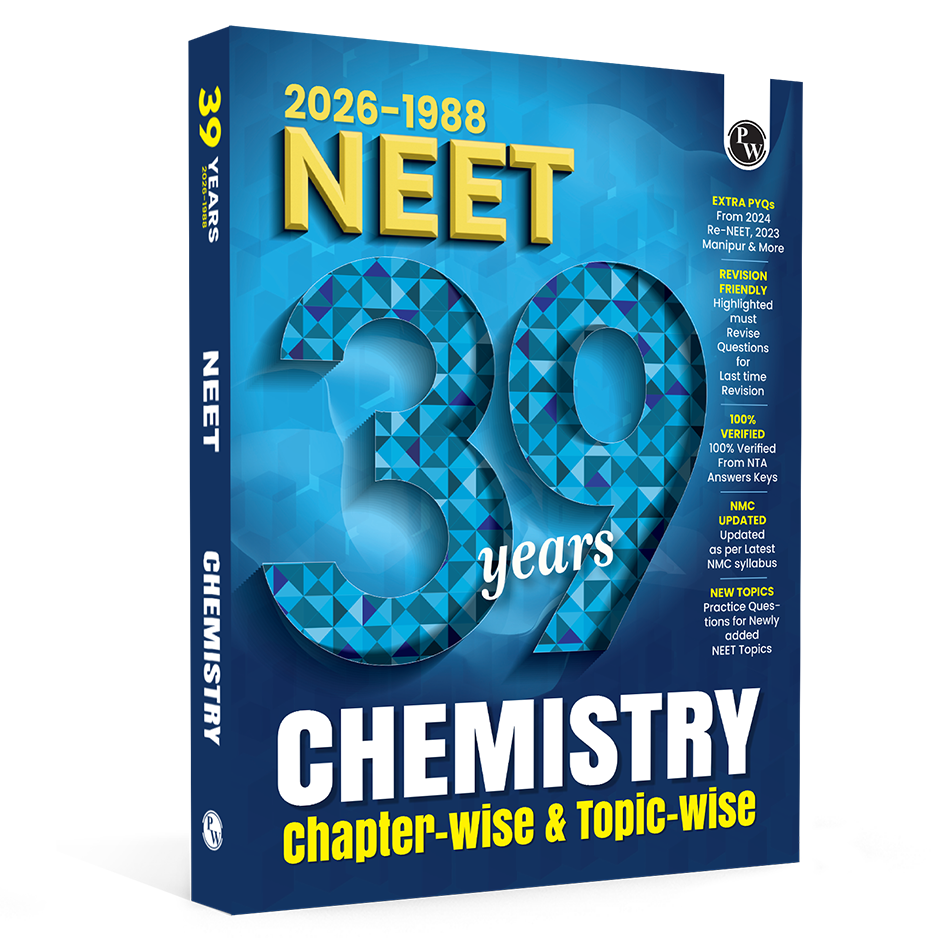
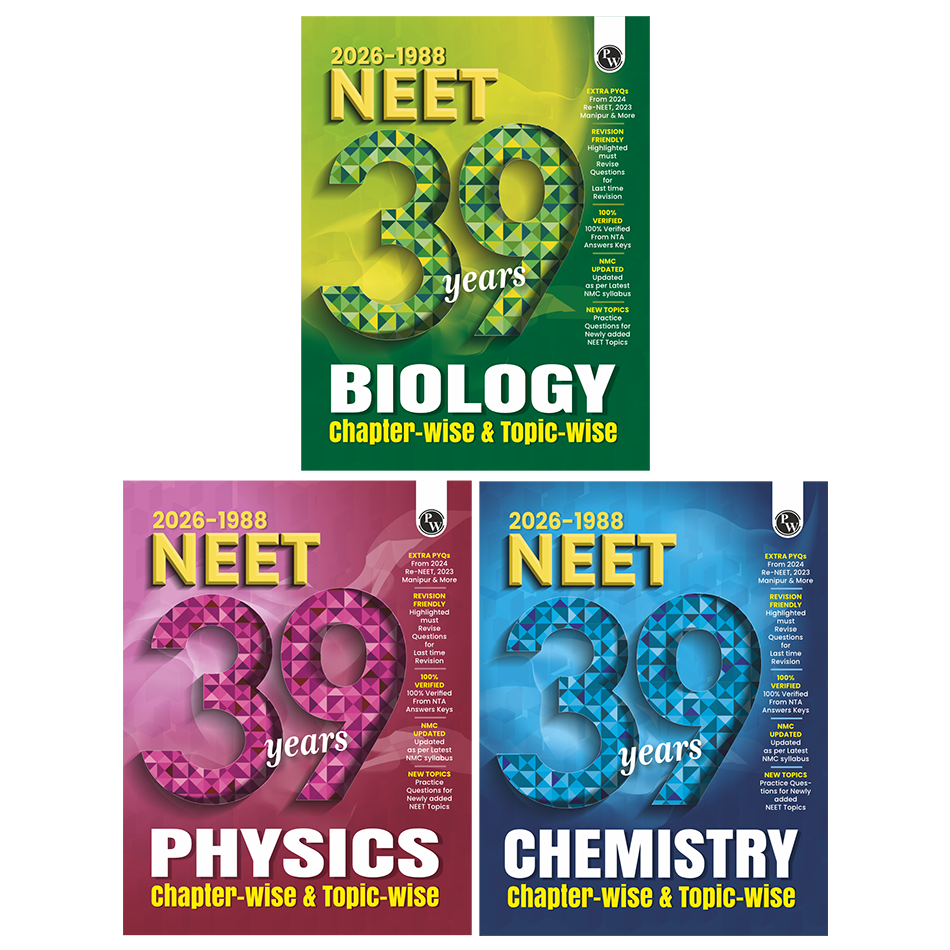
How to Improve NEET Chemistry Score from 120 to 150+

Many aspirants spend countless hours on complex theory while missing out on high-scoring, direct questions that can instantly boost their standing. Chemistry is universally recognized as the rank-deciding section in medical entrance tests because it balances conceptual understanding with straightforward numericals.
If your preparation feels stagnant and you want to bridge the gap to 150 plus marks, you need a targeted shift in how you tackle the syllabus.
Utilizing structured NEET Chemistry Score and carefully selected practice books can completely transform your preparation journey and build unwavering exam confidence.
Overview of the NEET Chemistry Score
Understanding how the chemistry section impacts your overall percentile requires looking closely at the exam structure and marking scheme. The chemistry paper comprises physical, organic, and inorganic branches, each testing distinct cognitive skills ranging from memory recall to multi-step problem solving.
-
Chemistry contributes fifty questions split evenly between theoretical recall and numerical application across physical, organic, and inorganic domains.
-
Moving from 120 to 150+ requires securing at least ten additional correct questions while systematically eliminating silly mistakes.
-
Tracking mock test performance helps identify recurring weak chapters that drag down your overall aggregate.
-
Structured revision prevents last-minute panic and solidifies memory retention for volatile inorganic reaction pathways.
Which Chemistry Topics Can Help Improve Your NEET Chemistry Score
Targeting high-weightage chapters is the fastest route to escalating your overall marks without spreading your energy too thin across minor topics. You should first review the NEET (UG) syllabus to understand the prescribed Chemistry topics before deciding where to focus your revision.
-
Master high-yield physical chemistry chapters such as Chemical Kinetics, Electrochemistry, and Solutions to secure predictable numerical marks.
-
Prioritize inorganic heavyweights like Coordination Compounds and Chemical Bonding, which frequently feature direct factual queries straight from the source text.
-
Strengthen organic reaction mechanisms covering Name Reactions, GOC, and Hydrocarbons to effortlessly decode multi-step conversion questions.
-
Dedicate extra revision cycles to environmental chemistry and biomolecules, ensuring you never miss easy bonus marks.
How to Use NCERT and PYQs to Increase Your NEET Chemistry Score
The ultimate blueprint for success in the medical entrance examination lies hidden inside standard textbooks and historical question banks. Most questions in the chemistry section are either directly lifted or subtly modified from standard lines, tables, and in-text examples.
Analyzing past board and entrance papers reveals recurring patterns, favorite concepts, and the exact depth of knowledge examiners expect. Integrating NEET chemistry questions into your daily study routine bridges the gap between passive reading and active recall.
-
Read every single line of the textbook thoroughly, paying special attention to summary paragraphs, tables, and marginal notes.
-
Solve at least the last ten years of NEET chemistry pyq sets under strict time limits to adapt to the exam environment.
-
Maintain an error notebook dedicated entirely to conceptual traps and calculation errors encountered during past practice sessions.
-
Re-attempt incorrect questions from previous exams multiple times until the underlying principle becomes second nature.
How to Improve Accuracy and Reduce Mistakes for a Better NEET Chemistry Score
Knowing the concepts is only half the battle; transferring that knowledge accurately onto the OMR sheet or computer screen dictates your final percentile. Many aspirants lose precious marks simply due to hasty reading, misinterpretation of negative statements, or careless calculation slip-ups during physical chemistry sections.
Cultivating a disciplined review habit during mock tests drastically cuts down negative marking and preserves your hard-earned score. Enhancing your overall NEET chemistry score depends heavily on eliminating these avoidable errors through systematic checks.
-
Read every question twice to catch sneaky negative qualifiers like incorrect, not, or except before jumping to conclusions.
-
Double-check stoichiometry, unit conversions, and decimal placements in physical chemistry numericals to avoid silly calculation traps.
-
Practice elimination techniques for statement-based and assertion-reason questions to save time and prevent wild guessing.
-
Leave the final ten minutes of your exam block exclusively for reviewing flagged numerical calculations and doubtful bubbles.
Study Strategy Plan to Raise Your NEET Chemistry Score from 120 to 150 Plus
Achieving a breakthrough score requires a disciplined, time-bound framework that balances syllabus completion with rigorous testing and thorough analysis. Transitioning from a mid-tier score to an elite standing means abandoning random study habits in favor of a repeatable weekly routine.
By dedicating specific blocks of time to theory revision, problem-solving, and mock evaluations, you establish steady momentum. A well-designed NEET 2027 chemistry strategy ensures you stay ahead of the intense competition.
-
Allocate specific days of the week exclusively for physical problem-solving, organic mechanism practice, and inorganic memorization drills.
-
Take full-length mock examinations every weekend to build mental stamina and optimize your paper-attempting sequence.
-
Analyze every mock test meticulously for two hours post-exam to understand why specific answers went wrong.
-
Revise volatile inorganic tables and organic name reactions every alternate morning to keep core concepts fresh in your mind.
Tips to Improve Your NEET Chemistry Score Through Regular Practice
Consistency is the invisible engine driving every top ranker's success story, turning intimidating chemical equations into familiar territory. Engaging in daily problem-solving prevents concepts from fading and builds the intuitive speed required to finish the chemistry section within thirty to forty minutes.
Utilizing reliable study materials that provide well-graded practice problems can streamline your daily workflow. Integrating these habits into your daily routine ensures steady progress toward your target score.
-
Solve a fixed quota of thirty to fifty diverse questions daily across all three chemistry branches without fail.
-
Use timed mini-quizzes for individual chapters to test your speed under pressure and track your retention levels.
-
Practice structural drawing and reaction flowcharts on paper rather than reading them passively to enhance active memory.
-
Select preparation books that offer structured practice exercises categorized by varying difficulty levels to challenge your problem-solving limits.
Mistakes That Can Lower Your NEET Chemistry Score
Even dedicated students often fall into subtle traps that stall their progress and prevent them from crossing the coveted 150 mark. Relying solely on secondary reference notes while ignoring the primary textbook is a classic error that leaves you vulnerable to conceptual twists.
Additionally, neglecting weak chapters out of fear or frustration creates blind spots that examiners love to exploit. Recognizing these pitfalls allows you to course-correct before they negatively impact your final results.
-
Avoid skipping inorganic chemistry revision under the false assumption that factual topics can be crammed in the final week.
-
Never ignore the physical chemistry theoretical portions, as assertion-reason questions frequently target underlying definitions rather than formulas.
-
Stop relying exclusively on shortcut tricks without understanding the fundamental chemical principles governing the reaction.
-
Avoid jumping between multiple reference books; stick to a trusted primary set and your textbook for consistent revision.
NEET Chemistry Score FAQs
Can I reach 150+ in chemistry starting from 120?
Yes, moving from 120 to 150+ is entirely achievable by plugging specific conceptual gaps, eliminating calculation errors, and practicing high-yield previous year questions regularly.
How many hours should I dedicate daily to chemistry?
A daily commitment of two to three hours split between textbook reading, numerical practice, and reaction revision is ideal for steady score improvement.
Is NCERT enough for inorganic chemistry?
The textbook is practically sufficient for inorganic sections, provided you read every table, footnote, and in-text question with absolute attention to detail.
How do I handle difficult physical chemistry numericals?
Break down complex word problems into known and unknown variables, write down the relevant formulas clearly, and practice similar sums under timed conditions.
When should I start taking full-length mock tests?
Begin taking weekly full-length mock tests at least six months before the exam to refine your time management and build optimal exam temperament.