How to Improve NEET Physics Score from 100 to 130+
Physics often acts as the deciding rank-maker in the medical entrance exam, separating aspirants who secure government seats from those who fall just short. If you are stuck at the century mark, it means your foundational concepts are in place, but your execution, question selection, or problem-solving speed needs refinement.
Breaking through the NEET Physics Score 130-plus threshold is entirely possible when you shift from passive reading to active, data-driven revision and strategic test execution. You can also explore curated resources to support your preparation journey.
How to Analyse Your NEET Physics Score
Analyzing a stagnant score requires looking beyond the final number and dissecting every single question you attempted, skipped, or got wrong during the mock assessment.
-
Break down your score sheet into conceptual errors, calculation mistakes, and questions left unattempted due to severe time shortages.
-
Maintain a dedicated error log to track recurring mistakes in specific chapters like mechanics or electrodynamics, ensuring you do not repeat them.
-
Evaluate whether your lost marks stem from a lack of formula application or simply misreading negative statements in assertion-reason prompts.
-
Compare your sectional timing against benchmark timings to identify where you spend excessive minutes on single difficult numerical items.
Which Topics Can Help Improve Your NEET Physics Score
Targeting high-yielding chapters with predictable question patterns provides the fastest route to accumulating extra marks without spreading your energy too thin.
-
Focus heavily on optics, modern physics, current electricity, and thermodynamics, as these units consistently carry high weightage and straightforward formulas.
-
Revisit mechanics topics like rotational motion and work-energy theorem, practicing standard multi-concept problems to build confidence.
-
Secure easy marks in semiconductor electronics and units-dimensions by memorizing standard direct application formats.
-
Filter out low-return, highly complex sub-topics temporarily until your core high-scoring chapters reach absolute perfection.
How to Use PYQs and Mock Tests to Increase Your NEET Physics Score
Previous years' question papers and timed mock evaluations act as the ultimate mirror for your preparation, revealing hidden gaps in your exam temperament.
-
Solve past decade papers under strict exam conditions to understand recurring conceptual trends and examiner preferences.
-
Analyze every skipped or incorrect question from your mock tests immediately, rewriting the correct derivation or concept statement in your short notes.
-
Simulate exam-day pressure by attempting full-length tests during the exact afternoon slot of the actual examination.
-
Track your percentile and accuracy progression over a series of five consecutive tests to measure the real impact of your study adjustments.
Before working through PYQs, it is useful to check the official NEET (UG) syllabus so you can focus your practice on the prescribed Physics topics.
How to Improve Accuracy and Reduce Mistakes for a Better NEET Physics Score
Silly calculation errors and misread units frequently rob aspirants of 15 to 20 marks that could easily push their total well past the 130 mark.
-
Double-check standard sign conventions, vector directions, and unit conversions before bubbling your final answers on the sheet.
-
Avoid mental arithmetic for complex division or square roots during high-stakes mock practice to minimize careless slip-ups.
-
Cultivate the habit of writing down given parameters clearly in the rough margin before selecting a formula to apply.
-
Review your unattempted items to see if fear of negative marking caused you to miss solvable questions due to brief hesitation.
Study Strategy to Raise Your NEET Physics Score from 100 to 130 Plus
Moving past an intermediate score plateau demands a disciplined daily routine that prioritizes active problem solving over passive video watching.
-
Dedicate the first hour of your study block to solving numerical questions rather than rereading theory notes.
-
Create concise, pocket-friendly formula sheets for every completed chapter to enable rapid weekly revisions.
-
Balance your daily schedule by pairing challenging physics numerical practice with lighter biology or chemistry reading slots.
-
Dedicate weekends exclusively to sectional tests and comprehensive doubt clearance sessions with mentors or study groups.
Tips to Improve Your NEET Physics Score Through Regular Practice
Consistent, disciplined daily engagement with varied question banks builds the subconscious pattern recognition required for rapid exam-hall execution.
-
Practice a healthy mix of direct formula-substitutions and deep analytical multi-step numericals every single day.
-
Time yourself using a stopwatch while solving sets of 30 questions to build natural exam speed and urgency.
-
Incorporate statement-based and matching-type questions into your daily practice pool to align with evolving test trends.
-
Revisit challenging problems after a gap of seven days to test your long-term retention of problem-solving techniques.
Common Mistakes That Can Lower Your NEET Physics Score
Avoiding hidden traps and counterproductive study habits is just as important as acquiring new problem-solving shortcuts during your preparation phase.
-
Relying solely on passive video lectures without actively solving pen-and-paper numerical problems on your own.
-
Neglecting NCERT textbook back exercises and summary points, which often serve as blueprints for conceptual questions.
-
Panicking when encountering a difficult first question in a test section, which ruins your momentum for the rest of the paper.
-
Ignoring weaker chapters out of fear, leading to sudden blank-outs when similar concepts appear in the actual test.
NEET Physics Score FAQs
What is a good strategy to improve NEET physics score from 100?
To elevate your score past 130, focus on rigorous error analysis, prioritize high-weightage chapters, practice previous years' papers thoroughly, and eliminate silly calculation mistakes through timed daily mock tests.
How many hours should I dedicate to physics daily for NEET 2027 physics?
Dedicate at least 3 to 4 hours daily, splitting your time equally between concept revision, formula memorization, and intensive numerical problem-solving across various difficulty levels.
Are NCERT textbooks enough for NEET physics preparation?
NCERT builds your foundational concepts and theoretical clarity, but scoring above 130 requires supplementing your reading with dedicated problem books and extensive NEET physics practice sets.
Why am I stuck at 100 marks in NEET physics questions?
Getting stuck at 100 usually indicates gaps in time management, frequent calculation errors, incomplete syllabus coverage, or an over-reliance on passive theory review rather than active numerical practice.
How can I find quality NEET physics practice material?
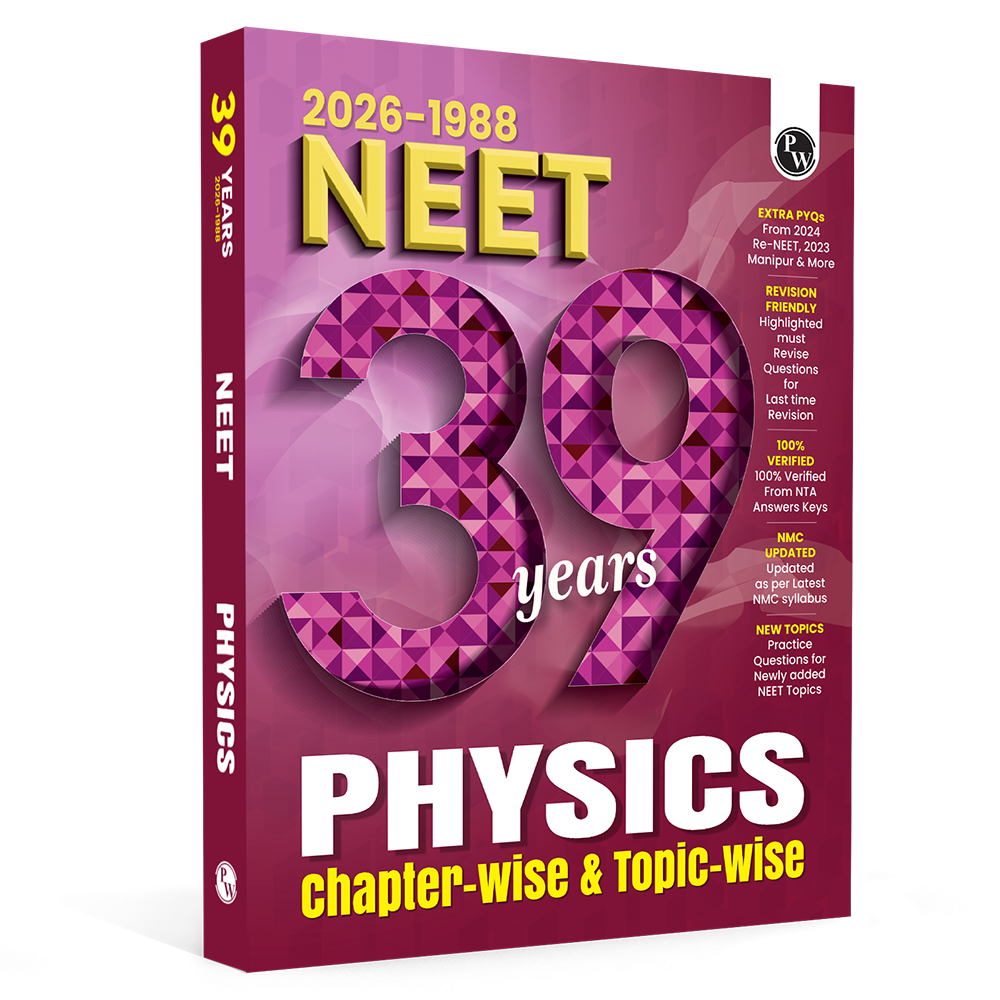
You can access structured chapter-wise problem banks, previous year compilations, and practice modules from reliable student resources such as the NEET Books collection to enhance your preparation