What Does the Most Wanted NEET Physics for Last-Minute Prep

Preparing for the National Eligibility cum Entrance Test (NEET) can be overwhelming, especially with the huge Physics syllabus. For many medical aspirants, final practice sessions are a nightmare because they involve applying formulas, solving complex numerical problems, and managing time.
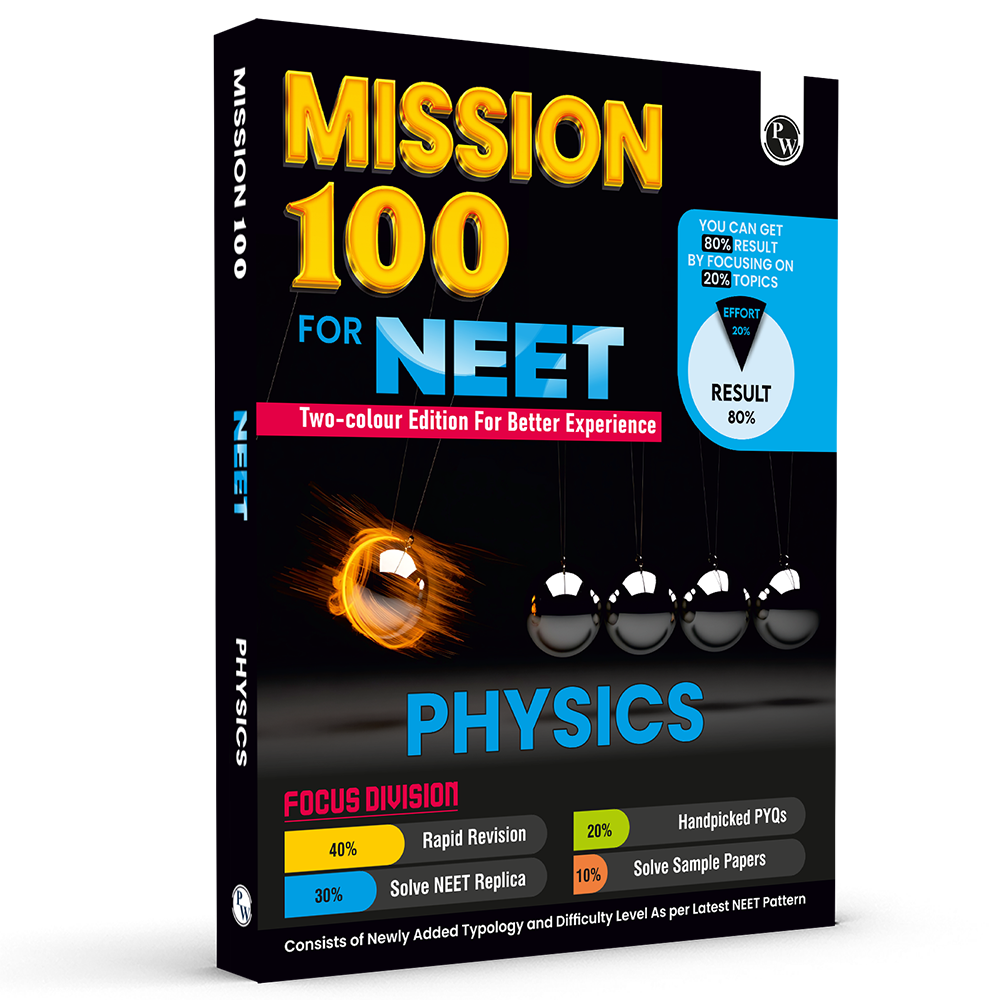
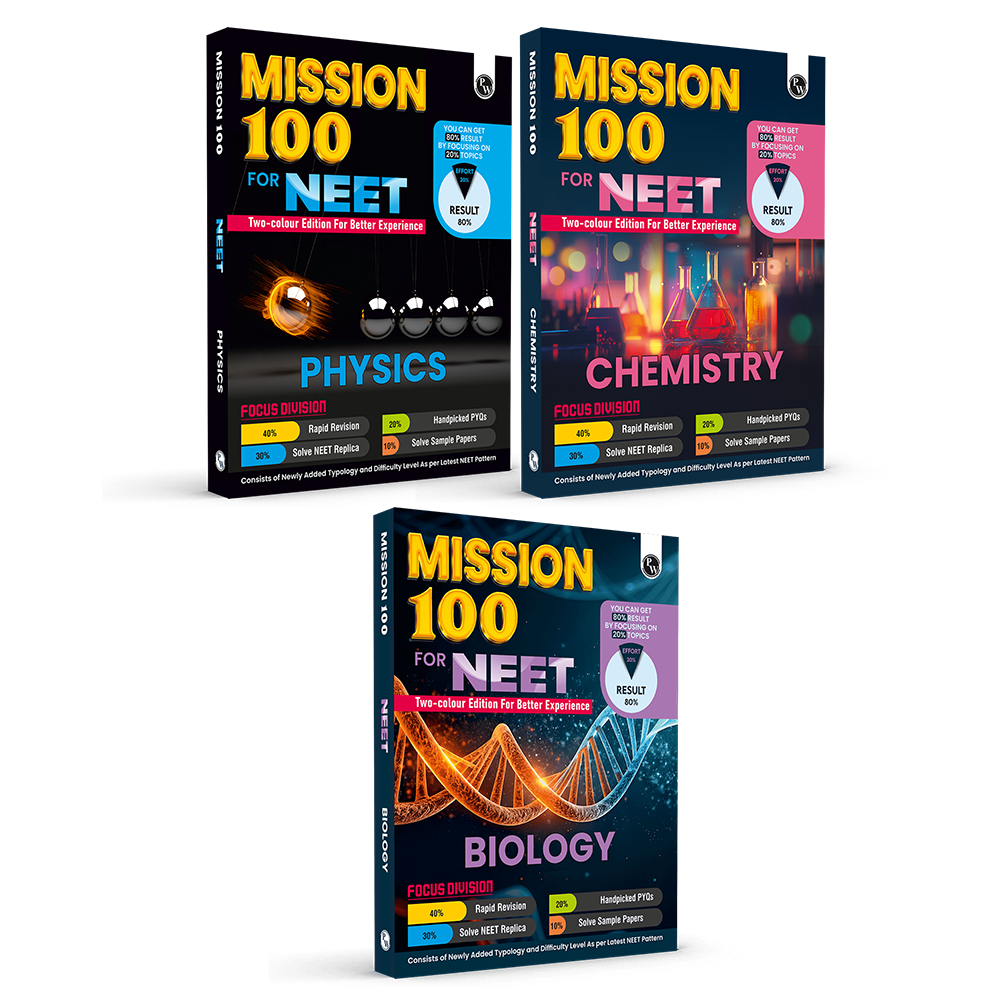
To succeed, it’s critical to find a resource that offers a good balance of rapid conceptual clarity and high-yield practice questions. The NEET Mission 100 physics book is designed to meet these fast-paced preparation demands.
Importance of NEET Mission 100 Physics Book
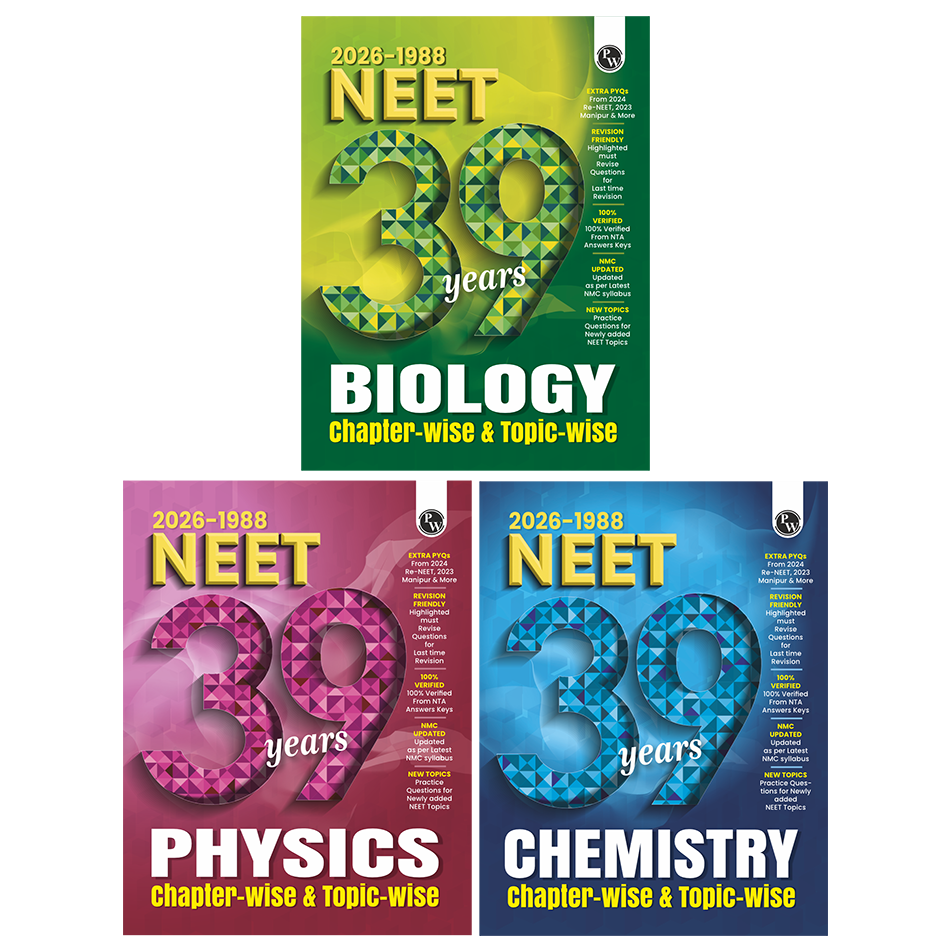
Analyzing historical exam trends helps students understand structural changes in the actual exam. Solving real questions gives an accurate look at language complexity and depth of calculation.
-
Detailed Step-by-Step Solutions: Every included item provides structured explanations instead of simple answer keys.
-
Alternative Solving Methods: Quick mathematical shortcuts are detailed alongside conventional methods to save paper time.
-
Topic Mapping: Every historical problem is explicitly linked to its respective sub-topic to point out remaining conceptual blind spots.
Working systematically through high-yield physics PYQ for NEET builds the necessary confidence required to tackle unpredictable question papers under exam stress.
Features of the NEET Mission 100 Physics Book
With the national medical entrance exam looming, traditional textbooks become too heavy to carry. Students require a system that deals with theoretical points and problem-solving techniques in a streamlined fashion. Resources such as the NEET Crash Course can make preparation more efficient by combining revision support with focused practice. This targeted resource makes preparation easy by filtering out secondary text and focusing on competitive exam patterns, helping students spend more time applying concepts instead of sorting through lengthy theory.
-
Integrated Concept Maps: Visual tools condense extensive chapters into one-page flowcharts for quick reference.
-
Formula Flash Sheets: High-yield equations are arranged systematically at the start of each chapter.
-
Difficulty Scaling: Solved examples move progressively from foundational applications to advanced multi-concept integration.
-
Error Analytics: Common conceptual mistakes made by aspirants are highlighted to prevent negative marking.
What is the 80-20 Rule for Using the NEET Mission 100 Physics Book?
The 80-20 rule implies that around 80 percent of exam questions originate from approximately 20 percent of the total syllabus topics. Identifying these key chapters enables students to allocate their study hours efficiently. The NEET Mission 100 physics book implements this methodology directly into its structural layout.
|
High-Weightage Unit |
Target Areas Covered |
Approximate Mark Share |
|
Modern Physics |
Dual Nature, Atoms, Nuclei, Semiconductors |
Around 15 to 20 percent |
|
Current Electricity |
Kirchhoff's Laws, Potentiometer, Circuit Analysis |
Around 9 to 11 percent |
|
Mechanics |
Laws of Motion, Work-Energy, Kinematics |
Around 15 percent |
|
Optics |
Ray Optics, Wave Interference, Optical Instruments |
Around 7 to 10 percent |
Focusing sharply on these heavy-weightage segments ensures that candidates gain maximum scoring potential in minimal time. This systematic layout is why the workbook serves as a practical mission 100 physics resource for completing quick revision cycles.
Topic-Wise Study Plan with NEET Mission 100 Physics Book
Developing accurate problem-solving skills requires more than just memorising definitions. Aspirants need to apply standard theories to diverse situations under real test conditions. Having structured practice pools makes transitioning from theoretical concepts to computational accuracy much easier.
Using a dedicated NEET physics revision book provides an advantage because it contains curated question sets that reflect modern test trends.
-
Level 1 Exercises: Conceptual questions aimed at reinforcing basic formulas and theoretical relationships.
-
Level 2 Exercises: Single-step numerical questions demanding numerical computations and unit transformations.
-
Level 2 Advanced: Multi-concept questions where mechanical formulas merge with thermal or electrical principles.
-
Assertion and Reason Bank: Special questions dedicated to statement-based evaluation, which are common in current papers.
Revision Schedule for NEET Mission 100 Physics Book
An unstructured approach to final revision can cause unnecessary panic. A balanced revision timeline allows students to preserve conceptual depth while improving objective test speeds.
Phase 1: Rapid Theory Mapping
Spend around two hours daily reviewing short chapter summaries. Focus on identifying specific conditions where specific formulas fail, such as non-inertial frames or non-conservative settings.
Phase 2: Targeted Application Training
Solve at least forty standalone questions from high-yield units every day. Avoid looking at answers prematurely to train your brain to retrieve stored facts independently.
Phase 3: Complete Performance Assessment
Take full-length mock examinations during actual testing hours to align your cognitive focus with real exam routines.
Benefits of Using NEET Mission 100 Physics Book
This specific reference text bridges the gap between raw board theory and objective exam requirements. It acts as an elite analytical workbook designed to fix preparation gaps rapidly.
-
Saves Productive Hours: Eliminates the need to read multiple hefty reference texts late in the session.
-
Improves OMR Accuracy: Includes practice papers with physical bubble sheets to minimise real-time marking errors.
-
Crisp Theoretical Explanations: Explains difficult topics like magnetic properties or alternating currents in simple bullet points.
Using this comprehensive NEET physics book regularly changes how students approach physical principles, transforming fear into consistent scoring ability.
How to Increase Speed with NEET Mission 100 Physics Book?
The inability to finish calculations quickly is a major reason why students lose easy marks. Cultivating mental math shortcuts and systematic estimation skills prevents valuable time loss.
-
Approximation Techniques: Rounding off complex decimal values helps filter out incorrect options quickly.
-
Dimensional Checks: Verifying the fundamental dimensions of final parameters eliminates wrong choices before calculation begins.
-
Ratio Comparisons: Handling comparative cases through pure variable proportions saves time compared to full numerical tracking.
This dedicated approach makes the book a highly reliable physics tool for NEET preparation, giving students the ideal mix of shortcut methods and reliable conceptual insights.
Tips for Using NEET Mission 100 Physics Book
An outstanding score requires daily tracking of speed and precision. Using systematic review worksheets lets students target weak areas without losing touch with strong units.
-
Fixed-Time Drills: Solve a batch of twenty complex problems in around twenty-five minutes.
-
Error Ledger Maintenance: Record recurring math errors or formula confusion in a separate diary.
-
Weekly Recall Sessions: Re-attempt previously missed problems to confirm conceptual correction.
Relying on this comprehensive database of curated NEET physics questions protects students from practicing outdated patterns and helps them match the precise standards of modern medical entrance exams.
Read More: How to Start NEET Preparation After Class 10?
NEET Mission 100 Physics Book FAQs
How does the NEET Mission 100 physics book help in fast-track preparation?
The book organizes important topics using the 80-20 rule, concentrating on the 20 percent of core concepts that yield 80 percent of exam marks. It uses formula sheets and summary charts to reduce final revision time significantly.
Are past years' questions included in this NEET physics revision book?
Yes, the text features detailed, step-by-step solutions for relevant previous years' questions. The entries are organized by topic, allowing students to check historical weightage while tracking their daily progress.
Does the workbook contain enough NEET physics questions for mock practice?
The book includes a wide selection of objective questions, categorized cleanly into clear difficulty tiers. It also provides comprehensive practice sample papers with printable OMR sheets to replicate real test environments accurately.
Can I clear my numerical application block using this physics for NEET resource?
The guide breaks down complex numerical problems into logical, sequential steps. It contrasts regular formulas with quick shortcut methods, helping students learn exactly how to apply mathematical steps to difficult questions efficiently.
Is this NEET physics book suitable for absolute beginners?
While it functions best as an advanced revision manual, the book is written in clear, accessible English. The logical arrangement of formula cards and basic exercises makes it highly useful for anyone looking to build reliable problem-solving skills from scratch.