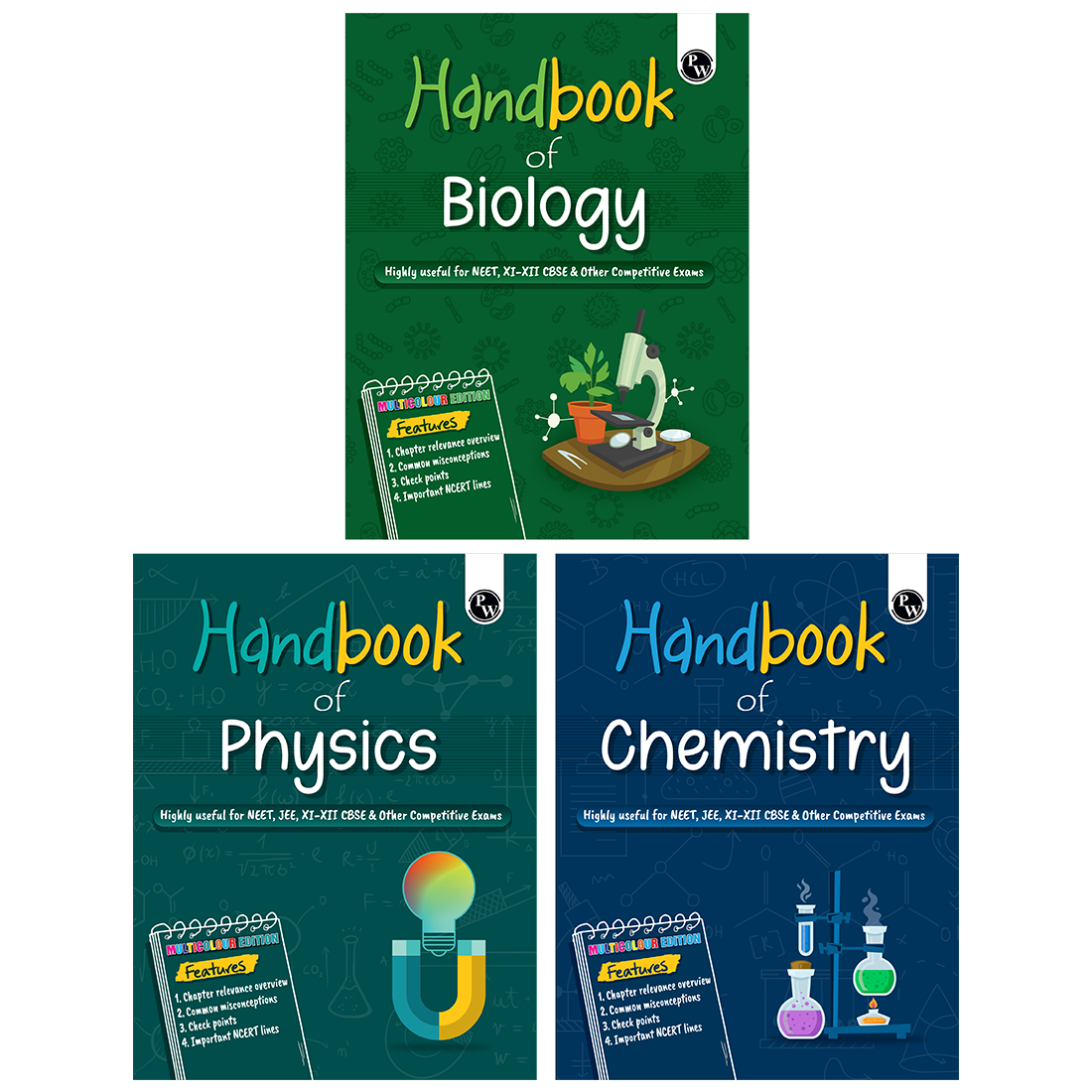
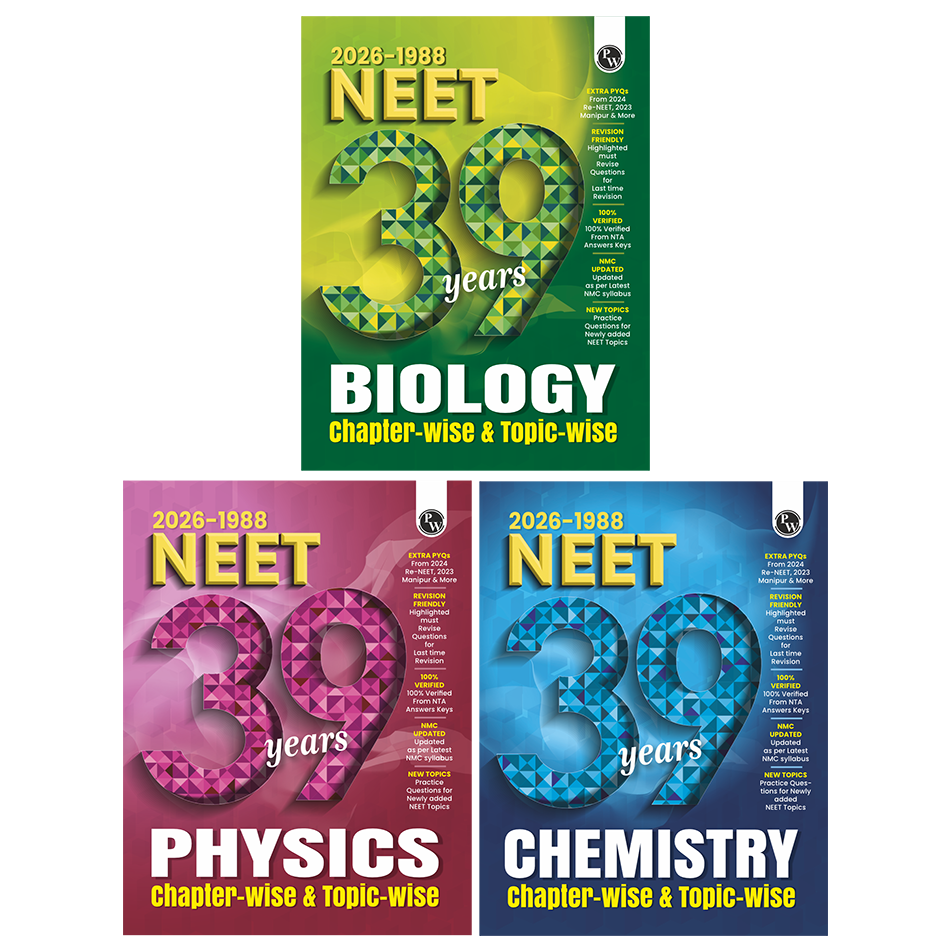
How PCB Handbook Helps NEET Aspirants with Quick Formula Revision
Competitive medical exams can be a daunting task because of the vast syllabus. It is very stressful to try to remember hundreds of complex formulae and reactions just before the exam. The solution to this problem is a well-structured NEET handbook that arranges the vital information into one easily accessible place, making your study sessions highly efficient.
Importance of NEET Handbook
Medical aspirants face the daunting task of revising around three massive subjects simultaneously. Covering every single textbook chapter in the final weeks before the exam is practically impossible. Students often lose valuable marks simply because they cannot recall a basic equation or a crucial chemical reaction during the test.
Traditional textbooks do a great job of building deep conceptual understanding, but fail in high-pressure situations. Wasting valuable time going through thousands of pages for a single equation. The lack of structured notes often becomes a roadblock in a smooth NEET preparation journey, and students feel unprepared.
How Does a NEET Handbook Simplify Physics and Chemistry Revision?
A good understanding of the methods of solving numerical problems is required in Physics and Physical Chemistry. The year is useful to memorise derivations, but the final exam requires immediate application of the final expressions. With dedicated formula revision, you can move from theory to practice and solve problems with ease.
An organised resource summarises the key variables, standard units, and application conditions for each mathematical relationship. The systematic approach avoids the common pitfall of confusing look-alike equations under exam pressure.
Let’s see how chapters can benefit from organised summaries:
-
Mechanics: Quick access to kinematic relationships, work-energy theorems, and rotational dynamics laws.
-
Electrodynamics: Immediate clarity on Gauss's law, capacitance equations, and alternating current variations.
-
Physical Chemistry: Rapid review of thermodynamics laws, chemical kinetics orders, and equilibrium expressions.
Having these concepts arranged in a structured format reduces cognitive load and improves recall speed during the examination. To make revision even more effective, students can also use a NEET Revision Book, which provides concise chapter-wise notes, important formulas, NCERT highlights, and exam-oriented summaries. Combining a handbook with a dedicated revision book helps strengthen concepts, improve retention, and maximise performance in the NEET examination.
How does a NEET Handbook improve the concepts of Biology, Chemistry, and Physics?
Balancing conceptual clarity in Physics with theoretical memorisation in Biology is incredibly challenging. A multi-subject biology chemistry physics handbook provides a balanced framework to handle this diversity effectively. It treats each subject with the specific structural layout it requires for optimal learning.
For example, Organic Chemistry requires clear reaction mechanisms and named reactions, while Biology requires crisp summaries of anatomical systems and ecological cycles. These different needs are satisfied in one consolidated reference manual, so you don’t have to flip through a number of weighty books.
Benefits of Using a NEET Handbook
Using a specialised NEET handbook offers distinct operational benefits during your study routine. It changes how you interact with vast amounts of information in a limited timeframe.
-
Portability: You can carry your complete study notes anywhere, enabling active recall during short breaks.
-
Visual Aid: Well-designed diagrams, flowcharts, and comparative tables enhance visual memory retention significantly.
-
Time Efficiency: It reduces the time spent searching for misplaced formulas or notes by approximately fifty percent.
-
Confidence Booster: Seeing the entire syllabus compressed into an achievable format reduces exam anxiety.
By referencing a brief manual frequently, you move the critical facts from short-term to long-term memory. This shift in mindset is very important to cope with the high time pressure of the real medical entrance test.
How to Use a NEET Handbook for Active Recall and Quick Revision?
Passive reading rarely yields excellent results when dealing with massive syllabi. Incorporating a quick revision strategy based on active recall is essential for higher score bands. Instead of simply staring at the pages, cover the explanations and try to write down the equations from memory.
A short summary manual is well served by an active self-assessment process. Compare your answers with the verified content on-the-spot and find out the exact weak areas in a jiffy. This focus means you spend your time fixing mistakes instead of re-reading topics you already know.
How Does a NEET Handbook Help Improve Your Score?
Choosing the correct supplementary material determines the efficiency of your preparation journey. A premium NEET book does not just list equations; it explains their contextual application clearly. Understanding when a specific rule applies is just as important as memorising the rule itself.
Many questions in the medical entrance exam blend multiple concepts together. A well-curated guide highlights these interconnections, showing you how a principle from one chapter applies to a problem in another. This integrated perspective is exactly what separates top scorers from average students.
How Does a NEET Handbook Covers Physics, Chemistry, and Biology?
To understand the immense utility of these tools, let us look at the structural needs of each individual subject area.
Physics Architecture
Physics preparation relies heavily on mathematical expressions and sign conventions. A reliable NEET handbook presents these components systematically, ensuring you do not confuse positive and negative signs in optics or thermodynamics.
Chemistry Structure
Chemistry is split into around three distinct fields, each requiring a completely unique revision approach:
-
Physical: Formula-heavy, requiring instant access to numerical constants and unit conversion factors.
-
Inorganic: Trend-heavy, needing clear tables for ionization enthalpy, atomic radii, and periodic anomalies.
-
Organic: Reaction-heavy, requiring direct summaries of reagents, intermediate steps, and named transformations.
Biology Systematics
Biology contains extensive terminology and complex classifications that require constant repetition. Condensing lengthy chapters into structured bullet points helps you memorise taxonomic hierarchies, plant kingdom divisions, and human physiological pathways without feeling overwhelmed by dense paragraphs.
Check Out: NEET Previous Year Papers
Why a NEET Handbook Is Better Than Scattered Study Materials?
Let us compare how different resources serve your preparation goals during various stages of the academic year.
|
Feature |
Standard Reference Textbooks |
Personal Handwritten Notebooks |
Compact NEET Handbook |
|
Primary Purpose |
Deep conceptual learning |
Detailed daily tracking |
Final high-yield revision |
|
Time Required |
Very high investment |
High initial creation time |
Extremely low investment |
|
Portability |
Heavy and difficult |
Moderate to carry |
Slim and highly portable |
|
Syllabus Coverage |
Exhaustive explanations |
Subjective to student notes |
Strictly exam-oriented facts |
This comparison shows that while textbooks are vital for initial learning, a dedicated NEET handbook is unmatched for final preparation efficiency.
How to Create a Daily Revision Plan with a NEET Handbook
Many students fail to utilise their study guides effectively due to incorrect habits. Avoid these common pitfalls to ensure your quick revision remains productive:
-
Starting Too Late: Do not wait until the final week to open your NEET handbook; introduce it early in your schedule.
-
Passive Scanning: Avoid merely looking at a NEET formula book without understanding the underlying components of each equation.
-
Over-reliance: Remember that systematic formula revision complements thorough practice; it does not replace solving full-length mock examinations.
By avoiding these mistakes, you ensure that your final study phases remain highly productive and stress-free.
Read More: NEET Handwritten Revision Notes PDF with Solutions
NEET Handbook FAQs
How does a NEET handbook help with fast revision?
A NEET handbook condenses the entire syllabus into high-yield points, formulas, and clear diagrams. This concise format allows you to review around three full subjects in a fraction of the time required by standard textbooks.
Can I rely entirely on a formula book for my preparation?
No, summary books are designed to complement your main textbooks and practice papers. They are excellent for memory retention and quick review, but should not replace deep conceptual learning and problem-solving practice.
When is the best time to start using a summary guide?
You should introduce it early in your study schedule. Using it alongside your regular chapter tests helps reinforce concepts progressively, rather than leaving all summary work for the final month of your routine.
How do compact manuals improve performance in numerical sections?
They present equations alongside their specific application rules and unit systems. This clear structure prevents confusion between similar formulas, leading to faster and more accurate calculations during the exam.
Why are visual aids important in final study materials?
Visual aids like comparative charts and flowcharts engage your spatial memory. This formatting makes it much easier to recall complex processes and periodic trends under high-pressure testing conditions.