NEET Magnetism PYQ Preparation with PW NEET Book
Aspirants preparing for medical entrance exams often struggle with conceptual clarity and formula retention in electroMagnetism. Tackling complex numericals requires structured practice using authentic previous year archives. If you want to boost your score, integrating a reliable resource like the 39 Years NEET PYQ Physics book into your study routine changes everything.
This article explores how focused practice with NEET Magnetism PYQ resources helps you understand recurring exam patterns, improve problem-solving speed, and achieve ultimate precision during the actual test.
Why NEET Magnetism PYQ Matters for Exam Success
Physics requires a distinct approach compared to biology or chemistry. Candidates cannot rely solely on rote memorization because examiners test analytical reasoning and multi-step formula application. Solving past exam papers bridges the gap between theoretical knowledge and actual examination performance. Without this targeted practice, students often find themselves overwhelmed by the mathematical complexity and spatial visualization required in electromagnetic chapters.
-
Identifies recurring patterns: National Testing Agency exams frequently cycle through core conceptual frameworks. Recognizing these trends saves valuable time in the examination hall.
-
Builds numerical accuracy: ElectroMagnetism problems involve vector calculus, cross products, and geometric visualisations. Regular practice minimizes calculation errors.
-
Boosts confidence: Familiarity with past paper difficulty levels reduces exam anxiety and helps students manage time efficiently across different sections.
Engaging with targeted Magnetism NEET questions exposes students to the exact standard expected by top medical colleges. When students incorporate NEET physics PYQs early in their study timeline, they transition from passive readers to active problem solvers. This shift is critical for securing a top rank in medical entrance tests. Furthermore, understanding the underlying rationale behind each correct option prevents common traps set by question setters, ensuring that candidates approach every numerical with absolute clarity and structured logical flow.
Features of NEET Magnetism PYQ Book
Prepare for NEET Physics with previous year questions, updated syllabus coverage, and clear solutions.
The NEET book helps you understand repeated concepts, revise important topics, and practice questions from different NEET exams.
-
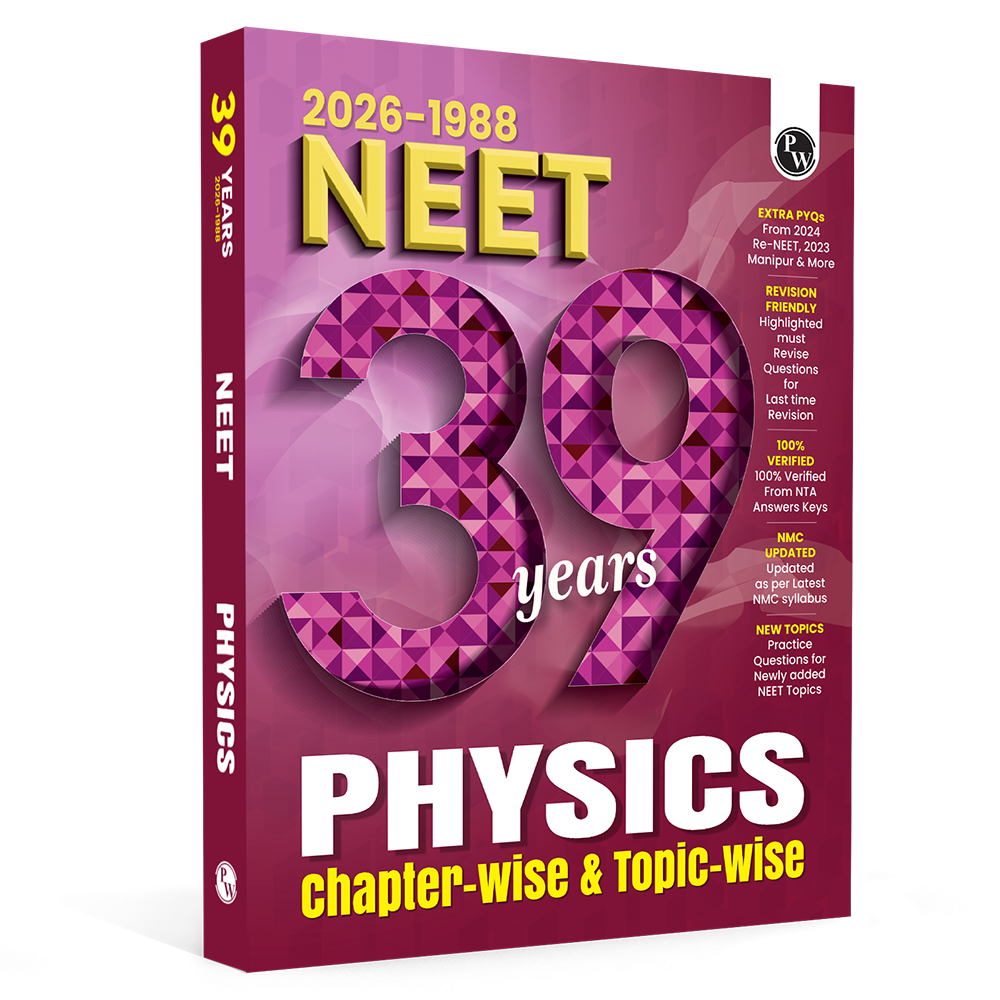
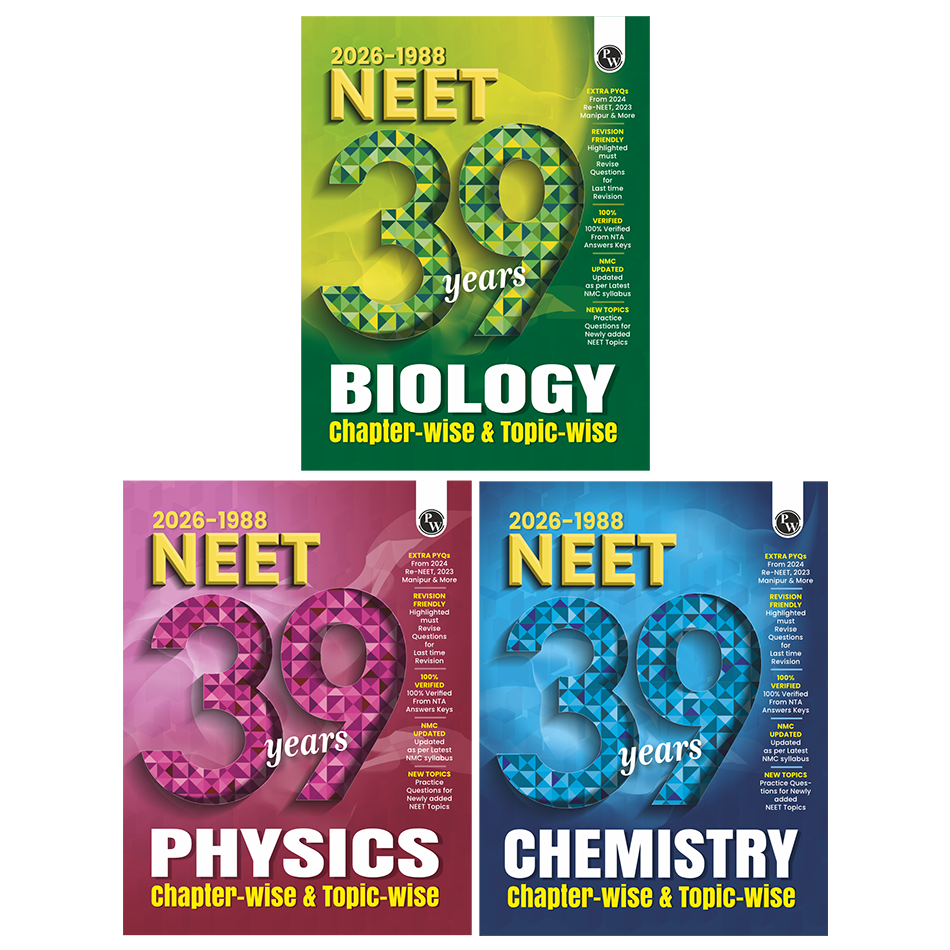
39 Years of Fully Solved NEET Physics PYQs (1988–2026): Practice 39 years of NEET Physics PYQs with questions covering important Physics concepts and different exam patterns.
-
Chapterwise & Topicwise Arrangement: Questions are sorted by chapter and topic for easy study and focused practice. This makes revision simpler and helps you work on specific concepts.
-
“PYQs Deja Vu”: Quickly find concepts and question types that have appeared many times in previous exams. This helps you focus on topics that need more attention.
-
Additional PYQs from 2024 Re-NEET, 2023 Manipur & More: Get extra questions from special and regional NEET exams for wider practice and better exposure to different question patterns.
-
Highlighted “Must Revise Questions”: Important questions are clearly marked so you can find them quickly during final revision and last-minute preparation.
-
100% Solutions Verified with NTA Answer Keys: Solutions are checked with the official NTA answer keys to help you verify answers and avoid confusion during practice.
-
Updated as per Latest NMC Syllabus: The content follows the latest NMC syllabus, helping you focus on topics relevant to the current NEET Physics preparation.
-
Practice Questions for Newly Added NEET Topics: Includes practice questions for newly added topics to help you prepare for changes in the syllabus.
-
Clear, Step-by-Step Solutions by Expert Faculty: Each answer is explained in a simple step-by-step manner so you can understand the method and improve your problem-solving skills.
What Topics Are Covered in NEET Magnetism PYQ?
Magnetism spans multiple weightage chapters in the physics curriculum. Understanding how marks are distributed across these subtopics helps aspirants allocate their study hours effectively. The curriculum bridges electrostatics and electromagnetism, requiring a firm grasp of both vector directions and scalar magnitudes.
-
Magnetic Force and Motion of Charged Particles: Problems involving Lorentz force, circular motion in uniform magnetic fields, and helical paths require precise application of the right-hand rule.
-
Biot-Savart Law and Ampere's Circuital Law: Calculating magnetic fields due to straight wires, circular loops, solenoids, and toroids tests spatial imagination and integration skills.
-
Torque on Current Loops and Moving Coil Galvanometers: Understanding magnetic dipole moments and galvanometer sensitivity forms the backbone of conceptual questions.
-
Magnetism and Matter: Properties of dia-, para-, and ferromagnetic materials, earth's magnetic field components, and magnetic hysteresis loops test theoretical retention alongside numerical ability.
Mastering these specific subtopics requires deliberate practice using authentic archives such as NEET Previous Year Papers. When students work through questions classified by these exact headings, they notice how examiners tweak standard formulas to test deeper understanding. Regular interaction with these core concepts ensures that unexpected twists in the exam paper do not catch candidates off guard. Building fluency across these specific domains transforms challenging multi-step problems into manageable scoring opportunities during high-pressure testing environments.
How to Solve NEET Magnetism PYQ Using Chapterwise Books?
Systematic organisation of study material dictates how effectively a student absorbs information. Sifting through random mock test papers often causes confusion and wastes precious hours that could be spent strengthening weak concepts. Chapter-wise segregation solves this bottleneck by allowing aspirants to target individual segments immediately after classroom instruction.
-
Immediate application: Once a teacher finishes explaining Biot-Savart Law or magnetic force on a moving charge, students can immediately test their understanding using structured archives.
-
Targeted weakness elimination: Tracking errors on a chapter-by-chapter basis highlights specific conceptual gaps, allowing focused remediation rather than generalized revision.
-
Structured progression: Moving sequentially from basic magnetic fields to complex electromagnetic induction builds a solid foundation without overwhelming cognitive load.
Effective NEET Magnetism preparation relies heavily on structured resources. Using chapter-organised problem sets ensures that candidates build momentum steadily. Instead of dealing with disorganised question papers, students benefit from a clear roadmap that mirrors the official syllabus guidelines. Integrating NEET PYQs directly into daily study schedules ensures steady progress, allowing aspirants to measure their growing competence against historical exam standards without second-guessing their curriculum coverage.
How to Revise NEET Magnetism PYQ Effectively?
Solving questions is only half the battle; how candidates review their mistakes dictates true progress. Passive reading of solutions yields poor retention. Active engagement transforms raw practice into sustainable knowledge retention. Adopting disciplined post-practice habits separates top rankers from average performers.
-
Maintain an Error Log: Every time a calculation fails or a conceptual trap catches you off guard, log the question and analyze the root cause.
-
Simulate Exam Conditions: Set a timer when tackling chapter archives to build speed and psychological endurance under pressure.
-
Highlighted Section Review: Use the curated must-revise markers during revision phases to refresh memory without rereading entire chapters.
-
Combine with Mind Maps: Link numerical formulas with visual diagrams to reinforce spatial and mathematical connections simultaneously.
Applying these strategic methods transforms standard study hours into high-yield output. Consistent tracking of performance metrics ensures steady upward momentum. By treating every past question as a learning milestone rather than a mere benchmark, aspirants build the resilience required to excel in competitive medical entrance examinations. Maintaining structural discipline throughout the revision lifecycle guarantees maximum conceptual retention and flawless execution on exam day.
Read More: NEET Physics PYQ PDF
NEET Magnetism PYQ FAQs
What makes the 39 Years Physics book ideal for Magnetism practice?
It offers chapter-wise and topic-wise arrangements, NTA-verified step-by-step solutions, and exclusive pedagogical tools like the PYQs Deja Vu trend tracker for high-yield study sessions.
How many years of past papers are included in the book?
The book contains a comprehensive archive spanning 39 years of fully solved questions from 1988 through 2026, ensuring thorough coverage of historical trends.
Are additional exam papers like Re-NEET included in the resource?
Yes, the book features extra questions sourced from special exams including Re-NEET and state-specific papers to prepare students for unexpected pattern shifts.
How do highlighted must-revise questions help during final revision?
They isolate questions containing multiple combined concepts, allowing students to revise core principles rapidly during the final weeks before the exam.
Can self-studying aspirants rely entirely on these step-by-step solutions?
Every answer is cross-checked against official NTA answer keys and solved by expert faculty, making it completely reliable for independent learners.