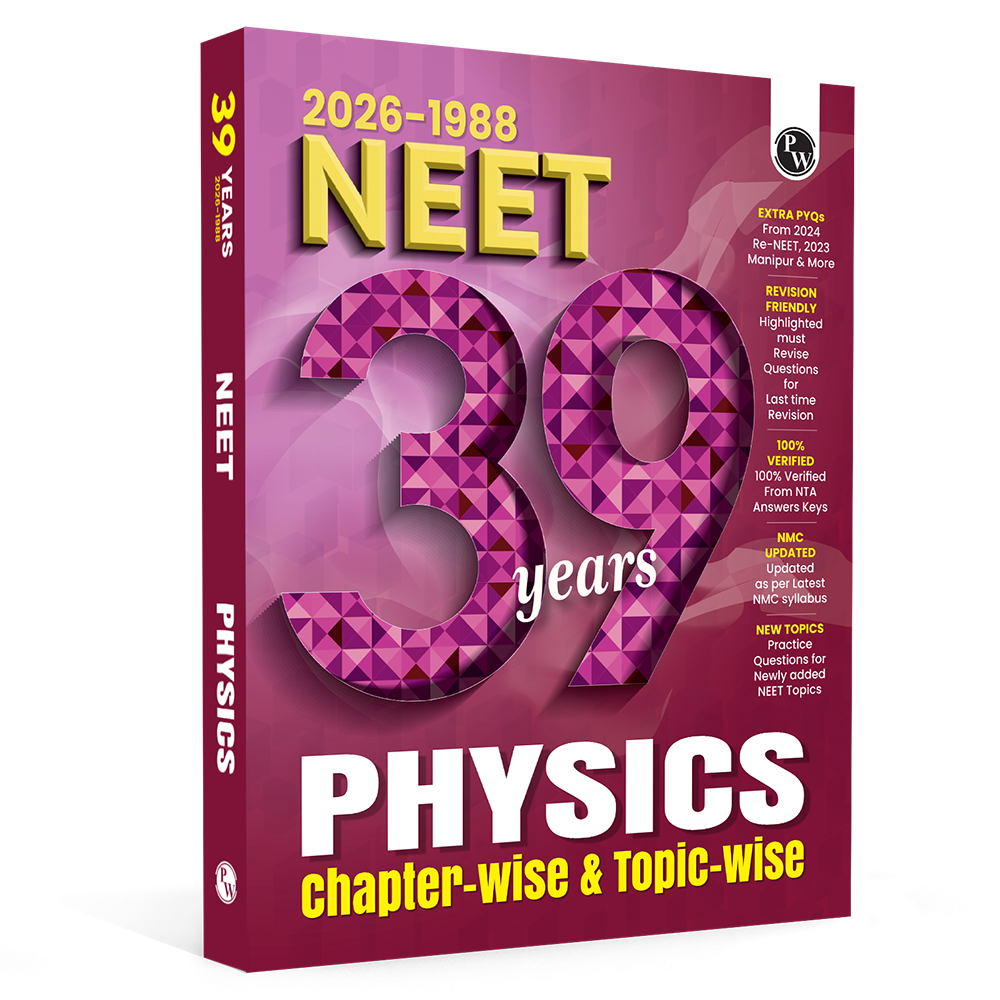
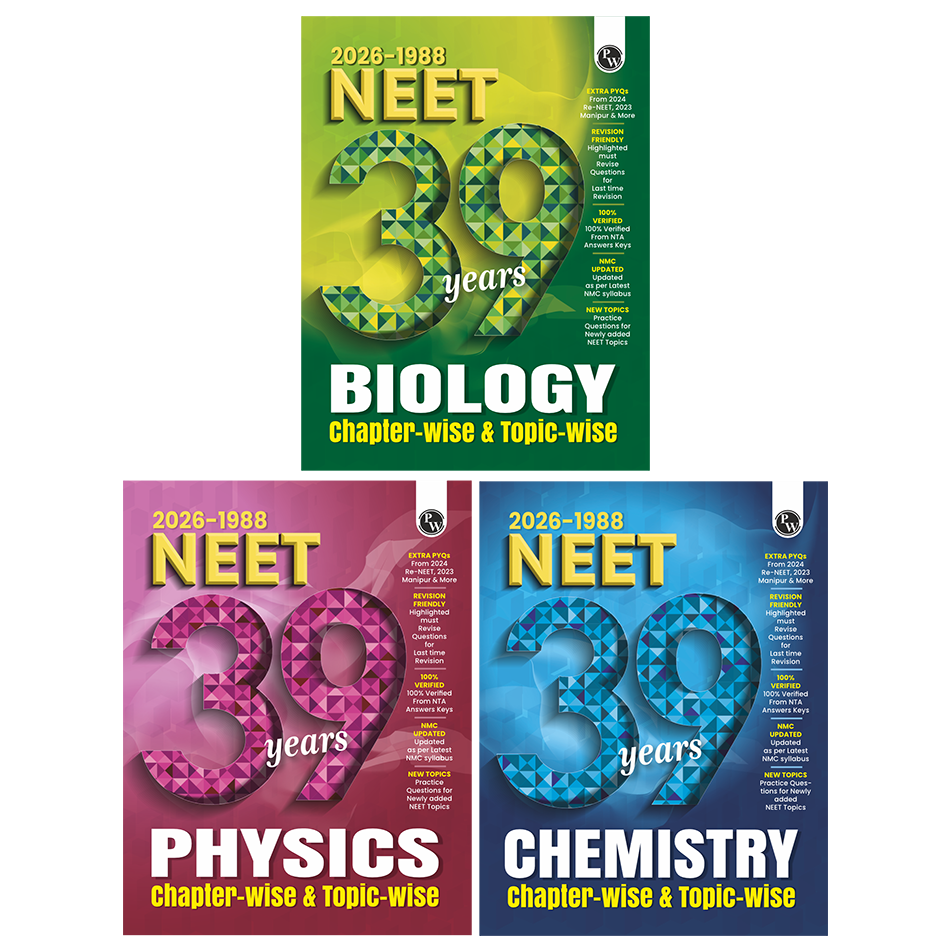
Important NEET Physics Topics Based on 39 Years PYQ Analysis
Getting a high score in the NEET exam often feels like trying to solve a complex puzzle with missing pieces. You might spend days excelling at a specific topic, only to find out it rarely appears in the actual exam. This lack of direction leads to wasted time and unnecessary stress. To bridge this gap, focusing on a NEET physics PYQ strategy is the most effective way to identify high-weightage areas. By analyzing trends from the last 39 years, you can move away from aimless studying and start focusing on the concepts that actually appear on the paper.
Check out: PW NEET Books
Why NEET Physics PYQ is Important
When you look at the history of medical entrance exams, patterns emerge. Physics is often considered one of the most scoring yet challenging sections in NEET, because while many students excel in Biology, Physics requires a deep conceptual understanding and application skills.
Relying on PYQ allows you to see the exact language of the questions and the complexity level expected by the examiners. The syllabus is massive, but the distribution of marks is not uniform. Some chapters, like Modern Physics and Current Electricity, frequently appear in NEET PYQs.
By reviewing the PYQ of NEET physics, you aren't just practicing questions; you are decoding the examiner's mindset. This helps in filtering out less important information and concentrating on core principles that have been tested repeatedly over nearly four decades.
Benefits of NEET Physics PYQ Chapter Wise Practice
One of the biggest mistakes students make is practicing random questions without a structure. Using NEET Physics PYQ resources changes your preparation from chaotic to organized.
When you solve questions category by category, you immediately notice which sub-topics within a chapter are the "favorites" of the National Testing Agency (NTA).
-
Pattern Recognition: You begin to see that certain types of numericals in Mechanics or Optics reappear with slight value changes every few years.
-
Better Time Management: Practicing with PYQ NEET helps you gauge how much time you need for different sections.
-
Stronger Concept Clarity: If you can solve a previous year's question from 2015 and 2023, it proves your foundational understanding is solid regardless of how the exam pattern evolves.
-
More confidence for NEET: There is a unique sense of security that comes from knowing you have tackled every question asked in the last 39 years.
Features of the NEET Physics PYQ Book
A comprehensive NEET PYQ book or module should offer more than just a list of questions. It needs to provide a roadmap for your success.
-
Year-wise and Topic-wise Questions: This allows you to track the evolution of questions from the late 80s to the current format.
-
Detailed Solutions: Simply knowing the answer is C is not enough. High-quality resources provide step-by-step solutions that explain the "why" behind the answer.
-
PYQ Trend Analysis: Modern resources often include a breakdown of how many questions appeared from each chapter in the last five years compared to the last thirty.
-
Error-Free Content: Precision is vital in Physics. Trusting a verified source of NEET physics past papers ensures you aren't learning incorrect methods.
How to Improve NEET Physics Score with PYQs
Improving your score requires more than just reading through the questions. You must engage with the physics PYQ actively. Start by finishing a chapter from your main textbook. Once you feel confident, immediately open the PYQ of the NEET physics section for that specific chapter.
Try to solve the questions without looking at the hints. If you get stuck, it indicates a gap in your theory. Go back, revise the concept, and try again. This "back-and-forth" method ensures that your theoretical knowledge and practical application are perfectly aligned.
Mark the questions that you found difficult or those that used a unique formula. These are the ones you must revisit during your final month of preparation. Consistency with PYQ NEET physics will eventually reduce your calculation errors and improve your speed.
Check Out: NEET Previous Year Papers
Right Time to Practice NEET Physics PYQ
Timing is everything in NEET preparation. While some students wait until the very end to look at a NEET physics previous year question, the most successful candidates integrate them from day one.
-
During Initial Learning: Use NEET PYQ physics chapter wise as soon as you finish a topic in class to understand the required depth.
-
During Mid-Term Revision: Use them to check how much information you have retained after a few months.
-
During Final Prep: In the last 60 days, solving a full NEET previous year paper physics under timed conditions is mandatory. It simulates the actual exam environment and helps reduce exam-day anxiety.
NEET Physics PYQ Study Plan
Creating a plan around NEET PYQ ensures you cover the syllabus efficiently. Physics can be divided into high, medium, and low-priority zones based on the 39-year analysis.
High-Priority Physics Chapters
Focus on Modern Physics, Semiconductor Electronics, and Current Electricity. These chapters are relatively easy to grasp and appear frequently in NEET physics PYQs. You can secure a significant chunk of marks here with minimal effort compared to bulky units like Mechanics.
Medium-Priority Physics Chapters
Optics, Thermodynamics, and Electrostatics fall here. These require a lot of practice. Using NEET PYQ physics chapter wise for these topics will help you identify the specific formulas that are most frequently used in numericals.
Low Priority Physics Chapters
Units like Properties of Bulk Matter or Oscillations are important but might have fewer questions. However, never skip them entirely. Even one NEET physics previous year question can make the difference between getting your dream college or missing out.
Read More: NEET Sample Papers PDFs with Solutions
NEET physics PYQ FAQs
How many years of NEET physics PYQ should I ideally solve?
While solving the last 10-15 years is helpful, covering the 39 years of PYQ of NEET physics gives you a much broader perspective on how questions can be twisted. It helps you prepare for different difficulty levels of concepts.
Is practicing the NEET PYQ physics enough to clear the exam?
Practicing chapter wise is a massive advantage, but it should be combined with NCERT reading and regular mock tests. PYQs help you understand the pattern, while mock tests help with time management.
Why are some questions in PYQ NEET physics repeated?
Certain concepts are fundamental to medical science and physics. NTA often repeats the logic or the formula of a previous year question because those topics are essential benchmarks for a student’s aptitude.
Can I rely only on NEET previous year paper physics for numerical practice?
The NEET previous year's paper physics collection is the right source for numerical practice because it matches the actual difficulty level of the exam. However, ensure you understand the theory behind the numbers first.
How do I handle difficult questions in NEET physics PYQ?
If you encounter a tough NEET PYQ, do not get discouraged. Use it as a learning tool. Check the detailed solution, understand the step you missed, and attempt a similar question to reinforce the concept.