Modern Physics PYQs for Quick NEET Revision with PW Book
Many aspirants struggle to retain theoretical concepts across vast syllabi, spending endless hours reading notes without seeing direct improvements in mock exam scores. Practicing past paper questions bridges the gap between theoretical knowledge and practical problem-solving.
By dedicating time to targeted modern physics NEET PYQ sessions, candidates quickly identify recurring question patterns, build accuracy, and sharpen their time management skills. This structured practice allows students to transform challenging physics topics into reliable score boosters, ensuring complete test readiness without unnecessary stress.
What Is Modern Physics NEET PYQ?
A modern physics NEET PYQ refers to a past examination question focused on essential topics such as the photoelectric effect, atomic structure, nuclear physics, and semiconductor devices collected from previous entrance papers. These practice questions are structured to reflect real test standards, strictly following current NTA syllabus guidelines.
Using authentic past papers provides a clear view of how fundamental concepts are tested in actual entrance exams. Rather than solving random practice problems, practicing with real questions ensures that aspirants focus on topics with proven weightage and recurring trends.
By engaging with modern physics NEET, candidates become familiar with typical question formats, standard numerical calculations, and conceptual trick questions. Practicing structured papers helps students move beyond memorization toward clear concept application.
Why Solve Modern Physics NEET PYQ for Revision?
Integrating targeted questions into daily study routines offers strategic advantages for medical entrance candidates. Because these units carry high weightage with relatively direct calculations, structured question practice delivers rapid score improvements.
-
Real Exam Patterns
Working through NEET previous year papers reveals exact question distributions and difficulty levels set by examiners over the years. Aspirants gain insight into how theoretical statements transform into multiple-choice options, reducing surprises on exam day.
-
Higher Accuracy with Reliable Answers
Reviewing fully solved answers allows candidates to analyze step-by-step resolution methods. This habit prevents recurring numerical errors, strengthens concept clarity, and ensures precise calculation techniques.
-
Focused Time Management
Random problem-solving wastes precious study hours. Using structured past paper collections streamlines study sessions, helping students review critical topics without getting lost in overly complex or irrelevant material.
Important Topics in Modern Physics NEET PYQ
A complete review using physics PYQs NEET requires focusing on high-yield topics. Past paper collections break down these units logically to ensure balanced preparation.
1. Dual Nature of Radiation and Matter
This unit focuses on photoelectric effect equations, stopping potential calculations, and de Broglie wavelength determinations. Questions frequently test the relationship between light intensity, frequency, and maximum kinetic energy of emitted electrons.
2. Atoms and Atomic Spectra
Key subtopics include Bohr’s atomic model, energy level transitions, spectral series (Lyman, Balmer, Paschen), and orbital radius calculations. Expect direct numerical problems requiring spectral wavelength ratios.
3. Nuclei and Radioactivity
This area emphasizes mass defect, binding energy per nucleon, nuclear fission, fusion processes, and law of decay applications. Candidates must pay close attention to nuclear stability curves and binding energy trends.
4. Semiconductor Electronics
Questions regularly cover p-n junction diodes, logic gates, energy band gaps, and rectifier circuit applications. Logic gate truth tables and diode conduction properties appear consistently year after year.
Regularly practicing modern physics questions from these areas ensures complete syllabus coverage while strengthening conceptual clarity.
Practice Sheet for Using Modern Physics NEET PYQ
A structured practice regimen using authentic NEET PYQ books strengthens numerical speed and conceptual recall. Medical aspirants can use systematic practice sets to test problem-solving ability across essential topics.
|
Topic Focus |
Primary Concept Tested |
Key Practice Objective |
|
Photoelectric Effect |
Work function and kinetic energy |
Calculate stopping potential accurately |
|
De Broglie Wavelength |
Wave-particle duality |
Derive wavelength ratios for particles |
|
Hydrogen Transitions |
Spectral lines and energy levels |
Find emitted photon frequencies |
|
Nuclear Binding Energy |
Mass defect and mass-energy equivalence |
Determine stability per nucleon |
|
Logic Gates & Diodes |
Truth tables and diode conduction |
Identify output boolean states correctly |
Engaging in targeted NEET physics revision via structured sets helps students identify individual weak spots before taking full-length mock tests. Repeated exposure to solved paper collections builds confidence for handling difficult numerical problems efficiently.
Study Strategy with Modern Physics NEET PYQ
A well-structured strategy ensures candidates cover all relevant topics without burnout. Using dedicated physics previous year questions sets keeps study plans organized and measurable.
|
Preparation Phase |
Main Focus Area |
Practical Action Item |
|
Phase 1: Concept Foundation |
Dual Nature & Atomic Structure |
Solve 30 to 40 topic-wise questions daily |
|
Phase 2: Application Build |
Nuclei & Semiconductor Devices |
Analyze incorrect options daily in detail |
|
Phase 3: Speed Refinement |
Timed Mixed Question Sets |
Complete timed past paper tests regularly |
|
Phase 4: Final Polishing |
High-Frequency Formula Review |
Re-solve highlighted past paper questions |
Tips to Score Higher in Modern Physics NEET PYQ
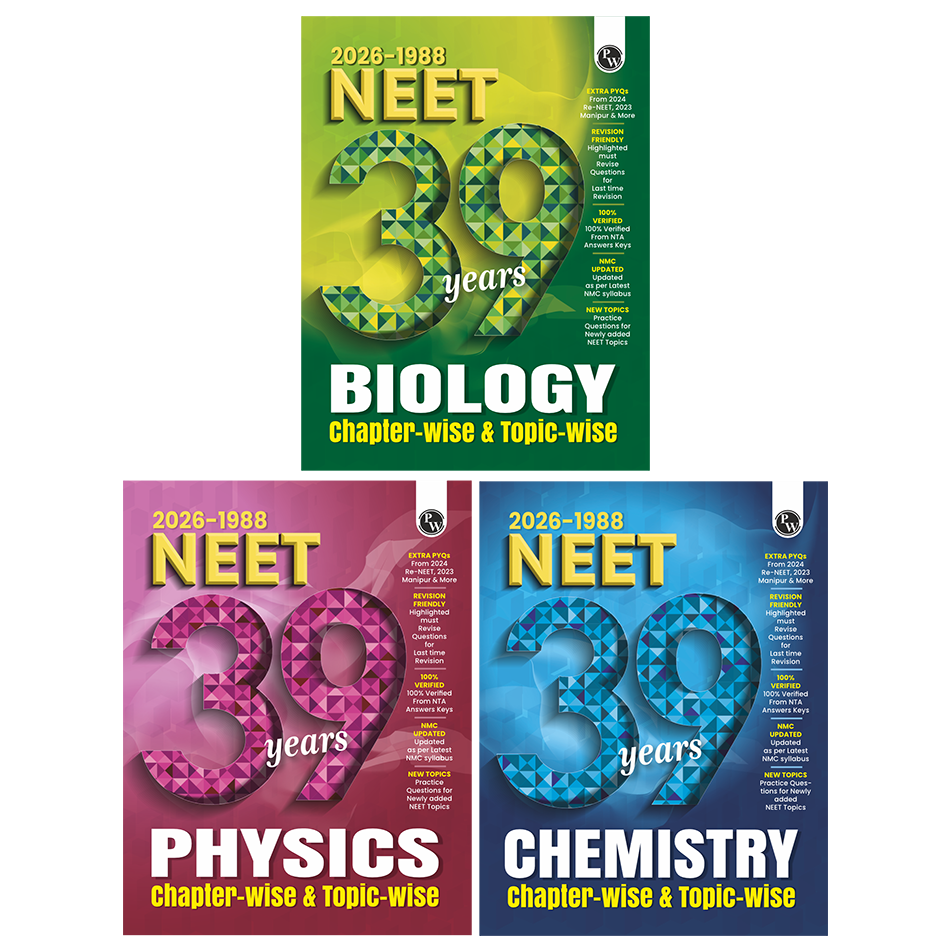
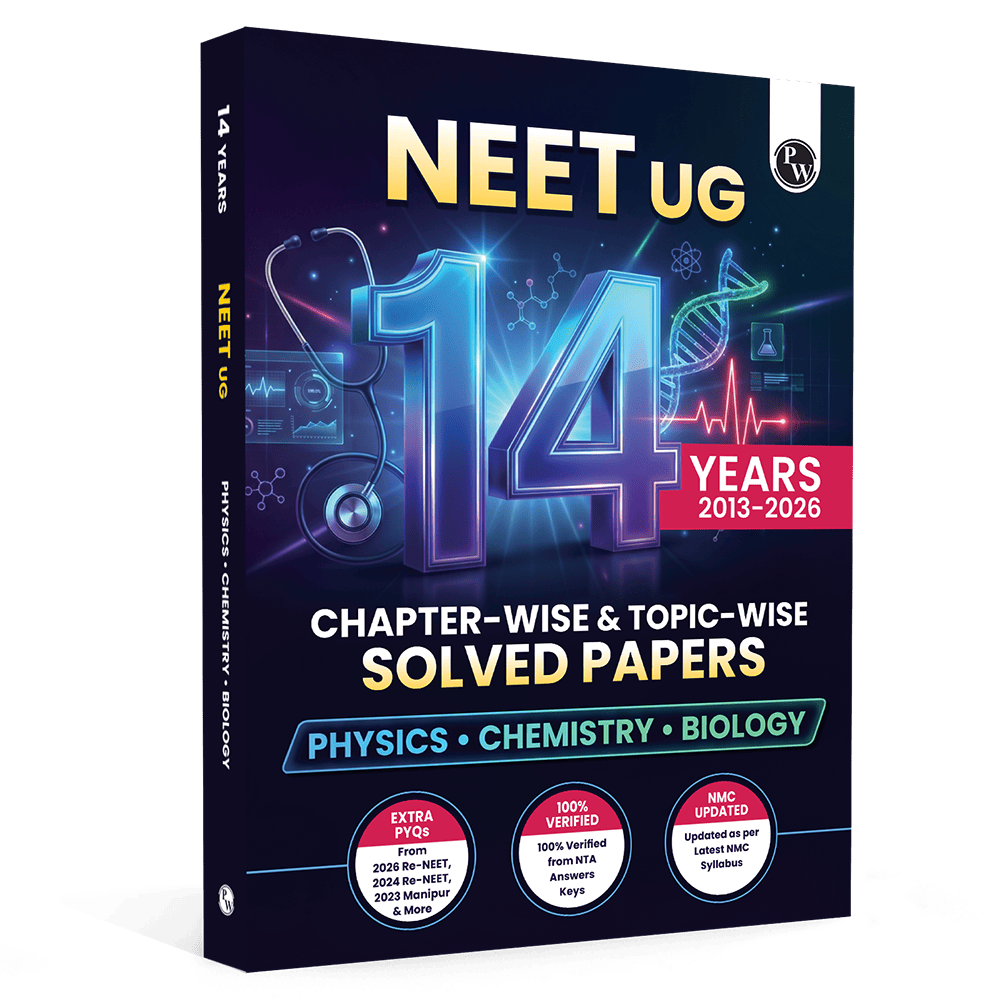
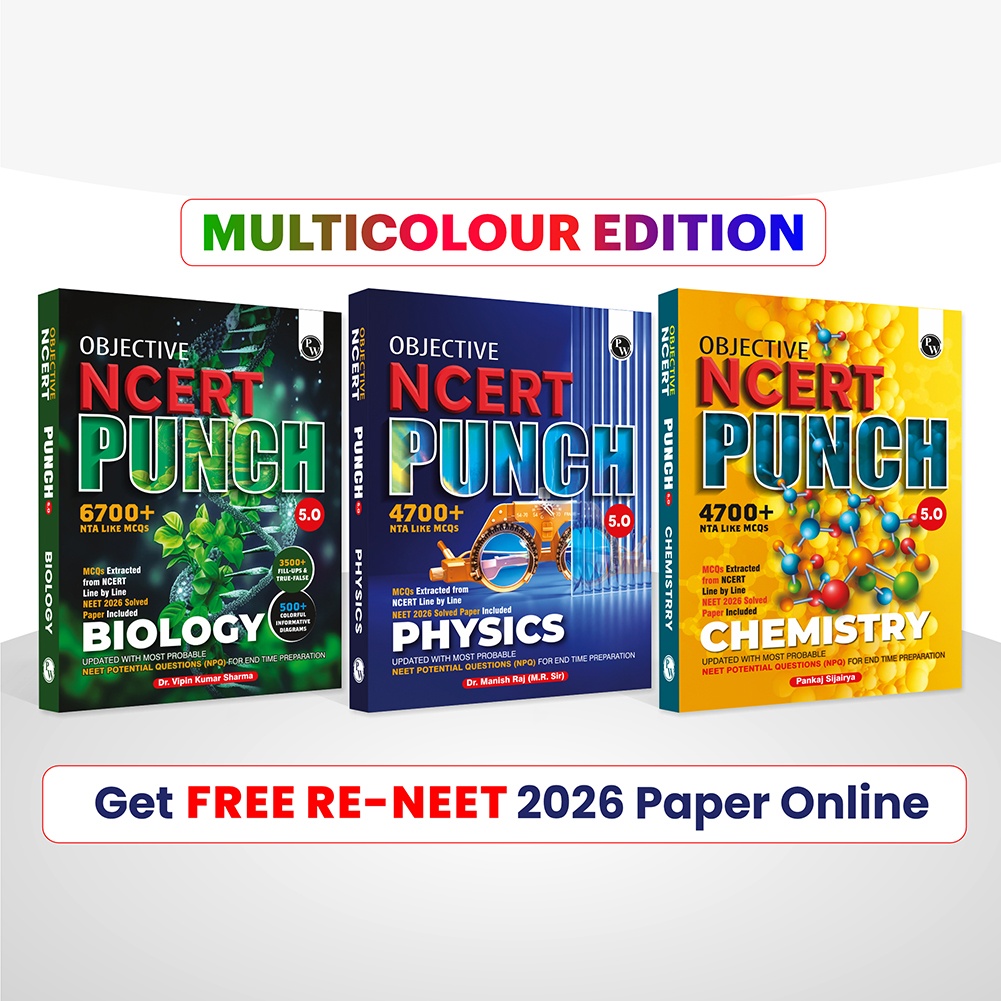
Achieving top marks requires combining strong subject knowledge with smart exam techniques. Using targeted PW NEET Physics practice resources along with NEET Books can help strengthen concepts, practise important question types, improve problem-solving speed, and develop efficient exam-oriented preparation habits.
-
Read Questions Carefully: Standard questions often contain subtle details regarding units, such as converting electron-volts to Joules. Always check unit specifications before running calculations.
-
Master Dimensional Analysis: Eliminate obviously incorrect multiple-choice options by checking dimensional consistency across given choices.
-
Memorize Standard Constants: Keep values for Planck's constant, speed of light, electron mass, and electronic charge handy to save valuable minutes during calculation steps.
-
Focus on High-Frequency Concepts: Prioritize topics that consistently appear in yearly papers, such as stopping potential graphs and logic gate combinations.
-
Review Solved Steps: Study standard step-by-step solutions to adopt quicker shortcut methods for lengthy numeric derivations.
Common Mistakes to Avoid While Using Modern Physics NEET PYQ
Even well-prepared candidates make avoidable errors during past paper practice. Identifying these common traps early helps protect precious marks during the final examination.
-
Neglecting Unit Conversions: Forgetting to convert Angstroms to metres or electron-volts to Joules frequently leads to incorrect choices in numerical questions.
-
Confusing Threshold Frequency with Work Function: Aspirants sometimes mix up threshold parameters in photoelectric equations, leading to incorrect kinetic energy formulas.
-
Skipping Explanations for Correct Guesses: Guessing an answer correctly during practice without reading the detailed step-by-step solution creates a false sense of security.
-
Ignoring Logic Gate Truth Tables: Treating logic gate problems casually leads to avoidable mistakes in basic Boolean algebra evaluations.
-
Overlooking Updated Syllabus Guidelines: Practicing outdated topics wastes energy; always ensure question sets follow current official NTA guidelines.
Read More: How to Start NEET Preparation After Class 10?
NEET PYQ FAQs
What makes modern physics NEET PYQ essential for preparation?
Practicing a modern physics NEET PYQ collection helps students understand real test trends, improve calculation accuracy, and save time by focusing on high-weightage topics.
How many questions should I practice daily from modern physics NEET?
Solving 30 to 40 past questions daily builds strong problem-solving speed and reinforces formula retention effectively over time.
Are past paper questions sufficient for physics PYQs NEET preparation?
Yes, past paper collections strictly follow NTA syllabus guidelines, offering comprehensive practice across recurring trends and core application concepts.
How do fully solved modern physics questions improve accuracy?
Detailed step-by-step solutions clarify fundamental concepts, highlight common calculation traps, and teach structured problem-solving approaches.
How does NEET physics revision help droppers improve scores?
Structured past paper practice helps droppers identify specific weak areas, track score improvements, and achieve smart, exam-focused revision.