How to Use NEET Revision Notes in the Final 30 Days Before the Exams

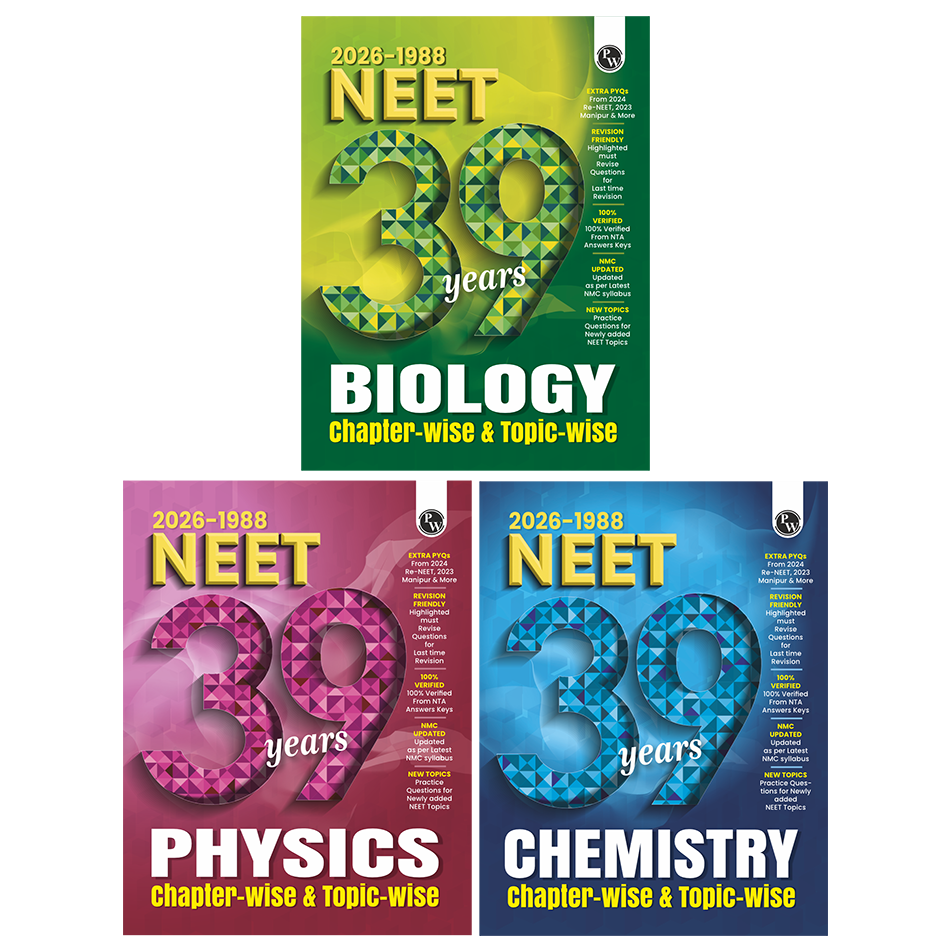
The final month before the NEET exam is the most critical period for any medical aspirant. Using NEET revision notes effectively is the difference between panic and confidence. These condensed resources help you recall vast amounts of information quickly, ensuring that high-yield topics remain fresh in your memory. Along with revision notes, NEET Books provide structured theory, important concepts, and additional practice material that strengthen overall preparation. This approach allows you to dedicate more time to practice and self-assessment, which are essential for securing a top rank in this highly competitive examination.
Importance of NEET Revision Notes for Last-Minute Prep
NEET notes are a filter that discards the unnecessary and retains only the key concepts, formulas and diagrams that are likely to appear in the exam. A significant portion of NEET questions, especially in Biology, are based on NCERT concepts and terminology. A revision book with these important lines and tables highlighted saves a lot of time. With these notes, you may review fast and complete chapter revisions more quickly than revisiting full textbooks. This efficiency is important when you have to juggle between numerous subjects and keep your mental energy up for daily mock tests.
-
Focus on High-Yield Content: Notes condense thousands of pages into high-impact facts.
-
Rapid Retrieval: They train your brain to access information faster, which is critical for the exam time limit.
-
Reduced Cognitive Load: By removing unnecessary details, your brain can focus on memorising the core syllabus.
How to Organize Your Schedule with NEET Revision Notes
The main thing in the last 30 days is consistency. Your NEET revision book should be the centre of your everyday routine. Consider it as your first aid to the ocean of syllabus.
Daily revision structure
-
Morning Sessions (Biology): Start your day by reviewing biology topics. Use your notes to recall key definitions, cycles, and diagrams.
-
Midday Practice (Chemistry): Dedicate the middle of the day to chemistry. Use your short notes for NEET to quickly glance at reaction mechanisms or periodic trends before solving numericals.
-
Afternoon Speed (Physics): Use your physics summary sheets to review formulas before jumping into timed practice sessions.
-
Evening Analysis: Review the mistakes from your mock tests and cross-reference them with your revision notes. This closes knowledge gaps instantly.
How to Learn High Weightage Topics using NEET Notes
Not all topics carry the same weightage. A quality short notes book for NEET allows you to perform a targeted review of the chapters that appear most frequently in previous year papers. Instead of reading every page, focus on the bolded sections, flowcharts, and highlighted formulas.
|
Subject |
Focus Area |
Resource Utility |
|
Biology |
NCERT Diagrams & Cycles |
Use notes for rapid memorisation of exceptions. |
|
Chemistry |
Name Reactions |
Use a NEET short notes book for quick mechanism recall. |
|
Physics |
Core Formulae |
Keep a cheat sheet of derivations and units. |
By focusing on these high-yield areas, you ensure that you are maximising your marks per minute of study time.
How to Use NEET Revision Notes for Effective Self-Assessment
Passive reading is the enemy of retention. Use your NEET revision notes as a trigger for active recall. After reviewing a topic, close the notes and try to explain the concept aloud or write down the key formulas on a blank sheet of paper. If you struggle to recall a specific detail, return to your notes and identify that precise weakness. This method transforms your revision into an interactive process.
Whenever you encounter a mistake in a practice paper, update your notes with a small annotation. This turns your study material into a living document that evolves based on your personal performance. This strategy ensures you never repeat the same mistake twice.
How to Maintain Focus with NEET Revision Notes
In the final 30 days, mental fatigue is common. The structure provided by revision notes helps you maintain a sense of direction. When you feel overwhelmed, pick one specific topic and finish its corresponding section in your notes. This provides a sense of accomplishment and prevents the chaos of jumping between random chapters. Keep your study space clear and treat your revision material with care, as these summaries will be your primary source of comfort and clarity leading up to the final day. Trust the preparation you have put in, rely on your structured notes, and stay consistent with your daily practice. Resources like the NEET PCB Med Easy Handwritten Notes Combo 2025 can further simplify revision by providing concise, easy-to-understand notes for all three NEET subjects.
Creating your own summary sheets
If your revision book has blank spaces, use them. Jot down:
- Frequently forgotten formulas.
- Specific page numbers from NCERT for difficult diagrams.
- Shortcut tricks learned during mock tests.
These personalised additions turn a generic book into a tailor-made roadmap for your exam success. Stay disciplined with your time, as the last month is not for learning new material, but for perfecting what you already know.
How to Choose the Right NEET Revision Notes for the Final 30 Days
The quality of your NEET revision notes can significantly influence your performance during the last month of preparation. Since time is limited, you need study material that helps you revise faster without compromising on important concepts. A well-structured revision book should provide concise explanations, formula sheets, NCERT highlights, and topic-wise summaries that can be completed in a short time.
When selecting short notes for NEET, focus on resources that prioritise exam-oriented content. The ideal notes should not overwhelm you with lengthy theory. Instead, they should present information as bullet points, flowcharts, diagrams, and quick-reference tables. This format improves retention and helps you revise multiple chapters in a single day.
Here are some features to look for in a good NEET short notes book:
-
NCERT-Focused Content: Since a large portion of NEET questions are based on NCERT, your notes should cover important NCERT lines, diagrams, and tables.
-
Formula and Reaction Sheets: Physics formulas and Chemistry reactions should be available in one place for quick revision.
-
Chapter-Wise Summaries: Every chapter should have a concise summary that highlights key concepts and frequently tested topics.
-
Visual Learning Elements: Flowcharts, mind maps, and diagrams help improve memory retention during last-minute revision.
-
Space for Personal Notes: The good revision resources allow students to add their own observations, shortcuts, and error corrections from mock tests.
A dedicated NEET revision book also reduces the time spent searching through multiple notebooks and textbooks. Instead of juggling different resources, you can rely on one structured source for daily revision. This not only saves time but also improves confidence as exam day approaches.
Many toppers recommend limiting study resources in the final month and repeatedly revising the same revision notes for NEET. Repetition strengthens memory and ensures that important concepts remain fresh. Rather than collecting new materials, focus on mastering the notes you already have and use them alongside mock tests and NEET Previous Year Papers for the good results. Regular practice with previous-year questions helps reinforce concepts, improve accuracy, and build familiarity with the actual exam pattern.
Read More: NEET Handwritten Revision Notes PDF with Solutions
NEET Revision Notes FAQs
1. How can I use NEET notes to improve my speed?
Use these notes to memorise formulas and key facts, reducing the time spent retrieving information during mock tests. This leaves more time for complex problem-solving.
2. Are NEET short notes sufficient for last-minute study?
It serves as a perfect companion to your core learning. Use it to quickly revise high-yield topics while focusing on practice papers to build exam stamina.
3. When should I stop learning new topics and focus only on a NEET revision book?
Shift entirely to your revision materials in the final 30 days. Learning new topics at this stage can create confusion; focus on perfecting your existing knowledge base.
4. How do revision notes for NEET help in reducing exam stress?
Having a clear, structured, and manageable set of notes eliminates the anxiety of flipping through heavy textbooks, providing a calm and systematic way to manage your final review.
5. Can I rely solely on a short notes book for NEET for NCERT coverage?
Yes, if the book is designed to cover NCERT concepts, it is an excellent tool for reinforcing the lines and tables most likely to be tested in the final examination.