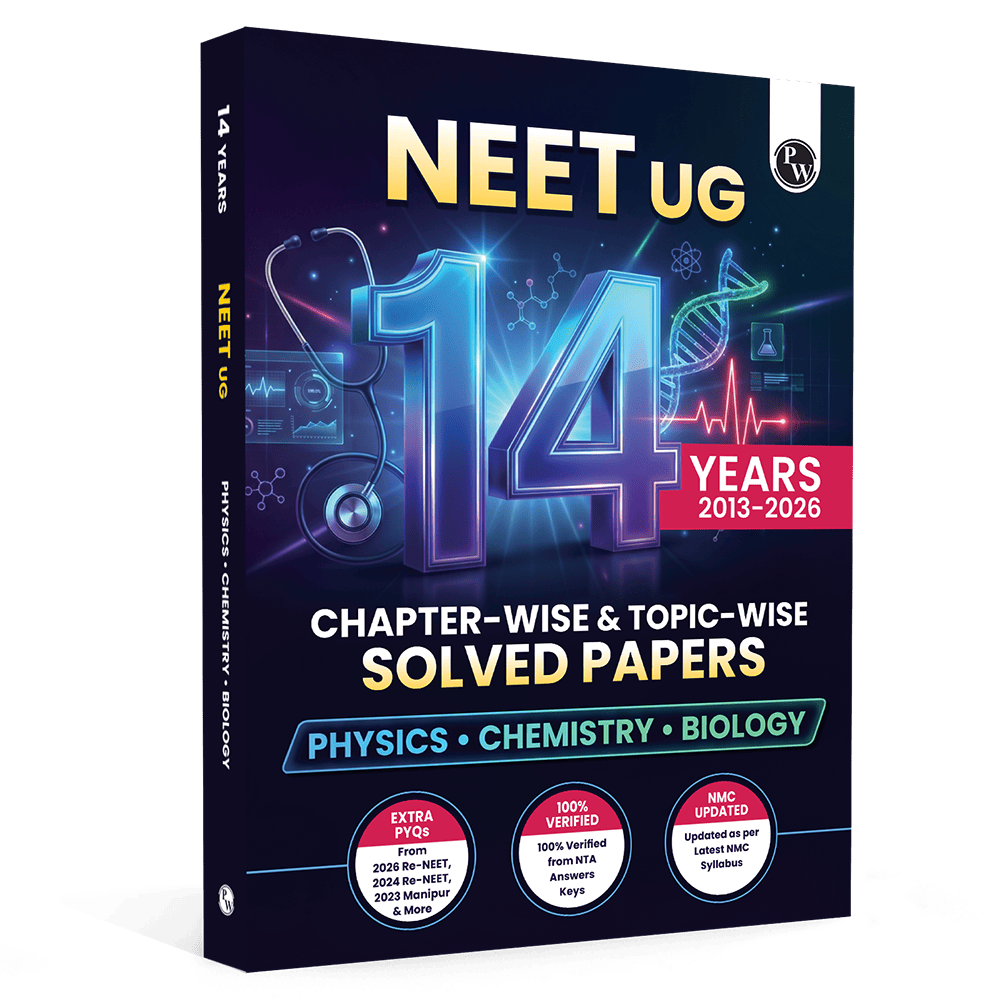
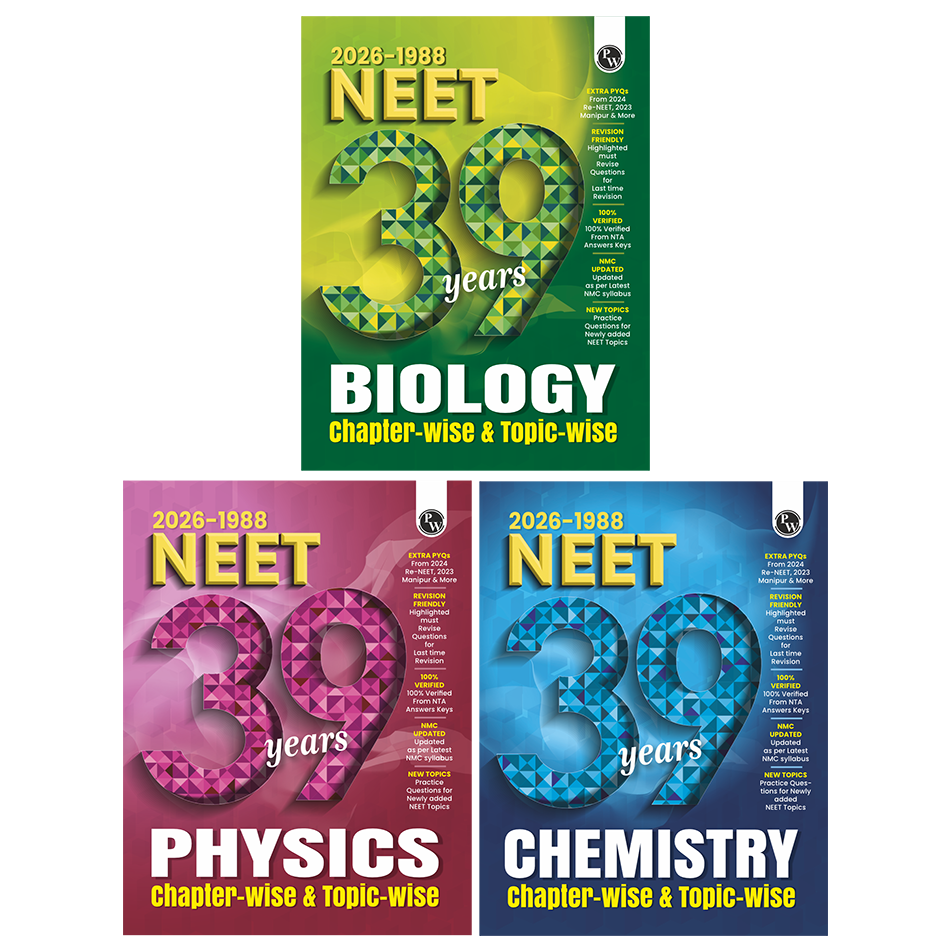
Who Should Use NEET 14 Years PYQ Book Alongside 39 Years Edition

If you focus only on older papers, you might miss how the exam has evolved recently. Conversely, looking only at recent years might leave gaps in your deep conceptual understanding. Balancing these two timelines is critical.
Using the 14-year book alongside the 39-year edition solves this dilemma, allowing you to catch modern patterns while maintaining a solid grasp of fundamental topics. This strategic combination transforms how you approach your NEET PYQ practice.
What is NEET PYQ?
A NEET PYQ consists of actual question papers from previous medical entrance examinations conducted over the last few decades. These questions serve as a foundational baseline for any medical aspirant aiming to secure a seat in top colleges.
They help you evaluate the difficulty level of the examination and assess how topics are distributed across Physics, Chemistry, and Biology.
Using a past-year question repository ensures that you are practicing authentic questions rather than simulated mock tests that might deviate from the actual syllabus. Using structured collections of previous papers allows you to practice authentic questions and understand how direct concepts are transformed into complex multiple-choice problems.
Features of NEET PYQ
To structure an effective study plan, understanding the design of your past yearbooks is essential. quality NEET previous year question books have distinct characteristics that make them essential NEET study resources.
-
Syllabus Alignment: These books closely track the guidelines set by the National Testing Agency (NTA).
-
Trend Tracking: They reveal key recurring themes, high-weightage chapters, and question sub-types.
-
Clarity Boost: They provide detailed explanations and solved answers to improve your conceptual clarity.
-
Time Management Tool: They help you measure your speed and accuracy under real exam-like conditions.
These tools save you time through focused preparation while covering both historical patterns and the latest syllabus changes. They also help you boost accuracy with fully solved, reliable answers.
Who Should Use the 14-Year NEET PYQ Alongside the 39-Year Edition?
Not every student approaches medical entrance prep with the same timeline or current score. Combining two distinct timeline variants of a NEET PYQ resource is an advanced strategy that benefits specific categories of learners.
1. Droppers Seeking Fast Score Upgrades
If you are a repeater who has already read the theoretical material once, you do not need to spend months re-reading textbooks. You need to identify your specific weak areas. Using a shorter 14-year book helps you quickly test recent paper frameworks, while the 39-year book helps you dive deep into chapters where you still make repetitive errors.
2. Class 12 Students Managing Board Exams
As a school-going student, your biggest challenge is managing time between school board preparations and medical entrance tests. The 14-year paper set serves as a streamlined option for your weekly tests, while the 39-year collection can be reserved for longer holidays or winter vacations when you have the time to study older topics in detail.
3. Aspirants Overwhelmed by Historic Questions
Some students experience anxiety when looking at questions from the 1980s or 1990s because the exam format, testing bodies, and difficulty levels were fundamentally different back then. If you feel lost studying outdated trends, using the 14-year variant keeps your primary attention on contemporary question styles, while the 39-year book remains an extra practice bank for tough chapters.
How do the 14-Year and 39-Year NEET PYQ Books Complement Each Other?
Using a 14 years vs 39 years NEET PYQ strategy creates an ideal balance between depth and relevance. The two timelines look at the syllabus through different lenses, offering a complete view of the exam.
|
Aspect |
14 Years Edition Focus |
39 Years Edition Focus |
|
Primary Goal |
Highlighting current trends and recent NTA patterns. |
Building a deep practice base across decades. |
|
Syllabus Fit |
Focuses heavily on the most recent, streamlined curriculum. |
Covers historical shifts and older conceptual variations. |
|
Ideal For |
High-speed simulation and fast timed revisions. |
Detailed topic-wise tracking and deep practice. |
How to Use NEET PYQ?
Simply buying the books will not improve your final score. You must follow a structured method to extract maximum value from your previous year questions.
-
Study the Chapter First: Never open your question bank before finishing your basic theory notes and NCERT paragraphs.
-
Segregate by Topic: Solve previous questions in a chapterwise practice manner rather than attempting full-length mixed papers too early.
-
Mark the Difficult Questions: Circle or star questions that you failed to solve on your first attempt so you can review them easily during revisions.
-
Analyze the Explanations: Even if your answer is correct, read the solution manual to see if there is a faster way to solve it.
When to Shift from the 39-Year Edition to the 14-Year NEET PYQ Edition?
Your preparation strategy should change as the final exam date approaches. Knowing when to change your focus between these two NEET preparation books can significantly impact your final score.
During the initial phase of your preparation, your focus should be on building deep conceptual understanding. This is when the 39-year book is most helpful, as it provides a large volume of questions for every single topic.
As the exam draws closer—typically in the final three to four months—you need to shift your focus to the 14-year book. At this stage, practicing questions from thirty years ago might take away time you should spend on modern NTA trends. The 14-year book acts as a focused revision tool that mirrors the exact difficulty and styling you will encounter on exam day.
Study Plan for Using NEET PYQ
To help you manage both NEET books effectively, here is a structured weekly study plan you can implement right away:
Day 1 to Day 3: The Deep-Dive Phase
Spend these days studying the theoretical aspects of a chapter. Once the theory is clear, open the 39-year book and solve all historical questions. This builds confidence and ensures that no hidden concept from the past decades is left unaddressed.
Day 4 to Day 5: The Speed Polish Phase
Open the 14-year book for the same chapter. Solve these highly relevant questions under a strict time limit using a stopwatch. This helps you adapt to modern exam trends and improves your problem-solving speed.
Day 6 and Day 7: Error Auditing
Go back through all the errors made during the week across both volumes. Note down your conceptual mistakes in a separate mistake notebook and re-solve those specific questions without looking at the answer keys.
Common Mistakes to Avoid While Using NEET PYQ
Using multiple books can sometimes lead to confusion if you do not follow a structured plan. Avoid these common pitfalls to get the best results from your resources:
-
Memorizing Solutions: Many students inadvertently memorize the answers to past questions after seeing them multiple times, which defeats the purpose of practice. Always focus on the underlying steps and logic.
-
Ignoring the Timer: Solving past papers without a time limit creates a false sense of security. Always practice with a stopwatch to simulate real exam pressure.
-
Skipping Tough Chapters: Students often repeatedly solve chapters they are already good at while avoiding their weaker topics. Focus more on your weak areas across both books.
-
Neglecting NCERT: Past-year books are meant to supplement your core textbooks, not replace them. Always keep your primary focus on understanding foundational concepts.
NEET PYQ FAQs
Which book version is better for an absolute beginner?
An absolute beginner should start with the comprehensive 39-year edition. It offers a larger question bank that is essential for building foundational concept clarity during the initial phases of your preparation.
Why should I look at a 14-year-old paper book if I have a longer version?
The 14-year book helps you focus on recent exam trends and question patterns introduced by the NTA. It provides a more accurate view of the modern difficulty level and serves as a streamlined tool for fast revisions.
Is it necessary to practice questions that are more than thirty years old?
While the exact format has changed, the underlying science remains the same. Practicing older questions from a 39-year edition ensures you have covered all conceptual variations, protecting you against unexpected or unusual questions on exam day.