Why NEET Toppers Prefer Batch-Specific Modules Over Market Books

Many medical aspirants struggle to choose between batch-specific NEET modules and standard market books, leading to scattered preparation. Successful candidates consistently prefer targeted NEET study modules because they provide a highly structured, syllabus-aligned framework that standard NEET preparation books cannot match.
Importance of NEET Modules
The depth of question practice determines an aspirant's speed and accuracy on exam day. General reference books often contain outdated questions or problems that match engineering patterns rather than medical entrance trends.
Dedicated NEET study material fixes this issue by categorizing questions based on the exact mental skills needed.
|
Feature Type |
Batch-Specific Modules |
General Market Books |
|
Syllabus Focus |
Strictly aligned with the latest NCERT updates |
Often contains legacy, outdated topics |
|
Question Mapping |
Divided by sub-topics and exact difficulty levels |
General chapter-wise mix |
|
Visual Tools |
Built-in mind maps, memory tricks, and flowcharts |
Text-heavy with minimal summary tools |
|
Additional Support |
Integrated video solutions and doubt portals |
Static text with no external digital help |
Topic-Wise Organisation
Navigating massive chapters can be overwhelming during revision phases. Quality modules solve this by segmenting chapters into smaller, manageable topics. This structure helps students instantly identify and fix their conceptual weaknesses without the need to re-read an entire chapter.
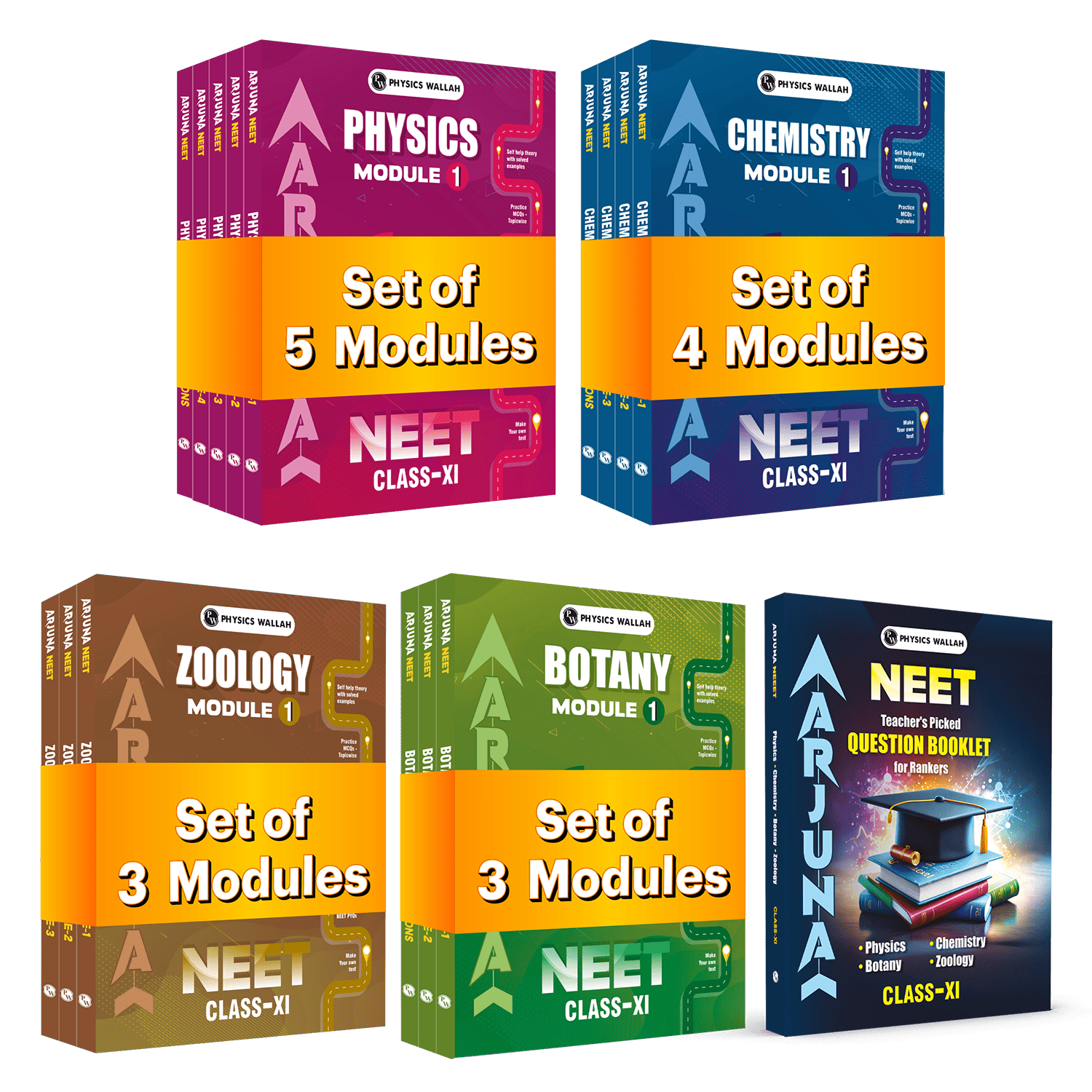
A well-structured example is the PW Arjuna for NEET Class 11 Modules, which provides topic-wise organisation, concept clarity, and exam-focused practice to help students strengthen their fundamentals and revise efficiently.
Advanced Question Categories
The top ranks are decided by the toughest questions in the paper. Specialized modules include unique sections, and these exercises push students beyond basic memory recall and train them in critical thinking.
Features of NEET Modules
Good NEET study modules are designed to help students understand concepts, practice effectively, and revise efficiently. Some key features include:
-
Year-wise and Topic-wise Analysis: Helps students understand NEET exam trends, identify important chapters, and focus on high-weightage topics through previous year question analysis.
-
Complete Theory Coverage: Provides clear and easy-to-understand explanations for Physics, Chemistry, Botany, and Zoology concepts to build a strong foundation.
-
Self-Assessment Questions: Includes practice questions after each topic to help students evaluate their understanding before moving ahead.
-
Solved Examples: Demonstrates the correct approach to solving NEET-level questions and improves problem-solving skills.
-
Concept-Based Questions: Encourages deeper understanding by testing the application of concepts across different scenarios.
-
Topic-Wise Practice Sets: Offers chapter-wise and topic-wise questions that help reinforce learning and improve accuracy.
-
Advanced-Level Questions: Challenges students with higher-difficulty problems that strengthen analytical and critical-thinking skills.
-
Multi-Concept Questions: Combines multiple concepts within a single question to improve application-based learning and exam readiness.
-
Latest NEET Question Formats: Includes question types such as Match the Column, Statement-Based Questions, and Assertion-Reason Questions aligned with recent exam patterns.
-
Previous Year Questions (PYQs): Provides access to NEET PYQ to help students understand exam trends, difficulty levels, and frequently tested concepts.
-
Detailed Solutions: Offers step-by-step explanations that help students learn the correct approach and understand their mistakes more effectively.
Difference Between NEET Modules and Market Books
Standard textbooks try to cater to multiple exams simultaneously, which often dilutes their focus. In contrast, batch-specific NEET study modules are designed with a singular focus on the National Eligibility cum Entrance Test. This exact alignment helps students save hundreds of hours that would otherwise be wasted on irrelevant topics.
-
Syllabus Streamlining: These modules filter out extra information, focusing exclusively on the official curriculum.
-
Targeted Learning: The content is divided to match daily lectures, ensuring that self-study complements classroom learning.
-
Resource Optimization: Instead of carrying multiple reference books, students get physics, chemistry, and biology combined in a cohesive set.
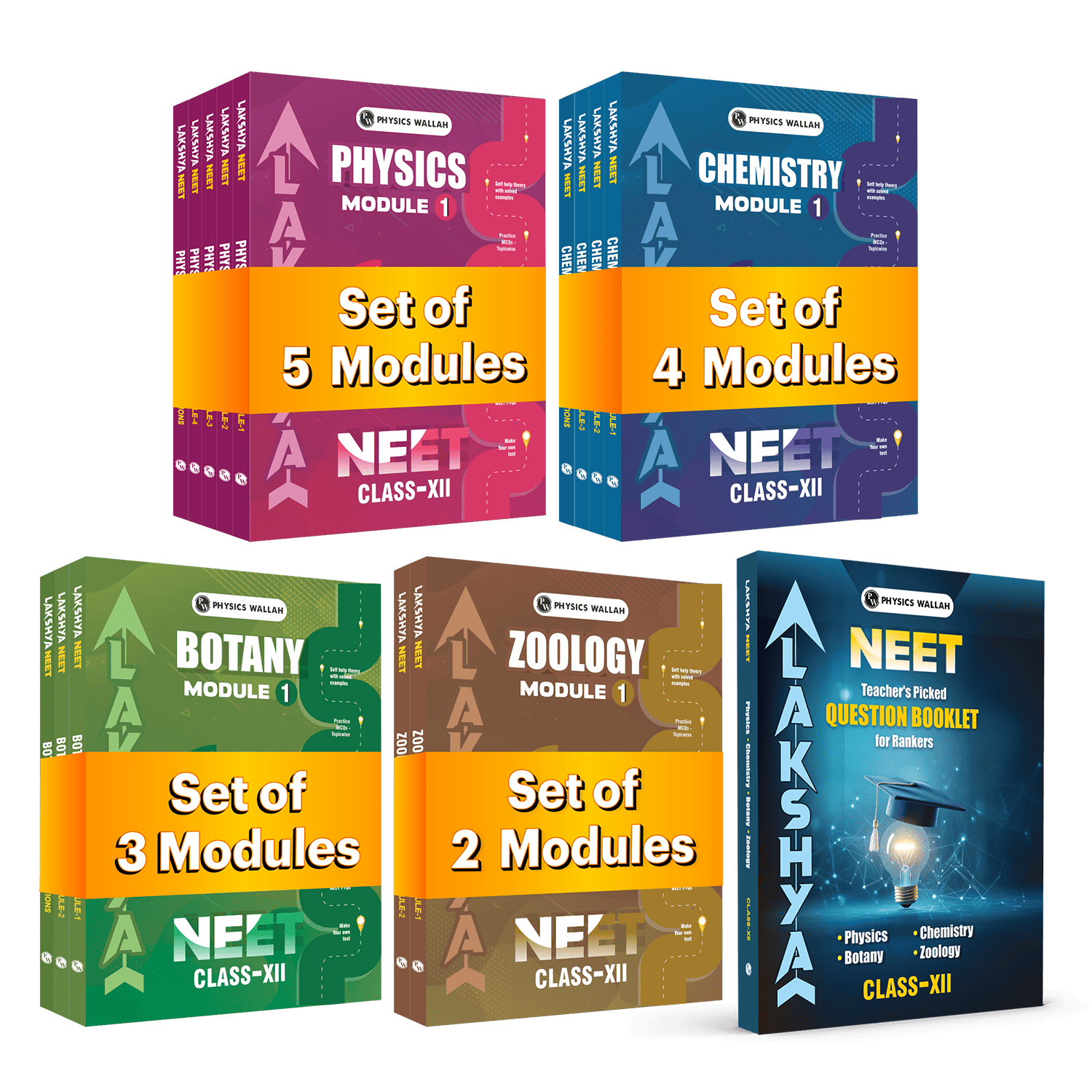
A strong example of this approach is the Lakshya NEET Class 12 Modules Combo 2026, which offers structured theory, practice questions, and exam-oriented material designed to align perfectly with NEET preparation needs, helping students study in a more focused and efficient way.
How to Use NEET Modules in Class 11?
Starting preparation early provides a massive advantage, but only if the foundational year is managed correctly. Utilizing NEET study modules for class 11 effectively requires a systematic approach that balances school theory with objective practice.
-
Read NCERT First: Always complete the basic textbook chapter before opening your advanced modules.
-
Maintain Active Notes: Highlight the special tips, memory maps, and formulas provided inside the modules for quick access.
-
Mark Challenging Questions: Circle difficult problems during your first attempt so you can revisit them before mock exams.
-
Review Detailed Solutions: Never skip the explanation section, even if your answer was correct, to check for faster methods.
How Do NEET Modules Improve Concept Clarity?
Clear concept delivery is the foundation of a high score in the medical entrance exam. Standard market books often present long, dense paragraphs that complicate basic ideas. Specialist NEET modules break down complex scientific mechanisms into digestible, clear portions.
-
NCERT Alignment: The core theories are deeply rooted in the NCERT text, which forms the baseline of the entrance exam.
-
Visual Breakdown: Complex topics utilize extensive diagrams, flowcharts, and molecular structures to make visualization easy.
-
Graded Problem Sets: Questions progress from fundamental concepts to advanced applications, allowing gradual skill development.
Read More - Benefits of Solving PW NEET Modules for 2026 Exam
NEET Modules FAQ
What subjects are covered in standard NEET study modules?
Standard NEET study modules cover all the important subjects required for the NEET exam. These include Physics, Chemistry, and Biology. Biology is usually divided into Botany and Zoology to make learning easier and more organized.
Can a module for NEET be used as the main study resource?
Yes, a good module for NEET can be used as a primary study resource because it combines theory, solved examples, practice exercises, and previous year questions in one place. Many students prefer using modules because they are designed specifically for NEET preparation.
How often is the NEET study material updated?
Quality NEET study material is updated regularly to match the latest NEET syllabus, exam pattern, and question trends. Educational experts review the content and make changes whenever there are updates in the official curriculum.
What are the benefits of using NEET study modules for class 11?
Starting preparation with NEET modules class 11 gives students enough time to build strong fundamentals in Physics, Chemistry, and Biology. Early preparation helps students understand concepts deeply instead of rushing through topics later.
Do NEET study modules include previous year questions?
Yes, most NEET study modules include chapter-wise and topic-wise previous year questions. These questions help students understand the actual exam pattern, difficulty level, and frequently asked concepts.
How are NEET study modules different from books for NEET preparation?
One major difference is that NEET study modules are created specifically for the NEET exam, while many books for NEET preparation are designed for multiple competitive exams.
Are NEET study modules useful for revision before the exam?
Yes, NEET study modules are very helpful during revision because they contain short notes, formula sheets, important points, and topic-wise practice questions. Since the content is already organized, students can revise quickly without going through large textbooks again.