How to Prepare Chemistry for NEET-Olympiad Exams?
Getting ready for both medical entrance exams and science Olympiads takes careful planning, especially for NEET Olympiad Class 11 Chemistry. Many students find it hard to balance the deep understanding needed for Olympiads with the speed and accuracy required for NEET.
This article will guide you on how to master the syllabus, pick the best study materials, and manage your time so you can do well in both exams.
Check Out: Olympiad Books
Syllabus for NEET Olympiad Class 11 Chemistry
The first step in your journey is to align the syllabi of both exams. While NEET focuses heavily on the NCERT curriculum, Olympiads often push the boundaries, exploring more complex applications of those same concepts. Mastering Class 11 Chemistry for the Olympiad involves identifying the common ground between these two prestigious examinations.
Class 11 Chemistry serves as the foundation for both organic and inorganic topics. Make sure you fully understand the basics, such as the mole concept, atomic structure, and chemical bonding. These ideas are key to solving advanced problems.
-
Atomic Structure: Focus on quantum numbers and electronic configurations.
-
Chemical Bonding: Understand molecular orbital theory and VSEPR theory deeply.
-
Equilibrium: Master both ionic and chemical equilibrium calculations.
-
Hydrocarbons: Focus on mechanisms rather than just memorising reactions.
Important Topics of NEET Olympiad Chemistry
While the entire syllabus is relevant, certain important topics in Olympiad chemistry carry more weight and require extra attention. These topics often involve intricate calculations or complex spatial visualisations.
-
Thermodynamics: Focus on enthalpy, entropy, and Gibbs free energy.
-
General Organic Chemistry (GOC): This is the heart of organic chemistry; understand inductive, resonance, and hyperconjugation effects.
-
Redox Reactions: Master the ion-electron method and oxidation number method for balancing equations.
-
S-Block and P-Block Elements: Focus on trends in the periodic table and anomalous properties of the first elements in each group.
Check Out: Class 11th Olympiads
How to Prepare for NEET Olympiad Chemistry
Doing well in these exams is not only about working hard, but also about working smart. For NEET Olympiad Chemistry Preparation, studying regularly is better than just having long study sessions once in a while. Focus on solving problems that make you think, not just ones that test your memory.
Begin by studying the NCERT textbook carefully. After you understand the basics, try solving more advanced problems. Olympiad questions often combine several ideas, so practice with questions that cover more than one concept at a time.
-
Daily Practice: Solve at least 40–50 MCQs every day to maintain speed.
-
Concept Mapping: Create flowcharts for reaction mechanisms in organic chemistry.
-
Mock Tests: Take timed tests once a week to simulate exam pressure.
-
Revision: Set aside the last two hours of your day specifically for revising what you learned.
NEET Chemistry Olympiad Books and Resources
The quality of your study material directly impacts your results. Relying on too many sources can lead to confusion. It is better to master a few quality NEET Chemistry Olympiad books than to skim through many.
|
Resource Type |
Recommended Material |
Purpose |
|
Core Textbook |
NCERT Class 11 & 12 |
Building basic concepts and NEET foundation. |
|
Practice Modules |
Olympiad-NEET Excellence Series |
Solving level-wise problems for both exams. |
|
Reference Book |
P. Bahadur or O.P. Tandon |
Deep dive into Physical and Organic Chemistry. |
|
Previous Papers |
Last 10-15 Years' Questions |
Understanding the exam pattern and difficulty. |
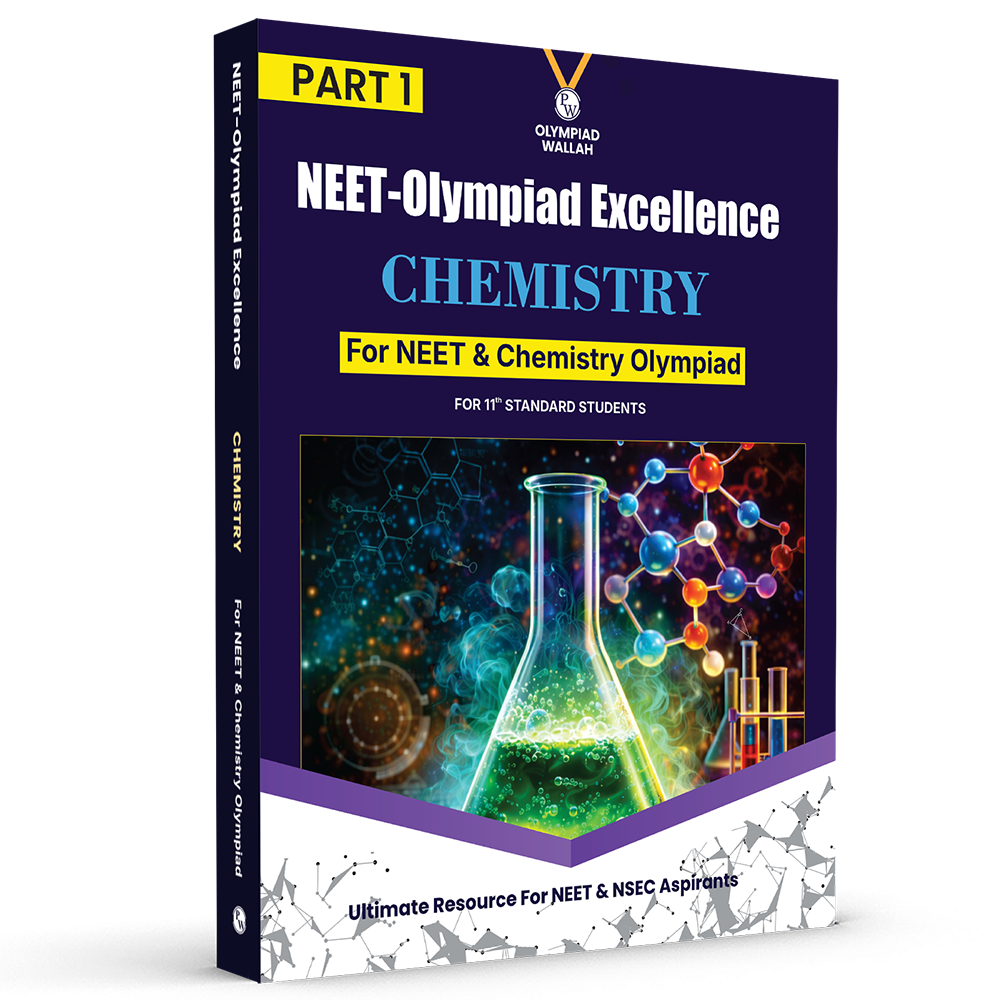
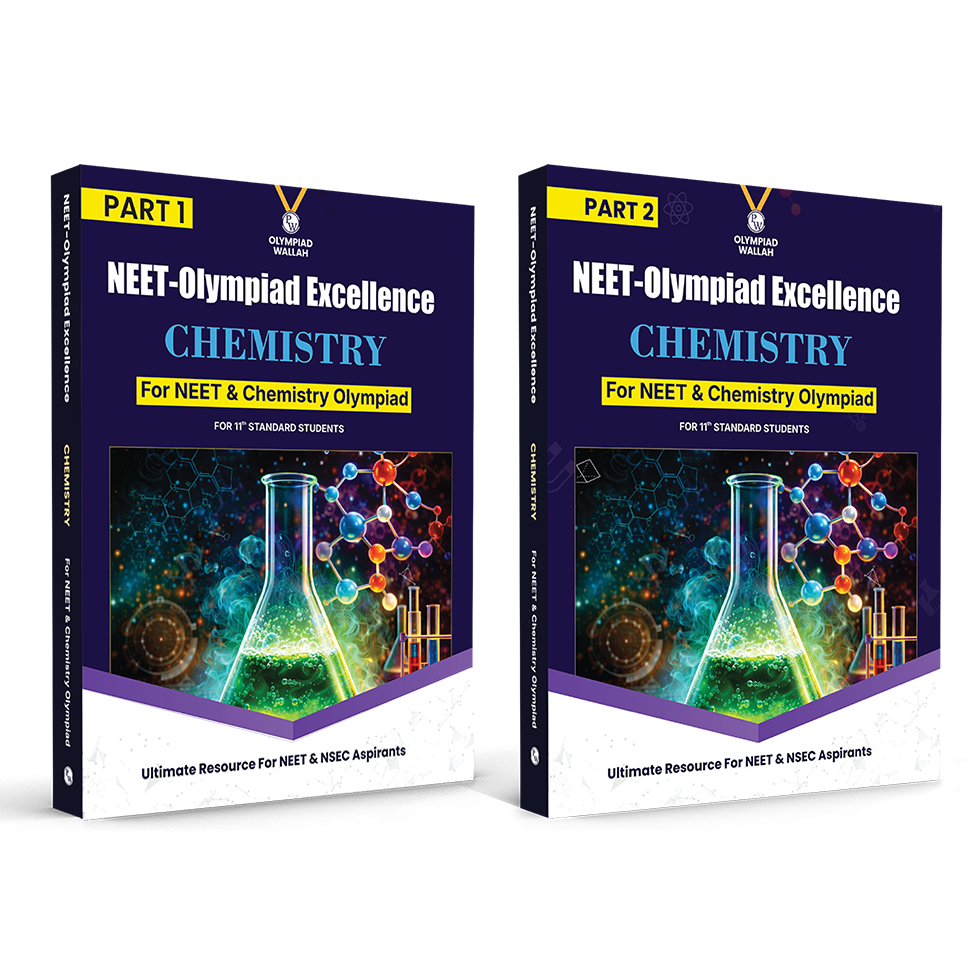
Using the Olympiad-NEET Excellence 11th Part 1 Chem is highly effective as it is designed specifically for this dual preparation. It bridges the gap between standard school learning and competitive excellence.
Importance of Chemistry Olympiad Previous Year Questions
One of the most effective ways to gauge your readiness is by working through the chemistry olympiad previous year questions. This practice helps you understand the "language" of the exam and the specific ways examiners twist simple concepts into challenging puzzles.
When solving these papers, do not just look for the correct answer. Instead, analyse why the other three options are incorrect. This habit builds a deeper understanding essential for both NEET and Olympiads.
-
Time Management: Use a stopwatch to see how long you take per question.
-
Error Analysis: Maintain a "Mistake Notebook" where you record every wrong answer and the correct logic behind it.
-
Pattern Recognition: Identify which chapters are frequently tested in the last five years.
Practising NEET Olympiad Chemistry MCQ
The format of both exams is primarily multiple-choice. However, a NEET Olympiad Chemistry MCQ can range from a straightforward factual question to a multi-step numerical. You need to develop different strategies for different types of questions.
For NEET, speed is your best friend. For Olympiads, patience and accuracy take priority. Practising a mix of these questions ensures you are ready for any difficulty level.
-
Elimination Method: Learn to discard obviously wrong options to increase your odds.
-
Substitution: In numerical questions, sometimes putting the options back into the formula saves time.
-
Visualisation: For stereochemistry questions, try to visualise the molecules in 3D.
Also Check, Class 12th Olympiad
Why Use Chemistry Olympiad Notes PDF for Revision
In the final weeks before your exam, you won't have time to read entire textbooks. This is where a high-quality chemistry olympiad notes PDF becomes invaluable. These notes should be concise and cover all essential formulas, named reactions, and exceptions.
It is recommended that you create your own short notes while studying. Handwritten notes are often easier for the brain to recall during the exam. Ensure your notes include:
-
Key Formulas: All physical chemistry formulas in one place.
-
Named Reactions: A list of organic reactions with their specific reagents.
-
Exceptions: The periodic table is a frequent target for MCQ questions.
-
Colours and Tests: Salt analysis and functional group tests for practical chemistry.
How to Manage School and NEET Chemistry Olympiad
Managing school exams alongside the NEET Olympiad class 11 chemistry can be stressful. The key is integration. When you study a chapter for school, dive deep enough to cover the competitive requirements at the same time. This prevents you from having to "re-learn" topics later.
Divide your day into blocks. Use the morning for high-energy tasks like solving difficult numericals and the evening for lighter tasks like reading Inorganic Chemistry.
-
School Hours: Focus on understanding the theory and definitions perfectly.
-
Self-Study: Use this time for advanced problem-solving and mock tests.
-
Weekends: Dedicate at least one full day to solving previous year papers.
Tips for Chemistry NEET Olympiad
Preparation is only half the battle; the other half is your performance on the day. Staying calm and maintaining a clear head is vital for exams as demanding as the Olympiad and NEET.
-
Read Carefully: Many marks are lost because students misread "is" as "is not" in the question.
-
Start Strong: Begin with the section you are most confident in to build momentum.
-
Manage Time: If a question takes more than two minutes, mark it and move on. Come back to it at the end.
-
Stay Hydrated: Physical comfort is often overlooked, but it affects your concentration levels.
Read More: How to Prepare for NSEC Exam?
Chemistry NEET Olympiad Book FAQs
What is the best way to start preparing for the NEET Olympiad in chemistry?
The best way to start is to master the NCERT Class 11 textbooks, then move on to specialised modules like the Olympiad-NEET Excellence series to practice advanced problems.
Are the NCERT books enough for the NEET Olympiad Class 11 Chemistry?
NCERT is sufficient for the foundation of NEET, but for Olympiads, you need additional reference materials to understand complex applications and higher-level concepts.
Where can I find previous-year chemistry olympiad questions?
Previous-year questions can be found in dedicated preparation books and on official competition websites. Solving these is crucial for understanding the exam's difficulty level.
What are the most important topics for the Chemistry Olympiad?
Important topics include Chemical Bonding, Thermodynamics, Equilibrium, and General Organic Chemistry. These form the basis for most advanced questions.
How should I use the chemistry olympiad notes PDF for revision?
Use these notes for quick daily revision of formulas and named reactions. They are most effective when used alongside regular problem-solving practice.