How 21 Previous Year Papers Help in RRB NTPC Exam Preparation
With millions of candidates vying for a limited number of vacancies, normal preparation often leaves aspirants struggling with speed and accuracy on the day of the examination. A lot of people share the same frustration of not being able to finish the paper within the strict 90 minutes.
A genuine RRB NTPC previous year paper collection assists candidates in moving from rote learning to active, exam-oriented practice. This approach reveals recurring trends, identifies the examiner's main preferences, and develops tactical pacing to achieve top marks.
Check out: PW RRB Books
Importance of Solving RRB NTPC Previous Year Papers
One major pitfall is to follow only standard theory guides without evaluating authentic papers. A structured format of past papers gives you an exact blueprint of what you will be facing in the testing hall.
In railway exams, the format of questions changes from one recruitment to another, but the subjects on which questions are asked remain almost the same.
If you do past assignments, you can plot these patterns straight out. Instead of guessing which parts are important, you can see exactly how questions are framed in the Mathematics, Reasoning and General Awareness sections.
The first Computer-Based Test gives you precisely 90 minutes to answer 100 tough questions. Less than a minute per problem. Solving a real RRB NTPC previous year paper on a regular basis trains your brain to process data quickly, do calculations at a faster pace and avoid complicated time-trap questions that can affect your final score.
Main Topics Covered in the RRB NTPC Previous Year Papers
So, a one-stop prep source, the PYQ book, helps you save time by incorporating detailed topic theories and dynamic practice elements into your daily routine. This integration of the structure guarantees that your conceptual learning directly reinforces your test-taking skills.
By looking at a complete set of questions asked in past exams, one can see exactly how the railway board builds its evaluation metrics:
-
General Knowledge: This huge section accounts for 40 questions in the initial stage. The past papers indicate that the board lays considerable stress on current government schemes, basic general science, Indian history, and static geographical places.
-
Mathematics: This section comprises 30 questions and is all about speed in operation. The old materials depend heavily on numerical relationships, percentages, profit and loss, interest calculations, and data interpretation charts.
-
General Intelligence and Reasoning. This section has 30 questions of logical processing. Historical papers always emphasise puzzle arrangements, coding patterns, syllogisms, and sequence completions.
Benefits of Using RRB NTPC Previous Year Papers
As the competition gets tougher, updating your library with a modern RRB NTPC Previous Year Papers ensures your training stays aligned with the latest testing updates. This mix of structured study material and genuine historical sets offers a distinct tactical edge.
|
Preparation Parameter |
Standard Textbook Prep |
Past Paper Integrated Prep |
|
Time Management |
Teaches formulas without time constraints |
Forces completion within the strict 90-minute limit |
|
Trend Tracking |
Outlines general academic topics |
Highlights high-yield, frequently repeated concepts |
|
Negative Marking Control |
Encourages theoretical guesswork |
Promotes calculated decision-making to save marks |
|
Syllabus Coverage |
Covers extensive theoretical details |
Focuses practice on core topics tested by the board |
Study Strategy for Using RRB NTPC Previous Year Questions
Just going through the solved answers won't give the best results. To derive maximum value out of your RRB NTPC previous year questions, you must adopt a disciplined, simulation-based training routine.
1. Create Real Exam Conditions
Sit in a quiet room, eliminate all distractions, and set a strict 90-minute timer. Do not refer to answer keys or theoretical notes during the test. Simulating the computer-based test environment builds the mental stamina needed to deal with intense exam pressure without panic.
2. Do a Deep Analytical Review
When your timer runs out, calculate your raw score, applying the standard negative marking rule of subtracting one-third of a mark for each incorrect answer. Then spend an hour reviewing every mistake. Work out whether your mistakes were due to a fundamental misunderstanding of the idea or just simple arithmetic errors.
3. Target effort at common failure points
Let your diagnostic results guide your revision plan. If you are consistently losing marks in certain areas, e.g. compound interest or logical arrangements, then go back and review those areas in your theory books. Fix those specific issues before you try your next mock set.
Tips for Using RRB NTPC Previous Year Papers Effectively
Simply solving old papers is not enough. The real benefit comes from using them strategically to improve speed, accuracy, and exam temperament.
-
Follow the latest exam pattern: Use recent papers to understand current question trends and section-wise weightage.
-
Maintain an error notebook: Record formulas, concepts, and question types that frequently cause mistakes.
-
Track sectional performance: Analyse how much time you spend on Mathematics, General Awareness, and Reasoning separately.
-
Review every solution carefully: Even correct answers can reveal faster methods and shortcut techniques.
-
Increase difficulty gradually: Start with chapter-wise questions and then move to full-length RRB previous year papers for complete exam simulation.
Mistakes to Avoid While Solving RRB NTPC Previous Year Papers
Many candidates solve dozens of papers but fail to improve because they repeat the same preparation mistakes. Avoiding these errors can significantly improve your final score.
-
Ignoring detailed analysis: Merely checking scores without understanding mistakes limits improvement.
-
Solving papers without time limits: Untimed practice does not prepare you for the pressure of the actual examination.
-
Focusing only on strong subjects: Neglecting weaker sections creates score imbalances and reduces overall performance.
-
Guessing excessively: The 1/3 negative marking can quickly reduce your score if random attempts become a habit.
-
Skipping recent papers: Older papers are useful, but recent shifts provide better insights into current exam trends.
-
Not revising mistakes: Repeating the same errors across multiple papers indicates a lack of corrective revision.
Read More: Is RRB NTPC Hard to Crack?
RRB NTPC previous year paper FAQs
Q1. How many times should I solve the RRB NTPC previous year paper before the exam?
Try to solve the complete set of papers at least twice. The first pass helps you to identify structural trends and personal weak spots, and the second pass ensures that your processing speed and accuracy have improved.
Q2. Can I prepare for both CBT 1 & CBT 2 with one RRB NTPC all in one book?
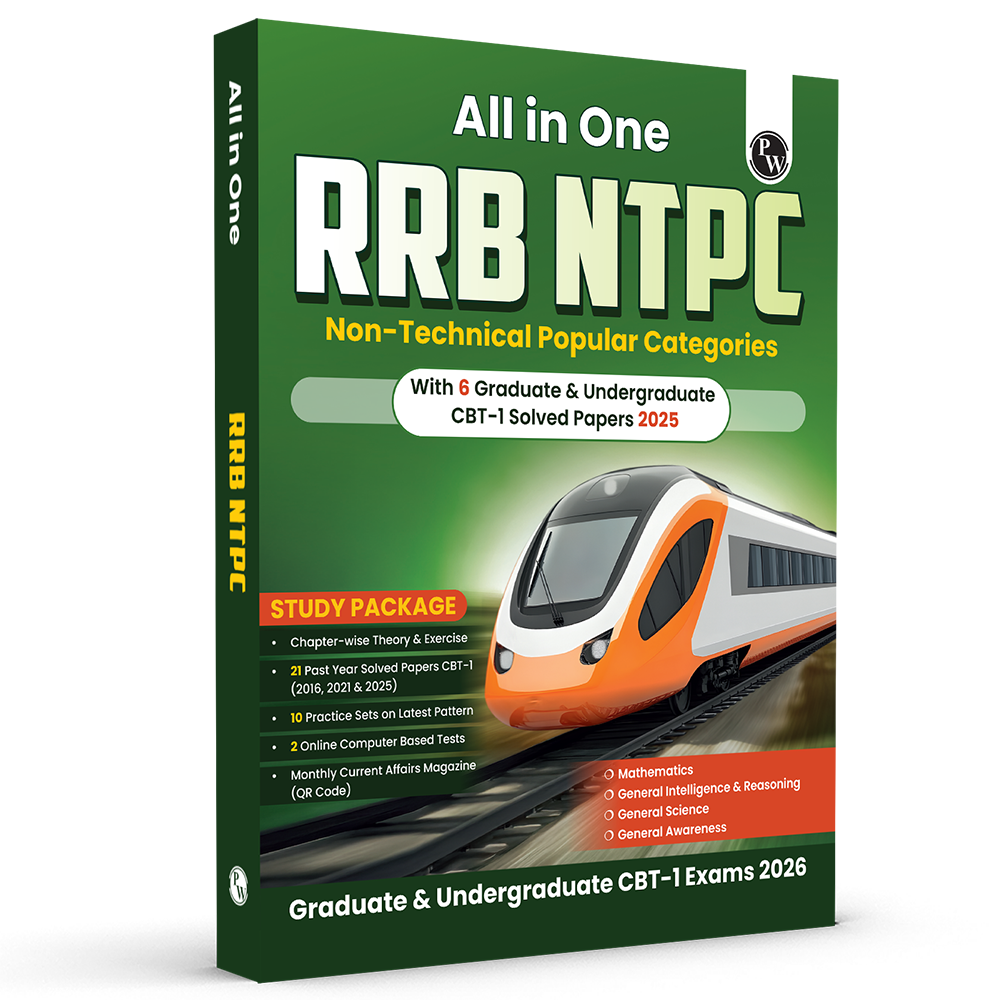
Yes, there is a complete all-in-one edition that covers the basic theory, short calculation tricks and past questions needed for both stages. The second tier is more difficult, so you need to adjust your pace and study level accordingly.
Q3. Why should I buy a specific RRB NTPC book 2026 rather than investing in previous editions?
An updated edition means that your practice sets are in accordance with the latest changes by the board. It also incorporates recent changes in general awareness, so you don’t waste your time learning outdated policies or obsolete statistics.
Q4. How does tracking RRB NTPC previous year questions help to avoid negative marking?
Reading real papers teaches you how to identify high-risk questions and trap patterns. Understanding these tricky formats will help you make intelligent decisions about when to skip a problem, saving your hard-earned score from steep negative penalties.
Q5. Can a candidate at the intermediate level prepare with an RRB NTPC undergraduate book?
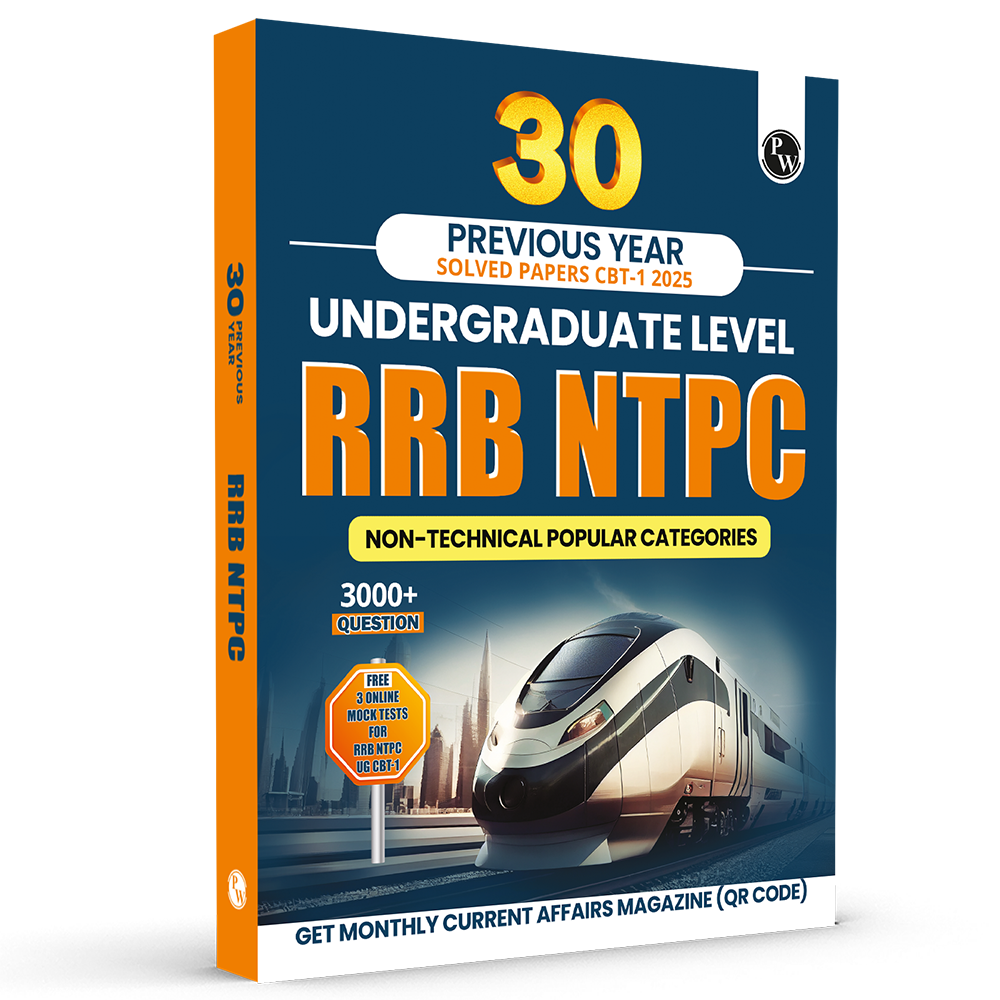
For sure. There is a particular undergraduate textbook that exactly covers the intermediate syllabus framework. This means your practice sessions are always highly relevant, and you don’t get bogged down with overly complex graduate-level puzzles.