Features of PW RRB English PYQ for Exam Preparation
Preparing for competitive exams organized by the Railway Recruitment Board requires a structured study routine, deep familiarity with the latest TCS testing patterns, and extensive problem-solving practice. Many candidates struggle to identify real exam trends, manage time effectively during Computer-Based Tests, and find reliable chapter-wise practice materials.
Solved exam papers offer clear direction by highlighting recurring question types across exams like RRB NTPC, Group D, ALP, and Technician. Utilizing a dedicated RRB PYQ compilation helps candidates bridge the gap between basic conceptual learning and high-speed exam performance.
Overview of RRB English PYQ
PYQ helps candidates prepare for Railway exams by providing practice based on previous exam questions and the latest TCS pattern. It helps aspirants understand common question types, important topics, difficulty levels, and exam trends. Regular practice with PYQ can improve speed, accuracy, and confidence. With chapter-wise questions, quick revision notes, mock tests, online CBT practice sets, and detailed exam analysis, candidates can revise important topics and prepare more effectively for exams such as RRB NTPC, Group D, ALP, and Technician.
Why Candidates Need RRB English PYQ Solutions?
Navigating Railway Recruitment Board examinations demands more than memorizing theoretical concepts. Candidates must learn to apply knowledge rapidly under strict time constraints. Practicing with authentic PYQ resources serves as a foundation for understanding exact question formats, difficulty trends, and scoring weightage.
TCS Exam Pattern
The shift toward Tata Consultancy Services conducting major railway examinations has standardized question structures across subjects. Engaging with railway English previous year questions allows candidates to familiarize themselves with the exact interface, question phrasing, and options style used in real test environments.
-
Trend Identification: Pinpoint recurring topics across NTPC, Group D, ALP, and Technician exams over recent years.
-
Question Variety: Experience multiple variations of questions covering core concepts and application-based queries.
-
Difficulty Mapping: Differentiate between basic memory-based questions and complex multi-step problems.
Speed and Accuracy
Speed and accuracy dictate selection in modern competitive exams. Candidates who rely solely on textbook theory often struggle to finish the complete paper within the allotted duration.
-
Elimination Techniques: Develop methods to rule out incorrect options quickly and reduce guessing errors.
-
Time Allocation: Learn how many seconds to devote to specific question types to prevent bottlenecks during the actual exam.
-
Confidence Generation: Familiarity with actual exam questions reduces test anxiety and minimizes simple mistakes.
Personal Strengths and Weaknesses
A primary benefit of systematic past paper practice is objective self-assessment. By solving questions topic by topic, aspirants can track accuracy rates and pinpoint areas needing further review.
-
Targeted Revision: Focus study time on high-weightage chapters where errors occur frequently.
-
Progress Tracking: Measure score improvements week after week through structured practice sessions.
-
Concept Refinement: Revisit fundamental concepts immediately after making mistakes during practice tests.
What are the Features of RRB English PYQ?
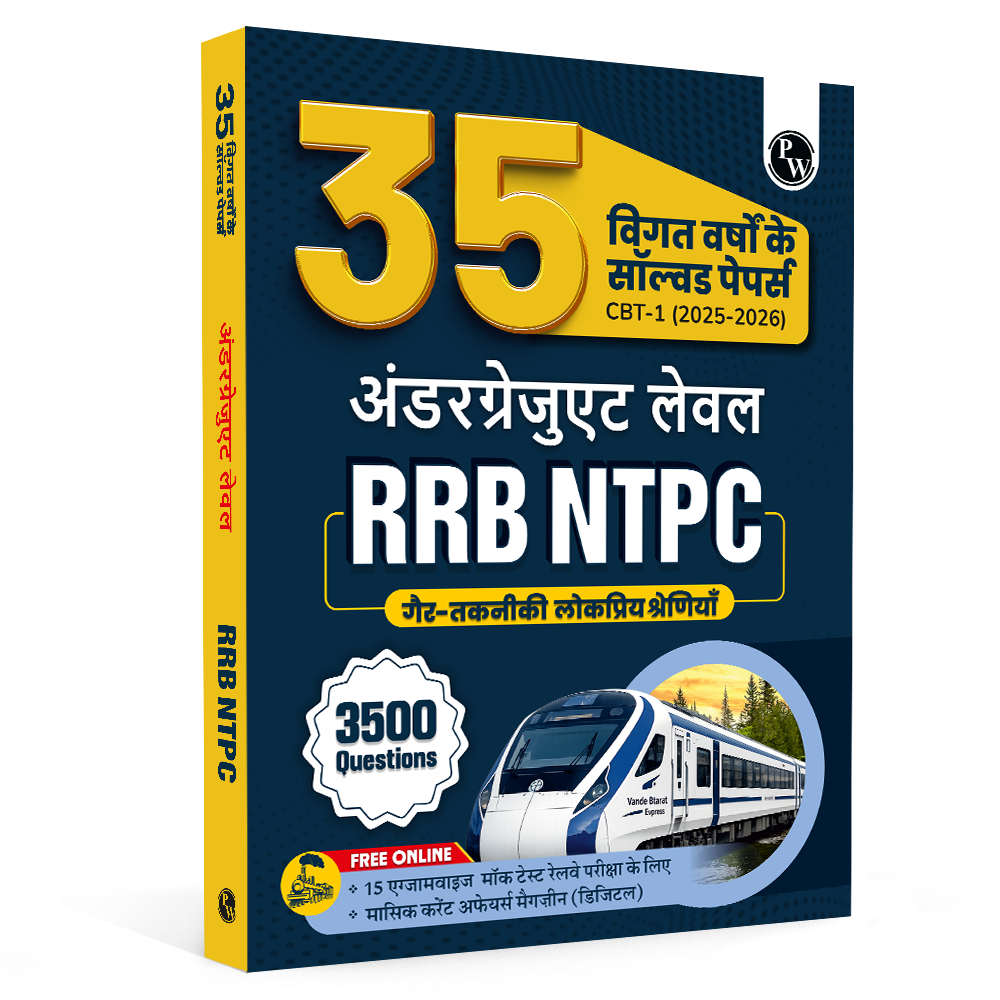
Build stronger Railway exam preparation with a practice-focused resource that combines TCS-style questions, revision support, mock tests, online practice, current affairs, and useful exam insights. The RRB books is designed to help you practise regularly and understand what to expect in the exam.
20,000+ TCS-Based MCQs: Get access to over 20,000 practice questions prepared in the TCS exam style. Questions from Mathematics, General Awareness, and Reasoning provide extensive practice across important Railway exam topics.
Quick Revision Notes: Refresh important topics with concise study points, formulas, shortcuts, and key facts. The notes are useful for revising large portions of the syllabus in less time, especially before the examination.
20 Sectional Mock Tests: Test individual subjects with 20 sectional mock tests. These tests allow you to find weak areas, measure your preparation, practise under time limits, and improve your question-solving approach.
20 Online CBT Practice Sets: Experience computer-based practice with 20 online CBT sets. Attempting these tests regularly can help you get comfortable with the online format while improving your speed, accuracy, and time control.
Monthly Current Affairs via QR Code: Access monthly updates through the QR code and prepare important General Awareness topics. The content includes major national and international events, government schemes, sports, awards, science and technology, and Railway-related updates.
Detailed Exam Analysis: Get useful insights into previous Railway exams through topic trends, question distribution, and difficulty-level information. Use this analysis to decide which subjects and topics need more attention during your preparation.
How to Use RRB English PYQ for Speed and Accuracy?
Mastering exam content is only half the battle; performing efficiently on a computer-based interface determines final results. Incorporating PYQ practice into daily routines transforms passive knowledge into active exam readiness.
Real CBT Environment Simulation
Railway exams are conducted via Computer-Based Tests, which demand digital literacy and comfort with onscreen navigation. Practicing with dedicated online tools builds this comfort early in preparation.
-
Interface Familiarity: Experience on-screen timer management, question flagging, and palette navigation.
-
Screen Endurance: Build focus and reduce eye strain when attempting long tests digitally.
-
Simulated Stress: Replicate actual test pressure to build emotional resilience and composure under timed conditions.
Time Management Strategies
A common challenge faced by candidates is failing to attempt all questions within the official time limit. Utilizing structured railway English practice tools helps refine time distribution.
-
First-Pass Strategy: Answer quick, direct questions first before attempting time-consuming items.
-
Sectional Pacing: Learn to distribute time wisely across different sections without getting bogged down in difficult questions.
-
Skip Decisions: Practice making quick decisions on when to skip a question and move forward to maximize overall score.
Negative Marking
Railway examinations apply penalty marks for incorrect choices. Developing a disciplined approach to question selection minimizes unnecessary score deductions.
-
Calculated Risk: Distinguish between educated guesses based on elimination and blind guesses.
-
Accuracy Emphasis: Prioritize precision over raw attempt count to maintain high net scores.
-
Pattern Recognition: Recognize complex or ambiguous phrasing early to avoid falling into traps.
Benefits of RRB English PYQ Material
Revision is most effective when it is quick, focused, and backed by clear analytical feedback. Utilizing an all-in-one railway English book provides aspirants with built-in revision aids alongside practice sets.
Quick Revision Notes and Key Concepts
Long textbook chapters are impractical to read during final exam preparation. Concise summary notes allow candidates to review core rules, key concepts, and important formulas efficiently.
-
Summary Formulas: Instant access to essential mathematical and analytical formulas for quick memory checks.
-
Core Rule Overviews: High-yield conceptual summaries formatted for rapid reading and retention.
-
Last-Minute Refresher: Ideal study companion during the final week before the scheduled exam date.
Detailed Exam Analysis and Weightage Insights
Understanding topic weightage prevents candidates from spending disproportionate time on low-yield chapters. Comprehensive analysis tables reveal clear historical trends.
-
High-Yield Mapping: Identifies topics that consistently generate the highest number of questions.
-
Shift Trend Analysis: Reveals shifts in question difficulty and topic distribution across different exam cycles.
-
Resource Prioritization: Helps candidates allocate study hours efficiently based on historical topic importance.
Digital Current Affairs Integration
General Awareness sections require continuous updates on recent developments. Integrated digital access keeps study materials relevant without requiring extra physical books.
-
Monthly Coverage: Detailed updates on national events, international news, sports, awards, and government schemes.
-
Railway-Specific Updates: Dedicated coverage of recent developments, achievements, and policies within Indian Railways.
-
QR Access: Simple smartphone scanning provides instant access to updated digital monthly notes.
Smart Study Plan to Use RRB English PYQ
To extract maximum value from a RRB Game Changer PYQ book, candidates should follow a disciplined, structured study methodology rather than solving questions randomly.
Phase 1: Conceptual Foundation and Topic Practice
Begin preparation by covering fundamental theory for each syllabus unit before attempting past year questions.
-
Read standard theory notes to understand foundational concepts and definitions.
-
Solve topic-wise past year questions immediately after completing a chapter to reinforce understanding.
-
Highlight difficult questions during the first pass to create a personalized revision list.
Phase 2: Sectional Testing and Analysis
Once individual topics are covered, transition toward evaluating performance across full subject sections using dedicated RRB English preparation resources.
-
Attempt 20 Sectional Mock Tests under strict timed conditions without interruptions.
-
Review every test thoroughly, analyzing both incorrect responses and unattempted questions.
-
Maintain an error log notebook to record recurring mistakes, weak concepts, and tricky formulas.
Phase 3: Full-Length CBT Simulation and Final Revision
In the final weeks leading up to the examination, shift focus entirely toward full-length practice and quick conceptual revision.
-
Complete 20 Online CBT Practice Sets on a computer to refine digital exam navigation.
-
Use Quick Revision Notes daily to keep formulas, shortcuts, and core concepts fresh in memory.
-
Focus review sessions exclusively on flagged questions and error log entries to eliminate remaining weak spots.
Read More: Railway Jobs for 12th Pass
RRB English PYQ FAQs
What is the importance of solving PYQ for railway exams?
Solving a PYQ set helps candidates understand the latest TCS examination pattern, identify high-weightage topics, improve speed and accuracy, and gain familiarity with actual computer-based test formats.
How does the PW RRB English PYQ book help in exam preparation?
The pw RRB English PYQ publication offers over 20,000 TCS-pattern MCQs arranged chapter-wise and topic-wise, complete with step-by-step explanations, quick revision notes, sectional mock tests, online CBT practice sets, and detailed exam analysis.
Are past year questions sufficient for RRB English preparation?
While solving past papers is crucial for understanding exam trends and practicing application, pairing them with foundational concept review through structured RRB English preparation tools ensures complete readiness for new or modified question types.
Can I prepare for multiple railway exams using one Railway English book?
Yes, a comprehensive railway English book covers past questions and patterns common across major Railway Recruitment Board examinations, including RRB NTPC, RRB Group D, RRB ALP, and RRB Technician.
How many mock tests are included for Railway English practice?
The PW RRB English PYQ includes 20 Sectional Mock Tests along with 20 Online CBT Practice Sets, offering extensive railway English practice under realistic exam conditions.