How Mock Tests Help in RRB Maths Preparation
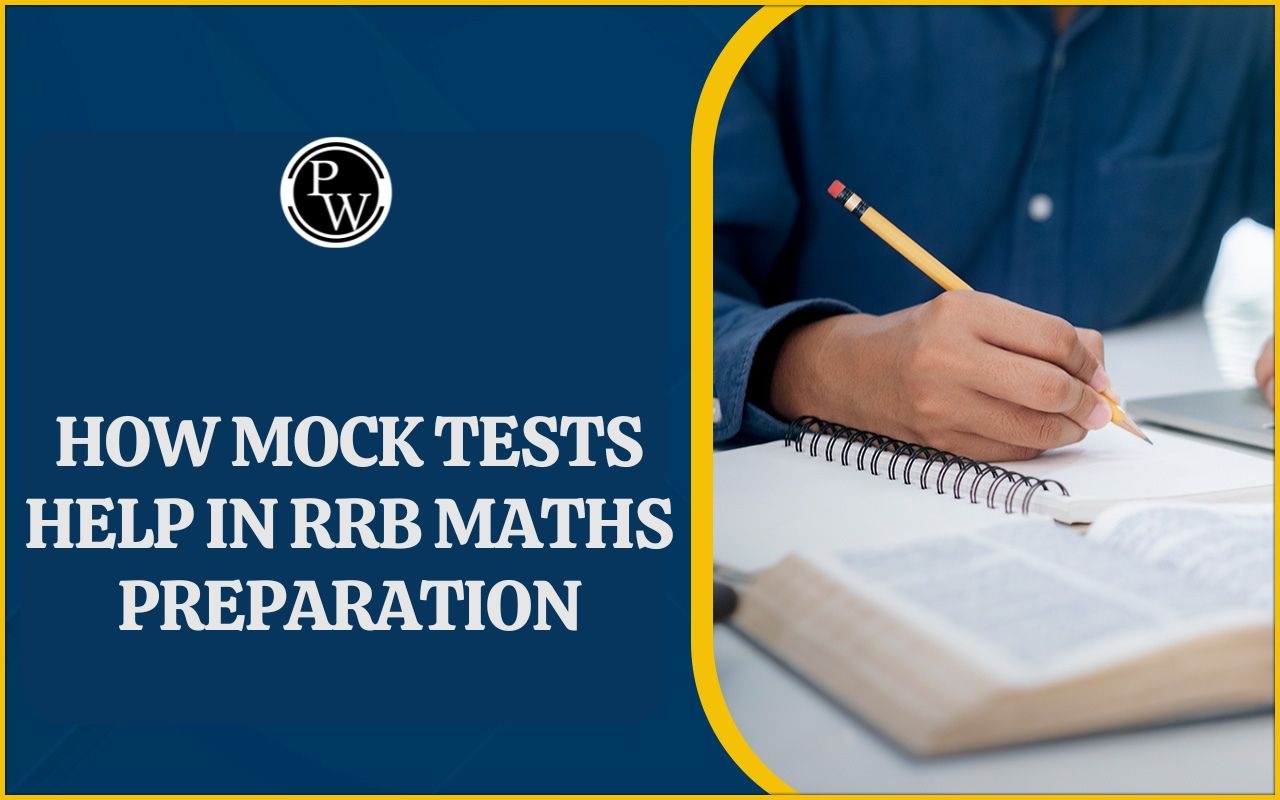
Mock tests are one of the best tools for exam success. They help students turn study knowledge into marks. For students doing RRB Maths preparation, mock tests improve speed, accuracy, and confidence.
They also help you understand the exam pattern and manage time better. Regular mock tests train your mind to solve questions faster. They also build focus and stamina for the real railway exam.
Check Out: RRB Books
Importance of Mock Tests in RRB Maths Preparation
The main purpose of mock tests in RRB Maths preparation is to make students ready for the real exam. Many students know concepts but fail because they cannot perform under time pressure. Mock tests solve this problem.
Railway exams usually ask arithmetic, calculation, and data-based questions in a fixed pattern. If you practice mocks often, you become familiar with this style. Then the actual exam feels easier.
-
Real-time Exam Experience: Mock tests give you the same pressure as the real exam. You sit for a fixed time and solve questions quickly. This reduces fear and stress on exam day.
-
Performance Tracking: Mock tests show where you stand. If your score is low in percentage or algebra, you know what topic needs more work.
-
Speed and Accuracy: In railway exams, only solving is not enough. You must solve fast and correctly. Mock tests train your brain to choose short methods.
-
Confidence Building: When your marks improve in mocks, confidence also improves. Confidence helps a lot in competitive exams.
-
Better Planning: Mocks help you know how much of the syllabus is done and how much is left. This makes your study plan smarter.
RRB Maths Preparation Study Plan
If you are new to preparation, do not start with hard full mock tests. It may reduce confidence. A good RRB Maths study plan for beginners with PW Railway Game Changer Maths should move step by step.
-
Foundation Building: Spend the first few weeks learning basic maths chapters. Start with the number system, percentage, ratio, average, fraction, LCM, HCF, and simplification. These topics are often asked.
-
Daily Practice: Solve 20 to 30 easy questions every day. Focus more on understanding than speed in the beginning.
-
Sectional Tests: After completing one topic, take a short test of 10 to 15 minutes. For example, after finishing the percentage, attempt a percentage quiz.
-
Full-Length Mocks: When 60% to 70% syllabus is complete, start one full mock test every week. Slowly increase to two or three tests weekly.
-
Revision Time: Keep one day every week only for revision. Revise formulas, tricks, and mistakes.
-
Analysis Phase: This is the most important part of how to prepare for the maths for the railway exam. After every test, check wrong answers, slow questions, and silly mistakes.
-
Build Confidence Slowly: Do not compare yourself with others in the beginning. Improve step by step.
RRB Maths Preparation Tips
Good marks need smart methods. These railway maths preparation tips and tricks can help you score better.
-
Learn Tables and Squares: Memorise tables up to 30, squares up to 50, and cubes up to 20. This saves a lot of calculation time.
-
Use Short Tricks: Learn shortcut methods for percentage, ratio, average, and simplification. They save precious seconds.
-
Option Elimination: Sometimes full solving is not needed. Look at options and remove the wrong ones first.
-
Formula Notebook: Keep a small notebook for formulas of mensuration, algebra, trigonometry, and geometry. Read it daily.
-
Time Rule: Do not spend more than 45 to 60 seconds on one question. If difficult, skip and return later.
-
Stay Calm: Panic creates mistakes. If one question is hard, move to the next.
-
Practice Mental Maths: Try small calculations in your mind without a pen. This improves speed.
-
Regular Revision: Without revision, formulas are forgotten. Revise every week.
Important Topics for RRB Maths Preparation
The syllabus is big, but some chapters are asked more often. During RRB Maths preparation, give extra time to these important topics.
Arithmetic:
This is the most important section. Topics include:
-
Number System
-
BODMAS
-
Decimals
-
Fractions
-
LCM and HCF
-
Ratio and Proportion
-
Percentage
-
Profit and Loss
-
Simple Interest
-
Compound Interest
-
Time and Work
-
Time, Speed and Distance
-
Average
Algebra and Geometry: Prepare basic identities, linear equations, lines, angles, triangles, circles, and quadrilaterals.
Mensuration: Learn formulas for area, perimeter, volume, cylinder, cone, cube, cuboid, and sphere.
Statistics: Questions on mean, median, and mode are common.
Data Interpretation: Bar graph, pie chart, line graph, and table questions may come in sets.
Simplification: Fast calculation-based questions are common in railway exams.
These RRB Maths important topics can give high marks if practised well.
Check Out: Railway Game Changer PYQ Combo Set of 3 Books
How to Analyse RRB Maths Mock Tests
Many students take mock tests but do not analyse them. This is a big mistake. Strong analysis is the heart of the RRB Maths preparation strategy 2026.
After every mock test, do these steps:
-
Check Wrong Answers: Find why the answer was wrong. Was it a formula mistake, calculation error, or misunderstanding?
-
Check Time Spent: If you solved correctly but took 3 minutes, then speed is weak.
-
Mark Easy Missed Questions: Sometimes, students miss easy questions due to haste. Fix this by staying calm.
-
Find Weak Topics: If profit and loss questions are wrong again and again, revise that chapter first.
-
Use Error Notebook: Write all mistakes in one notebook. Read it before the next mock.
-
Try Better Methods: Look at official or shortcut solutions. Learn faster methods.
Make Three Mistake Groups:
-
Silly Errors
-
Concept Errors
-
Time Pressure Errors
This method makes the RRB Maths preparation strategy 2026 more effective and result-oriented.
Study Plan for RRB Maths Preparation
Consistency is more important than motivation. Even 2 hours daily can give great results if done regularly.
For RRB Maths preparation, make a fixed timetable.
Daily Routine Example:
-
30 minutes of formula revision
-
1 hour topic practice
-
30 minutes of previous year's questions
-
30-minute speed quiz or mini mock
Weekly Routine Example:
-
5 days of topic study
-
1-day full mock test
-
1-day analysis and revision
Study at Exam Time: If your real exam may be in the morning shift, practice mocks in the morning. This trains your body and brain.
Increase Slowly: Start with 20 questions daily, then 50, then 100 mixed questions later.
Stay Healthy: Sleep well and eat light food. Good health improves concentration. Consistency turns average students into successful candidates.
RRB Maths Preparation with PYQs
RRB Previous Year Questions (PYQs) are very useful in Maths preparation. They show the real level of exam questions.
Many times, similar patterns repeat in railway exams. By solving PYQs, you learn:
-
Common topics are often asked
-
Easy and hard question levels
-
Best time-saving methods
-
Real exam language
Mix PYQs with mock tests. For example:
-
Monday to Friday: Topic practice
-
Saturday: PYQ practice
-
Sunday: Full mock test
Use papers from recent years, like 2022, 2024, and the latest available exams. This keeps preparation updated.
PYQs also help in how to prepare maths for railway exam because they remove confusion about what matters most.
Read More: Features of PW Railway Game Changer Book You Should Know
RRB Maths Preparation FAQs
How many mock tests should I take for RRB Maths preparation?
After finishing the basics, try 20 to 30 full mock tests. In the beginning, take 2 to 3 sectional tests weekly. This improves RRB Maths preparation step by step.
What is the best RRB Maths preparation strategy 2026 for working professionals?
Working people should study daily for 30 to 60 minutes and take full mocks on weekends. Use mobile apps during travel time. This is a practical RRB Maths preparation strategy for 2026.
Can a beginner clear the exam using an RRB Maths study plan for beginners?
Yes, absolutely. A proper RRB Maths study plan starts with the basics, then practice, then mocks. Many beginners clear exams through planned study.
What are the most frequent topics in RRB Maths preparation?
Profit and Loss, Percentage, Ratio, Time and Work, Interest, Simplification, and Mensuration are common. These are key RRB Maths important topics.
How to prepare for the maths for the railway exam if my basics are weak?
Start with Class 6 to 10 maths books or NCERT level basics. Learn tables, fractions, percentages, and ratios first. Then move to exam books and easy mocks. This is the best answer to how to prepare for the maths for the railway exam.
Are mock tests enough for selection?
Mock tests are very useful, but they should be combined with concept study, revision, and PYQs.
How often should I revise formulas?
Revise formulas daily for 10 to 15 minutes. Weekly revision is also important.
Can I improve speed in one month?
Yes, if you practice daily timed quizzes and mock tests, speed can improve a lot in one month.