RRB Group D Exam - How to Improve Accuracy in CBT
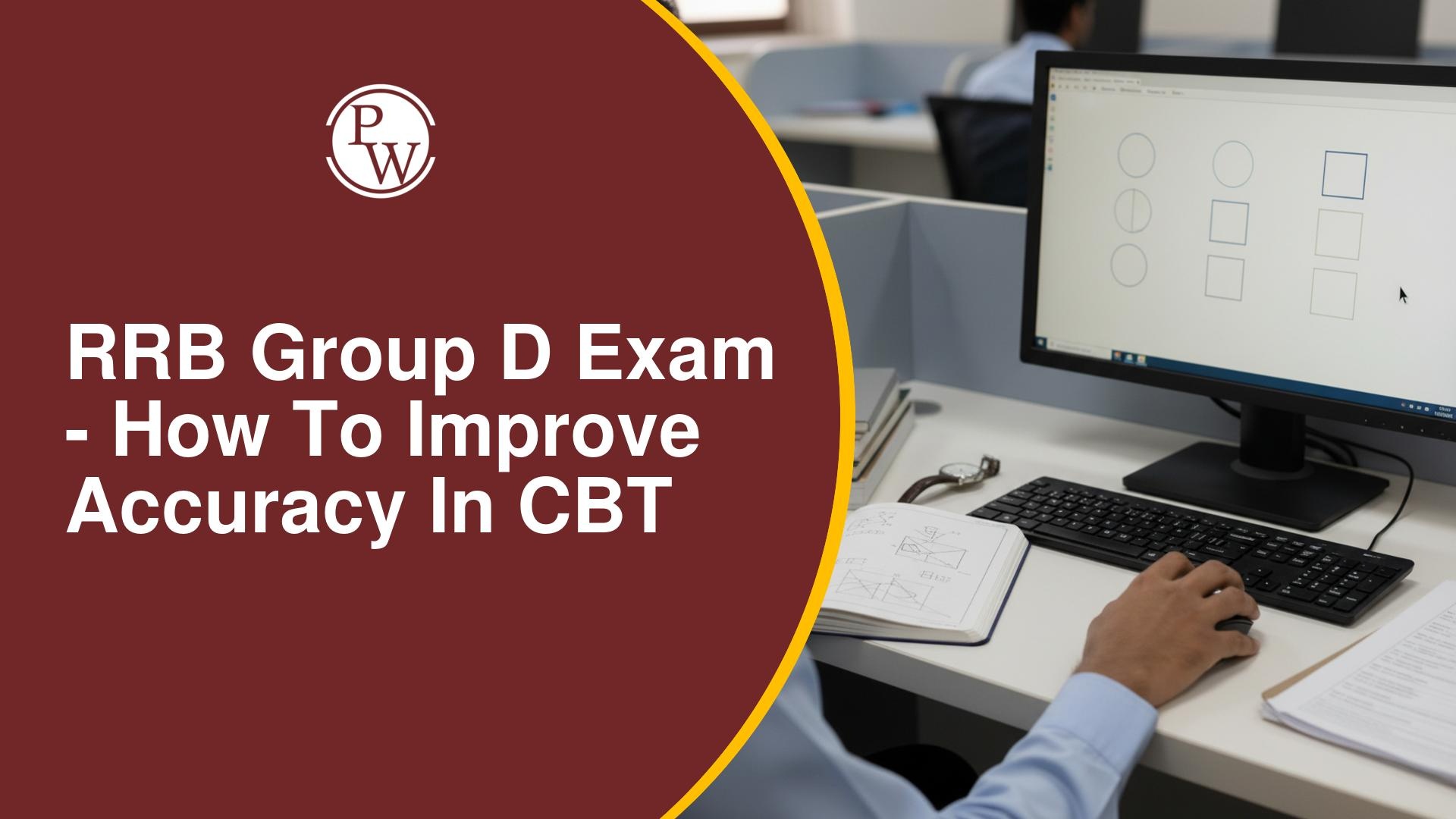
Preparing for the RRB Group D exam requires both speed and accuracy. Many candidates lose marks because of calculation mistakes, incorrect guesses, or spending too much time on difficult questions. A good study routine can help reduce these mistakes and improve overall performance. Accuracy does not improve by solving questions randomly.
Candidates need clear concepts, regular revision, timed practice, and proper analysis of mock tests. Choosing the right RRB Books can help candidates strengthen their concepts and practise important topics. A planned RRB Group D preparation strategy can help you understand which questions to attempt and which ones to leave.
Why is Accuracy Important in the RRB Group D Exam?
Accuracy is important because the final score depends on correct answers as well as incorrect answers. The RRB Group D examination has negative marking, so careless attempts can reduce your score.
Many candidates believe that attempting more questions will always lead to a better score. However, attempting questions without enough confidence can increase the number of wrong answers.
Good RRB group D CBT accuracy means knowing when to solve a question, when to review it, and when to move to the next one.
Keep these points in mind:
-
Read every question carefully before selecting an option.
-
Avoid guessing when you have no idea about the answer.
-
Check calculations whenever possible.
-
Do not spend too much time on one difficult question.
-
Review questions marked for later if time is available.
-
Learn from repeated mistakes during practice.
The aim should not be to attempt every question but to make your attempts as accurate as possible. Practising RRB Group D Level 1 Previous Years Solved Papers can help you understand question patterns, improve accuracy, and learn to manage time effectively.
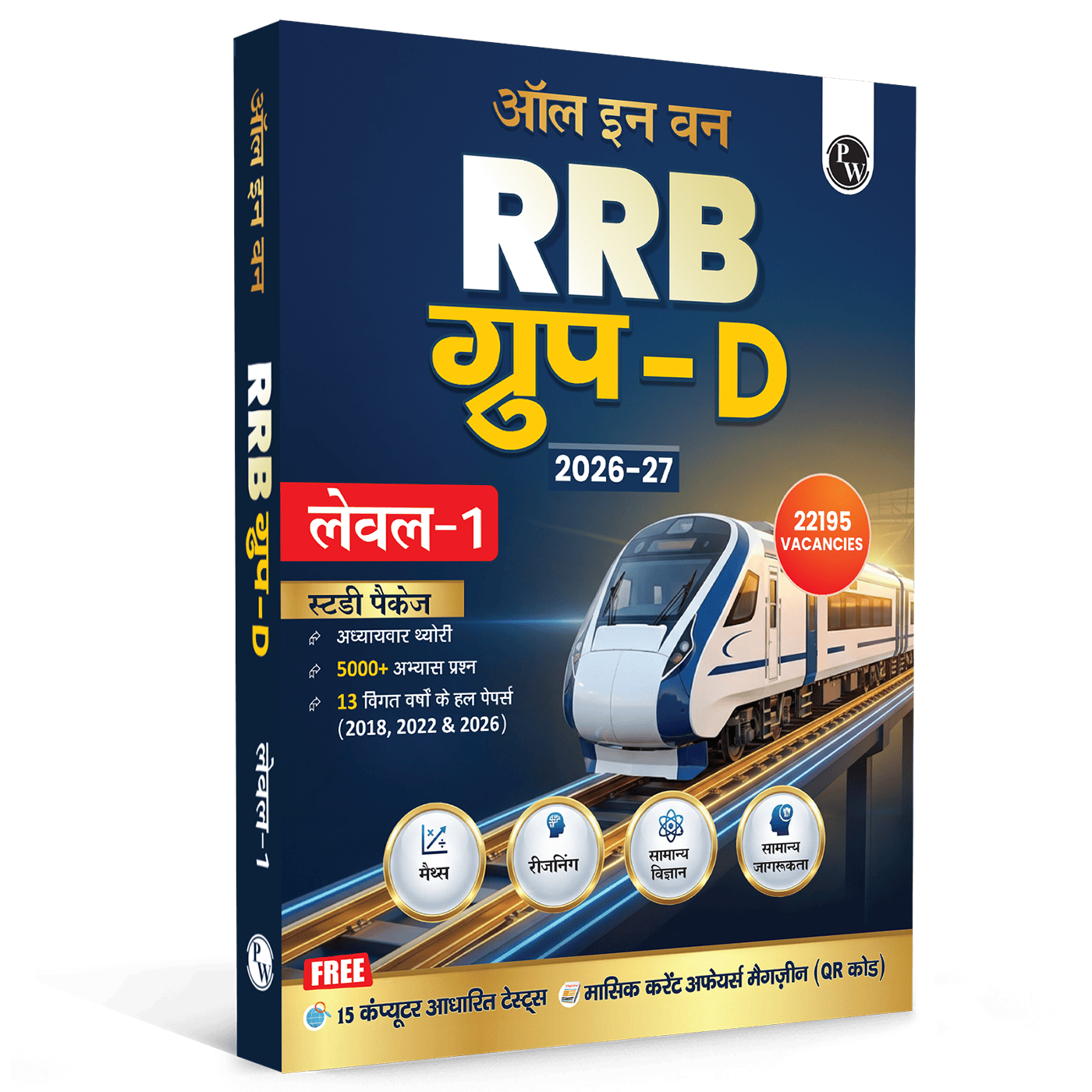
Features of RRB Group D Exam Preparation Book
A structured preparation book can bring learning and practice material together. The book includes resources for the main RRB Group D subjects and different stages of preparation.
-
Complete Subject Preparation: Cover Mathematics, General Intelligence & Reasoning, General Science, and General Awareness with chapter-wise theory, formulas, short tricks, and exam-focused concepts.
-
18 Solved Papers From 2018, 2022 & 2026: Practise RRB Group D Previous Year Question Papers to understand real question types and topics asked across different exam cycles.
-
18 Practice Sets Plus 15 Online CBTs: Use 10 practice sets in the book and take 15 full-length online Computer-Based Tests (CBTs) with score analysis.
-
Different Ways to Solve Questions: Learn detailed methods, shortcuts, and alternate approaches so you can select a suitable method during the exam.
-
5000+ Questions for Regular Practice: Practise questions from the complete RRB Group D syllabus and gradually work on different difficulty levels.
-
Monthly Current Affairs Through QR Code: Revise Current Affairs, General Knowledge, Government Schemes, National & International Events, Awards, Sports, Science & Technology, and Railway Updates.
Using these features regularly can help you move from basic learning to timed exam practice.
How to do RRB Group D Exam Preparation for Better Accuracy?
Strong accuracy starts with strong concepts. If the basic concept is unclear, shortcuts and repeated practice may not solve the problem.
A balanced RRB group D preparation strategy should include the following:
-
Concept Clarity: Understand the basic method before solving advanced questions.
-
Smart Shortcuts: Learn useful formulas and shortcuts after understanding the standard method.
-
Syllabus Mapping: Follow the prescribed syllabus and give more time to important areas that need practice.
-
Regular Revision: Revise formulas, Science facts, General Awareness topics, and important notes regularly.
-
Question Practice: Solve questions every day instead of depending only on theory.
-
Mistake Tracking: Maintain an error notebook for questions you repeatedly get wrong.
The All in One RRB Group D Book can support this preparation with chapter-wise theory, short tricks, exercises, previous year papers, and practice material.
How to Make RRB Group D Exam CBT Strategy for Better Accuracy?
A computer-based test requires careful time management. You may know the answer but still lose marks if you rush through the question or spend too much time on one problem.
A simple RRB group D CBT strategy can include the following steps:
-
Start With Easier Questions: Solve questions that you can answer confidently.
-
Use a Two-Pass Method: Complete easy questions first and return to difficult or lengthy questions later.
-
Use Option Elimination: Remove clearly incorrect options when you have enough information to narrow down the answer.
-
Watch the Clock: Keep checking your progress without repeatedly looking at the timer.
-
Avoid One-Question Traps: If a question is taking too long, move ahead and return to it later if time permits.
-
Read Carefully: Pay attention to words such as “not,” “incorrect,” “least,” or “except.”
Practising this approach during mock tests can make your exam routine more comfortable.
What are the RRB Group D Exam Mock Test Practice and Tips?
Mock tests are important because they allow you to practise the complete examination process. They can also show whether your problem is related to knowledge, speed, or accuracy.
Follow these RRB Group D tips during mock-test practice:
-
Take Full-Length Tests: Attempt complete tests under a fixed time limit.
-
Analyse Your Errors: Check every incorrect and doubtful question after the test.
-
Classify Mistakes: Mark errors as conceptual, calculation-based, reading-based, or caused by guessing.
-
Track Accuracy: Record your correct and incorrect attempts after every test.
-
Practise Previous Year Papers: Solve actual previous year questions to become familiar with different question types.
-
Revise Current Affairs: Keep your General Awareness preparation updated with regular revision.
Do not take one mock test after another without analysing the results. The review process is where you find the mistakes that need attention.
The All in One RRB Group D Book includes eighteen previous year solved papers and fifteen online CBTs with score analysis. These resources can be used to build regular test practice and improve your RRB Group D accuracy.
What are the RRB Group D Exam Tips to Reduce Silly Mistakes?
Some wrong answers happen even when the candidate knows the concept. These mistakes may come from reading too quickly, using the wrong formula, or making a simple calculation error.
To reduce such mistakes:
-
Underline or mentally note important information in the question.
-
Check units and signs in Mathematics and Science questions.
-
Avoid solving calculations too quickly.
-
Read all options before selecting an answer.
-
Do not change an answer without a clear reason.
-
Review your most common mistakes every week.
If the same mistake appears in several mock tests, do not treat it as bad luck. Find the reason and work on that specific problem. Practising with the PW Railway Game Changer PYQ Book can help you identify recurring mistakes, understand question patterns, and improve your exam preparation.
How to do RRB Group D Exam Accuracy Tracking?
Keeping a simple record can make your preparation more useful. After every mock test or practice set, note your performance.
You can track:
|
Area |
What to Check |
|
Correct Answers |
Questions solved correctly |
|
Wrong Answers |
Questions that reduced your score |
|
Unattempted |
Questions left due to time or difficulty |
|
Calculation Errors |
Mistakes in basic calculations |
|
Concept Errors |
Questions where the method was unclear |
|
Time Issues |
Questions that took too long |
This record can help you decide what to revise next. If your Maths accuracy is low, spend more time on Maths practice. If your Reasoning accuracy is good but speed is low, focus on timed sets.
Read More: RRB Group D Topic Wise Weightage
RRB Group D Exam FAQs
What is the best way to improve RRB Group D accuracy during mock tests?
Review every mock test after completing it. Check incorrect, doubtful, and time-consuming questions. Maintain an error log and revise the concepts behind repeated mistakes. This makes mock tests a learning tool instead of only a score check.
How does negative marking affect scores in the RRB Group D exam?
Negative marking means incorrect answers can reduce the marks gained from correct answers. This makes careful question selection important. Candidates should avoid random guessing and focus on questions they can solve with reasonable confidence.
Are previous year question papers important for RRB Group D CBT strategy?
Yes. Previous year question papers help candidates understand the types of questions asked and practise under realistic conditions. They can also help identify topics that need more revision and form an important part of an RRB group D exam strategy.
How many mock tests should I attempt before the RRB Group D exam?
There is no fixed number that works for every candidate. Focus on taking enough full-length tests to improve speed, accuracy, and time management. More important than the number of tests is analysing each test and correcting repeated mistakes.
Where can I find chapter-wise theory and practice sets for RRB Group D preparation?
Candidates can use reliable RRB Group D preparation books that provide chapter-wise theory, practice questions, previous year papers, and mock tests. The All in One RRB Group D Book combines these resources in one place and can be used for structured RRB Group D preparation.