RRB Group D PYQ: How to Use Them Alongside Chapterwise Theory?
You have spent weeks reading through basic textbooks, memorising formulas, and writing down notes. Yet, when you attempt full-length mock tests, your scores stall. This common setback happens because reading theory in isolation does not train your brain to recognise real exam patterns.
To score high marks, you must pair your theoretical learning directly with real examination questions. Integrating an RRB Group D PYQ routine into your daily schedule transforms passive reading into active practice.
By working through previous papers alongside topic-wise concepts, you gain clear insights into exact question trends, recurring difficulty levels, and time-management demands.
Importance of RRB Group D PYQ
Using RRB Group D previous year questions gives your study plan a concrete direction and keeps your daily practice aligned with the official examination syllabus.
-
Understanding Question Trends: Reviewing past papers reveals which topics from Mathematics, General Intelligence & Reasoning, General Science, and General Awareness appear most frequently.
-
Gauging Real Difficulty Levels: Practice sets written by third parties can sometimes be unnecessarily hard or unrealistically simple. Previous papers set an exact standard of question depth.
-
Improving Accuracy and Speed: Solving actual papers helps you identify shortcut opportunities and formula applications, which boosts your overall problem-solving speed.
-
Identifying High-Weightage Chapters: Analyzing RRB Group D PYQ enables you to filter out low-yield chapters and dedicate more study hours to high-weightage areas.
How Can RRB Group D PYQ Help You Practise Chapter-Wise Topics?
When you break down past papers into topic-based sets, learning becomes structured and manageable. Practising real questions directly after finishing a specific chapter validates whether you have understood the underlying theory.
-
Immediate Verification: Solving chapter-focused questions right after reading a theoretical topic confirms if you can apply formulas correctly.
-
Exposing Concept Gaps: Attempting real exam questions highlights subtle tricks or conditional rules you might have overlooked while reading theory.
-
Building Exam-Level Confidence: Successfully solving real questions from 2018, 2022, or 2026 builds authentic confidence before you move on to new syllabus topics.
-
Refining Problem-Solving Approaches: Reviewing detailed step-by-step solutions and alternate shortcut methods teaches you efficient ways to attempt complex problems.
How to Use RRB Group D PYQ Alongside Chapterwise Theory?
Integrating RRB previous year papers with theoretical concepts requires a systematic approach rather than random question solving. Follow a dual-layer strategy where theory and practice feed directly into each other.
-
Step 1 - Study the Theoretical Framework: Begin by reading chapter concepts, formulas, and short tricks thoroughly.
-
Step 2 - Solve Immediate Chapter-Wise Questions: Turn directly to topic-wise past questions to apply what you just read.
-
Step 3 - Analyze Explanations and Shortcuts: Read through detailed step-by-step and alternate solutions for every question, even the ones you got right, to discover faster methods.
-
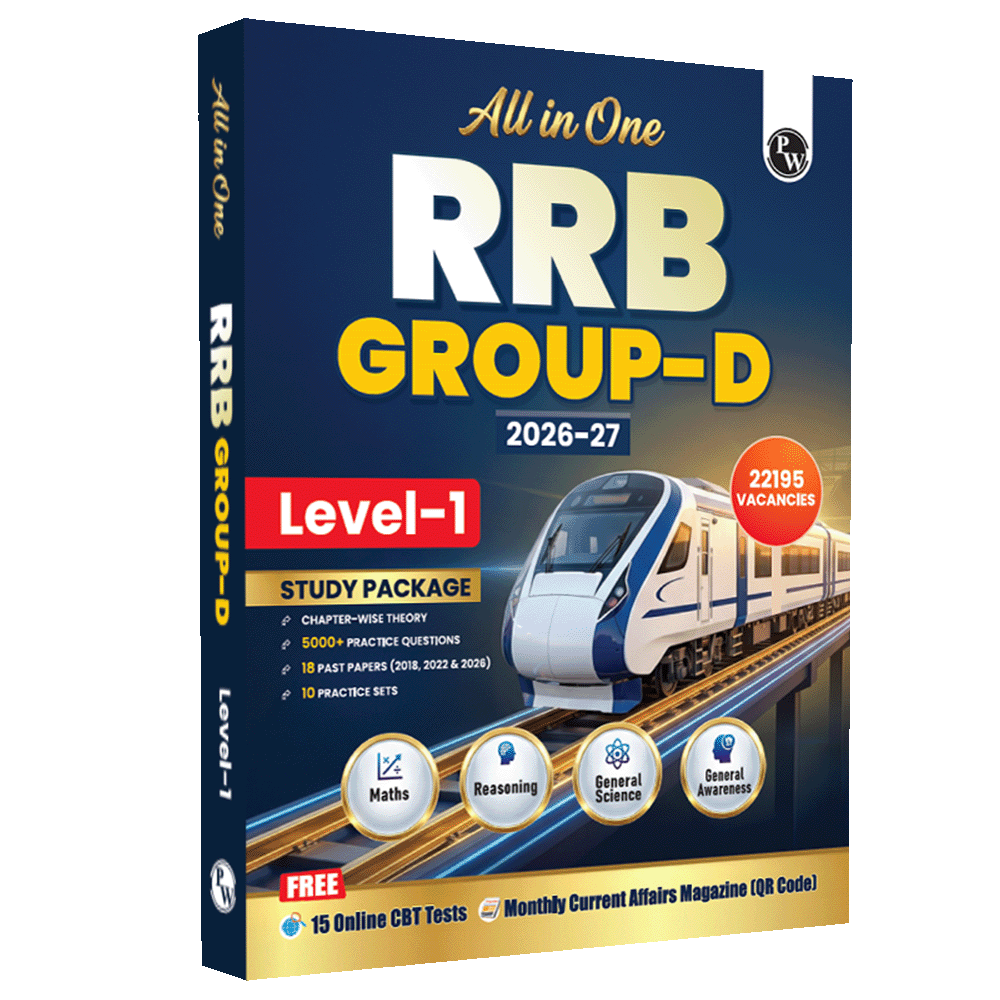
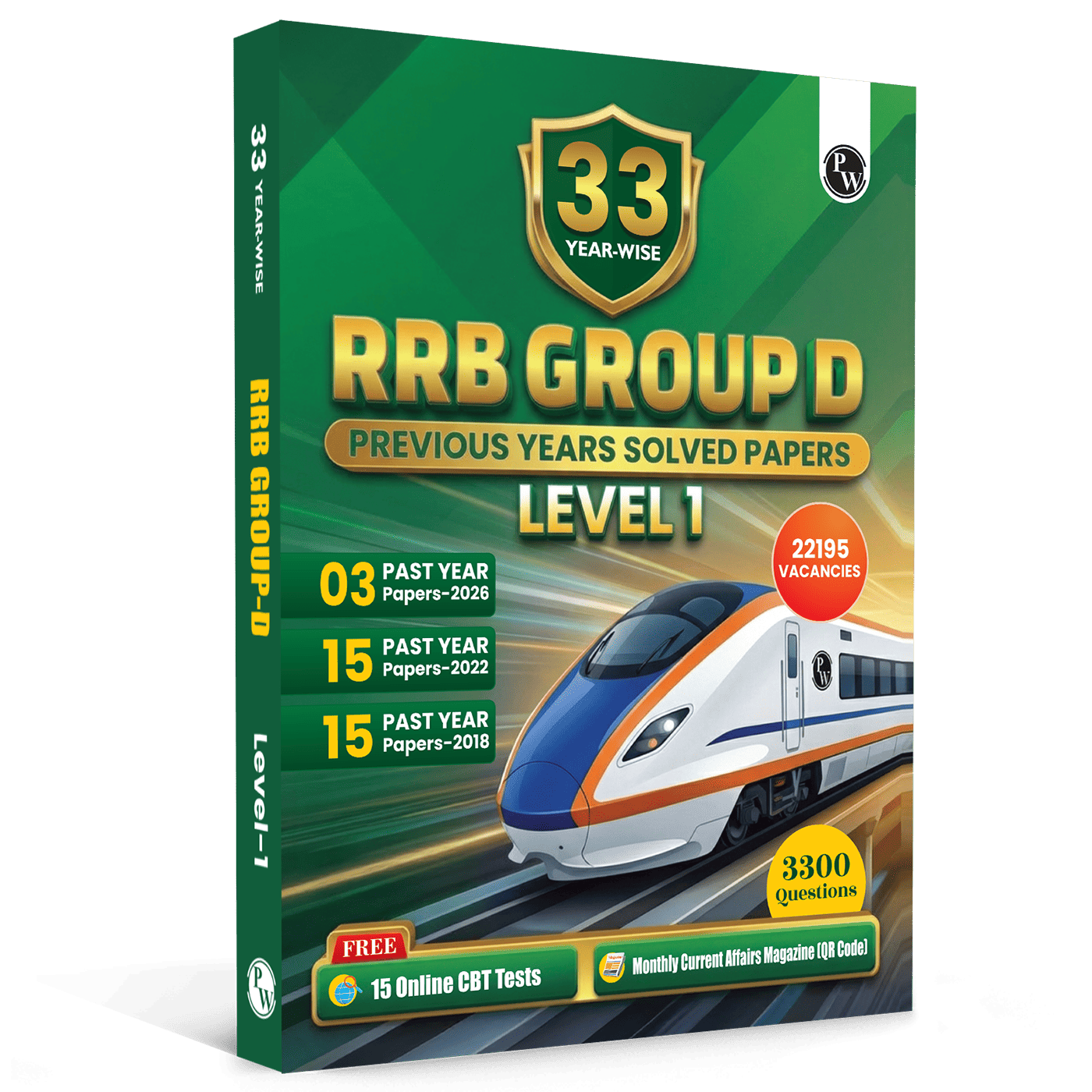
Step 4 - Utilize an Integrated Resource: Use an RRB Group D PYQ book that combines structured concept-building theory with solved paper sets, practice sets, and mock tests for a streamlined workflow.
When Should You Solve RRB Group D PYQ During Your Preparation?
Timing is crucial when integrating past questions into your daily schedule. Solving papers too early without basic knowledge leads to frustration, while saving them for the final week leaves no time for corrective measures.
Phase 1: Early Preparation Phase
During the initial coverage of the syllabus, use past papers strictly on a chapter-by-chapter basis. Do not attempt timed, full-length papers yet. Focus entirely on concept application and accuracy.
Phase 2: Mid-Term Revision Phase
As you reach the midpoint of your preparation timetable, start solving year-wise papers alongside ongoing chapter theory. This phase helps maintain a balance between learning new topics and retaining previously covered concepts.
Phase 3: Final Exam Sprint Phase
In the final weeks, transition to solving full papers under strict time constraints. Combine these with full-length online computer-based tests (CBTs) to build endurance, refine time management, and complete final revisions.
Study Strategy Plan with RRB Group D PYQ and Chapterwise Theory
A balanced study plan, supported by RRB Books, ensures that your weekly schedule allocates equal time to reading concepts, solving past questions, and taking mock tests.
|
Phase |
Core Focus |
Theory Allocation |
Practice Resource |
Goal |
|
Initial Phase |
Basic Concept Building |
70% Theory |
Chapter-wise past questions |
Strengthen fundamental understanding |
|
Mid-Term Phase |
Application & Analysis |
40% Theory |
18 Solved Papers (2018, 2022, 2026) |
Identify weak areas and build speed |
|
Final Sprint |
Speed & Mock Testing |
15% Theory Revision |
18 Practice Sets & 15 CBT Mocks |
Simulate real exam conditions |
Having a comprehensive RRB Group D study material pack that includes over 5000+ questions with detailed solutions, practice sets, and current affairs updates simplifies tracking your daily progress.
Tips to Balance RRB Group D PYQ Practice and Theory
Maintaining equilibrium between reading theory and solving questions, with the help of the Railway Game Changer PYQ Combo Set of 3 Books, prevents burnout and keeps your score rising steadily.
-
Set Fixed Daily Time Slots: Allocate fixed hours every day—for instance, 2 hours for reading theory and 2 hours dedicated entirely to question practice.
-
Maintain an Error Notebook: Note down every mistake made while solving past papers. Revisit the relevant theory chapter to fix the underlying conceptual misunderstanding.
-
Leverage Short Tricks: Apply formulas and smart shortcuts provided in your theory sections directly to past questions to save time during calculations.
-
Incorporate General Awareness Updates: Pair your static subject practice with a monthly current affairs resource to stay updated on national events, sports, and science developments.
-
Use Reliable Practice Books: Rely on an RRB Group D practice book that features structured level-1 questions ranging from basic to advanced difficulty.
Common Mistakes to Avoid While Using RRB Group D PYQ
Many candidates struggle despite working hard because they use past papers incorrectly. Avoid these frequent missteps:
-
Memorising Answers Instead of Concepts: Memorising specific answers from past papers is useless because questions are rarely repeated verbatim; focus on the underlying concepts instead.
-
Ignoring Solution Explanations: Skipping the detailed reasoning and alternate approaches provided in solution keys deprives you of learning faster problem-solving methods.
-
Delaying Practice Until Syllabus Completion: Waiting until the entire syllabus is finished before touching past papers creates overwhelming backlogs and delays score growth.
-
Neglecting Mock Tests: Relying only on offline papers without taking online CBT mock tests leaves you unprepared for real computer-based test interfaces.
Read More: RRB Group D Exam Preparation Tips and Strategy
RRB Group D PYQ FAQs
1. How many years of RRB Group D PYQ should I solve?
Solving papers from recent exam cycles such as 2018, 2022, and 2026 provides a comprehensive understanding of recent paper trends and difficulty standards.
2. Should I solve past questions before reading theory?
It is best to complete the basic chapter-wise theory first, then immediately attempt corresponding past questions to verify your understanding.
3. How do past papers help in general science and reasoning?
They highlight recurring scientific formulas, core reasoning patterns, and frequently tested question types across all subjects.
4. Is solving past papers enough to clear the exam?
While past papers are essential, combining them with concept-building theory, dedicated practice sets, and online CBT mock tests ensures complete preparation.
5. What is the best way to analyze errors in past paper practice?
Review the detailed solutions for incorrect answers, identify the gap in your concept or calculation, and re-read that specific chapter theory before attempting more questions.