RRB Maths Game Changer for Beginners: Which Chapter Should You Start With?
Starting your preparation for Railway exams can feel overwhelming, especially when faced with a vast Quantitative Aptitude syllabus. Beginners often struggle with choosing the right starting point, leading to lost time and low confidence.
Working through RRB Maths PYQ materials gives you immediate clarity on what the exam board expects. By focusing on foundational topics first, you can easily build speed, accuracy, and strong problem-solving habits.
What is RRB Maths PYQ?
PYQ refers to the previous years' questions asked in the Mathematics section of Railway exams. These questions help candidates understand the exam pattern, important chapters, question types, and difficulty level. Solving PYQs regularly can improve calculation speed, accuracy, and problem-solving skills.
Candidates can also use railway maths previous year questions and chapter-wise practice sets to prepare important topics in a structured way.
Features of Railway Maths MCQ Book
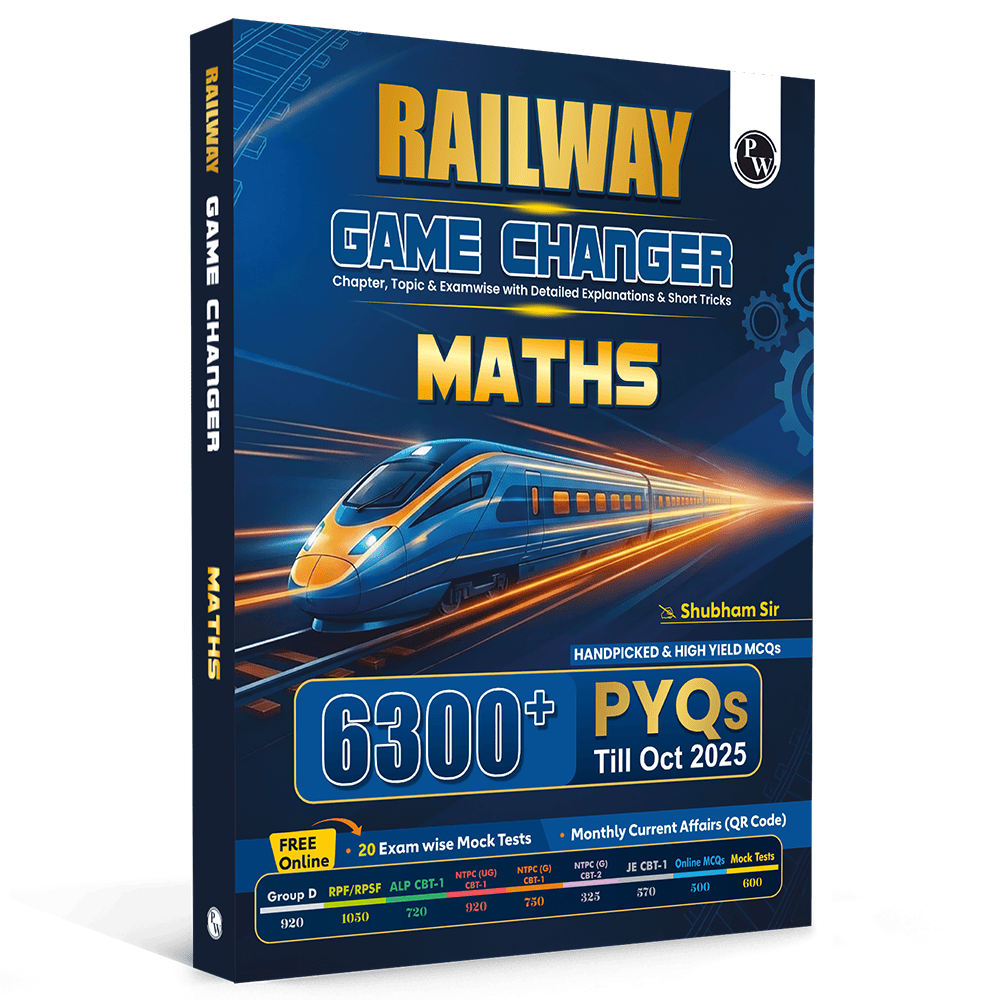
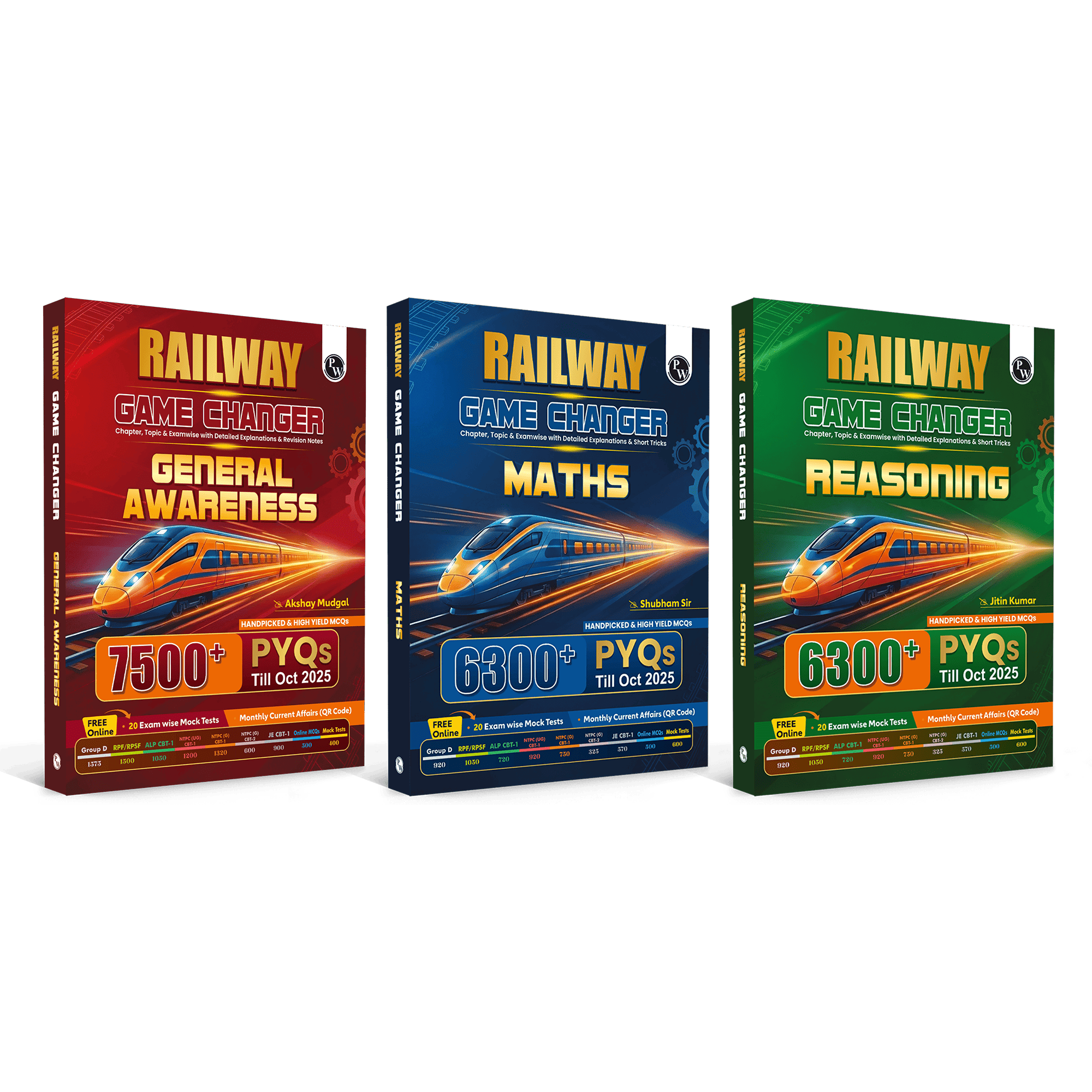
Prepare for Railway Maths with a wide range of questions, revision notes, mock tests, and online practice sets.
The book follows the latest TCS pattern and helps you improve calculation speed, accuracy, and time management.
-
6300+ TCS-Based MCQs: Practice more than 6300 Railway Maths questions based on the latest TCS pattern for Railway exams. The question bank covers important topics from the complete syllabus for thorough practice.
-
Quick Revision Notes: Revise Railway Maths with short tricks, key formulas, and important concepts. These notes make regular revision easier and are also useful for last-minute exam preparation.
-
20 Sectional Mock Tests: Test your preparation with 20 sectional mock tests based on the Railway CBT format. Regular practice helps improve speed, accuracy, and time management.
-
20 Online CBT Practice Sets: Solve 20 online practice sets designed to provide a computer-based Railway exam simulation. This helps you get familiar with the CBT format and build confidence before the exam.
-
Monthly Current Affairs (QR Access): Get monthly current affairs updates covering important national and international events. These resources can also support Railway General Awareness and Current Affairs preparation.
-
Detailed Exam Analysis: Understand topic-wise trends, question weightage, and important areas from major RRB Railway exams. This helps you focus your preparation on important and high-scoring topics.
Why Should You Start With The Right Chapter For RRB Maths PYQ?
Beginning with complex topics like Advanced Geometry or Permutation and Combination often leads to frustration. Mathematics is a sequential subject where advanced chapters build directly upon basic arithmetic concepts.
Starting with foundational chapters provides distinct advantages:
-
Builds Calculation Speed: Basic chapters train your brain to perform mental math, reducing reliance on rough sheets.
-
Establishes Core Concepts: Topics like Percentages and Ratios act as the building blocks for over 50% of the arithmetic syllabus.
-
Boosts Exam Confidence: Solving RRB maths chapter-wise questions early creates momentum and reduces exam anxiety.
-
Improves Accuracy: Mastering fundamentals minimizes simple calculation errors in high-weightage sections.
Why Should You Start RRB Maths PYQ With Number System?
The Number System is the ultimate foundational topic for any Railway exam aspirant. Whether you are preparing for RRB NTPC, Group D, ALP, or RPF, practicing questions from RRB Previous Year Papers can help you understand the types of questions asked from this chapter.
Foundational Path for Mathematics
|
Step |
Topic |
Focus |
|
Step 1 |
Number System |
Divisibility, Unit Digit |
|
Step 2 |
Percentage & Ratio |
Core Arithmetic Base |
|
Step 3 |
Profit & Loss / Time & Work |
Applications |
Key Sub-Topics to Cover in Number System:
-
Unit Digit and LCM/HCF: Essential for solving complex simplification problems quickly.
-
Divisibility Rules: Direct questions on divisibility by 7, 11, and 13 save precious time during the test.
-
Fractions and Decimals: Helps in quickly comparing values and understanding approximations.
Practicing PYQs from the Number System helps beginners understand how TCS structures basic conceptual questions.
How To Prepare Percentage And Ratio With RRB Maths PYQ?
Once you complete the Number System, move directly to Percentage and Ratio & Proportion. These two chapters form the backbone of Arithmetic.
|
Chapter Name |
Direct Weightage in Exam |
Secondary Impact on Other Topics |
|
Percentage |
2 - 3 Questions |
Profit & Loss, Simple & Compound Interest, DI |
|
Ratio & Proportion |
2 - 3 Questions |
Ages, Partnership, Mixtures, Time & Work |
|
Simplification / BODMAS |
3 - 4 Questions |
Overall calculation speed across all sections |
By mastering fraction-to-percentage conversions and practicing with RRB Books, you can solve complex RRB maths practice questions without relying on lengthy formulas.
What Is The Best RRB Maths PYQ Chapter-Wise Order For Beginners?
Following a clear roadmap prevents study burnout. Here is the recommended order for mastering the syllabus:
-
Number System & Simplification: Establishes calculation speed and fundamental rules.
-
Percentage, Ratio & Proportion: Builds the foundation for applied arithmetic.
-
Profit, Loss & Discount: Applies percentage concepts to commercial scenarios.
-
Simple & Compound Interest: Uses ratio and percentage shortcuts for quick calculations.
-
Time & Work / Pipes & Cisterns: Relies heavily on LCM methods learned in chapter one.
-
Time, Speed & Distance: Introduces proportional reasoning for train and boat problems.
-
Algebra, Geometry & Mensuration: Advanced topics to be tackled after mastering basic arithmetic.
What Mistakes Should Beginners Avoid While Solving RRB Maths PYQ?
Avoid these common mistakes to build accuracy, speed, and confidence while solving RRB Maths PYQs.
-
Jumping Directly to Mock Tests: Attempting full-length tests without finishing topic-wise basics causes unnecessary panic.
-
Ignoring Detailed Solutions: Simply checking the answer key without reading step-by-step explanations prevents you from learning faster shortcut methods.
-
Memorising Without Understanding: Learning formulas by heart without grasping the underlying logic leads to confusion when question formats change slightly.
-
Neglecting Speed and Time Management: Practicing without a timer build bad habits that slow you down on exam day.
Read More: How to Solve Railway Maths Questions Faster
RRB Maths PYQ FAQs
Which chapter is best to start RRB Maths preparation?
Beginners should start with the Number System because it builds a strong base for calculations. After that, move to Simplification, Percentage, and Ratio & Proportion. Learning these basic topics first makes it easier to understand and solve other chapters in the RRB Maths syllabus.
How many PYQ questions should I practice daily?
Aim to solve around 40 to 50 topic-wise questions daily. Do not focus only on completing the target. Spend enough time understanding the solution steps, checking your mistakes, and learning faster methods for questions that take more time to solve.
Is the RRB maths game changer book suitable for beginners?
Yes, the book can be useful for beginners because it categorises RRB Maths PYQs topic-wise and provides basic theory, revision shortcuts, and step-by-step solutions. This makes it easier for new learners to understand each concept before moving to more difficult questions.
Why are RRB maths chapter-wise questions important?
Chapter-wise practice allows you to focus on one concept at a time instead of solving mixed questions from the beginning. It helps you understand common question types, identify weak areas, improve accuracy, and track your preparation progress in a more systematic way.
How do I increase calculation speed for railway math previous year questions?
Build your calculation skills by learning basic tables up to 30, squares up to 50, and cubes up to 20. Also, practise fraction-to-percentage conversions every day. Regular calculation practice can reduce the time spent on basic operations and help you solve railway maths previous year questions faster and with better accuracy.