How to Score High in Railway Reasoning Section

The railway exam preparation process can be like a maze, particularly for the General Intelligence and Reasoning paper. The secret to ending this cycle is to grasp the exam pattern with a railway reasoning PYQ. Using previous trends, you can find out what areas the examiners like and how the difficulty varies in each shift of the exam. This article emphasises practical strategies and tools, including the right RRB reasoning book of PYQs, to elevate reasoning skills from average to exceptional.
Check Out: RRB Books
Railway Reasoning PYQ Overview
Railway Reasoning PYQs, or 'Previous Year Questions', are the questions that were asked in the reasoning section of the railway recruitment tests conducted in the past by Railway Recruitment Board. The questions are based on logical thinking, problem-solving skills and pattern recognition skills on subjects such as analogies, coding/decoding, number series, puzzles, syllogisms, etc. By doing PYQs, candidates get to know the exam pattern, types of questions and the difficulty level.
By regularly practising previous railway reasoning papers, you can enhance your speed, accuracy, and decision-making when under time pressure. It also uncovers patterns of commonly repeated questions, enabling candidates to be better prepared. Solving these questions regularly will help aspirants develop exceptional reasoning abilities, helping them perform with more confidence in the real exam.
Important Topics in Railway Reasoning PYQ
To get a good grade, you cannot apply the same effort to all topics. According to RRB reasoning previous year paper analysis, some are weightier. Concentrate on these fundamental areas:
-
Analogy and Classification: These are questions with frequent occurrences that are based on relationships between words, numbers or figures.
-
Coding-Decoding: See variations that include shifts in letters, coding numbers and a combination of both.
-
Syllogism: Learning the “Venn diagram” technique is essential to avoid confusion between “some” and “all” statements.
-
Blood Relations: These questions assess your ability to understand the intricate family relationships within a matter of a few seconds.
-
Mathematical Operations: Simple, but you have to be quick to avoid spending time on basic maths.
-
Series Completion: It is very common in previous railway reasoning papers; the number and alphabetical series come in the question.
-
Data Sufficiency: A question type that requires you to use logic, not calculations. You need to decide if the given info is enough to answer the question.
-
Puzzles and Seating Arrangement: Often considered the toughest part. Practising regularly with an RRB reasoning A PYQ book is the best approach to becoming comfortable with linear and circular arrangements.
Tips to Solve Railway Reasoning PYQ
The main thing in a railway exam is the speed. The reasoning section can be completed in less than 20 to 25 minutes, allowing you to save time for the mathematics and general awareness sections. Here are some tips for getting faster:
Start with Easy Questions
Avoid using puzzles as the first activity. However, look for analogy, classification, and a sense of direction on the paper. These are questions that can be answered in seconds and are known as “one-liner” questions. This helps to build confidence in your ability to clear these.
Use Elimination Method
You do not have to get the complete answer to many railway reasoning PYQs, particularly those of the coding-decoding or series type. Check the choices. If only one choice begins with the correct letter, write it and proceed to the next letter.
Improve Mental Calculations
Wherever possible, do not use pen and paper to make basic additions or subtractions for topics such as mathematical operations or number series. Using mental calculations helps keep your brain active and saves seconds, which can add up during the exam.
Follow the 30-Second Rule
If you get stuck on a question for 30 seconds or more and can't see how to answer it, move on to the next question. If time permits, you can go back to it later. The worst thing that can happen is to get stuck.
Practice with a Timer
Always use a stopwatch with your book of previous year questions for RRB reasoning. Attempt to answer 30 questions in 20 minutes. This helps to simulate the exam environment and decreases anxiety when taking the exam.
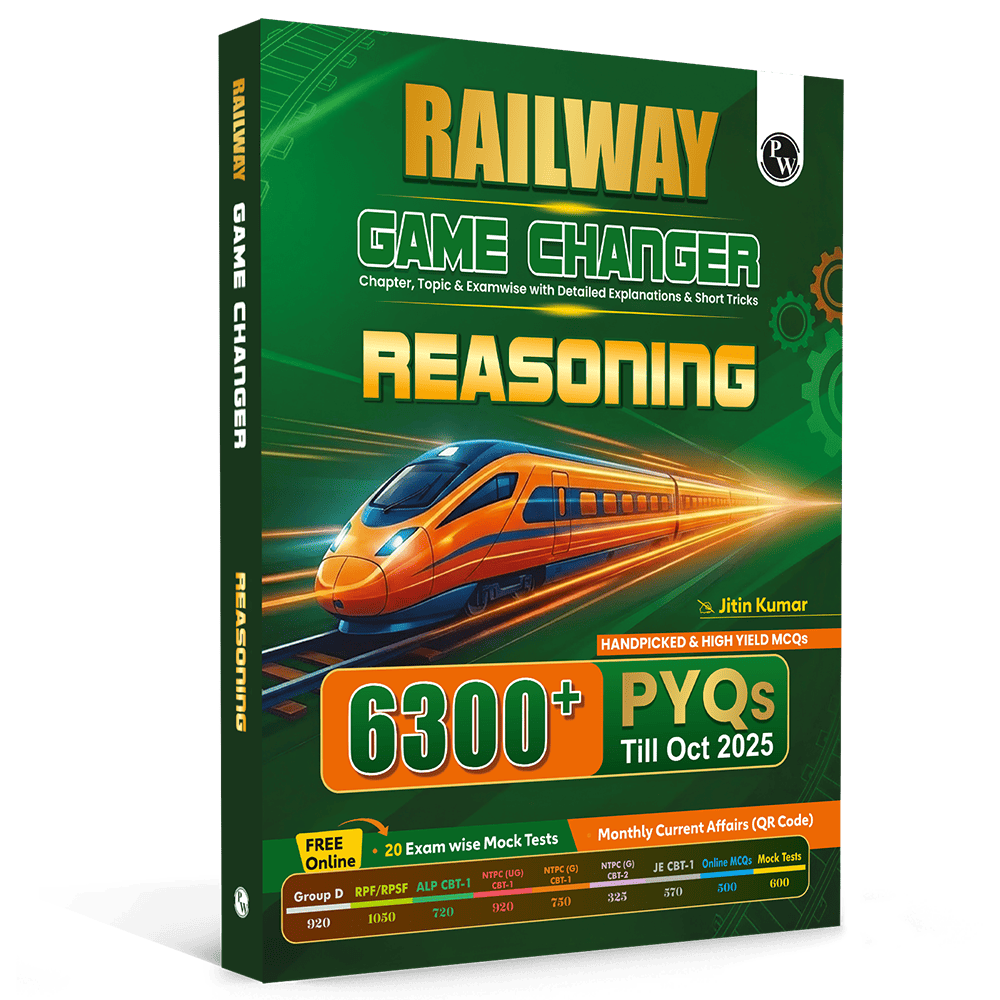
Check Out: Railway Game Changer PYQ Combo Set of 3 Books For 2026
Common Mistakes to Avoid in Railway Reasoning PYQ
Even if the candidates are well prepared, they can go wrong in common ways. These are the ones you'll need to recognise early on in preparation to avoid losing marks:
-
Ignoring Non-Verbal Reasoning: Many students only attempt questions which involve reading text. In the RRB previous year paper PDF, there are multiple such questions, such as multiple mirror images, paper folding and hidden figure questions. If you know the visual logic, these would be easy marks.
-
Depending Too Much on Shortcuts: Tricks can be helpful, but if the examiner changes the wording of the question slightly, the trick may not work. Before memorising a shortcut, always make sure you know the basic concept.
-
Using Outdated Study Material: Exam patterns may change over time. The reasoning PYQs of the old RRB may make you practise topics that are not relevant. Make sure that your study material is updated according to the latest exam pattern.
-
Skipping Mock Tests: Answering questions is not the same as answering a paper. If you've been doing it without mocks, you won't be able to deal with the pressure of the clock.
-
Not Reviewing Wrong Answers: If a question is wrong, don't merely check the correct answer in your railway reasoning PYQ book. Identify the faulty logic in your argument. Is it a mistake in the calculations or a misunderstanding?
How Railway Reasoning PYQ Helps in Exam Preparation
Practising PYQs helps candidates understand the latest exam pattern, important topics, and question difficulty levels. Regular practice improves logical thinking, speed, and accuracy during the actual exam.
-
Better Understanding of Exam Pattern: RRB Previous year questions help aspirants identify commonly asked topics such as coding-decoding, puzzles, syllogisms, and series-based questions.
-
Improves Speed and Accuracy: Solving RRB reasoning PYQs regularly helps candidates manage time effectively and answer questions more accurately under exam pressure.
-
Topic-wise Practice: Practising questions chapter-wise allows students to focus on weak areas and strengthen important reasoning concepts systematically.
-
Builds Confidence for Exams: Attempting previous railway reasoning papers gives candidates a real exam-like experience, helping reduce stress and improve confidence before the exam day.
-
Helps Identify Common Mistakes: Reviewing incorrect answers helps aspirants understand their weak points and avoid repeating similar mistakes in future mock tests or exams.
Effective use of these resources along with a disciplined daily routine will definitely help you to crack the cut-off and secure a position in Indian Railways.
Read More: General Science Book for All Railway Exam Preparation
RRB Reasoning PYQ Book FAQs
Which RRB reasoning PYQ book is right for beginners?
An RRB reasoning PYQ book that includes topic-wise previous year questions, detailed solutions, and updated exam patterns is considered best for beginners preparing for railway exams.
Where can I find a previous year's paper PDF for free?
Previous year's paper PDFs for various exams such as NTPC and Group D can be found on the official educational websites.
Is solving the previous railway reasoning paper enough to pass?
It's a big component of preparation, but concept building is important too. Look at the old railway reasoning paper to see where you are weak and then go and research those theories.
How many years of RRB reasoning should I solve?
You should solve at least the RRB reasoning problems from the last 5 to 7 years. This will give you an idea of what the traditional questions are and the newer, more complicated questions.
How do I improve my speed in the reasoning section?
Consistent practice is key. Take at least two RRB solved previous year papers a day with time limits. Find ways to save time on each question by concentrating on elimination methods.