How Beginners Can Use Question Bank for Class 10 Boards
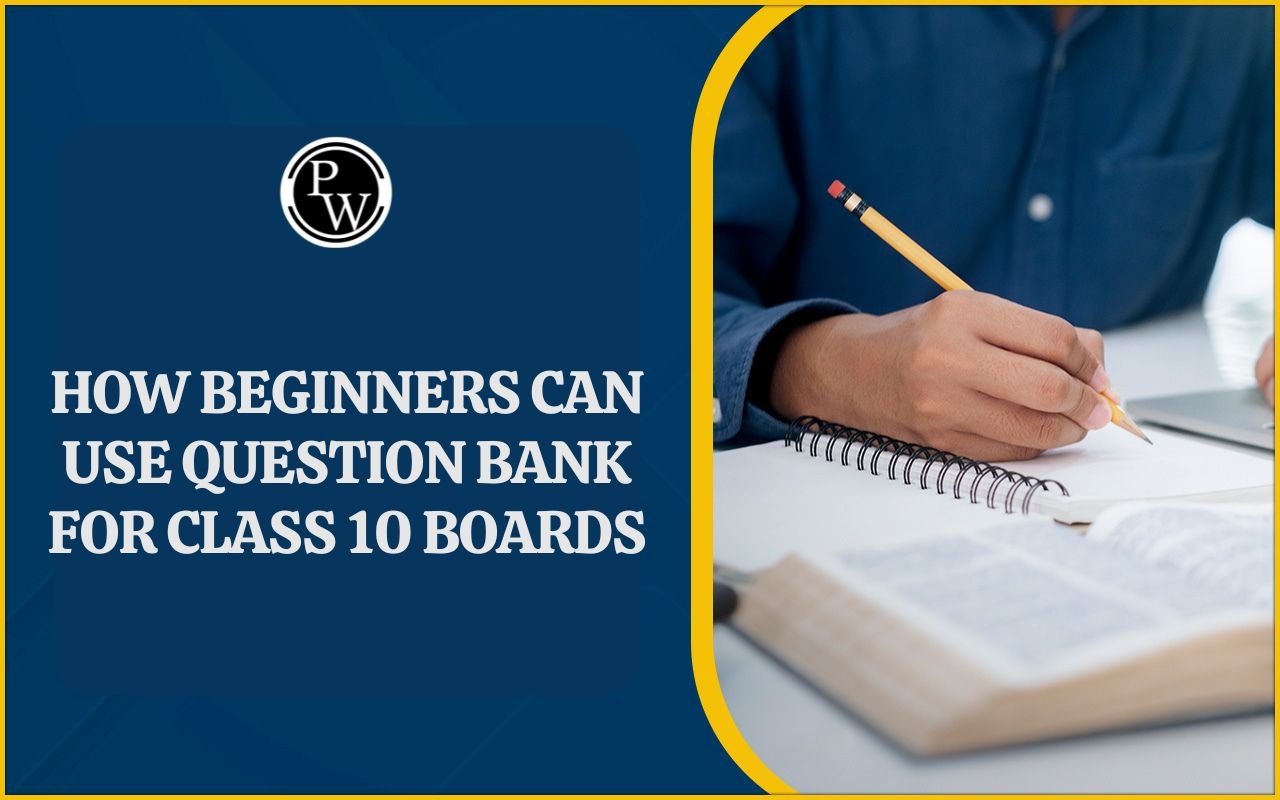
Getting ready for board exams can seem overwhelming, especially with so much to study. Many students find the large syllabus challenging. A question bank for class 10 can be a valuable tool, not just another book. Instead of reading chapters over and over, you can use the question bank to focus on what’s important for the exam.
With regular practice and by learning how marks are given, you can organise your study time and aim for better scores. This guide will show you how to use question banks in your daily study routine.
Check Out: CBSE Class 10th Books
Overview of Question Bank for Class 10
Many beginners use a question bank like a textbook, but they serve different purposes. A textbook helps you understand concepts, while a question bank for class 10 shows you how to use those concepts in exams. It helps you move from learning theory to actually earning marks. If you’re starting from the beginning, these books can guide you.
They sort questions by how hard they are and how often they appear in board exams. This way, you don’t have to guess what’s important; you can practice what really matters. These question banks are important if you are looking for a strategy to improve your grades in class 10. Solving these papers with right strategy can be very helpful for the candidates.
How to Choose the Right Question Bank for Class 10
Not every resource is the same. When choosing a CBSE Class 10 question bank, look for features that make learning easier. A good question bank should match the latest curriculum and exam patterns.
-
Updated Syllabus: Ensure the content matches the 2025-26 requirements.
-
Detailed Solutions: Beginners need step-by-step explanations, not just final answers.
-
Marking Scheme Insights: Understanding how examiners award marks for steps is crucial.
-
Variety of Questions: It should include MCQs, short answers, and long-form case study questions.
Having a CBSE question bank class 10 that includes topper’s answer sheets or model responses can significantly change how you perceive the "perfect" answer.
Study Plan for Question Bank for Class 10
The most effective way to study is to break the syllabus down. Using a CBSE class 10 chapter wise question bank prevents you from feeling overwhelmed by the entire year's worth of content.
Phase 1: The Chapter-Linked Approach
After finishing a chapter in your NCERT textbook, immediately open your question bank for class 10. Look for that specific chapter. Start by reading the "Frequently Asked Questions" section. This tells you which parts of the chapter you should have paid more attention to.
Phase 2: Mastering Solved Examples
Beginners should never start with unsolved exercises. First, go through the solved questions. Observe how the information is structured. In subjects like Science or Maths, notice how the formulas are introduced and how the final units are written.
Phase 3: Targeted Practice
Once you understand the format, try solving the "Short Answer" types. These are usually high-yield and help in building the core logic of the chapter. A class 10 question bank usually ranks these by importance, so prioritise the ones marked with "Repeated" or "Important."
How to Improve with the Question Bank for Class 10
As you move closer to the exam season, your focus must shift from "learning" to "performing." The CBSE Class 10 Question Bank 2026 is designed to reflect the latest shift toward competency-based education. This means more real-life scenarios and less rote memorisation.
-
Case-Based Questions: These are now a staple in boards. Use your question bank to practice extracting data from long paragraphs.
-
Assertion-Reasoning: These can be tricky for beginners. Practice at least 10 of these from every chapter to sharpen your logic.
-
Diagram-Based Practice: In Biology and Physics, use the bank to practice labelling and drawing clear diagrams as per board standards.
Check Out: CBSE Class 10th Previous Year Papers
Problems Beginners Face with the Question Bank for Class 10
Many students know the answers but still run out of time during exams. This usually happens because they haven’t practised writing within a time limit. Your class 10 question bank can help improve this skill.
This builds the muscle memory needed for the actual exam hall. It also helps in reducing "exam anxiety" because the format of the questions becomes familiar and predictable.
|
Feature |
Benefit for Beginners |
|
Chapter Summary |
Quick revision before starting practice |
|
Solved Papers |
Understands the ideal word count for answers |
|
Self-Assessment |
Identifies weak areas that need more reading |
|
Trend Analysis |
Shows which topics have been ignored by examiners |
After you finish the CBSE class 10 chapter-wise question bank, you’re ready to move on to full-length mock tests. The question bank helps you build a strong base, and sample papers will help you practice for the whole exam.
Always keep your bank handy, even during the final revision month. It serves as a focused index for the most difficult problems you encountered during your first pass. Marking these "tough" questions with a highlighter during your first read-through will save you dozens of hours in the final weeks.
Read More: Tips for Solving CBSE Class 10 Question Banks For Board Exam
Beginners Can Use Question Bank for Class 10 FAQs
1. Is a question bank for class 10 enough to score 90%?
A question bank is very helpful, but you should also use your NCERT textbooks to make sure you understand the basics well.
2. When is the best time to start using a CBSE Class 10 question bank?
The best time to start is at the beginning of the school year. Use the question bank for each chapter as your teacher covers it in class.
3. How is a question bank different from a sample paper?
A question bank sorts questions by chapter and topic, while sample papers give you practice with the whole exam at once.
4. Do questions in the board exam come directly from the class 10 question bank?
The exact questions may change, but the types, patterns, and ideas are usually the same as those in a good question bank.
5. Should I solve every single question in the CBSE class 10 chapter-wise question bank?
If you’re just starting, focus on solved examples and questions marked as "Most Important" before trying every exercise.