CBSE Class 10 Maths Basic: Easy Chapters to Score Marks
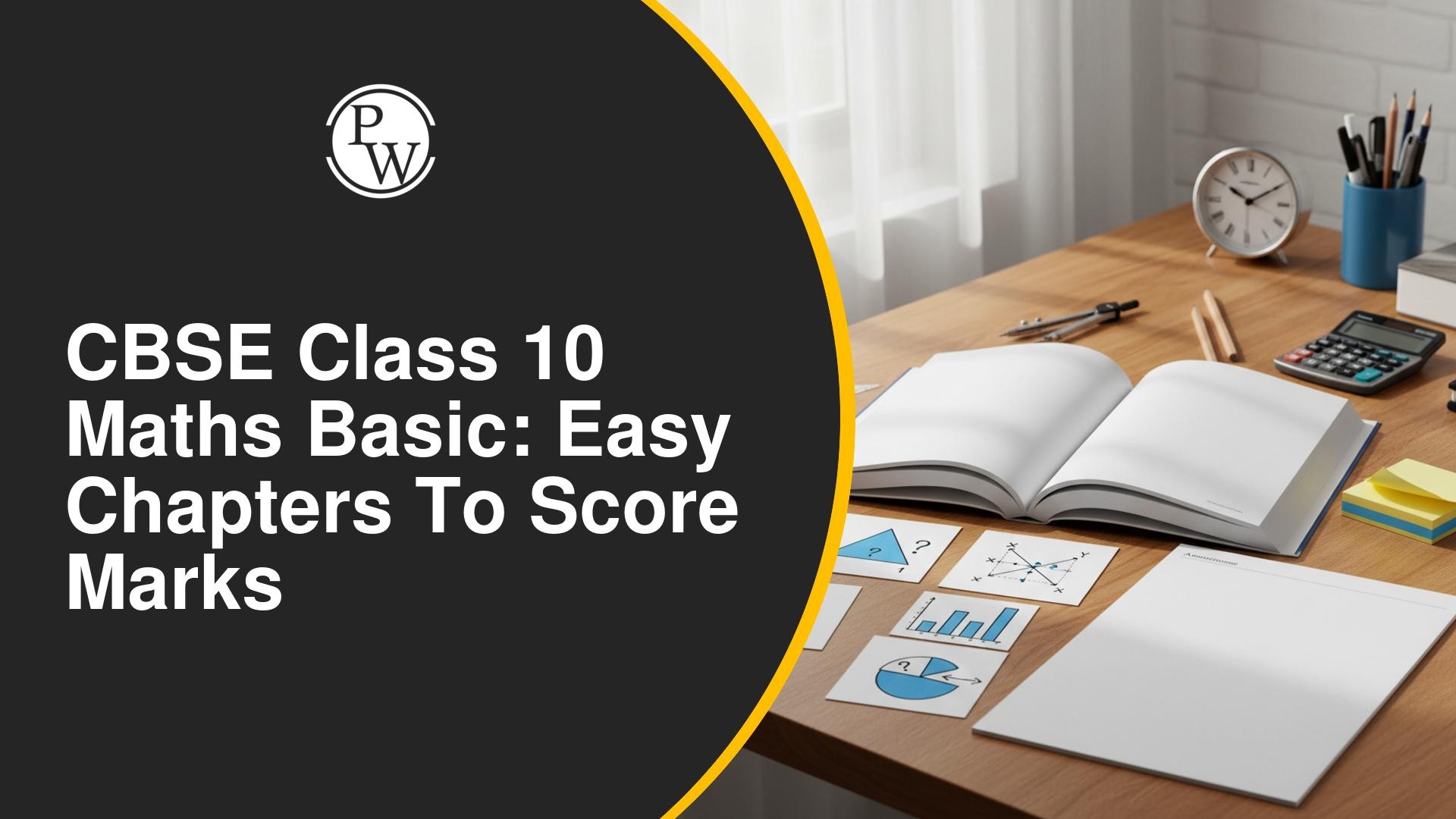
If you have always found numbers difficult to deal with, choosing the elementary mathematics course makes sense because it focuses on basic understanding rather than complex and abstract problems.
However, you still need a well-organised plan to pass or achieve a good score. Instead of memorising every formula in the textbook, smart learners focus on topics that offer the best results with consistent effort. Using the right CBSE Class 10 Books can help strengthen fundamental concepts and make revision more effective.
This article explains the easiest topics in CBSE Class 10 Maths Basic, provides strategic study methods, and outlines the key habits you need to perform well in your upcoming exams.
Why Do Easy Chapters Matter in CBSE class 10 maths basic
Each academic term presents the same problem: how to go through a large amount of material without getting exhausted. In the case of CBSE Class 10 Mathematics Basic, the curriculum is deliberately structured in order to examine basic arithmetic and logical reasoning rather than more advanced theorems requiring multiple steps. Adjusting your focus to the simpler topics alters your whole method of preparation.
First, it creates at once a psychological advantage. Whenever you manage to work through a complete exercise in statistics or probability without getting stuck, your confidence shoots up. Second, it establishes a safe minimum score. By securing the easier sections, you ensure that you get a passing mark right from the start, which in turn leaves you with some mental room to deal with more difficult problem sets.
Since the basic subjects take up less time to study, you will be able to go over them several times before the main exam. By adopting a strategic method, you can ensure that the hard work you put in leads directly to high marks on your report card without having to become overly exhausted.
Which Easy Chapters to Cover First in CBSE class 10 maths basic
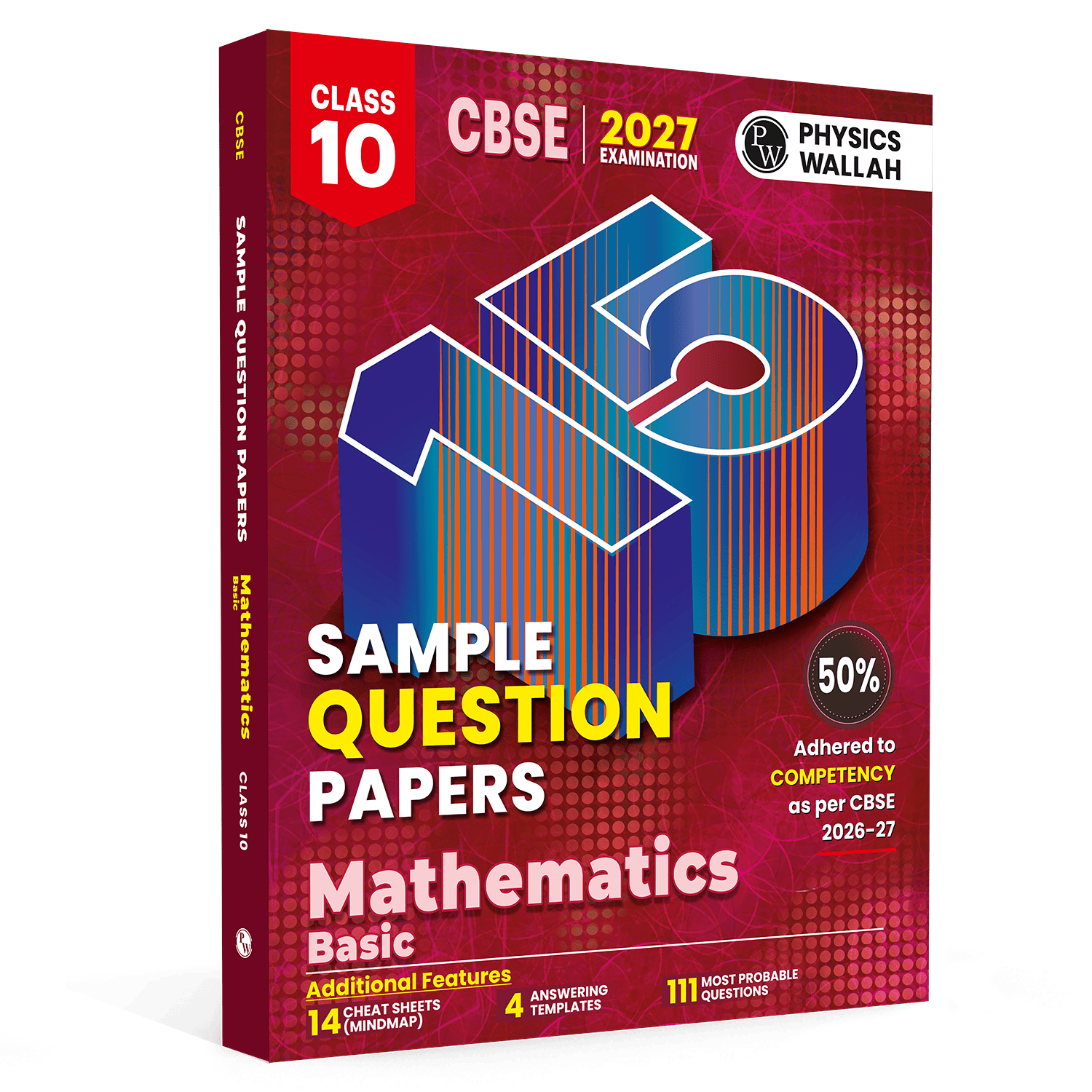
Beginning your preparation in the correct order can help you avoid early frustration, as some textbook sections are both important and easy to learn. Practising with CBSE Class 10 Basic Maths Sample Papers can help you identify these topics and build confidence through exam-style questions.
-
On the topic of Real Numbers: this section typically includes straightforward questions asking for the HCF and LCM to be found using prime factorization, together with some simple proofs. You can earn full marks here by using just a few formulas.
-
For Statistics: Statistics offer a golden opportunity for securing points; to find the mean, median, and mode you just need to apply simple formulas with nothing more than substituting the data.
-
Probability: This is probably the most straightforward part of the syllabus since simple counting and the expression of quantities as fractions are all that are needed to solve the basic problems involving cards, coins, and dice, making them easy to deal with.
-
An introduction to trigonometry: Although advanced identities may appear intimidating, the basic angle values and the use of standard ratios in the basic papers for CBSE class 10 maths are repetitive and predictable.
-
Coordinate Geometry: The distance and section formulas are procedures that can be used straight away. After you have memorised the structure of the formulae, calculating coordinates becomes a task that can be carried out automatically.
How to Identify Scoring Topics in CBSE class 10 maths basic
The first step in deciding what to study is to examine past patterns and trends in questions. To assess the syllabus for CBSE class 10 maths basic, you should look for themes that have occurred repeatedly in previous board papers.
-
Check the Marking Scheme: Review the official CBSE Class 10 Mathematics curriculum to understand the prescribed syllabus, assessment structure, and marks distribution. This can help you prioritize topics while planning your preparation. You can refer to the CBSE Class 10 Mathematics Curriculum 2026–27 for the official details.
-
Analyze Question Typology: Look closely at past board questions to see if the numerical values change while the underlying concept stays identical. Topics that feature repetitive, template-based questions are prime candidates for easy scoring.
-
Assess Your Personal Strengths: If geometry feels confusing, do not force yourself to spend weeks on circle theorems initially. Shift your energy to algebra or arithmetic progression segments where you can secure points faster.
-
Use Structured Practice Material: Practicing with curated question banks that highlight class 10 maths important chapters helps you direct your energy precisely where the board examiners look.
Read More: CBSE Class 10 Pre Board Sample Papers 2026-27
Which Chapters Need More Practice in CBSE class 10 maths basic
Even when the subject matter is simple, some topics still require careful and repeated practice in order not to lose marks during the assessment process.
-
Finding the nth term or the sum of the terms is simple, but calculation errors due to algebraic sign mistakes or misinterpreting the word problems can still spoil an otherwise correct solution, and regular practice helps to avoid such calculation errors.
-
When solving simultaneous equations using either the substitution or the elimination method, it is necessary to provide a clear and step-by-step record of the work; omitting steps usually results in incorrect answers.
-
Memorizing the formulas for circles is only half the problem; understanding when to subtract the areas of segments from the areas of sectors demands spatial visualization, and this can only be achieved by working through a variety of problems.
-
Factoring quadratic equations or applying the quadratic formula is mechanical, but converting the statements in word problems into mathematical equations demands careful reading and multiple drafts.
Study Strategy for Easy Chapters in CBSE class 10 maths basic
Reading a textbook chapter once will not help you retain formulas by exam day. You need a reliable, repeatable routine to reinforce those concepts, and practising with the CBSE Class 10 Sample Papers Combo of 4 Books 2027 can help you revise effectively and prepare for the exam pattern.
-
Create Dedicated Formula Sheets: Keep a separate notebook or quick reference sheet containing every important formula from your easy chapters in maths. Review this sheet every morning before starting your study session.
-
Solve NCERT Exercises Completely: Do not skip optional or miscellaneous exercises. Board papers frequently adapt direct questions from standard textbook back-of-chapter problems.
-
Incorporate Timed Mock Practice: Simulating real exam conditions using structured class 10 maths marks assessment papers helps you manage your writing speed and reduces panic in the final exam hall.
-
Review Step-by-Step Solutions: When you make an error, do not just look at the final answer. Trace back through your calculation steps to find where your sign or substitution went wrong.
Tips to Score Better Marks in CBSE class 10 maths basic
The small habits you display have a great impact on how an examiner assesses your answer sheet, since neat work will prevent you from losing marks caused by ambiguity.
-
Show All Working Steps: Even if your final calculation contains a minor arithmetic slip, step-by-step marking guidelines ensure you receive partial credit for correct formulas and structure.
-
Draw Neat Diagrams: For coordinate geometry and circle problems, always sketch a clean, labelled rough diagram using a sharp pencil. It clarifies your logic for the evaluator.
-
Double-Check Units and Formulas: Always write down the base formula before substituting values. Ensure final answers include proper units like square centimeters or meters where applicable.
-
Manage Your Time Wisely: Spend the first fifteen minutes reading the paper thoroughly. Tackle high-scoring, familiar questions first to build immediate momentum.
Also Check - CBSE Sample Papers Class 10 Maths (Standard)
Common Mistakes to Avoid in CBSE class 10 maths basic
By avoiding the common pitfalls you can prevent any unexpected deductions from your hard-earned score, and by being aware of these traps your performance will remain sharp.
-
Rushing Through Calculations: Simple addition or multiplication slips in the final step of an easy statistics problem can cost you full marks. Always reserve two minutes at the end of a question to cross-verify basic arithmetic.
-
Ignoring the Question Statement: Misreading whether a question asks for diameter instead of radius, or total surface area instead of curved surface area, leads to wasted effort. Read every prompt twice.
-
Leaving Answers Unsimplified: Always reduce fractions to their lowest terms and express decimal answers cleanly unless specified otherwise.
-
Neglecting Regular Revision: Studying a chapter once and touching it only months later causes severe formula forgetting. Schedule weekly review slots for all scoring chapters maths.
Read More: CBSE Class 10 Sample Papers 2026-27: Subject-Wise
CBSE class 10 Maths Basic FAQs
Is basic mathematics enough for higher studies?
Certainly, passing the basic mathematics examination proves that you have the necessary foundational skills. Yet those students who choose to study advanced mathematics as part of the senior secondary science or commerce streams generally have to follow the standard curriculum. For definite clarity, refer to your school's specific guidelines.
Can I score above ninety percent using only the easier sections?
Although the easier sections ensure a safe and comfortable progression and a strong first division, entering the top brackets demands that the geometry, trigonometry, and algebra sections be tackled with equal care and accuracy.d precision.
How many sample papers should I solve before the exam?
Solving at least five to eight structured practice papers under strict time limits builds the stamina and accuracy needed to excel in your maths basic preparation.
What is the best way to memorize long formulas?
Instead of rote memorization, write down the derivation or logic behind each formula once. Paste your formula sheets near your study desk for daily visual reinforcement.
How do I handle panic if I get stuck on a tough question?
If a specific problem drains too much time, leave adequate space, move on to the next question, and return to it later. Protecting your momentum is vital during board exams.