How to Start CBSE Class 10 SST Preparation from Zero Using Question Bank?

Social Science in Class 10 is often viewed as a vast subject comprising History, Geography, Political Science, and Economics. Many students struggle to manage the sheer volume of dates, maps, and lengthy theories. If you find yourself with zero preparation, the primary challenge is knowing where to begin without wasting time on irrelevant topics.
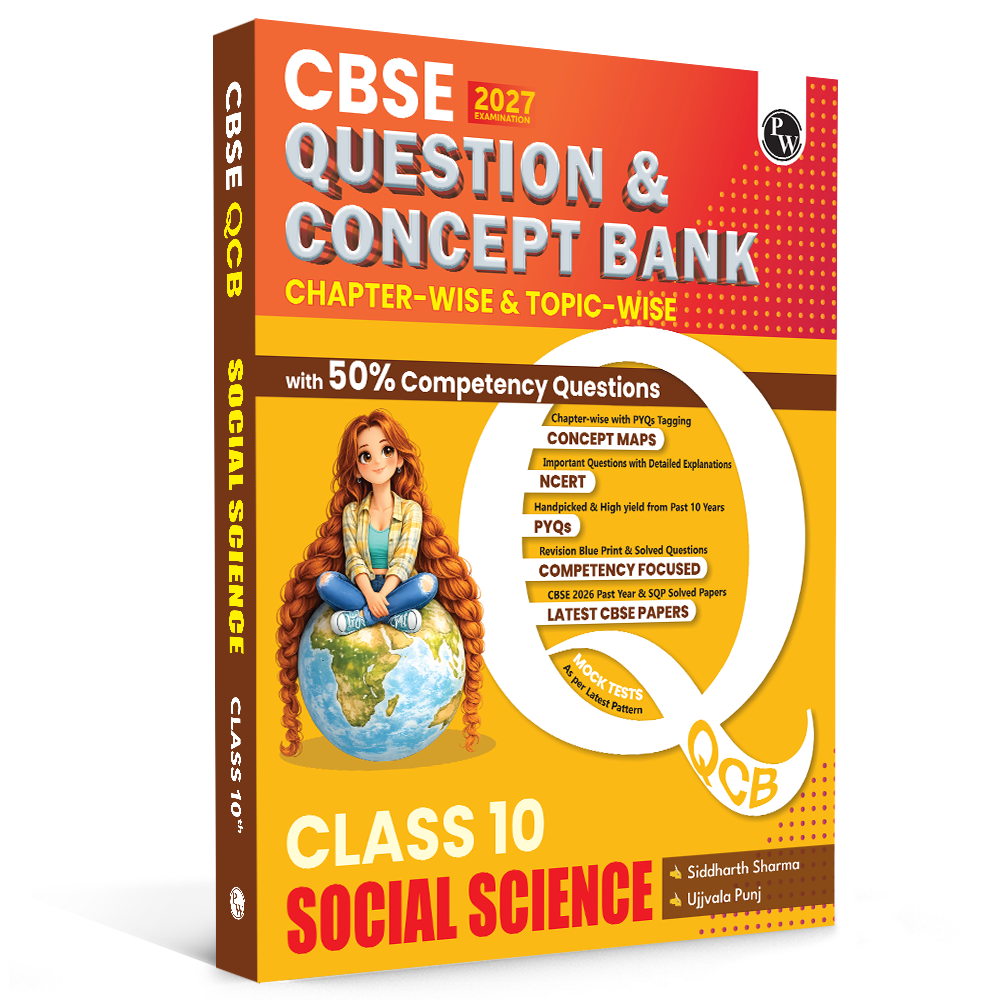
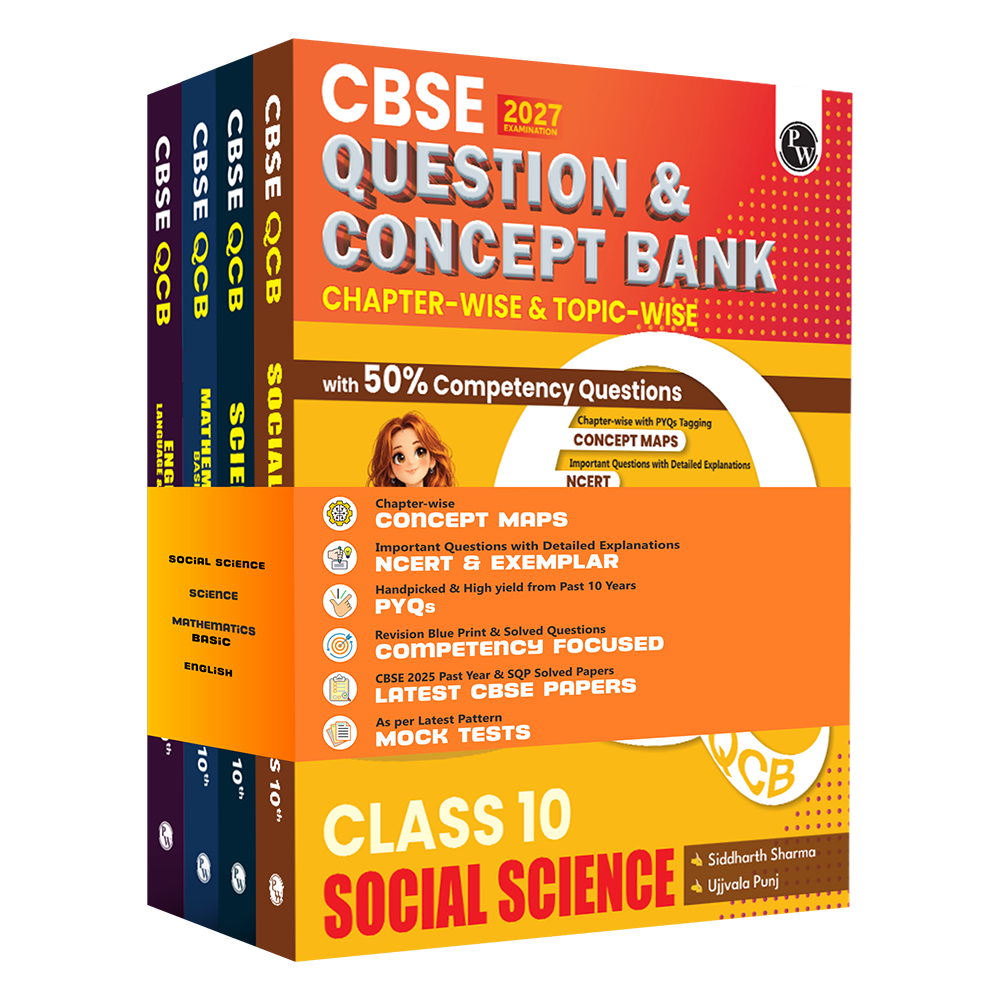
This is where a CBSE class 10 question bank SST becomes your most valuable resource. It filters the syllabus into manageable parts, allowing you to focus on what actually appears in the board exams rather than getting lost in thick textbooks.
Check Out: CBSE Class 10th Books
Importance of CBSE Class 10 Question Bank SST
A social science question bank is not just a collection of problems; it is a strategic roadmap. When you start from zero, reading every line of the NCERT might take too long. A question bank helps you identify the most frequently asked questions and the marking scheme.
Using a class 10 question bank, SST allows you to see the transition from theory to application. For instance, while a textbook tells you about the French Revolution, the question bank shows you how the board frames questions about its impact. This targeted approach ensures that your brain is trained to look for answers while you read, making your study sessions much more efficient.
Features of CBSE Class 10 Question Bank SST
When choosing a class 10 SST question bank, students should look for resources that align with the latest 2025-26 syllabus.
-
Real-Life Examples: It breaks down complex political and economic theories into relatable examples.
-
Updated Pattern: Includes the latest MCQ styles and case-based questions.
-
Expert Solutions: Every question is followed by a detailed explanation to clear any doubts instantly.
Using such a comprehensive CBSE Class 10 Social Science question bank ensures that no stone is left unturned. It effectively replaces the need for multiple reference books, saving you both time and money.
How to Use the CBSE Class 10 Question Bank SST?
To begin using the question bank, you need to have the right strategy. Below is the strategy to use the PYQs:
Phase 1: Categorising the Syllabus with Chapter-Wise Resources
The first step in your journey from zero is to break down the massive syllabus. A CBSE class 10 social science chapter-wise question bank is essential here. Instead of looking at Social Science as one big subject, look at it as four smaller modules.
-
History: Focus on "Nationalism in Europe" and "Nationalism in India." These carry significant weight.
-
Geography: Prioritise maps and resources.
-
Political Science: Understand the mechanics of power-sharing and federalism.
-
Economics: Focus on development and the sectors of the Indian economy.
By using a CBSE class 10 question bank SST, you can tackle one chapter at a time. Finish a chapter from the NCERT and immediately solve the corresponding questions from the question bank. This reinforces the concepts and highlights which parts of the chapter are "hot spots" for examiners.
Phase 2: Learn Answer Writing
One of the biggest hurdles in SST is not just knowing the answer but knowing how to write it. CBSE examiners look for specific keywords and structured responses. A CBSE 10th social science question bank provides model answers that show you exactly how to frame your thoughts.
When using your question bank, pay attention to:
-
Point-wise Responses: Avoid long, rambling paragraphs. Use bullet points for clarity.
-
Heading Usage: Give subheadings to your answers to make them easy to read for the evaluator.
-
Keyword Emphasis: Bold important dates, names, and terms.
-
Word Limits: Practice staying within the word count for 2-mark, 3-mark, and 5-mark questions.
Phase 3: Revision and Map Work
Once you have covered the chapters using the CBSE class 10 question bank for social science, you need to shift to revision. SST is a subject where memory plays a huge role. Regular retrieval practice is necessary.
Map work is often neglected until the last minute. However, maps are "free marks" if handled correctly. A good CBSE Class 10 Social Science question bank will include a dedicated section for map-based questions in Geography and History. Spend 15 minutes every day practising these maps. Visual learning helps in retaining geographical locations better than rote memorisation.
Why CBSE Class 10 Question Bank SST is Better Than Textbooks
While NCERT is the foundation, it does not provide enough practice. A CBSE Class 10 SST question bank bridges the gap between learning and testing. It includes:
-
Previous Year Questions (PYQs): These help you understand the trend of the board exams.
-
Competency-Based Questions: Modern CBSE papers focus on case studies and assertion-reasoning questions.
-
Sample Papers: These give you a feel of the actual exam environment.
Starting from zero means you have no time to lose. A CBSE class 10 social science chapter-wise question bank ensures you are always moving in the right direction. It prevents the "blank page syndrome" where you know the facts but don't know how to start writing the answer.
How SST Question Bank Helps with Mock Tests
In the final stages of your preparation, the question bank will provide full-length mock tests. This is the ultimate test of your preparation from zero.
Time yourself. Sit in a quiet room and try to finish the paper in three hours. This helps with time management—a crucial factor in Social Science, where papers are notoriously long. After finishing, use the marking scheme provided in the question bank to grade yourself. Be a strict examiner. This self-assessment will highlight your weak areas, allowing you to fix them before the actual board exam.
By following this structured approach and relying on a quality CBSE Class 10 question bank, you can turn a difficult subject into your highest-scoring one. The key is to start now, stay focused on the question bank, and practice writing every single day.
How to Track Progress with CBSE Class 10 Question Bank SST
Consistency beats intensity. It is better to study SST for two hours every day using your question bank than to pull an all-nighter once a week.
Set weekly goals. For example, aim to complete five chapters and their corresponding questions from the SST question bank each week. Mark the questions you found difficult and revisit them after a few days. This cycle of learning, testing, and reviewing is the fastest way to move from a zero level to a 90+ score level.
The social science question bank acts as a mirror, showing you exactly where you stand. If you can solve the "Difficult" category questions in the bank, you are ready for the board exam. If you struggle with the "Easy" ones, you know you need to revisit the NCERT basics.
Read More: CBSE Previous Year Question Papers Class 10 PDF with Solutions
CBSE class 10 SST Question Bank FAQs
Q1: Can I score 95+ in SST if I start from zero with a question bank?
Yes, if you use the CBSE SST question bank consistently. Focus on chapter-wise questions and previous year papers to understand the examiner's expectations and master the marking scheme.
Q2: How should I use a CBSE 10th social science question bank for History?
Use the social science question bank to identify the most important 5-mark questions in History. Focus on the cause-and-effect of major events and practice writing these in points with clear headings.
Q4: Is the NCERT textbook enough, or do I need a CBSE class 10 SST question bank?
NCERT is the base, but a SST question bank is essential for practising the variety of questions (MCQs, case studies, Assertions) that the board now includes, which are not always abundant in NCERT.
Q5: How does a CBSE class 10 social science chapter-wise question bank help in revision?
A CBSE class 10 social science chapter-wise question bank allows you to test your knowledge of specific chapters quickly. It helps you identify which chapters need more attention so you can manage your revision time effectively.