CBSE Class 11 Physics Syllabus 2026-27 All Chapter-wise Details
A lot of students have trouble figuring out which topics are still on the CBSE Class 11 Physics syllabus and which ones have been taken off to make school less stressful. This post goes over the new curriculum, how marks are given out each unit, and the deleted syllabus of class 11 physics so that you can be sure your preparation is correct and useful.
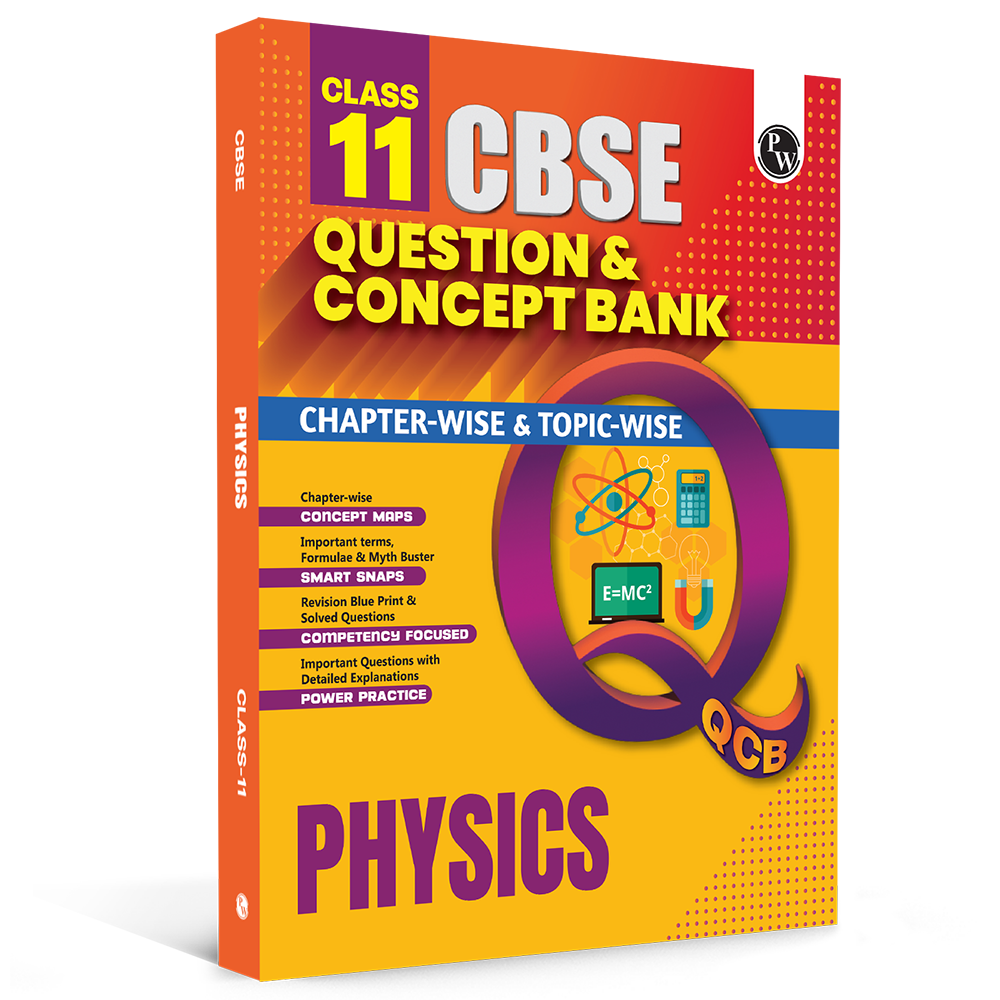
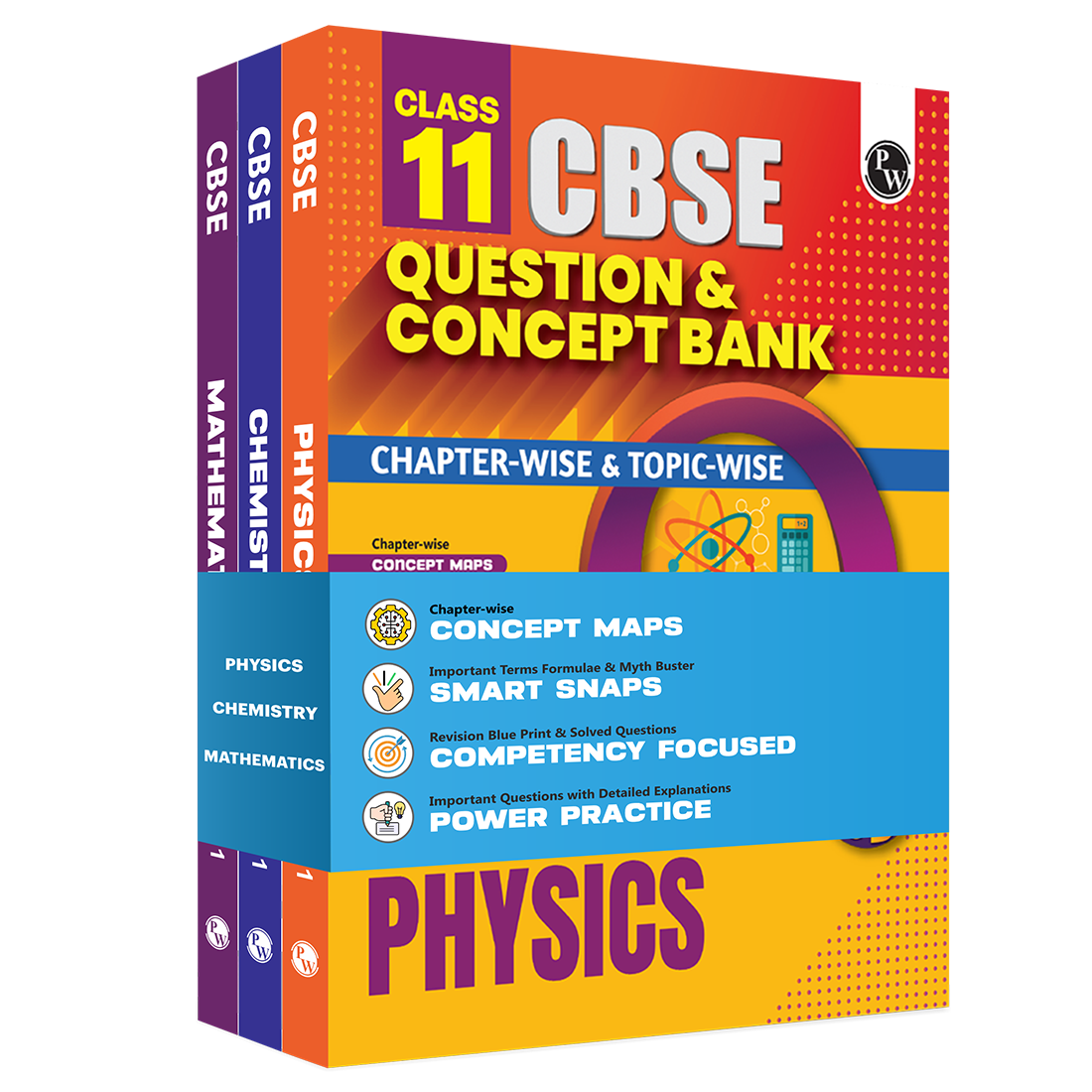
Check Out: CBSE Class 11 Books
CBSE Class 11 Physics Syllabus Overview
The curriculum is meant to push students away from memorising facts and toward learning how to use what they know. The physics syllabus has ten units, from the basics of measurement to the complicated behaviour of waves.
The theoretical paper is worth 70 points, and the internal assessment and practicals are worth the other 30 points. Students must finish the curriculum in the time given so that they have ample time to review.
CBSE Class 11 Physics Unit-Wise Marks Distribution
The CBSE Class 11 Physics syllabus is broken up into units, each with its own number of marks. This helps students know which topics to focus on when studying for the test.
|
Unit Number |
Unit Name |
Marks |
|
Unit I |
Physical World and Measurement |
23 Marks (Combined with Units II & III) |
|
Unit II |
Kinematics |
|
|
Unit III |
Laws of Motion |
|
|
Unit IV |
Work, Energy, and Power |
17 Marks (Combined with Units V & VI) |
|
Unit V |
Motion of System of Particles and Rigid Body |
|
|
Unit VI |
Gravitation |
|
|
Unit VII |
Properties of Bulk Matter |
20 Marks (Combined with Units VIII & IX) |
|
Unit VIII |
Thermodynamics |
|
|
Unit IX |
Behaviour of Perfect Gases and Kinetic Theory of Gases |
|
|
Unit X |
Oscillations and Waves |
10 Marks |
|
Total |
70 Marks |
Check out: CBSE Class 11 Question Bank
CBSE Class 11 Physics Chapters List Part 1
To understand the CBSE class 11 physics syllabus , you need to look at the main ideas that each unit covers. Here is a more in-depth look at the main chapters.
Unit I: Physical World and Measurement
This unit is the basis for all scientific computations.
-
Units and Measurements: This course is all about the International System of Units (SI), basic and derived units, and important figures.
-
Key Skills: Students learn about mistakes in measuring and dimensional analysis, which are very important for checking physical equations.
Unit II: Kinematics
Kinematics is the study of motion without looking at what causes it. It is one of the most important chapters for scoring.
-
Straight-Line Motion: Talks about displacement, velocity, and acceleration-time graphs.
-
Motion in a Plane: Introduces vectors, scalar values, and projectile motion. This chapter requires a good grasp of basic trigonometry.
Unit III: Laws of Motion
This unit talks about the idea of "force."
-
Newton's Laws: This book is about inertia, momentum, and the three laws of motion.
-
Friction: Knowing the different kinds of friction and how they change the way things move on different surfaces.
-
Circular Motion: Centripetal force and how cars move on banked roadways are both parts of circular motion.
Unit IV: Work, Energy, and Power
This is a part of the CBSE class 11 syllabus that is very important.
-
Work-Energy Theorem: Understanding how work done relates to kinetic energy.
-
Conservation of Energy: An examination of potential energy, spring constants, and elastic and inelastic collisions.
Unit V: Motion of System of Particles and Rigid Body
This unit goes from point objects to extended bodies, which many people think is the hardest section of the CBSE 11 physics chapters.
-
Centre of Mass: Finding the place where different systems are balanced.
-
Rotational Dynamics: Torque, angular momentum, and the moment of inertia are all ideas.
Unit VI: Gravitation
This section links the physics of the Earth with the physics of the stars.
-
Kepler's Laws: The paths that planets and satellites take.
-
The universal law of gravitation explains how acceleration due to gravity (g) changes with height and depth.
-
Escape Velocity: The amount of energy needed to break free from a planet's gravity.
CBSE Class 11 Physics Syllabus Chapters List Part 2
The second half of the Class 11th CBSE Physics syllabus is all about the characteristics of materials and thermal physics.
Unit VII: Properties of Bulk Matter
-
Mechanical Properties of Solids: Hooke's law, elasticity, stress and strain
-
Mechanical Properties of Fluids: include pressure, Pascal's law, Bernoulli's principle, and viscosity.
-
Thermal Properties of Matter: Heat, temperature, thermal expansion, and specific heat capacity.
Unit VIII: Thermodynamics
This unit looks at how heat and work are related.
-
Laws of Thermodynamics: There are three laws of thermodynamics: the zeroth, the first, and the second.
-
Heat Engines: Understanding reversible and irreversible processes (though some specific cycles might be in the deleted syllabus).
Unit IX: Kinetic Theory of Gases
-
The molecular nature of matter: how the way molecules travel affects the temperature and pressure of a gas.
-
Degrees of Freedom: Figuring out the specific temperatures of different kinds of gases.
Unit X: Oscillations and Waves
The last unit is about motion that happens over and over again.
-
Simple Harmonic Motion (SHM): Learning about spring systems and pendulums.
-
Wave Motion: The speed of sound, transverse and longitudinal waves, and the Doppler effect.
Check out: PW Stationery
CBSE Class 11 Physics Deleted Syllabus 2026-27
CBSE has taken out a few topics to keep the curriculum up-to-date. Students might avoid wasting time on non-evaluative content by keeping track of the deleted syllabus.
-
Physical World: A lot of the opening portions about the range and excitement of physics have been taken out or rendered non-evaluative.
-
Specific Heat Engines: Some parts of the heat engine and refrigerator sections in thermodynamics have been cut down.
-
Doppler Effect in Sound: Some specific derivations have been made easier in the board syllabus, although they are still important for competitive exams.
-
Rolling Motion: The intricate mathematical derivations of rolling motion in rigid body dynamics have been simplified.
CBSE Class 11 Physics Practical Marks and Internal Assessment
The CBSE class 11 physics syllabus doesn't merely include theory. The 30-mark practical part is very important for a high total score.
-
Experiments: Students must do at least 8 experiments, 4 from each section.
-
Activities: A minimum of 6 activities (3 from each section) must be documented.
-
Project: An investigation that involves gathering data or constructing models.
-
Viva Voce: Oral questioning based on the experiments and the project.
Class 11 Physics Experiments and Activities List
Common Experiments:
-
Use of Vernier calipers for measurement
-
Use of screw gauge for thickness measurement
-
Determination of Young’s modulus
-
Surface tension experiments
-
Viscosity of liquids
-
Sonometer experiment for frequency
Common Activities:
-
To study the cooling curve of a liquid
-
To observe the variation of pressure with depth
-
To analyse motion using simple tools
These experiments help students understand concepts practically and improve their performance in viva and practical exams.
Study Plan for Class 11 Physics Preparation
A well-organised study plan helps you finish the course quickly and gives you ample time to review.
Phase 1: Building Concept
-
Concentrate on the NCERT theory.
-
Get a handle on basic ideas and how they come about.
-
Make your basics strong
Phase 2: Practice and Application
-
Answer NCERT questions and example problems.
-
Do maths problems every day
-
Pay attention to essential topics like Thermodynamics and Laws of Motion.
Phase 3 Testing and Revision
-
Go over formulas and ideas often.
-
Answer questions from last year.
-
Take practice tests to get better at speed and accuracy.
Following this plan will help you cover the entire curriculum and do better on the test.
Preparation Tips for Class 11 Physics Syllabus
-
Focus on Derivations: CBSE often wants direct derivations of formulas, especially in kinematics and gravitation.
-
Graph Analysis: Practice interpreting velocity-time and stress-strain graphs. These are frequently featured in the physics CBSE class 11 syllabus exams.
-
Numerical Practice: Physics is incomplete without math. Make sure you work through the NCERT example problems for each chapter.
-
Unit Conversion: Always check your units twice. A common mistake in physics chapters, such as Properties of Bulk Matter, is not changing units to the SI system.
Read More: CBSE Class 11 Important Topics - Subject Wise
CBSE Class 11 Physics Syllabus FAQs
Is the CBSE class 11 physics syllabus difficult for beginners?
The syllabus is a considerable jump from Class 10. By focusing on important physics chapters like Vectors and Laws of Motion early on, students may build the logical framework they need to grasp difficult ideas later.
Which units have the highest weightage in the physics CBSE class 11 syllabus?
The block with the most marks (23) is the one with Physical World, Kinematics, and Laws of Motion. The block with the second most marks (20) is the one with Properties of Bulk Matter and Thermodynamics.
Where can I find the deleted syllabus of class 11 physics?
The official CBSE academic website usually provides the most recent version of the syllabus that was erased. It usually features a lot of hard-to-understand derivations and extra chapters at the beginning to help people learn.
Are NCERT books enough for the class 11th CBSE physics syllabus?
NCERT is the main source for the CBSE Class 11 Physics syllabus. You need to master NCERT theory and back exercises inside and out to do well on school assessments but credible study material can help you get even better.
How many chapters are there in the CBSE 11 physics chapters list?
There are 15 chapters in all, and they are grouped into 10 units.make sure to check deleted syllabus of class 11 physics on official sources.