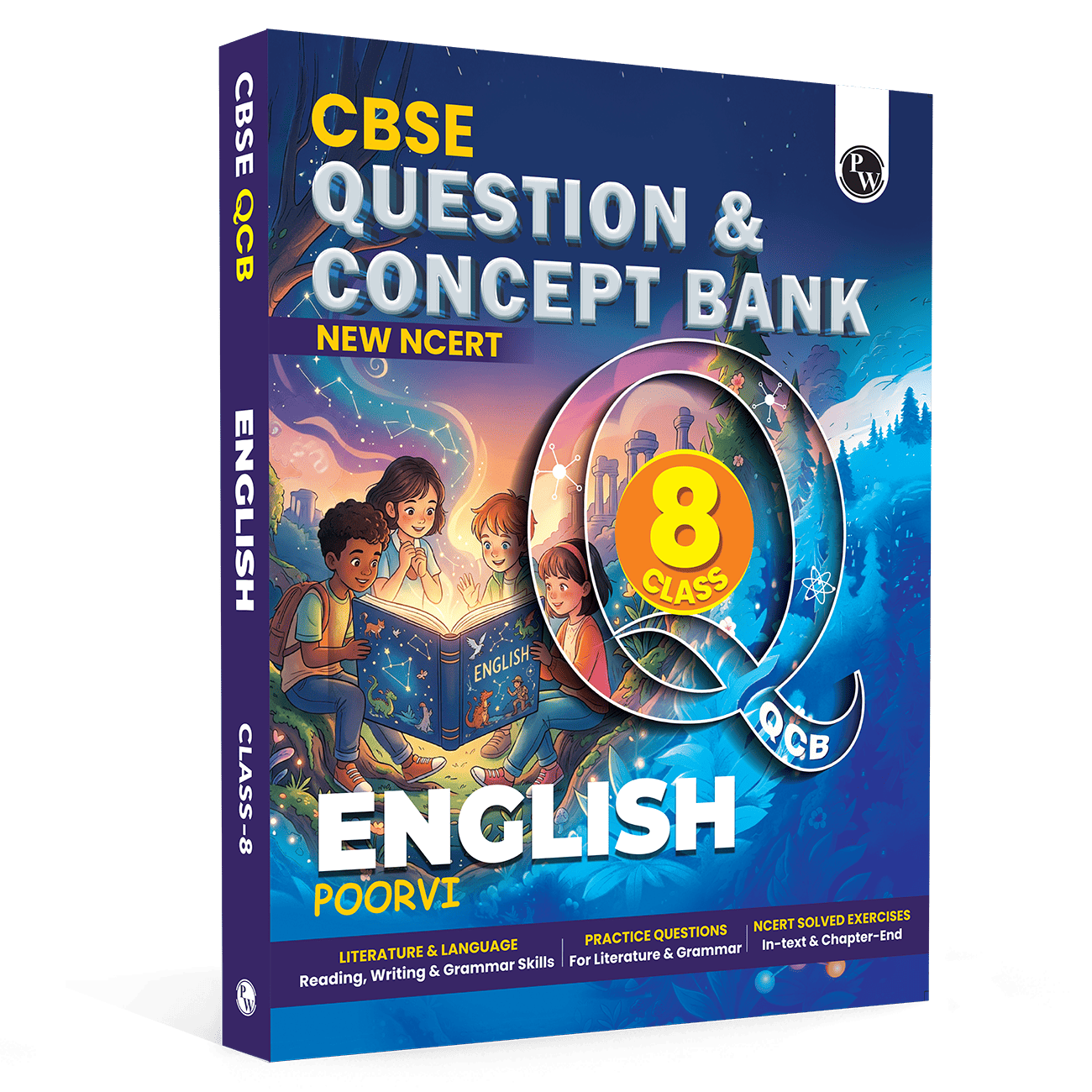
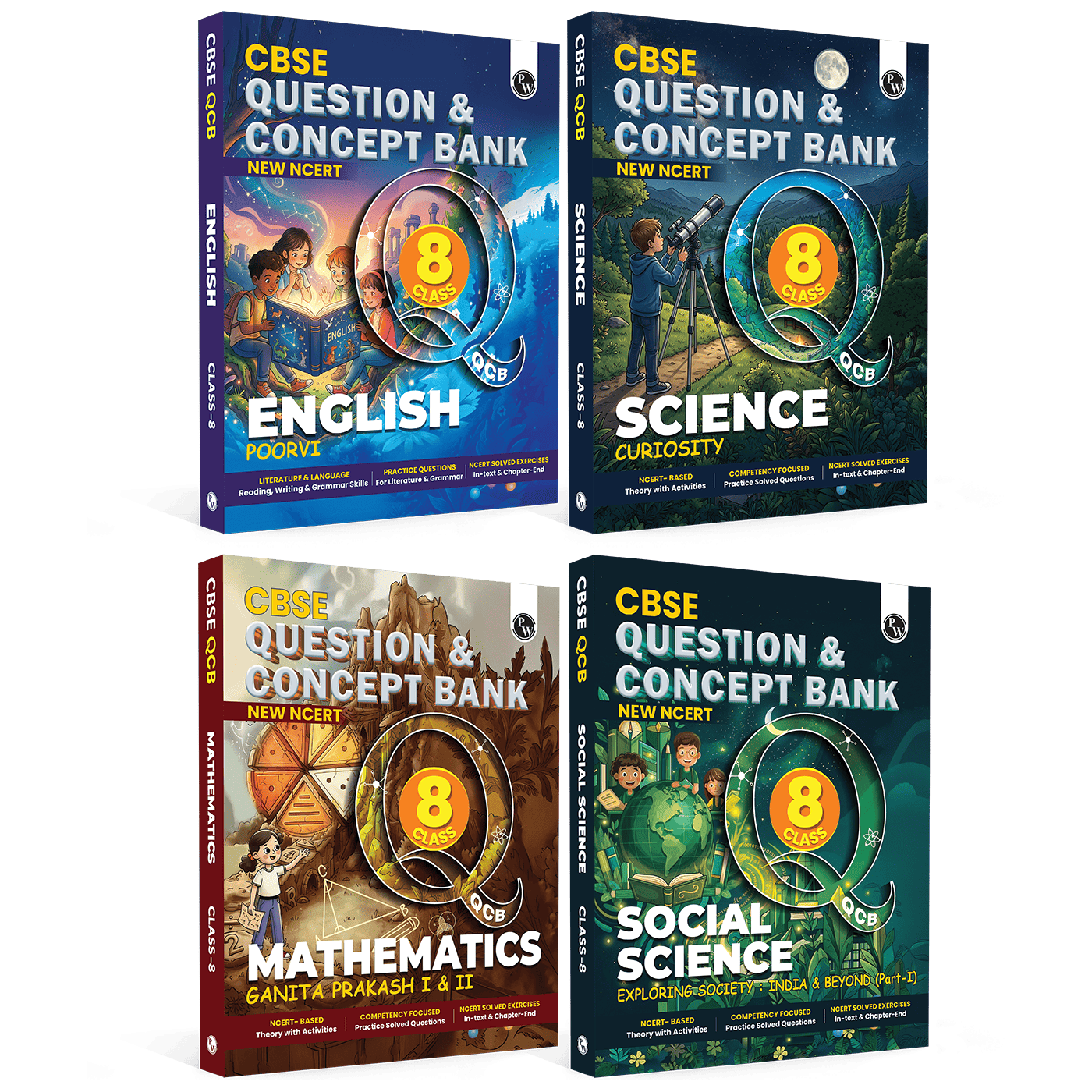
How to Improve English Preparation with CBSE Class 8 Question Bank
Studying English in middle school is challenging since language tests measure practical comprehension, creative writing and grammar application, not rote memorization. Students sometimes struggle to balance their time between literature chapters and language rules, which can result in poorer grades on exams. A organized Class 8 English question bank offers targeted practice material, clear grammatical rules and detailed literature breakdowns, perfectly linked with the new NCERT curriculum to overcome this precise problem.
Why You Need a Class 8 English Question Bank
English is a subject that needs regular practice, analytical thinking and exposure to many types of questions. Textbooks alone may not be enough to prepare students for exams, as the activities in textbooks do not necessarily match the exact format of school evaluations. A full question bank fills this gap by providing you with structured practice that is geared for school examination criteria.
Moving Beyond Rote Learning
Language acquisition is about functional understanding, not line-by-line memorization of answers. Students using specialized practice tools will encounter a broad range of passage styles and question models. This exposure helps learners know how to organize their replies rationally and to communicate concepts clearly.
-
Enhanced Problem-Solving: Regular exercise with varied question types sharpens analytical ability.
-
Targeted Preparation: Focused chapter-wise sections allow students to address specific weak points without wasting time.
-
Pattern Awareness: Practice with unseen passages and creative prompts familiarises learners with typical examination structures.
Using a well-designed English practice book enables students to evaluate their own progress independently. By checking their answers against step-by-step solutions, learners instantly recognise structural mistakes, spelling errors, and grammatical slips before appearing for actual school tests.
Aligning with the Latest CBSE Syllabus
The Central Board of Secondary Education frequently updates its curriculum guidelines to focus more on competency-based learning and critical thinking. The modern syllabus for CBSE English class 8 emphasizes understanding context over simple factual recall.
|
Learning Area |
Traditional Approach |
Modern Competency-Based Approach |
|
Reading Section |
Simple direct extraction from passages |
Inference, vocabulary evaluation, and contextual analysis |
|
Grammar Section |
Isolated definition memorisation |
Contextual application, editing, and sentence transformation |
|
Writing Section |
Fixed format repetition |
Creative expression, logical flow, and tone adaptability |
|
Literature Section |
Rote learning of direct answers |
Character analysis, thematic understanding, and value-based prompts |
By engaging with updated practice books, students ensure that their study habits align perfectly with the current assessment standards. This targeted approach prevents surprise questions during examinations and builds genuine confidence across all four sections of the English paper.
How to Use a Class 8 English Question Bank for Reading Skills
Learning Unseen Passages
Unseen prose passages and poems require active reading habits. A quality question bank includes diverse reading materials, ranging from factual reports and discursive essays to narrative excerpts and descriptive passages.
To maximize score potential in the reading section, follow these strategic steps when working through practice passages:
-
Pre-reading the Questions: Skim through the given questions before reading the actual passage. This highlights key words and helps locate specific answers faster.
-
Annotating Key Information: Underline dates, names, main themes, and transitional markers while reading through the text for the first time.
-
Contextual Vocabulary Building: When encountering unfamiliar words, analyze the surrounding sentences to deduce their meanings logically instead of guessing blindly.
-
Direct vs Inferential Answers: Learn to distinguish between direct factual questions and inferential questions that require interpreting authorial tone or underlying themes.
Strategies for Discursive and Factual Passages
Factual passages focus on data, historical facts, or scientific descriptions, whereas discursive passages involve opinions, arguments, and complex ideas. Regular work with an English workbook trains students to adapt their reading speed and analytical focus depending on the passage type.
-
For Factual Passages: Focus on precision. Ensure that statistics, names, and sequential events mentioned in your answers match the source text exactly.
-
For Discursive Passages: Pay attention to the logical transition between paragraphs. Identify the central argument, supporting arguments, and the author's final conclusion.
-
For Unseen Poems: Focus on literary devices, rhyme schemes, imagery, and emotional tone rather than attempting a word-for-word literal translation.
Consistent practice with diverse reading texts reduces reading anxiety, increases comprehension speed, and helps students allocate their exam time efficiently.
How to Learn Grammar with a Class 8 English Question Bank
Grammar forms the core foundation of language accuracy. A strong grasp of grammatical rules improves not only the language paper results but also overall writing quality across all academic subjects. However, studying grammar purely through abstract rules can feel dry and confusing.
Structured Approach to English Grammar Practice
Effective grammar practice requires moving from basic rule identification to active contextual application. A specialized CBSE class 8 question bank presents grammar topics through clear explanations followed by targeted exercises.
Key grammar topics that require focused practice include:
-
Tenses and Agreement: Correct subject-verb agreement and appropriate tense usage across past, present, and future contexts.
-
Reported Speech and Active/Passive Voice: Rules for transforming direct speech to indirect speech and shifting sentence focus between active and passive forms.
-
Determiners and Prepositions: Accurate selection of articles, possessives, quantifiers, and positional prepositions.
-
Editing and Omission: Identifying grammatical errors within a given paragraph and inserting missing words correctly.
-
Sentence Reordering: Rearranging jumbled phrases to form meaningful, grammatically correct sentences.
Converting Grammar Rules into Writing Fluency
Understanding a rule theoretically is only half the battle; applying it correctly while writing under pressure is what earns top marks. Dedicated workbook exercises provide immediate feedback through comprehensive answer keys, helping students spot repeating patterns of error.
When revising grammar, systematically track recurring mistakes in a separate revision notebook. If prepositions or tense consistency frequently cause errors during practice sessions, return to the core rules and resolve ten focused questions daily until the concept becomes second nature.
How to Practice Writing Skills Using Class 8 English Question Bank
The writing section evaluates a student's ability to communicate ideas clearly, structure compositions logically, and maintain correct formats. Whether writing formal letters, notices, paragraphs, or creative stories, practice is essential for building fluency and confidence.
Format Precision and Structural Clarity
Examiners assign specific marks for adhering to correct formats. A comprehensive English question bank provides clear template layouts and sample answers for every standard writing task.
-
Notice Writing: Brief, precise, and contained within a box. Must highlight the event, date, venue, target audience, and issuing authority without unnecessary details.
-
Formal and Informal Letters: Clear block layout, correct salutations, concise body paragraphs, and appropriate closing sign-offs.
-
Paragraph Writing: Strong opening topic sentence, coherent supporting details, and a clear concluding thought.
-
Story Writing: Creative plot development, logical sequence of events, character introduction, and a meaningful conclusion or moral.
Enhancing Vocabulary and Expressions
Good writing has little to do with proper formatting; it has everything to do with different types of sentences and a precise vocabulary. Students work via practice modules to replace repetitive language with expressive replacements and great action verbs.
Pro Tip for Writing: Always allocate two minutes before writing to draft a quick mental outline of your paragraphs. Spend one minute at the end checking for punctuation, spelling, and tense errors.
Regular composition practice using structured question sets ensures that students learn to express complex thoughts within specified word limits.
Literature Revision with Class 8 English Question Bank
Literature forms a major portion of the school curriculum. Preparing for literature involves understanding narrative plots, analyzing character motivations, interpreting poetic devices, and articulating thematic messages clearly.
Simplifying Chapter-Wise Study
The new NCERT English curriculum for Class 8 introduces rich prose and poetry selections that demand deep textual comprehension. A well-organized class 8 English question bank breaks down each chapter into manageable study units.
To learn literature effectively during your English revision sessions, structure your preparation around these core steps:
-
Chapter Summaries: Go through short summaries to jog your memory on essential plot points, character development and major themes.
-
Key Vocabulary and Glossary: Go over challenging words and expressions in the text to help you answer questions on vocabulary in extracts.
-
Extract Based Questions: Practice the short questions based on straight quotes or stanzas to measure contextual awareness.
-
Short and Long Answer Questions: Write organized answers that clearly answer the question prompt using specific evidence from the text.
-
Competency and Value-Based Questions: Train yourself to connect chapter themes to real-world scenarios or personal reflections.
Answering Literature Questions Effectively
Literature answers ought to be concise, well-structured and clearly linked to the prompt to earn a score well. Do not write lengthy summary retellings when requested for character analysis or thematic critique.
-
For Extract-Based Prompts: For prompts that are extract-based, you should be able to identify the author, poem or prose accurately and give the context of the statement in simple and exact language.
-
For short response prompts: Get straight to the main idea with concentrated answers (30-40 words), avoiding any fluff.
-
For Long-Answer Prompts: Begin with a brief introductory statement, develop your main points across one or two structured body paragraphs, and conclude with a crisp summarizing thought.
Also Check - PW Umang For Class 8 Combo Set of 5 Books
How to Create a Study Plan with Class 8 English Question Bank
By having a question bank as part of your regular study regimen, you’ll improve gradually rather than having to cram at the last minute before an exam. A planned timetable is very useful in balancing reading, grammar, writing and revision of literature properly.
Weekly Study Schedule Breakdown
By allocating certain days to distinct parts of the syllabus, you can make sure you have an even spread of preparation over the whole subject.
-
Monday & Tuesday (Reading Section): Do two unseen passages or poems from your practice book. Prioritize speed and accuracy of vocabulary.
-
Wednesday & Thursday (Grammar Section): Focus on one specific grammar topic. Work through concept explanations followed by twenty practice exercises.
-
Friday (Writing Section): Practice one short-format writing task (like a notice or message) and one long-format task (like a letter or story).
-
Saturday (Literature Section): Read two chapters or poetry. To practice speed and clarity of handwriting write out comprehensive responses for short and long questions.
-
Sunday (Review & Self-Assessment): Review your weekly answers using the solutions key. Identify mistakes that you repeat often and focus on these weak areas.
Self-Assessment and Mock Examinations
One of the right strategies to increase speed and stamina is to practice exam conditions at home. Clear your work area of distractions and try full length practice sheets from your workbook without resorting to notes. Set a timer.
The precise answer keys you work with to judge your own performance create an objective eye. Pay very close attention to mark allocation, structure presentation and time management to get yourself totally prepared for exam day.
Read More: Tips to Prepare for Class 8 CBSE Exams
Class 8 English Question Bank FAQs
How does a question bank help in school exam preparation?
Structured chapter-wise summaries, grammar rules, extract based practice and solved example papers as per the latest curriculum in one comprehensive question bank. It prepares the students for the exam format, improves time management and helps identify weak areas at an early stage.
What is the best way to practice grammar using an English workbook?
Start by going over the fundamental rules for a given topic and then quickly follow with some focused practice tasks. Check your answers against the solution key to see the rationale behind correct answers, and keep note of mistakes you are repeatedly making.
Can I use an English question bank for daily English revision?
Yes, using a question bank for 20 to 30 minutes daily is an ideal revision strategy. You can rotate through reading passages, grammar drills, writing tasks, and literature questions across different days of the week.
How are competency-based questions included in CBSE English class 8 books?
The competency questions are designed to test practical application, contextual inference and analytical thinking rather than direct recall. These include reading passages based on cases, situational writing prompts, and thematic literature questions.
Is an English practice book sufficient for learning the reading section?
An practice book is highly effective because it provides diverse unseen prose and poetry extracts with varied question types. Regular practice improves reading speed, comprehension accuracy, and vocabulary skills required for high scores.