CBSE Class 9 Question Bank vs Sample Papers: Which Should You Solve First

Choosing the right study resource can make Class 9 exam preparation more organised. Students often compare a question bank with sample papers to decide what suits their preparation stage. Understanding CBSE class 9 question bank vs sample papers helps learners know when to use each resource for concept practice, revision, and exam-style preparation.
Importance of CBSE Class 9 Question Bank vs Sample Papers for Preparation
To create a strong study schedule, you must understand how each particular preparation tool works. A CBSE class 9 question bank vs sample papers will reveal the distinct phases of learning that each resource caters to. The selection of resources has a direct impact on the way students process theory, practice questions, rewrite formulas and measure their overall preparedness.
A question bank is generally more useful during regular chapter-wise study because it allows students to practise specific concepts soon after learning them. Sample papers, on the other hand, are more suitable when students have covered most of the syllabus and want to practise answering questions within a fixed time. Understanding this difference helps students use both resources without creating gaps in their preparation.
-
Targeted Practice: There is a lot of emphasis on certain sub-topics and questions at the end of each chapter.
-
Time Management: Helps students learn to pace themselves during the three-hour assessment window.
-
Competency Alignment: Prepares students for contemporary, application-based board assessment approaches.
Students must look at how each tool serves a different educational purpose. Prioritising resources incorrectly leads to gaps in foundational knowledge.
Class 9 Question Bank Features for CBSE Exam Preparation
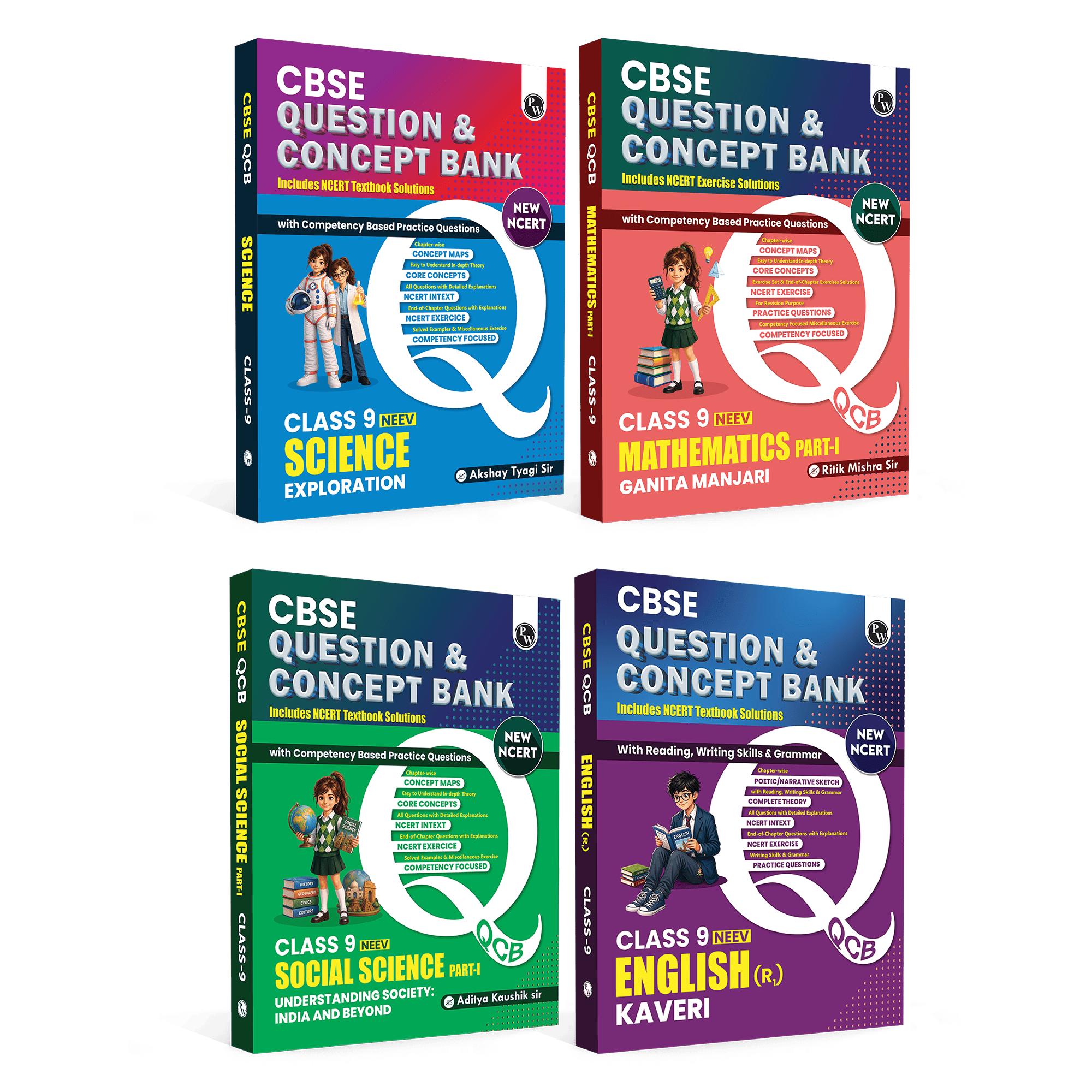
A detailed class 9 question bank is a good resource to establish strong concepts and practice questions chapter wise. For example, publications like CBSE Class 9 New NCERT Question Bank combination provide structured covering. It helps students to revise crucial concepts and apply what they study in their textbooks.
Once a school chapter is completed, a question bank offers students a chance to practice different kinds of questions instead of waiting for the whole syllabus to be finished. It also helps them spot tough ideas early on and spend more time revising issues where they keep making mistakes.
-
Concept Maps: Visual summaries that connect major ideas within a chapter for quick revision.
-
Detailed Theory: Concise explanations that clear up difficult points before problem-solving begins.
-
NCERT Solutions: Step-by-step answers to textbook exercises for better understanding and curriculum alignment.
-
Varied Questions: Includes different question types that help students practise concepts from multiple angles.
-
Chapter-Wise Practice: Allows learners to focus on one topic at a time and track their progress throughout the session.
Using a specialized CBSE Class 9 Question Bank Combo Set Books just after you have completed the school chapter will help you avoid confusion later. It helps learners to practice multiple choice, assertion reasoning, short answer and subjective questions before going toward full length sample papers.
CBSE Class 9 Sample Papers for Exam Practice
The full length sample papers will test your cumulative knowledge under stringent exam settings. Unlike the chapter-wise modules, these exam papers follow exactly the same weightage and pattern as those of the final school assessments.
-
Exam Simulation: Mimics the pressure of a genuine exam hall.
-
Marking Scheme Outline: Explanation of the allocation of marks between parts.
-
Self-Assessment: Highlights the weak areas which need to be revised on priority before the test date.
Attempting CBSE Class 9 sample papers too early can discourage students if their fundamental concepts remain weak. These papers work best as a diagnostic tool after completing major portions of the syllabus.
CBSE Class 9 Question Bank vs Sample Papers Comparison
The following table highlights the main differences between a question bank and sample papers. Understanding these differences can help students choose the right resource based on their preparation stage and study goals.
|
Feature |
Question Bank |
Sample Papers |
|
Primary Purpose |
Chapter-wise mastery and concept building |
Full syllabus testing and speed management |
|
Structure |
Topic-wise segregation with detailed solutions |
Mixed-format questions mimicking final exams |
|
Ideal Time to Use |
Throughout the academic session |
Weeks leading up to the final exams |
|
Difficulty Range |
Easy to advanced, competency-focused |
Standard exam level with strict blueprints |
Reviewing this table clarifies why neither resource can completely replace the other during systematic CBSE class 9 exam preparation.
Question Bank and Sample Papers Preparation Strategy for Class 9
Establishing an effective sequence guarantees maximum grade improvement. Learners should always start with targeted topic practice before moving on to timed evaluation models.
-
Phase One: Read the textbook chapter and review concept maps from a trusted question bank.
-
Phase Two: Solve in-text and high-yield questions to build analytical thinking.
-
Phase Three: Switch to sample papers once the entire syllabus reaches completion.
-
Phase Four: Track speed, accuracy, and error logs using standard answer keys.
Following this step-by-step workflow transforms chaotic studying into a focused, goal-oriented routine.
NCERT Updates for Class 9 Question Bank and Sample Papers
Adapting to revised textbook patterns requires students to update their study methodology. Modern tests evaluate critical thinking rather than rote memorisation.
-
Syllabus Changes: Newer guidelines emphasize competency-based questions that test practical understanding.
-
Updated Resources: A standard question bank incorporates these changes directly into chapter exercises.
-
Analytical Shift: Students must connect theoretical chapters to real-world scenarios.
Recognising curriculum shifts ensures that your study hours are spent understanding relevant competencies rather than outdated patterns.
Common Mistakes While Using Class 9 Question Banks and Sample Papers
Unstructured study habits often sabotage academic performance despite long hours of revision. Avoiding common mistakes keeps your preparation on track.
-
Premature Testing: Jumping straight into sample papers without reading chapters causes low scores and frustration.
-
Ignoring Mistakes: Failing to review incorrect answers prevents long-term improvement.
-
Neglecting Formulas: Skipping regular formula revisions leads to silly calculation errors under exam pressure.
Identifying these traps early with the help of CBSE Class 9 Books allows learners to correct course and build a disciplined, error-free study routine.
How to Balance Class 9 Question Bank and Sample Paper Practice
Managing regular school assessments alongside self-directed practice requires careful planning. Integrating both aspects prevents burnout during peak exam months.
-
Weekly Goals: Dedicate specific weekdays to finishing chapter modules in your question bank.
-
Weekend Mock Tests: Reserve weekends for attempting full-length sample papers under timed conditions.
-
Doubt Resolution: Clear tricky concepts with teachers or mentors immediately to avoid piling up backlogs.
Building confidence over time has a natural rhythm that involves balancing school assessments with independent practice.
Read More: CBSE Class 9 Important Questions for All Subjects
CBSE Class 9 Question Bank vs Sample Papers FAQs
1. Which book should I pick first during CBSE class 9 question bank vs sample papers planning?
Start with a chapter-specific question bank to secure your fundamentals and clear core concepts before attempting full tests.
2. Can I skip a question bank and solve only CBSE Class 9 sample papers?
Skipping chapter practice causes huge knowledge gaps because sample papers examine the whole curriculum at once and do not concentrate on specific weak points.
3. How do Class 9 sample papers improve my exam scores?
They train your brain on time management, lessen exam anxiety and teach you how to compose accurate answers according to established marking systems .
4. Are practice papers different from a standard Class 9 question bank or sample papers?
School worksheets are often called as practice papers. Standard question banks provide well-structured concept maps, detailed theory and plenty of exercises.
5. What role does CBSE class 9 exam preparation play in higher grades?
Rigorous practice in secondary classes builds strong analytical thinking and problem-solving skills required for future board examinations and competitive tests.