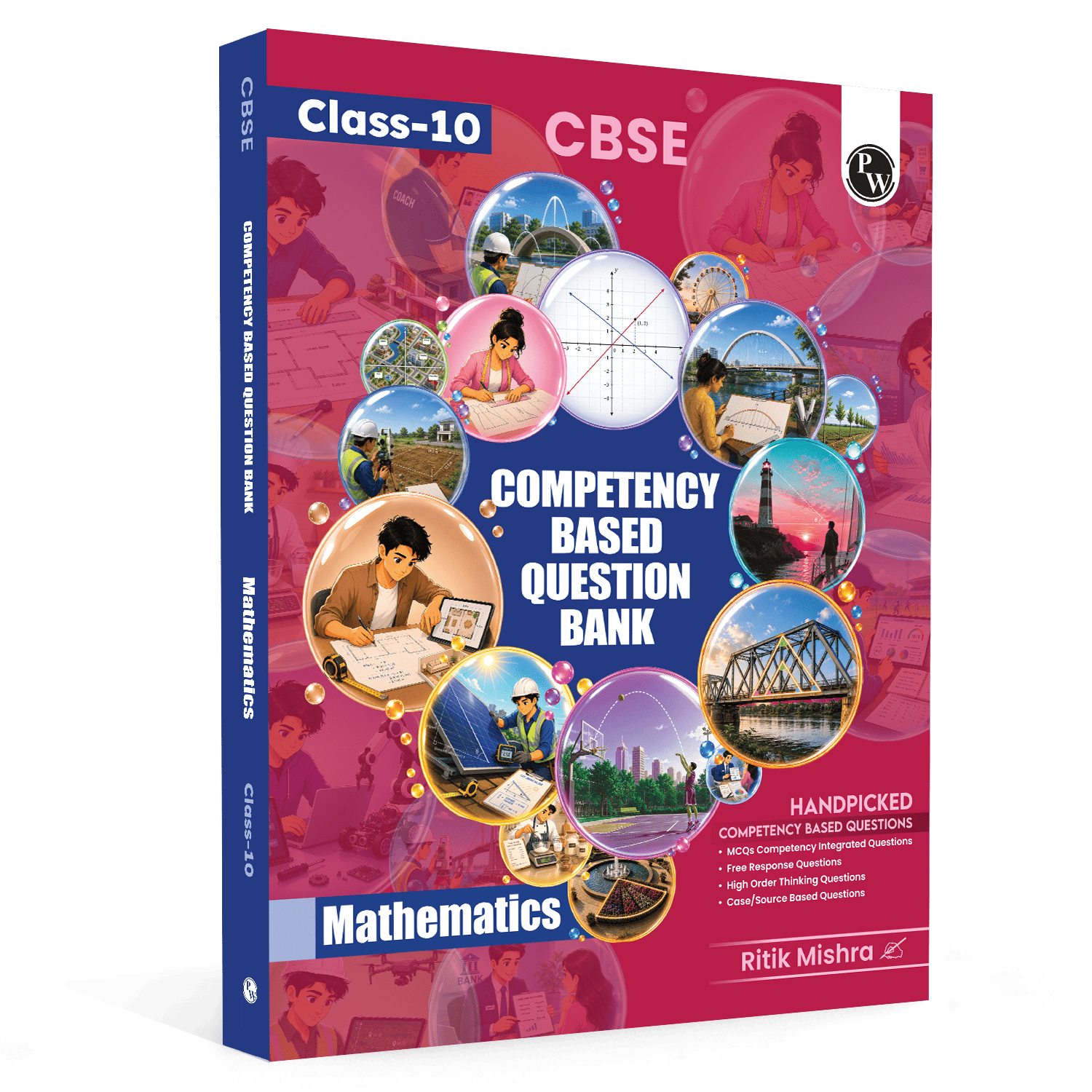
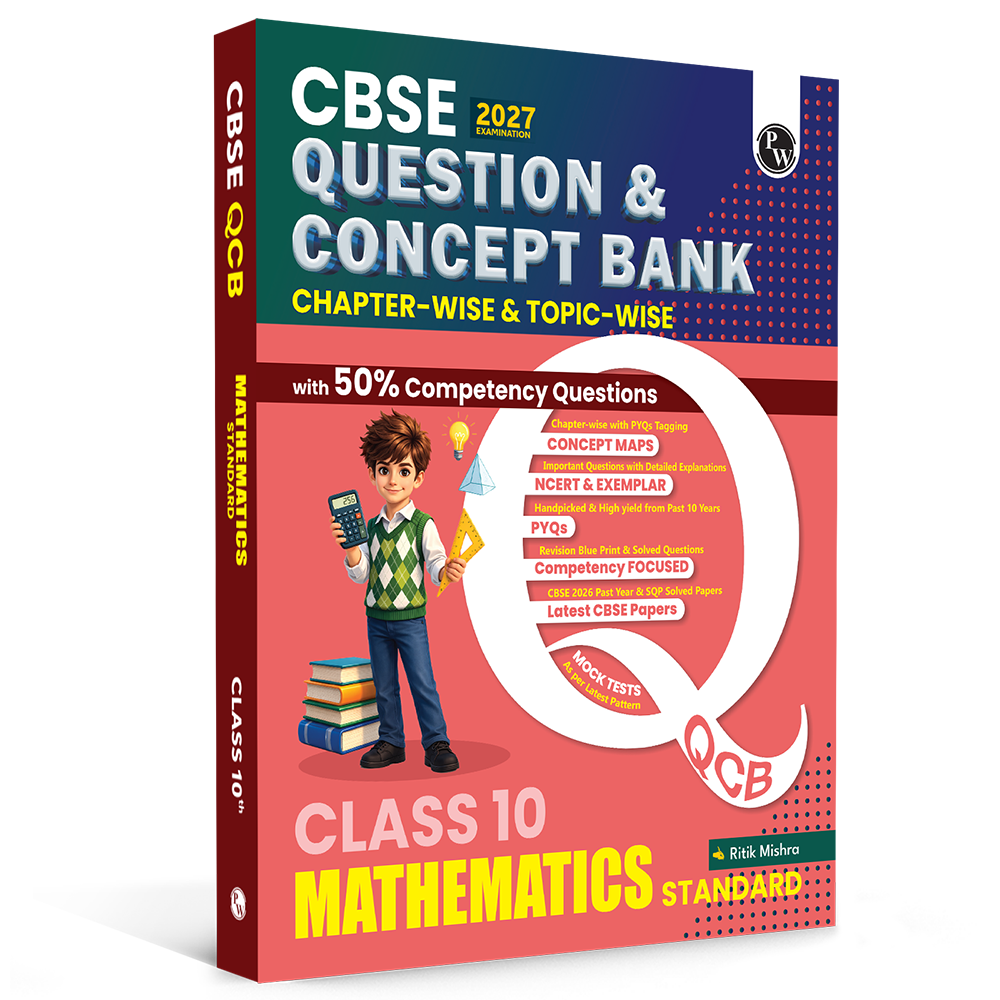
How Many Class 10 Competency-Based Maths Questions Should You Solve Daily?

Sitting for hours over complex equations often leads to mental fatigue rather than true concept clarity. The recent shift towards application-heavy board evaluation means memorising steps is no longer enough to secure top marks.
Many learners find themselves stuck when facing real-life scenario problems, case studies, and analytical questions during tests. Finding a balanced, manageable daily routine is the key to mastering these practical assessments without burnout.
By focusing on targeted Class 10 maths competency questions every day, you can steadily build confidence and improve your problem-solving speed.
Importance of Class 10 Maths Competency Questions
Modern board evaluations have shifted dramatically away from basic memorisation, focusing instead on practical application and analytical thinking. Integrating targeted Class 10 maths competency questions into your daily routine changes how you understand mathematical principles.
Alignment with NEP 2020 Guidelines
-
Experiential Learning Focus: The latest curriculum follows NEP 2020 guidelines to ensure students apply concepts to real-world situations.
-
Shift Beyond Rote Learning: Questions encourage logical deduction and critical analysis rather than repeating memorised steps.
-
Curriculum-Aligned Revision: Practicing application problems offers effective board exam preparation and reinforces Classroom lessons.
Core Skills Developed Through Practical Practice
-
Analytical Thinking Development: Long narrative context passages train you to pull out relevant numerical data quickly.
-
Real-Life Application-Based Learning: Problems connect core mathematical theories with practical scenarios like architecture, business, and geometry.
-
Step-Wise Marking Scheme Precision: Working through detailed solutions helps you present structured answers that secure full marks.
Engaging in regular competency-based maths practice makes complex exam papers feel familiar and manageable.
How Many Class 10 Maths Competency Questions Should You Solve Daily?
Focusing on quality over raw quantity is essential when working through analytical problems. Solving five well-structured application problems thoroughly offers far greater value than skimming through dozens of basic equations.
|
Student Preparation Level |
Daily Target |
Primary Question Types |
Weekly Total |
|
Beginner |
3 to 5 questions |
MCQs & Assertion-Reasoning |
20 to 25 questions |
|
Intermediate |
5 to 8 questions |
Subjective & Case-Based Questions |
35 to 40 questions |
|
Advanced |
8 to 12 questions |
Complex Case Studies & Exemplar Support |
50+ questions |
To maintain effective daily maths practice Class 10, distribute your daily workload across various format types:
-
2 Multiple Choice Questions (MCQs): Quick application checks that test speed and accuracy under pressure.
-
2 Assertion & Reason Problems: Excellent exercises for validating logical statements and core definitions.
-
2 Case-Based Questions: Practical contextual passages that test your ability to solve multi-part real-world problems.
-
2 Subjective Questions: Comprehensive word problems that require step-by-step mathematical reasoning.
This balanced mix ensures complete coverage of all standard CBSE Class 10 maths questions bank without causing study fatigue.
When to Use Class 10 Maths Competency Questions?
Timing your practice correctly throughout the academic term prevents last-minute stress and ensures steady skill progression.
Early Academic Session (Concept Building)
-
Begin tackling application problems right after finishing the initial textbook exercises for a unit.
-
Rely on a dedicated maths question bank to explore 400+ competency-based questions covering every chapter.
-
Focus entirely on understanding step-by-step methodologies rather than worrying about speed.
Mid-Session Phase (Skill Strengthening)
-
Integrate NCERT Exemplar support to complement standard Classroom learning and deepen topic comprehension.
-
Introduce timed practice sessions to build real exam pacing and time management skills.
-
Target weak chapters where real-life application questions feel particularly challenging.
Final Revision Phase (Exam Readiness)
-
Reserve study slots for mixed-topic practice tests to adapt quickly between different mathematical concepts.
-
Refine your writing style using step-wise marking schemes to maximize answer presentation marks.
-
Follow a structured Class 10 maths study plan during pre-board preparation to build confidence for board exams.
Study Strategy Plan for Class 10 Maths Competency Questions
Having a structured study workflow transforms random practice into measurable exam success. Using CBSE Class 10 Question Bank alongside a step-by-step daily plan helps organise chapter-wise practice, identify weak areas, improve accuracy, and steadily strengthen analytical problem-solving skills.
Phase 1: Master Core Concepts First
Never jump directly into complex application scenarios without reviewing basic definitions, formulas, and standard textbook exercises. Strong foundational knowledge makes solving Class 10 maths competency questions much easier.
Phase 2: Establish a Fixed Practice Schedule
Assign a dedicated 45-minute block every evening purely for application questions. Treating this window as a non-negotiable routine builds long-term consistency and study discipline.
Phase 3: Active Solution Analysis
When checking detailed solutions, avoid simply reading through the steps. Cover the solution write-up and reconstruct the steps manually in your notebook to build muscle memory for accurate answer writing.
Phase 4: Track Recurring Errors
Maintain a separate notebook to record mistakes made during daily practice. Reviewing calculation errors, misread word problems, or forgotten formulas every week stops you from repeating the same mistakes on test day.
Common Mistakes to Avoid While Solving Class 10 Maths Competency Questions
Even dedicated students make predictable errors when transitioning to application-driven mathematics. Avoiding these common traps keeps your preparation on the right track. Using CBSE Class 10 Books alongside regular practice can help strengthen concepts, improve understanding of application-based questions, and reduce common mistakes during board exam preparation..
-
Overlooking the Step-Wise Marking Scheme
Many learners focus only on calculating the final answer, assuming a correct number guarantees full marks. Board examiners award specific credit for writing down formulas, substituting variables correctly, and stating proper units. Skipping intermediate steps leads to unnecessary point deductions.
-
Misinterpreting Case Study Passages
Case-based questions feature real-life descriptions to set up practical scenarios. A common mistake is skimming through the passage too quickly and missing vital numerical conditions hidden inside the text. Always underline given values, variables, and constraints during your first read.
-
Skipping Foundational Practice
Attempting high-level application questions before gaining full clarity on standard textbook problems leads to confusion and wasted effort. Ensure you master standard textbook exercises before diving into advanced Class 10 maths competency questions.
Read More: One Shot Revision Tips for CBSE Class 10 Students
Class 10 Maths FAQs
What are Class 10 maths competency questions?
They are real-life application-based problems designed to test logical thinking, problem-solving abilities, and concept clarity rather than simple rote memorisation.
How do competency questions differ from standard textbook problems?
Standard problems provide direct numbers for formula calculations, whereas competency questions present practical scenarios where you must extract data and decide which mathematical method to apply.
Is solving 5 competency questions daily enough for board exams?
Yes, solving 5 to 8 well-structured Class 10 maths competency questions daily provides consistent skill development without causing study fatigue.
What question formats are included in competency-based practice?
Competency-based practice includes MCQs, Assertion & Reason, Subjective problems, and Case-Based scenario questions aligned with the latest CBSE pattern.
How does competency practice assist in overall board exam preparation?
It improves analytical thinking, sharpens real-world problem-solving, and trains you to present answers according to official step-wise marking schemes.