How PW Class 10 Question Bank Cover Latest CBSE Exam Pattern?
Mid-term examinations are right around the corner, and the stress of balancing daily revision with school tests is starting to build up. Navigating through multiple reference books, revising lengthy chapters, and figuring out what to focus on during mid-term prep can feel overwhelmingly difficult.
A structured Class 10 question bank provides targeted practice, aligned with current evaluation formats, so you can spend less time worrying and more time building exam-day confidence.
Overview of Class 10 Question Bank?
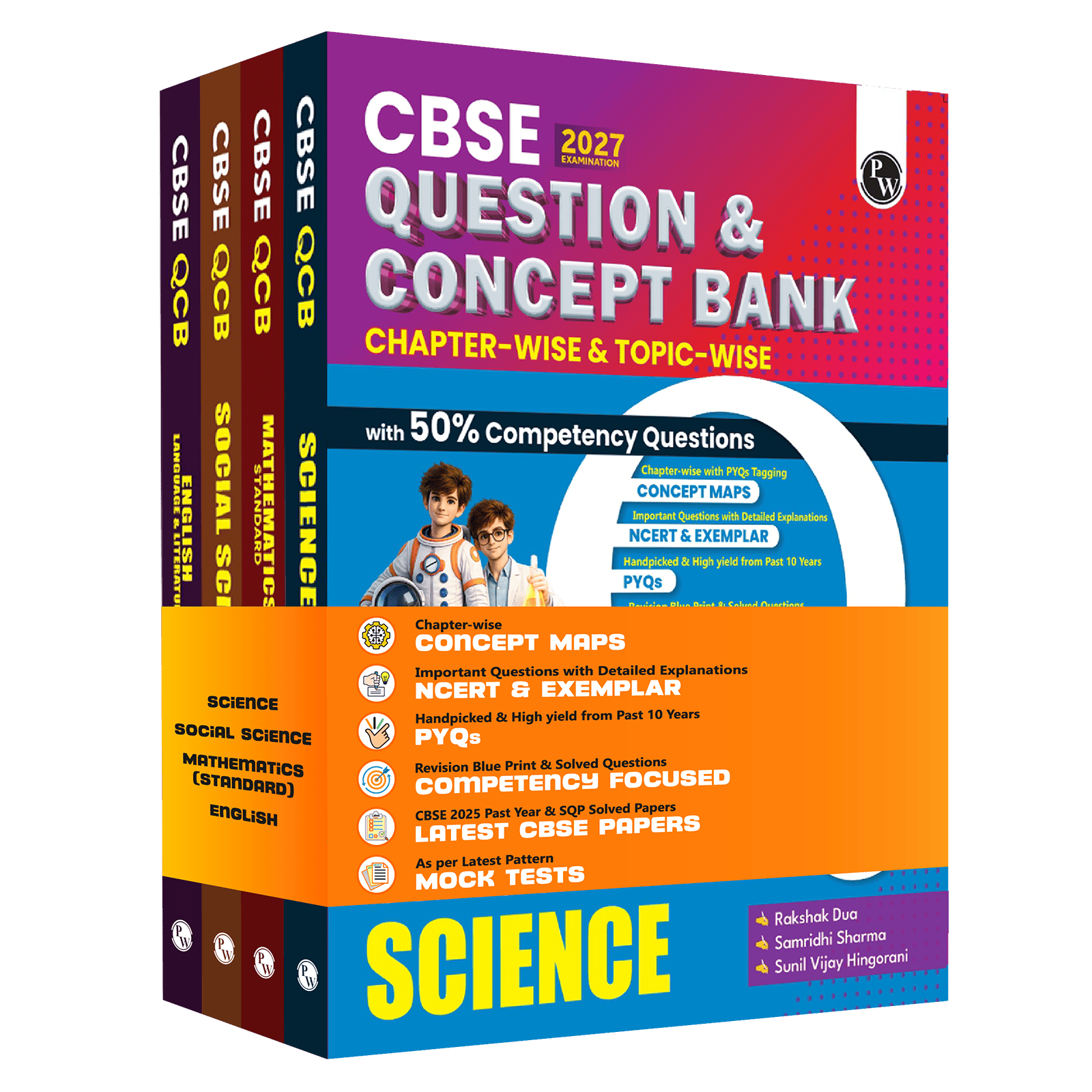
A Class 10 question bank is an all-in-one practice resource that compiles chapter-wise and topic-wise solved questions tailored for board preparations. It acts as a bridge between learning textbook concepts and answering board-level test papers under real conditions.
-
NCERT Intext and Important Questions: Direct practice covering core textbook exercises along with key in-text problems.
-
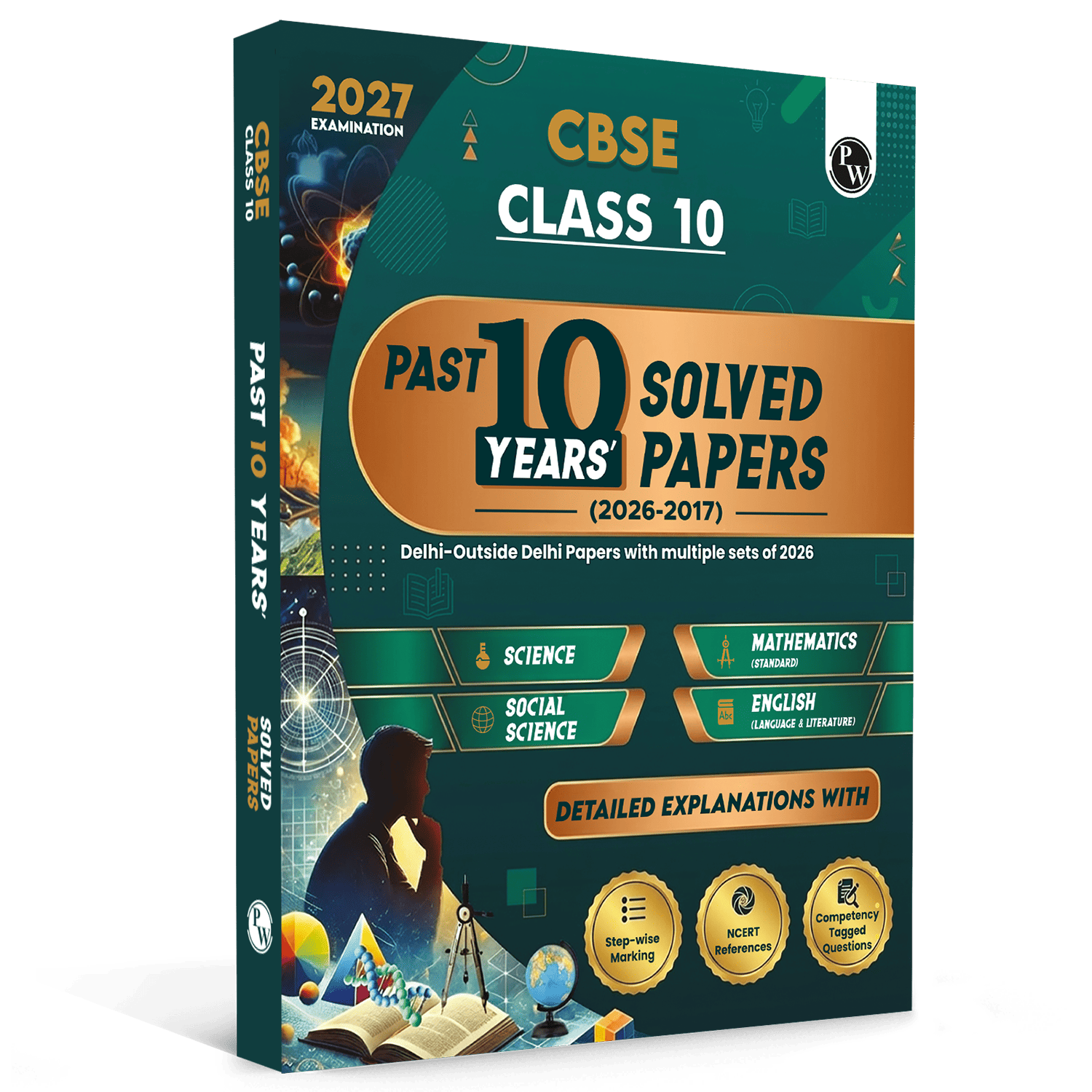
Previous Year Questions (PYQs): Handpicked high-yield questions from the past 10 years to focus on key exam areas.
-
Sample Question Papers (SQPs): Fully solved official CBSE sample papers to help understand marking schemes and question trends.
-
Chapter-wise Concept Maps: Visual tools that simplify complex topics and enable quick, structured revision.
-
Competency-Focused Blueprints: Dedicated problem sets targeting application, case-study solving ability, and exam readiness.
-
Latest Pattern Mock Tests: Board exam-style mock tests based on the latest pattern to improve accuracy, speed, confidence, and time management.
Why Is Class 10 Question Bank Based on the Latest CBSE Pattern?
Exam formats evolve over time to focus heavily on practical comprehension rather than rote learning. The PW Class 10 question bank is specifically engineered around the updated guidelines released for board assessments.
|
Feature Aspect |
Alignment with Latest CBSE Evaluation Guidelines |
|
Syllabus Coverage |
Mapped to the latest CBSE syllabus and exam pattern |
|
Target Exam Year |
Tailored for board exams 2027 with high-yield questions |
|
Competency Focus |
Includes case-study solving ability and structured revision blueprints |
|
Past Year Integration |
Combines 10 years of PYQs with solved CBSE sample papers |
|
Time Management Practice |
Mock tests structured to refine accuracy, speed, and time control |
This alignment ensures you spend effort studying topics and question layouts that actually appear on the paper, making it an ideal companion for Class 10 question bank 2027 preparations.
Topics Covered in Class 10 Question Bank
A single combo collection provides complete subject coverage, ensuring balanced preparation for mid-term exams and final boards alike.
-
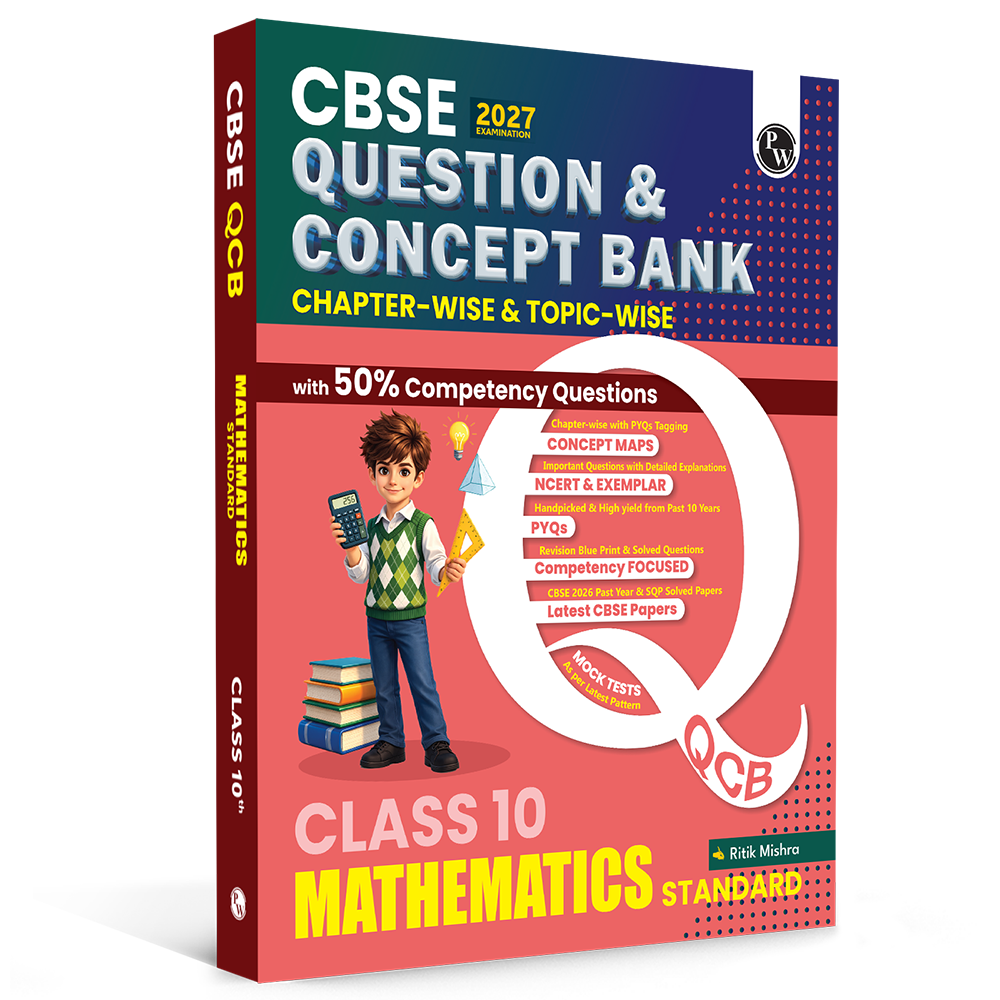
Mathematics (Standard): Step-by-step solutions combining basic conceptual questions with higher-order thinking problems.
-
Science: Chapter-wise division covering Physics, Chemistry, and Biology through NCERT intext items, PYQs, and concept maps.
-
Social Science: Detailed coverage incorporating past year insights, source-based practice, and structured revision blueprints.
-
English: Comprehensive practice for reading passages, writing skills, grammar rules, and literature questions.
How Class 10 Question Bank Helps with Competency-Based Questions?
Current paper layouts place significant emphasis on competency-based questions Class 10. These questions test how well you apply theoretical knowledge to real-world scenarios.
-
Case-Study Blueprints: Structured steps to break down complex case studies and real-life scenarios into simple, solvable parts.
-
High-Yield Problem Sets: Focused sets that train logical reasoning and critical thinking required for objective sections.
-
Source-Based Insights: Contextual questions designed to test comprehension rather than direct memorisation.
-
Detailed Step-by-Step Solutions: Fully solved papers that demonstrate exactly how marking schemes award marks for structured steps.
Using a structured CBSE Class 10 books ensures that solving non-traditional or analytical problems becomes second nature well before the final assessment.
How to Use Class 10 Question Bank for Board Preparation?
Getting the most value out of a revision book requires a clear, deliberate strategy during your study routines.
-
Complete Textbook Theory First: Read through the NCERT chapter thoroughly before attempting practice questions.
-
Review Concept Maps: Use visual mind maps at the beginning of each chapter for quick, structured revision.
-
Solve NCERT & PYQs First: Attempt the in-text questions and past decade PYQs without looking at the solutions.
-
Analyse Solution Steps: Compare your answers against the detailed solutions to understand marking schemes and question trends.
-
Attempt Competency Questions: Focus heavily on case-study and analytical problems to build essential competency-based skills.
-
Take Timed Mock Tests: Complete whole mock papers under strict time limits to build real test stamina and speed.
Following this structured method turns routine study hours into efficient CBSE board preparation sessions.
Study Strategy Plan with Class 10 Question Bank
To manage mid-term exams alongside regular Classwork, follow this structured weekly routine using your practice material.
|
Day |
Focus Activity |
|
Monday |
Revise Chapter 1 Theory + Review Chapter Concept Map |
|
Tuesday |
Solve NCERT Intext & Important Questions |
|
Wednesday |
Solve 10 Years PYQs for the target chapter |
|
Thursday |
Practice Case-Study & Competency-Based Questions |
|
Friday |
Check detailed solutions and record difficult concepts |
|
Saturday |
Full-length subject mock test using the latest pattern paper |
|
Sunday |
Weekly revision of weak areas and short rest |
Adhering to a systematic timeline ensures comprehensive coverage across all subjects without last-minute cramming.
Common Mistakes to Avoid While Using Class 10 Question Bank
While using practice books is highly beneficial, certain common habits can hinder progress during mid-term and board prep.
-
Reading Answers Instead of Solving: Looking at solutions immediately without writing down answers manually leads to false confidence.
-
Ignoring NCERT Basics: Jumping straight into yield CBSE Class 10 PYQs before understanding base NCERT concepts creates learning gaps.
-
Skipping Competency Sections: Avoid focusing only on short direct questions while ignoring analytical case-study problems.
-
Neglecting Marking Schemes: Failing to note how step-marks are distributed can result in avoidable lost points on long-answer questions.
-
Leaving Mock Tests for the Last Week: Postponing full-length practice tests limits your ability to correct time management flaws before exams.
Understanding how the CBSE Class 10 exam pattern structures question weightage prevents these study errors.
Read More: CBSE Class 10 Question Bank PDF Download
Class 10 Question Bank FAQs
Is a single Class 10 question bank enough for mid-term and board exam preparation?
Yes, a comprehensive Class 10 question bank containing NCERT questions, 10-year PYQs, competency blueprints, and latest sample papers covers both mid-term syllabi and final board patterns completely.
How are competency-based questions different from traditional questions?
Competency questions test the application of concepts to real-life situations through case studies, assertion-reasoning, and analytical tasks rather than simple direct memorisation.
How far ahead of exams should students begin practicing mock tests?
Students should start solving chapter-wise mock tests during mid-terms and attempt full-length timed mock papers regularly using a Class 10 practice book leading up to final exams.
Are NCERT in-text and important questions included in the practice book?
Yes, quality question banks integrate important NCERT in-text questions, textbook exercises, and past board questions for balanced preparation.
How does using concept maps help during mid-term revision?
Concept maps provide visual tools that simplify complex topics, allowing structured revision and better retention of key ideas right before tests.