Why Every Class 10 Student Should Use English Question Bank?
Most students spend hours reading literature chapters or memorising rule sheets, only to freeze when facing complex, analytical board-style questions. Reading the chapter gives you theoretical knowledge, but standard textbook exercises often fall short of preparing you for the actual exam pattern.
Using a Class 10 English question bank transforms your preparation from passive reading to active, targeted problem-solving. It directly addresses the struggle of structuring long answers, tackling unseen extracts, and applying grammar rules accurately.
Mid-terms serve as the ultimate reality check before board exams, making structured practice essential right now.
What Is Class 10 English Question Bank?
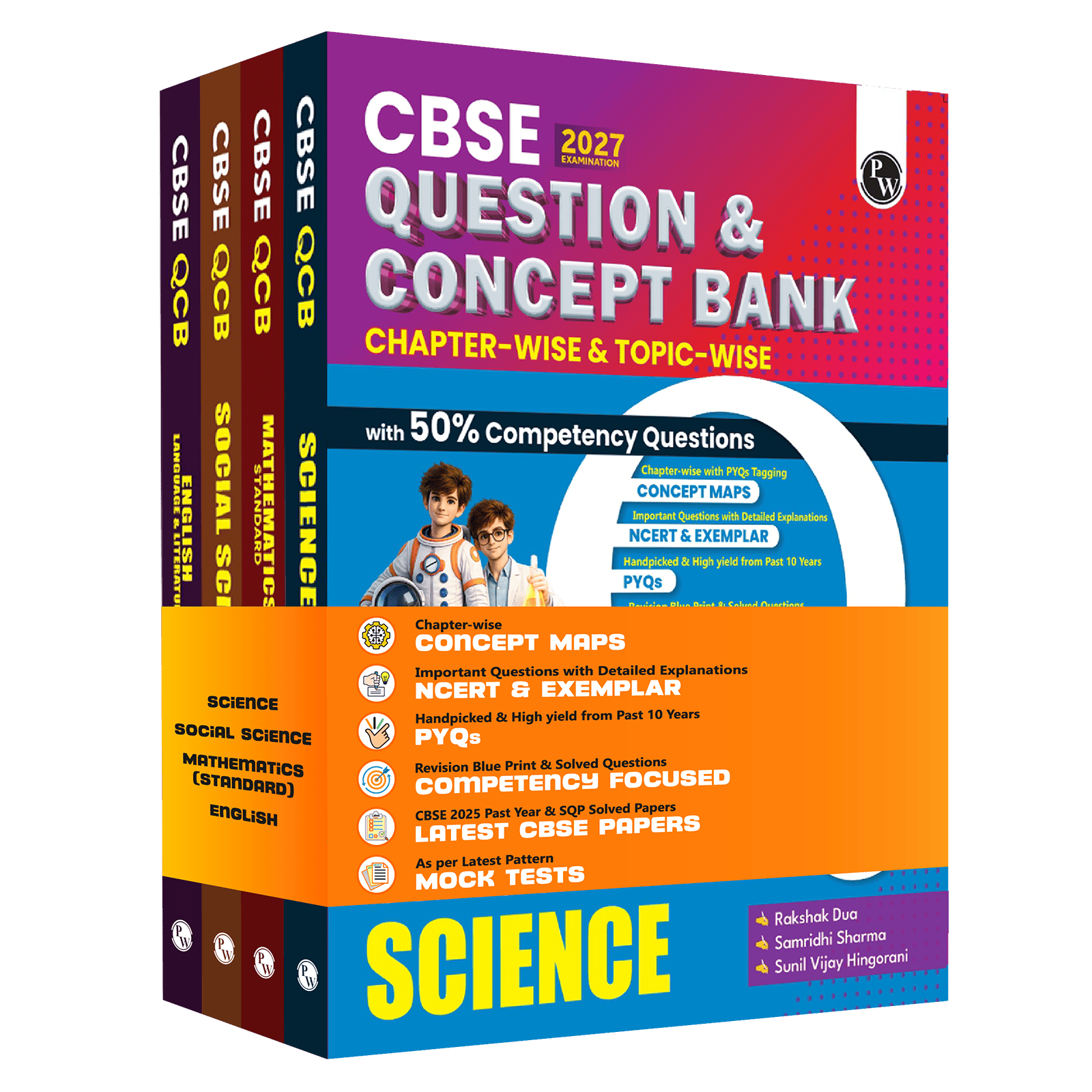
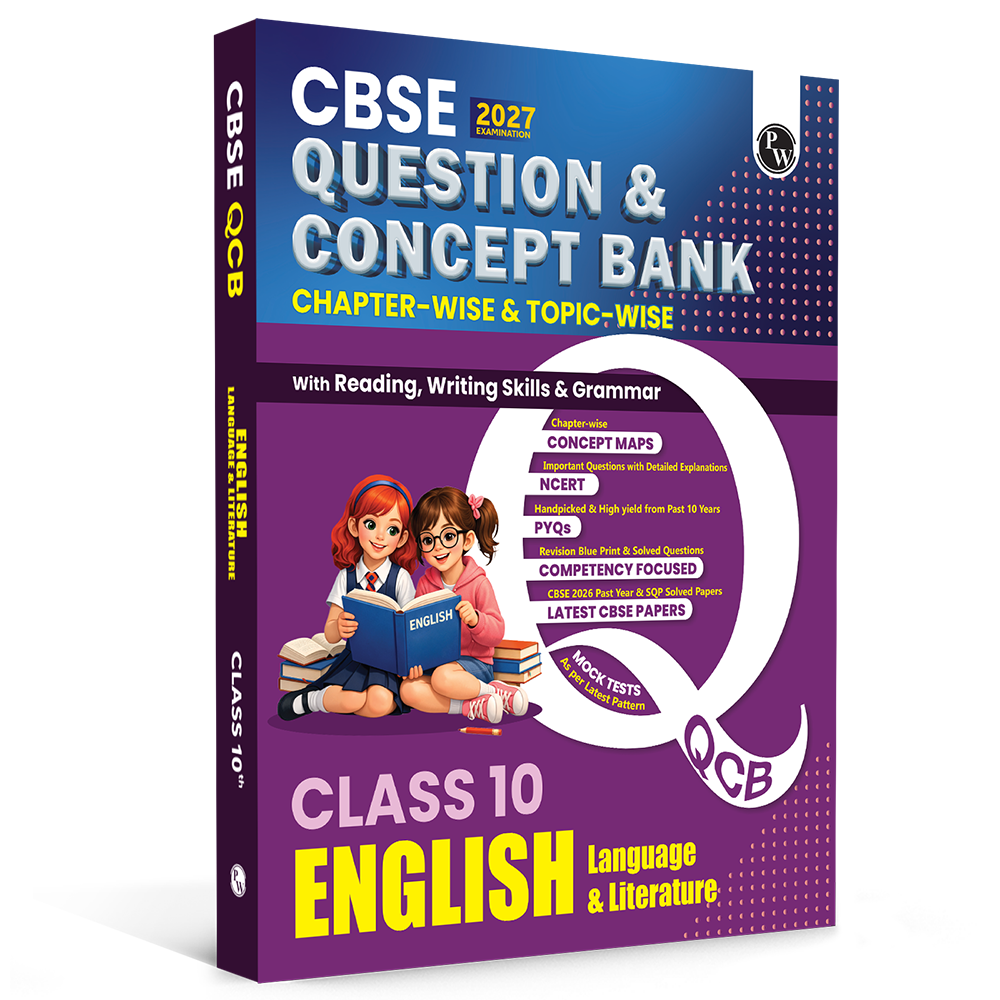
A Class 10 English question bank is an all-in-one practice resource tailored strictly around the current curriculum and board exam requirements. Rather than offering just summary notes, it organises questions categorically by topic, difficulty level, and question type.
Key features CBSE Class 10 question bank typically include:
-
NCERT Intext and Important Questions: Comprehensive coverage of standard textbook questions combined with high-yield practice items.
-
Previous Year Questions (PYQs): Handpicked high-yield English board questions spanning the last 10 years.
-
Competency-Based Questions: Case-study solving tasks and analytical prompts to build real-world application skills.
-
Visual Concept Maps: Chapter-wise visual aids to simplify complex concepts and enable quick retention.
-
Solved Sample Papers: Fully solved papers following the exact marking scheme and question trends.
Why Should Every Student Use Class 10 English Question Bank?
Relying solely on textbooks during mid-terms leaves significant gaps in exam readiness. Here is why incorporating an English practice book class 10 into your daily schedule creates a massive advantage:
-
Targeted Practice and Concept Clarity
Reading a chapter creates a false sense of security. Answering specific questions tests whether you actually understand character motivations, themes, and underlying literary devices.
-
Familiarity with Exam Trends
Solving CBSE class 10 previous year papers exposes you to recurring themes and question structures. You learn exactly what evaluators expect in high-scoring responses.
-
Strategic Time Management
Practicing with realistic mock tests under timed conditions builds speed, precision, and confidence, ensuring you never leave a paper unfinished.
|
Feature |
Standard Textbook |
Class 10 English Question Bank |
|
Focus |
Theory and basic comprehension |
Exam-oriented practice and execution |
|
Question Types |
Basic end-of-chapter exercises |
PYQs, competency-based, and mock tests |
|
Revision Tools |
Plain text summaries |
Chapter-wise concept maps |
|
Solutions |
Answers not provided |
Detailed, marking-scheme aligned answers |
How Class 10 English Question Bank Improves Grammar Skills?
Grammar is often where students lose easy marks due to silly errors and lack of application. Regular Class 10 grammar practice using a structured bank neutralises this risk.
-
Rule Application over Rote Learning: Instead of memorising rules for tenses or reported speech, you solve targeted exercise sets that apply those rules in exam-like formats.
-
Error Correction Insights: Detailed solutions explain why an answer is correct, helping you identify and eliminate recurring personal mistakes.
-
Balanced Question Mix: Combines basic gap-filling exercises with complex editing and omission tasks, ensuring strong foundational clarity.
How Class 10 English Question Bank Helps in Literature Preparation?
Literature requires deep understanding, clear character analysis, and precise thematic writing. A dedicated Class 10 question bank combo set of 4 books simplifies literature preparation significantly.
1. Extract-Based Mastery
Board exams heavily feature extract-based questions from prose and poetry. The question bank provides multiple extracts per chapter to train your inference skills.
2. Competency-Focused Blueprints
Modern assessments focus heavily on analytical and value-based questions. Structured blueprints guide you on how to compare characters across different stories or evaluate moral dilemmas effectively.
3. Structured Revision
Chapter-wise concept maps allow you to revise key plot points, character traits, and literary devices in minutes right before an exam.
How to Use Class 10 English Question Bank for Writing Practice?
Writing sections often cause anxiety because students worry about format, word limits, and coherence. Using your resource strategically turns this section into a guaranteed mark-fetcher.
-
Study the Formats: Review solved sample letters and analytical paragraphs to understand structural layouts, formal tones, and introductory phrases.
-
Practice Under Timed Conditions: Pick an unseen prompt, set a timer for 15 minutes, and write your draft without checking reference material.
-
Self-Evaluate against Marking Schemes: Compare your written piece with the provided solutions to check for content relevance, organisation, and grammatical accuracy.
Study Plan for Using Class 10 English Question Bank
To maximize your performance during mid-terms, follow this practical weekly study routine designed around CBSE English preparation:
Stage 1: Chapter Review and Concept Mapping
Start by reading your literature chapter or reviewing a grammar topic. Immediately follow up by studying the visual concept map in your question bank to lock in core ideas.
Stage 2: Sectional Question Practice
Solve the NCERT in-text questions and basic practice sets. Move on to competency-based problems to test your deep understanding.
Stage 3: PYQs and Error Analysis
Work through handpicked 10-year past paper questions. Check your answers against the detailed solutions, noting down areas where you lost marks.
Stage 4: Full Revision and Mock Tests
As mid-terms approach, dedicate your English revision class 10 sessions to solving full-length mock papers under strict exam conditions to refine your speed and accuracy.
Common Mistakes to Avoid While Using Class 10 English Question Bank
While having a quality CBSE Class 10 books is beneficial, using it incorrectly can limit your progress. Avoid these frequent missteps:
-
Reading Solutions Passively: Simply reading the answers like a storybook does not build recall. Always attempt the question on paper first before checking the answer.
-
Ignoring the Marking Scheme: Board exams award marks based on specific step-by-step points and keyword inclusion. Pay close attention to how model answers are structured.
-
Skipping Competency Questions: Many students focus only on simple factual questions and skip case-study or analytical questions, which form a major part of modern exams.
-
Delaying Practice Until the Last Minute: Waiting until the day before the mid-term to open your question bank leads to burnout. Consistent daily practice yields the best results.
Read More: CBSE Class 10 Study Timetable
CBSE Class 10 English Question Bank FAQs
Q1. How does a Class 10 English question bank help in mid-term exams?
It provides structured practice with past year papers, sample papers, and competency-based questions, helping you understand exact marking schemes and manage time effectively during mid-terms.
Q2. Are NCERT questions sufficient, or do I need extra practice?
While NCERT forms the base, board exams require analytical and competency-focused answers. A question bank bridges this gap with varied problem types.
Q3. How often should I practice grammar from the question bank?
Setting aside 20–30 minutes daily for grammar exercises ensures consistent retention of rules and builds confidence for the exam.
Q4. Can visual concept maps really help in literature revision?
Yes, visual concept maps summarize plot points, character relations, and central themes visually, allowing for rapid final revision right before test day.
Q5. What is the best way to practice writing skills using a question bank?
Analyze solved model answers for correct formats and tones, then write unseen prompts under timed conditions and compare your work against model solutions.