Class 12 Chemistry Question Bank vs NCERT: What Should You Prioritise?
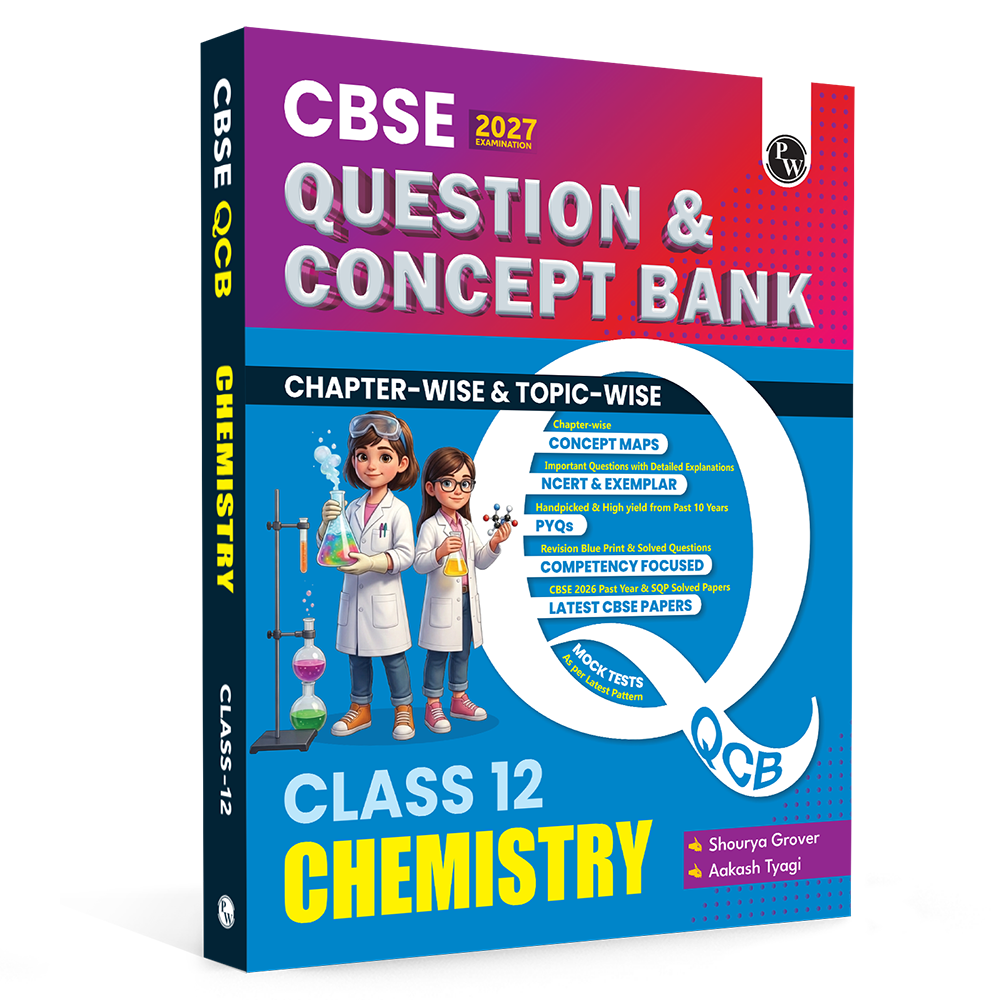
The problem most students face when preparing for the board exams is balancing the Chemistry NCERT theory with proper question practice. Text books are helpful in building concepts but not much of practice targeted towards exams. The Class 12 chemistry question bank is an ideal supplement to NCERT with chapter-wise questions, competency-based activities and extensive solutions to help students reinforce ideas, improve accuracy and prepare confidently for the latest CBSE board exam pattern.
Why NCERT Is Important Before Using Class 12 Chemistry Question Bank
The official textbook is the base of CBSE Chemistry preparation. Question papers prepared by Central Board of Secondary Education question setters strictly follow the syllabus, definitions and numerical examples given in the textbook.
-
Direct Formula and Definition Source: Board exams frequently evaluate students on exact definitions, statements, and fundamental laws. Learning these directly from the textbook ensures high accuracy in short-answer sections.
-
Intext and Exercise Questions: A lot of board exams contain intext questions from textbook and end of the chapter exercises as it is or after modification. The baseline marks are mandatory.
-
Organic Chemistry Reaction Pathways: The organic conversion questions and identified reactions are just from the syllabus supplied. Skipping the textbook reading leaves big holes in the organic reaction processes.
-
Conceptual Clarity for Entrance Tests: Strong fundamentals established through standard readings simplify preparation for national competitive entrance tests alongside board exams.
Relying solely on textbooks, however, can leave you unprepared for real-time exam challenges like time constraints, mark-allocation logic, and complex analytical questions.
Benefits of Class 12 Chemistry Question Bank for Board Preparation
Text books give you knowledge but a Class 12 Chemistry question bank prepares you to apply the knowledge in test scenario. The secret to getting high grades is going from reading the questions to solving them.
|
Feature |
NCERT Textbooks |
Class 12 Chemistry Question Bank |
|
Primary Objective |
Conceptual understanding & theory coverage |
Exam-oriented practice & scoring accuracy |
|
Question Variety |
Standard exercise and intext problems |
PYQs, SQPs, MCQs, & competency questions |
|
Revision Tools |
Detailed descriptive paragraphs |
Chapter-wise concept maps & quick summaries |
|
Self-Assessment |
Basic practice without detailed mark schemes |
Board-pattern solutions with step marking |
-
Exposure to Board Exam Trends: CBSE Class 12 Question banks compile board exam papers from the last 10 years, highlighting high-yield topics and repetitive question patterns.
-
Mastery Over Competency-Based Questions: Recent exam guidelines emphasize case-based, assertion-reason, and analytical questions. A dedicated practice manual provides targeted questions aligned with these modern testing formats.
-
Chapter-wise Concept Maps: Visual summaries can help students to quickly review complicated reaction sequences, physical chemistry formulas, and inorganic trends without having to read lengthy lines.
-
Step Marking Awareness: Solutions in a trustworthy practice guide show accurate step-by-step marking schemes, so you can avoid losing marks on partial answers.
Class 12 Chemistry Question Bank Vs. NCERT Key Differences
Evaluating how the two tools fare at different stages of the study might help you decide when to move on to working through problems in depth versus reading theory.
[Phase 1: Foundation]
│
Read NCERT Textbooks ──► Build Core Concepts & Definitions
│
▼
[Phase 2: Application]
│
Solve Question Bank Sets ──► Master PYQs & Competency Questions
│
▼
[Phase 3: Revision]
│
Concept Maps & Mock Tests ──► Maximize Exam Speed & Accuracy
Coverage of Board Exam Questions
Textbooks cover 100% of the prescribed theory. However, board papers test application, analytical thinking, and numerical speed. A Chemistry practice book translates theoretical paragraphs into actual examination formats, showing how a single concept can be framed as a 1-mark MCQ, a 3-mark short answer, or a 5-mark structured question.
Time Efficiency During Chemistry Revision
Reading whole textbook chapters during preboard preparation or final study leave is time consuming. Practice collections include high yield questions and visual mind maps so you may review a complete chapter in under 30 minutes and only focus on examinable issues.
Practice of High-Yield Topics
In examinations not all sections of a textbook are of similar importance. The practice CBSE class 12 books categorize the questions by their frequency in the last 10 years. This will assist you to invest more time on the repetitive themes such as numericals of electrochemistry, bonding theories of coordination compounds and reaction mechanisms of aldehydes and ketones.
How to Use Class 12 Chemistry Question Bank with NCERT
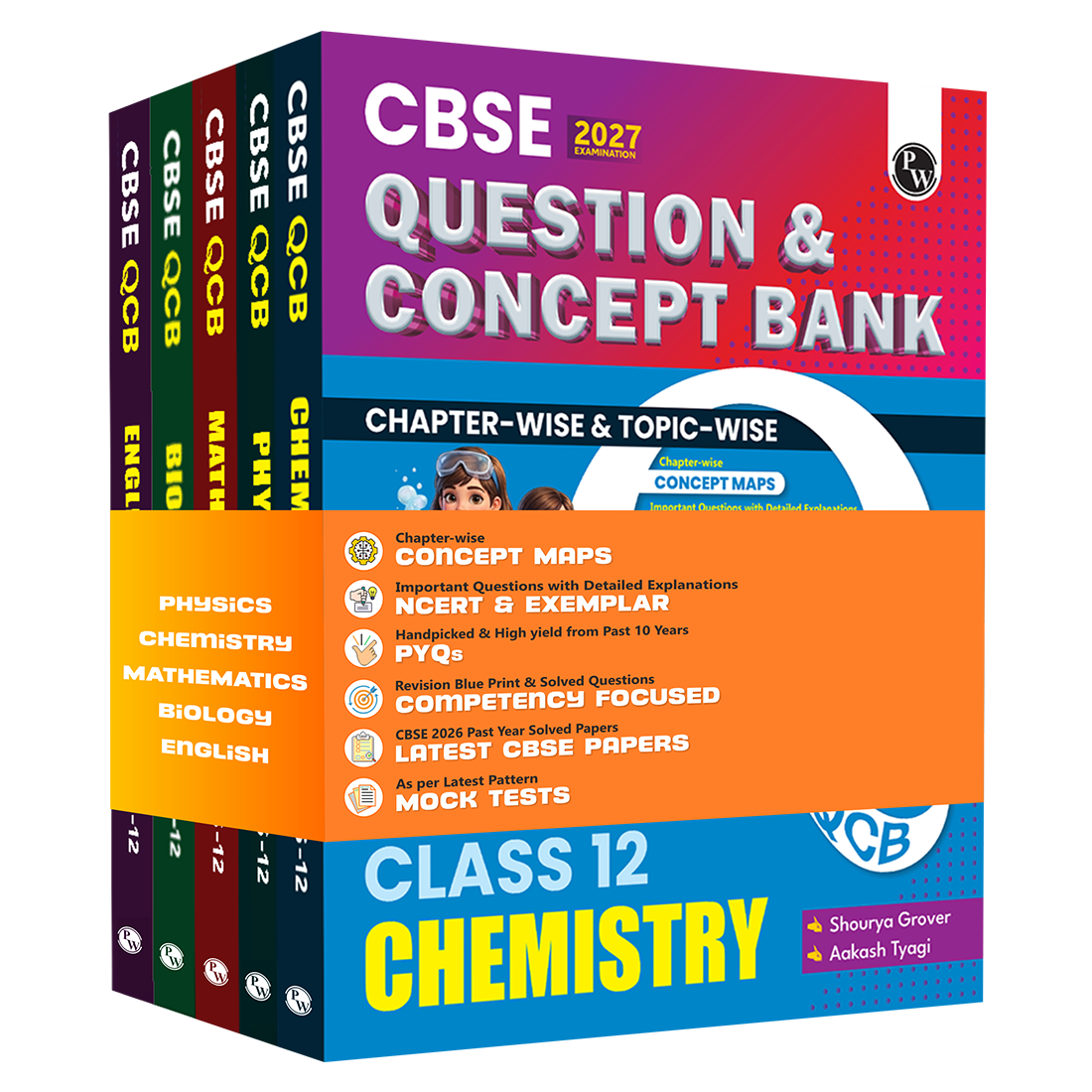
Combining both PW CBSE Question Bank COMBO Set of 5 Books in a structured study routine yields better results than using either material in isolation.
-
Read the Core Chapter: Begin by reading the specific chapter from your textbook to grasp fundamental concepts, key terms, and named reactions thoroughly.
-
Solve Intext & Exercise Problems: Do all textual questions to check your basic understanding before going for supplemental practice material.
-
Try Chapter-wise Practice Sets: Open your practice book and solve the previous years’ questions, assertion-reason questions and case-study questions from that chapter.
-
Analyze Solution Steps: Compare your answers against the provided step-by-step solutions to identify gaps in presentation, formula notation, or missing key terms.
-
Use Concept Maps for Weekly Review: Revisit chapter-wise visual summaries every weekend to retain formulas, trends, and organic conversion steps long term.
When to Start Using Class 12 Chemistry Question Bank
Timing your transition between study materials prevents last-minute preparation bottlenecks and ensures thorough coverage.
-
Initial Phase (Syllabus Coverage): Dedicate 70% of your time to thorough reading and basic exercise solving, using practice sets only for short quizzes.
-
Mid-Session Phase (Pre-Board Prep): Divide your study time equally (50-50) between textbook reviews and practice problems from your question manual.
-
Final Phase (Exam Countdown): Shift 80% of your focus toward solving past papers, competency questions, and full-length mock tests to build speed and accuracy.
Read More: CBSE Class 12 Chemistry Chapter-Wise PYQs
Class 12 Chemistry Question Bank FAQs
Is a Class 12 question bank enough to score 90+ in board exams?
A question collection is most effective when used alongside primary textbooks. While it provides critical exposure to Chemistry board questions, previous year papers, and sample papers, reading core chapters remains necessary to solve unexpected conceptual problems.
Should I complete NCERT before starting a Chemistry practice book?
Yes, completing textbook chapters first ensures a solid grasp of core concepts. Moving to a practice manual afterward allows you to test your understanding effectively without getting stuck on basic definitions.
How do question books help in solving organic chemistry reactions?
Practice manuals compile organic conversions, named reactions, and mechanism questions into organized sections. Studying these formats builds speed in identifying reaction pathways compared to reading standard textbook prose.
Are past 10 years Chemistry board questions included in question banks?
Quality practice resources assemble high-yield questions from the last decade of board examinations, organized chapter-wise to help you identify repeating exam trends easily.
What makes competency-based questions different from standard textbook exercises?
Competency-based items evaluate application of knowledge in the actual world, data analysis and critical thinking through case studies, assertion-reason formats, etc. and are different from the direct theoretical questions that are generally asked in the standard textbooks.