Why Every Class 6 Student Should Practise Social Science Question Bank

For many young learners, Social Science suddenly feels overwhelming because it combines history, geography, and social life into a single curriculum. Reading chapter after chapter is rarely enough to secure strong grades when mid-term assessments approach.
Students often struggle to convert their reading into structured answers during school tests. Utilizing a dedicated Class 6 social science question bank bridges this gap effectively.
It transforms passive textbook reading into active practice, giving young minds the clarity, critical thinking skills, and writing discipline needed to handle school examinations confidently.
What Is Class 6 Social Science Question Bank?
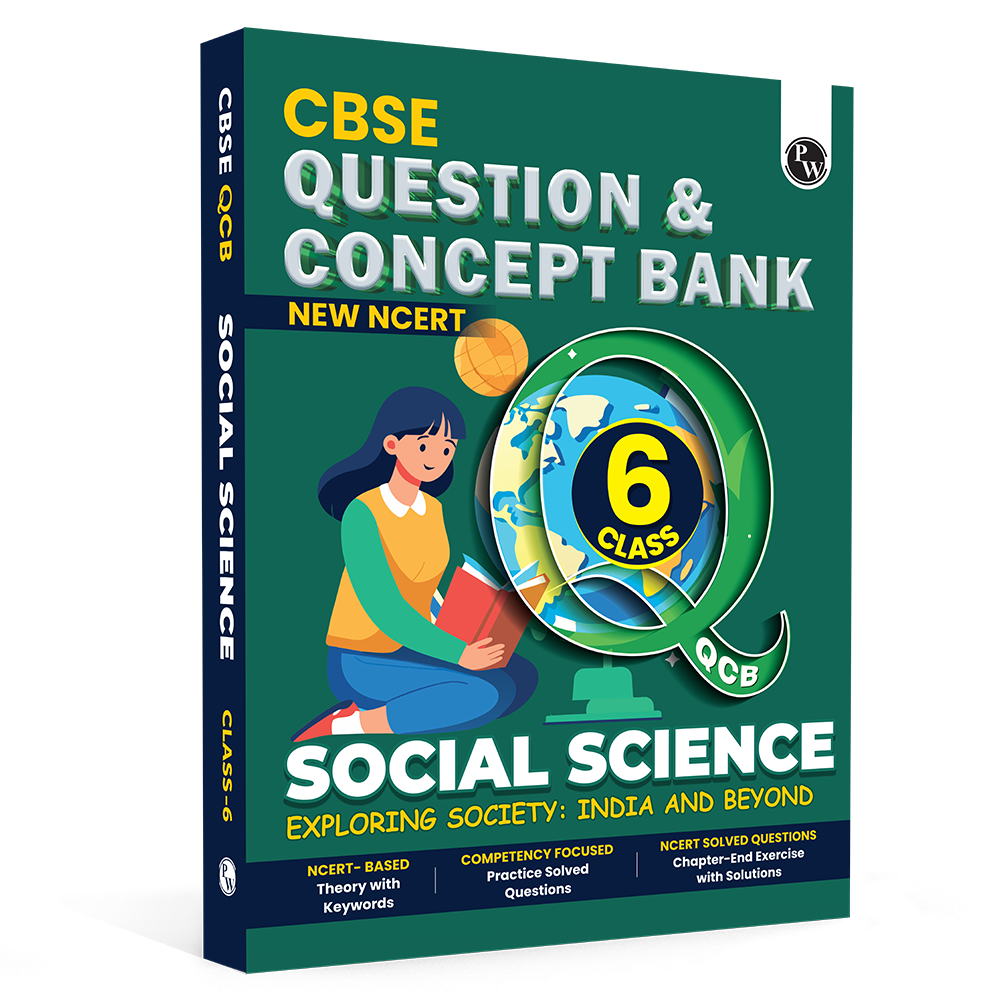
A Class 6 social science question bank is a structured practice resource designed specifically to align with the latest CBSE and NCERT curriculum guidelines for Class 6. Rather than offering simple plain text, it provides an organized compilation of conceptual summaries, important keywords, solved textbook exercises, and diverse practice problems across all units.
Using an NCERT Class 6 SST question bank allows learners to move beyond simple memorisation. It organizes content so that students can test their knowledge systematically after completing every chapter.
-
Chapter-Wise Theory: Concise summaries featuring essential keywords for rapid review before tests.
-
NCERT Solutions: Complete, accurate answers for textbook exercises to establish strong fundamentals.
-
Competency-Based Questions: Practical problems designed to test logical reasoning and real-world understanding.
-
Detailed Explanations: Step-by-step guidance provided for tricky queries to clarify doubts immediately.
Why Should Every Student Use Class 6 Social Science Question Bank?
Mid-term assessments require students to write clear, precise answers within a limited time frame. Relying solely on Classroom notes often leaves gaps in exam readiness. Integrating a Class 6 question bank into daily routines offers several distinct benefits:
-
Builds Conceptual Clarity: Detailed explanations help simplify complex historical timelines or geographical terms.
-
Encourages Active Learning: Solving Class 6 SST practice questions regularly keeps students engaged compared to simple reading.
-
Improves Answer-Writing Skills: Structured solved examples teach students how to organize their points logically for full marks.
-
Reduces Mid-Term Stress: Regular familiarity with exam-style questions eliminates test anxiety and boosts self-confidence.
How Class 6 Social Science Question Bank Makes Social Science Easy?
Social Science often feels daunting due to the volume of dates, terms, and definitions. A Class 6 social science question bank breaks this heavy syllabus into manageable chunks.
By using chapter-wise Class 6 SST questions, students can focus on one single topic at a time without feeling overwhelmed. The inclusion of highlighted keywords ensures that young learners remember essential technical terminology required by examiners.
-
Step 1: Read the core chapter theory to understand fundamental concepts.
-
Step 2: Review important keywords highlighted in the theoretical summaries.
-
Step 3: Solve corresponding practice problems to test immediate recall.
-
Step 4: Compare answers with detailed solutions to correct mistakes early.
Important Topics Covered in Class 6 Social Science Question Bank
The middle school Social Science curriculum covers three primary branches: History, Geography, and Social and Political Life. A comprehensive Class 6 social science question bank addresses all three sections thoroughly.
History (Exploring Past Civilisations)
-
Understanding early human societies, food gathering, and early settlements.
-
Key features of the Indus Valley Civilisation and ancient kingdoms.
-
Important historical sources, manuscripts, and inscriptions.
Geography (Earth and Our Environment)
-
The Solar System, planets, and Earth's position in space.
-
Latitudes, longitudes, time zones, and motions of the Earth.
-
Major domains and landforms of the Earth alongside basic map reading.
Social and Political Life (Community and Governance)
-
Diversity, equality, and understanding discrimination.
-
Key functions of local government, rural administration, and urban planning.
-
Livelihoods in rural and urban areas.
Accessing targeted CBSE Class 6 books across these topics ensures thorough mid-term coverage.
Study Strategy Plan with Class 6 Social Science Question Bank
Having quality resources is only half the battle; following an organized weekly plan ensures consistent progress throughout the term.
Weekly Study Schedule
-
Monday & Tuesday (Concept Building):
-
Read textbook sections carefully.
-
Review theory summaries and key terms in your Class 6 SST question bank.
-
Wednesday & Thursday (Targeted Practice):
-
Solve short-answer and multiple-choice questions.
-
Practice pw Class 6 SST question bank exercises to verify basic concepts.
-
Friday (Competency Focus):
-
Attempt long-answer and case-based practice problems.
-
Focus on critical thinking and real-world application items.
-
Saturday (Self-Assessment):
-
Check written responses against the provided detailed explanations.
-
Mark areas needing improvement and make quick revision notes.
-
Sunday (Rest & Light Revision):
-
Re-read highlighted keywords and quick summary notes.
Tips for Using Class 6 Social Science Question Bank
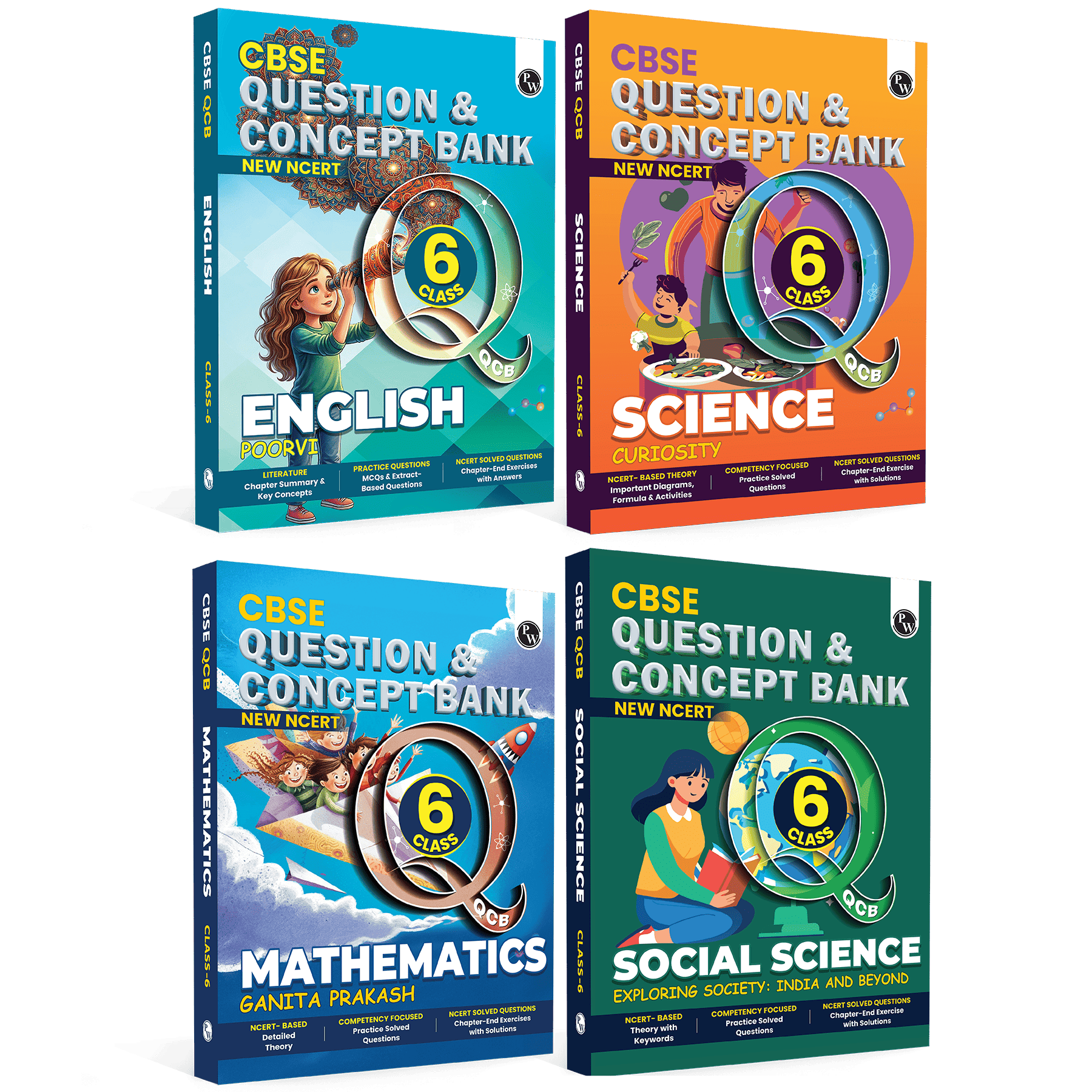
To derive maximum value from a Class 6 Social Science Question Bank, apply these practical techniques during self-study sessions. The CBSE Class 6 Question Bank Combo 2027 can help you practise chapter-wise questions, revise important concepts, identify weak areas, and build confidence through consistent exam-oriented practice.
-
Write Answers Down: Avoid simply reading solutions. Physical writing builds memory retention and improves writing speed for exams.
-
Focus on Keywords: Highlight essential terms in your answers to match standard assessment formats.
-
Time Your Practice: Set a timer when practicing long-answer questions to build healthy exam-pacing habits early.
-
Review Mistakes Promptly: When an answer is incorrect, refer back to the detailed explanation immediately to correct understanding.
-
Maintain a Formula/Term Notebook: Keep a small notebook dedicated solely to dates, definitions, and key geographical terms.
Common Mistakes to Avoid While Using Class 6 Social Science Question Bank
Even with access to an excellent Class 6 social science question bank, certain habits can limit progress. Avoid these frequent miSSTeps:
-
Looking at Answers Too Soon: Attempting questions independently before checking solutions is essential for building true problem-solving skills.
-
Ignoring NCERT Textbook Base: A practice bank complements the NCERT textbook; it does not replace reading the primary chapters.
-
Skipping Competency Questions: Modern exam patterns emphasize analytical skills over simple recall. Do not skip modern competency-focused items.
-
Cramming Right Before Exams: Consistent weekly practice produces far better results than last-minute preparation before mid-term tests.
Read More: CBSE Class 6 Syllabus and Exam Pattern
Class 6 Question Bank FAQs
Q1. How does a Class 6 social science question bank help in mid-term preparation?
It provides structured practice, chapter summaries, and exam-oriented questions that build answer-writing confidence and improve conceptual clarity before mid-term tests.
Q2. Is an NCERT Class 6 SST question bank aligned with the latest CBSE syllabus?
Yes, quality practice books are designed strictly according to the latest CBSE and NCERT curriculum guidelines for Class 6.
Q3. Should students solve chapter-wise Class 6 SST questions daily?
Practicing chapter-wise questions regularly for 20 to 30 minutes helps reinforce Classroom learning without causing study fatigue.
Q4. Are detailed explanations included for competency-based questions?
Yes, standard question banks include step-by-step explanations for competency-based and analytical questions to strengthen critical thinking skills.
Q5. Can Class 6 SST practice questions improve answer writing speed?
Regularly writing out answers under timed conditions helps young students structure their responses faster and manage time efficiently during actual school examinations.