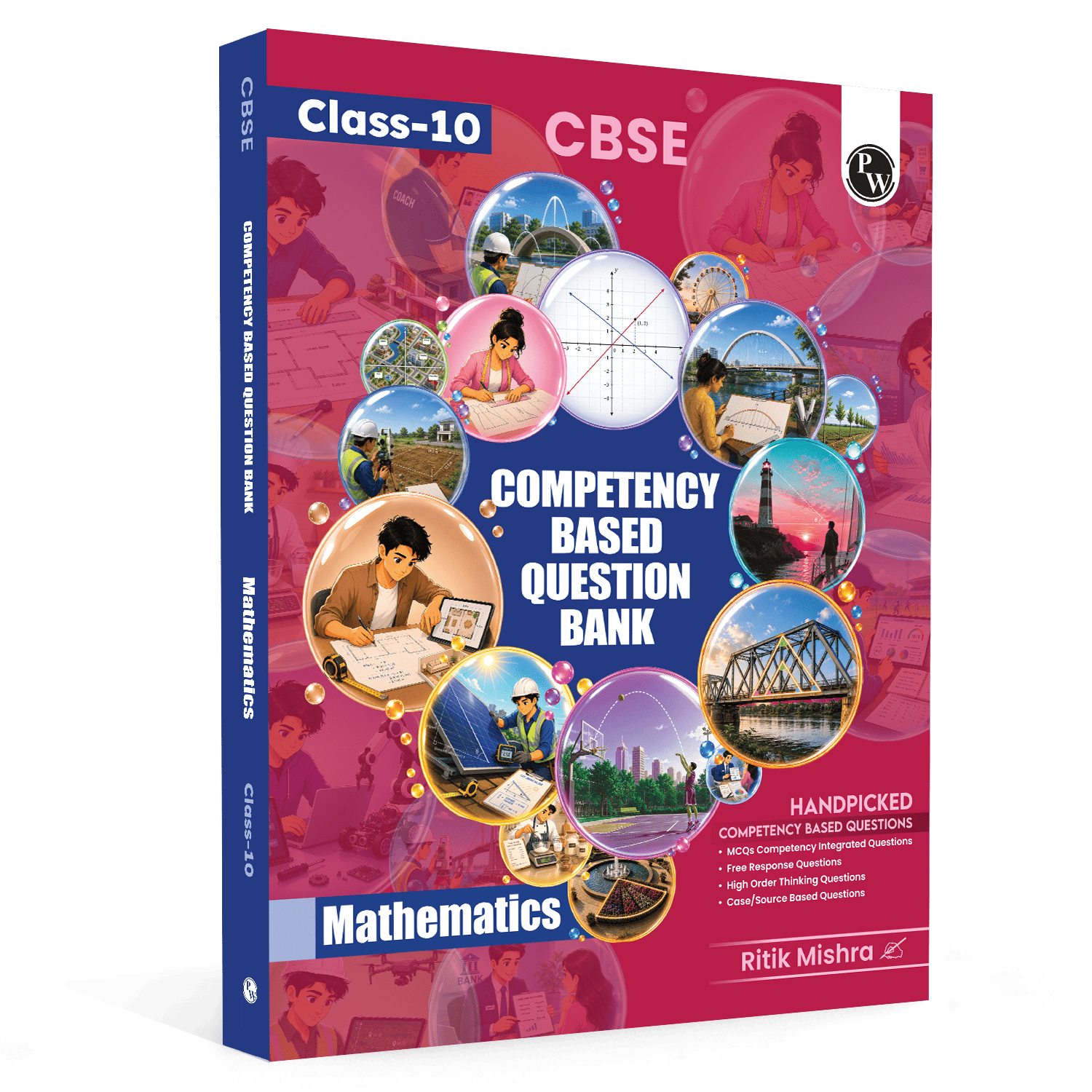
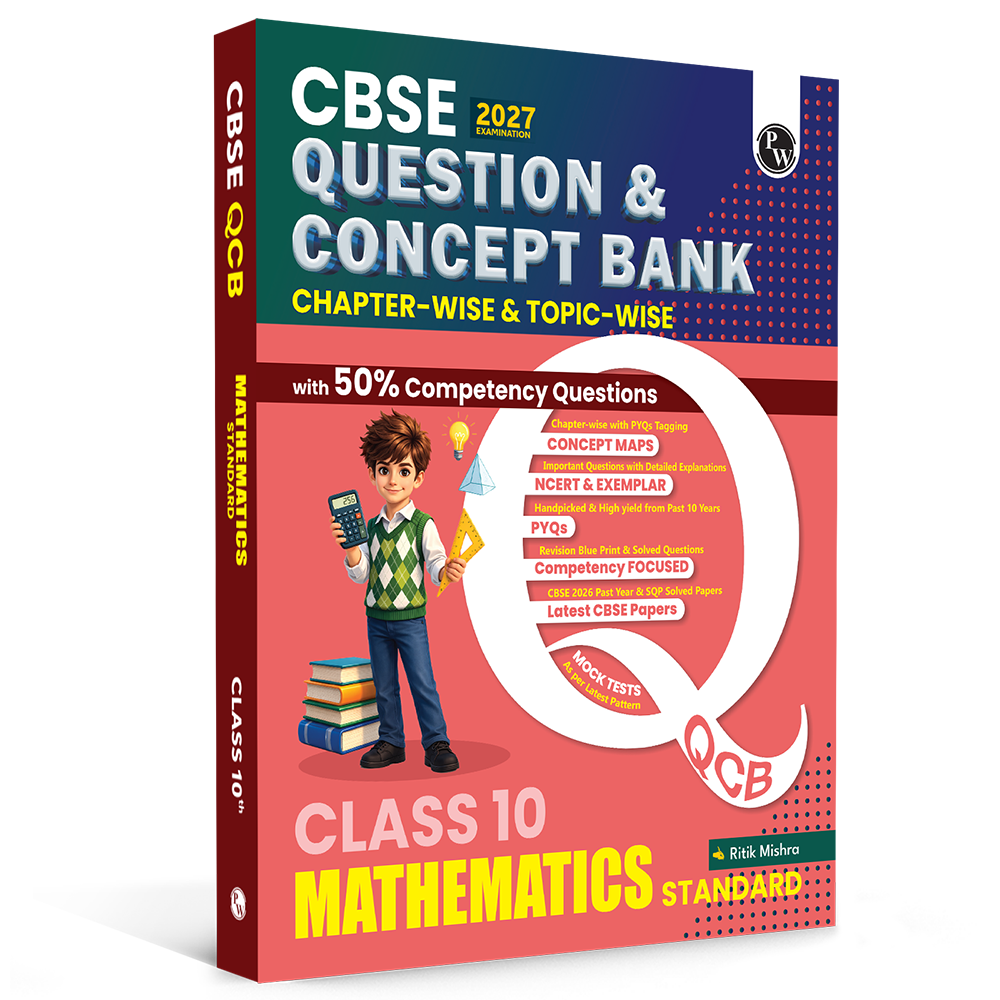
What Are Competency-Based Questions in CBSE Class 10 Maths?
You might know every formula by heart, yet struggle when asked to apply mathematical principles to real-world situations. This gap between theoretical knowledge and practical application is exactly what modern board assessments address.
Understanding Class 10 maths competency questions is essential to bridging this gap, allowing you to approach complex problem formats with complete confidence.
Overview of Class 10 Maths Competency Questions
Class 10 maths competency questions are specially structured evaluation items designed to assess a student's ability to apply mathematical concepts to practical, real-life situations. Unlike traditional questions that test formula recollection, competency-based questions CBSE focus on analytical thinking, conceptual understanding, and practical problem-solving skills beyond rote learning.
Based on the latest NEP 2020 guidelines, these questions require students to interpret data, identify underlying mathematical principles, and implement step-by-step logic to arrive at accurate solutions.
-
Real-Life Application: Problems are rooted in everyday scenarios, making mathematics practical and relatable.
-
Analytical Focus: Demands logical reasoning rather than basic memory recall.
-
Curriculum-Aligned: Fully aligned with the standard board syllabus and NCERT Exemplar support to complement textbook learning.
Why Are Class 10 Maths Competency Questions Different from Regular Questions?
Regular textbook problems usually present straightforward numerical values and ask for a direct calculation using a specific formula. In contrast, Class 10 maths competency questions present a scenario, a chart, or a real-world case study where you must first determine which mathematical concept applies.
|
Feature |
Regular Questions |
Competency-Based Questions |
|
Primary Focus |
Formula application & direct calculation |
Conceptual understanding & analytical thinking |
|
Learning Approach |
Direct rote learning or standard steps |
Real-life application-based maths questions |
|
Format |
Standard numerical problems |
MCQs, Case-Based, Assertion & Reason |
|
Objective |
Tests speed and formula retention |
Evaluates problem-solving and critical reasoning |
By moving away from basic memorisation, these questions ensure that students develop a deeper grasp of foundational mathematics that serves them well in higher education.
Types of Class 10 Maths Competency Questions Asked in the CBSE Exam
To perform well under the updated CBSE maths pattern, students must familiarize themselves with the various formats used in the examination. CBSE Class 10 question bank incorporates over 400+ competency-based items structured across four distinct question styles.
1. Multiple Choice Questions (MCQs)
These are objective questions designed to test conceptual clarity quickly. Rather than simple calculation, these MCQs present scenario-based options that require logical elimination and rapid analysis.
2. Assertion & Reason Questions
This format consists of two statements: an Assertion (statement of fact) and a Reason (explanation). Students must evaluate whether both statements are true and if the Reason correctly explains the Assertion, testing deep logical connections.
3. Case-Based Questions
Case-based items present a real-world situation, passage, or data set followed by a series of sub-questions. These assess your ability to extract relevant mathematical information from complex context blocks.
4. Subjective Questions
These short and long answer questions require detailed step-by-step mathematical working. They evaluate your clarity of thought, presentation skills, and logical flow.
How to Solve Class 10 Maths Competency Questions Step by Step?
Solving practical mathematical problems requires a structured approach. Following a systematic methodology ensures you do not miss critical data points or lose marks on presentation. Regular practice with a CBSE Class 10 Maths Question Bank can help you understand different question types, strengthen concepts, improve accuracy, and develop a clear step-by-step approach to solving problems.
-
Read the Context Carefully: Read the case study or problem statement thoroughly to understand the scenario before looking at the numbers.
-
Identify Given Information: Extract and list all relevant data points, ignoring extra context that does not impact the mathematical calculation.
-
Map to Core Concepts: Determine which mathematical chapter or formula applies to the extracted data.
-
Execute Step-Wise Solutions: Write down each logical step cleanly. Follow the step-wise marking scheme to secure full credit even if a final calculation error occurs.
-
Verify the Final Answer: Cross-check your final result against the context of the question to ensure the value makes practical sense.
Practice Strategy for Class 10 Maths Competency Questions
Building confidence in practical application requires structured practice over time. Relying solely on standard textbook exercises is often insufficient for modern board expectations.
-
Use Dedicated Resources: Practice with a specialized competency practice book containing curriculum-aligned questions designed for board-focused preparation.
-
Integrate NCERT Exemplar: Combine standard textbook problems with exemplar questions to strengthen analytical thinking and handle higher-level questions easily.
-
Focus on Detailed Solutions: Always review comprehensive step-by-step solutions after attempting questions to understand correct presentation styles and alternate solving methods.
-
Solve 400+ Variety Questions: Ensure exposure to all formats—including MCQs, Assertion & Reason, and Case-Based items—to build familiarity across every chapter.
How to Revise with Class 10 Maths Competency Questions?
Revision should not mean simply reading through formulas repeatedly. Effective revision involves actively testing your ability to apply concepts under exam-like conditions.
When planning your revision routine, incorporate systematic practice using high-quality reference materials designed for thorough maths board preparation.
-
Chapter-Wise Application: After completing each chapter's core theory, solve specific application-based questions to solidify your understanding.
-
Analyze Marking Schemes: Pay close attention to step-wise marking guidelines during revision to ensure your written presentation aligns with evaluator expectations.
-
Target Weak Areas: Identify question formats (such as Case-Based or Assertion & Reason) where you make frequent errors and dedicate focused practice sessions to them.
Tips to Improve Accuracy in Class 10 Maths Competency Questions
Accuracy in application-based questions comes down to comprehension and neat presentation rather than speed alone. Using CBSE Class 10 Books alongside regular practice can help strengthen concepts, improve understanding of application-based questions, and develop a clear, well-structured approach to answering them in the board examination.
-
Highlight Key Keywords: Circle or underline key metrics, units, and conditions given in long contextual paragraphs.
-
Pay Attention to Units: Ensure all units are converted to a uniform system before performing calculations.
-
Write Down Assumptions: If a real-world scenario requires a standard mathematical assumption, state it clearly in your working.
-
Maintain Clean Formatting: Keep your working organized and step-wise so that the evaluator can follow your logical progression effortlessly.
Common Mistakes to Avoid While Solving Class 10 Maths Competency Questions
Many students lose marks in practical mathematical questions due to avoidable errors in comprehension and execution.
-
Rushing Through the Passage: Skimming the context too quickly often leads to misinterpreting essential details or missing key constraints.
-
Ignoring Step-Wise Presentation: Writing down direct answers without showing logical steps leads to loss of marks under step-wise marking rules.
-
Confusing Assertion and Reason Logic: Marking an explanation as correct simply because both statements are true, without checking if the Reason actually explains the Assertion.
-
Overlooking NCERT Fundamentals: Attempting complex scenarios without thoroughly mastering foundational textbook concepts first.
Read More: CBSE Previous Year Question Papers Class 10 PDF with Solutions
CBSE Class 10 Maths Competency Questions FAQs
Q1. What are class 10 maths competency questions in board exams?
Class 10 maths competency questions are real-world application problems designed to evaluate critical thinking, analytical reasoning, and conceptual clarity beyond traditional formula memorisation.
Q2. How many competency-based questions are asked in the CBSE exam?
As per the updated pattern, a significant portion of the paper consists of competency-based items, including MCQs, Assertion & Reason, Case-Based, and Subjective formats.
Q3. How can I practice application-based maths questions effectively?
You can practice effectively by solving curriculum-aligned question banks, working through NCERT Exemplar problems, and reviewing detailed step-by-step solutions and marking schemes.
Q4. Are competency questions harder than regular board questions?
They are not necessarily harder, but they require comprehension and analytical skills rather than direct formula application, making structured practice essential.