One Book, All Subjects: How Class 10 PYQ Book Saves Revision Time
Students often hit a wall during the mid-term slump. You look at the syllabus for four different subjects and wonder how to cover everything before the final assessments. Stacks of guides and scattered notes only create confusion when time is limited. You need a targeted strategy rather than blind reading.
Focusing on a CBSE class 10 PYQ collection solves this exact problem. Analysing past trends and frequently asked questions helps you understand what examiners actually want.
What is CBSE class 10 PYQ?
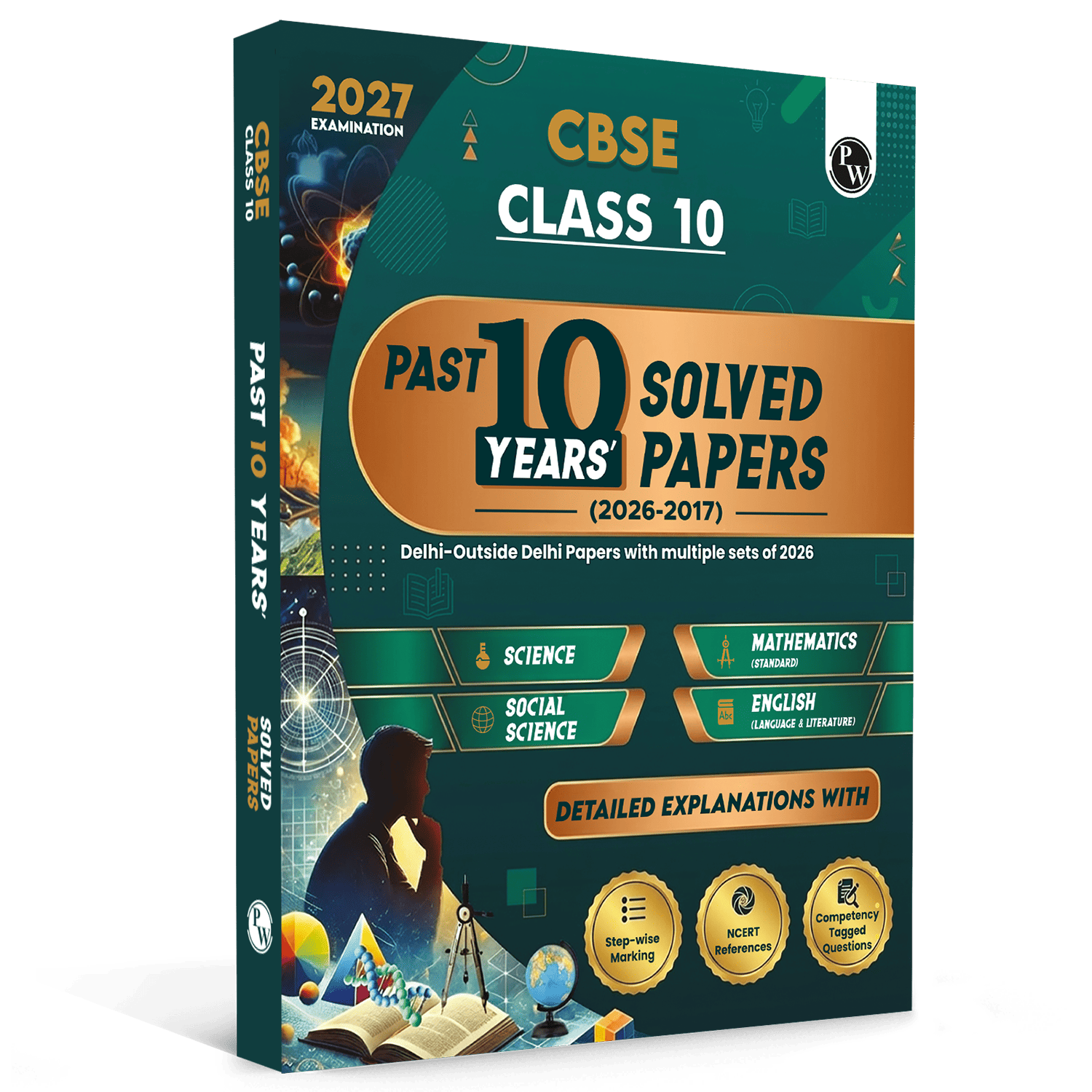
A CBSE class 10 PYQ resource is a comprehensive collection of previous year questions spanning a full decade, specifically from 2016 to 2026. This compilation aligns with the latest 2027 board exam pattern and marking scheme.
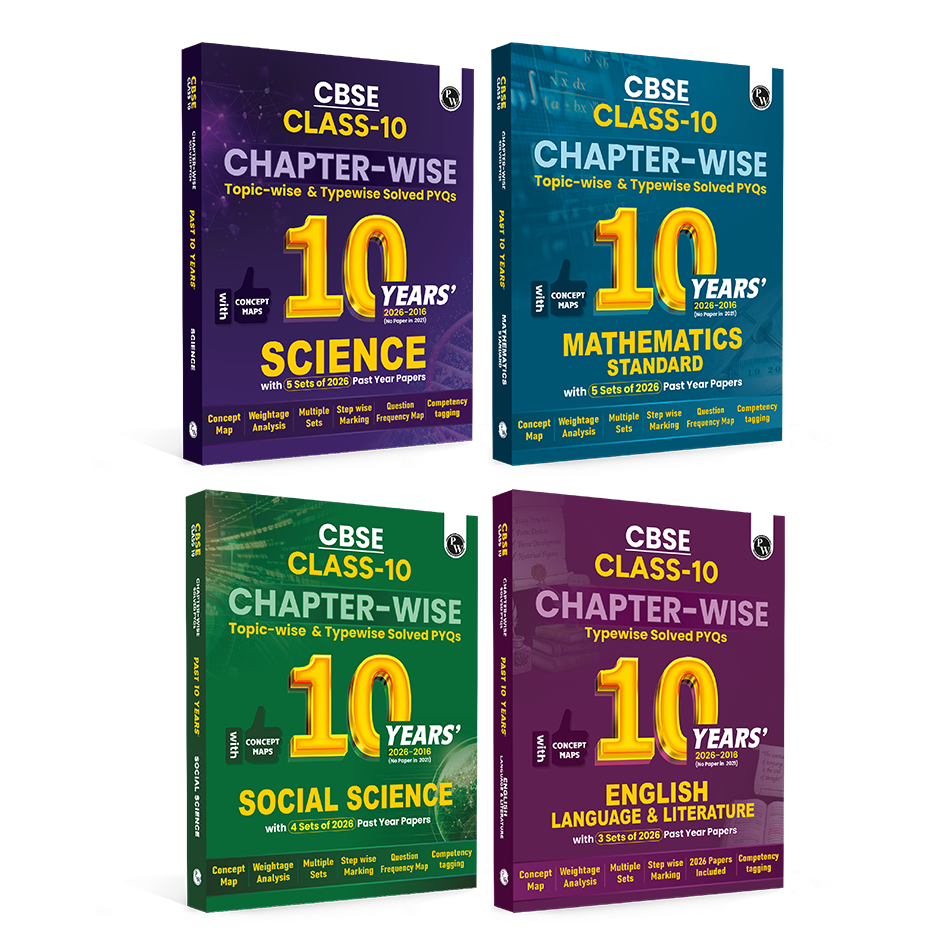
Instead of random question banks, this specific tool acts as a structured previous year papers combo encompassing four major subjects:
-
Science
-
Mathematics (Standard)
-
Social Science
-
English Language & Literature
The material goes beyond simple question-and-answer formats. It categorises past questions chapter-wise, topic-wise, and type-wise. Students gain access to detailed solutions, official sample papers, and chapter weightage analysis, all compiled into a single study tool.
Why CBSE class 10 PYQ is a Smart Revision Resource?
Using a unified CBSE class 10 PYQ guides your exam preparation through data-driven insights rather than guesswork.
Key features that make this a smart choice include:
-
Concept Maps: Visual breakdowns of complex topics help you grasp connections quickly.
-
Question Frequency Tracking: Pinpoints exactly which topics carry high weightage.
-
Bloom's Taxonomy Classification: Organises questions across six cognitive learning levels to build conceptual understanding and analytical thinking.
-
Latest Board Paper Coverage: Integrates multiple sets from Delhi and Outside Delhi (2026) with step-wise marking schemes.
How CBSE Class 10 PYQ Replaces Multiple Practice Books
Juggling separate guides for every subject wastes both time and energy. A unified CBSE class 10 PYQ 2027 Combo acts as a complete class 10 all subject PYQs solution, eliminating desk clutter.
|
Traditional Approach |
Unified PYQ Approach |
|
Buying separate guides for four subjects |
One combo covering Science, Maths, SST, and English |
|
Guessing chapter importance |
Clear chapter-wise weightage analysis provided |
|
Searching for official sample papers online |
2025, 2024, and 2023 official SQPs included in print |
|
Relying on disconnected answer keys |
Step-wise solutions with exact NCERT references |
Consolidating ten years of solved papers (2016–2026) into one package guarantees complete exam-oriented practice without the need to cross-reference multiple heavy textbooks.
Benefits of CBSE class 10 PYQ
Integrating a CBSE class 10 PYQ into your daily routine offers tangible advantages for your CBSE class 10 revision. The structured format directly tackles common academic hurdles.
-
Targeted Practice: The type-wise question segregation aligns perfectly with the current board question typology.
-
Improved Answer Writing: Detailed explanations linked directly to NCERT references teach you exactly how to frame answers.
-
Real Exam Simulation: Includes Term-I and Term-II papers from 2022, plus official Sample Question Papers (SQPs) for 2023, 2024, and 2025.
-
Competency Tagging: Helps you track your ability to answer application-based and analytical questions.
These elements work together to build exam strategy, refine time management, and improve conceptual clarity.
Who Should Use CBSE Class 10 PYQ?
Any student looking to optimise their study hours will find value in a CBSE class 10 PYQ. It caters to different stages of academic readiness.
-
Students facing mid-term anxiety: If you feel overwhelmed by the sheer volume of chapters across Science, Maths, Social Science, and English, this tool provides a clear direction.
-
Learners aiming for score improvement: The step-by-step solutions and marking scheme explanations show exactly where marks are awarded and lost.
-
Candidates needing rapid reviews: The visual concept maps allow for quick revision of entire chapters just before school tests or pre-boards.
This resource is ideal for anyone targeting the 2027 board exams who wants a straightforward, factual approach to learning.
Study Plan with CBSE Class 10 PYQ
A structured approach guarantees the best results when using your CBSE class 10 PYQ. Follow this sequence to integrate the material into your current mid-term schedule.
-
Analyse Weightage First: Check the chapter-wise weightage analysis to identify high-priority topics.
-
Use Concept Maps: Review the visual concept maps for a specific chapter before attempting any questions.
-
Solve Topic-Wise: Tackle the segregated questions to test your understanding of individual concepts.
-
Check NCERT References: Compare your answers against the detailed, step-wise marking explanations to fix knowledge gaps.
-
Attempt Full Papers: Once confident, use the included official sample papers to simulate a timed testing environment.
This methodical process ensures steady score improvement and deepens analytical thinking.
Check Out: CBSE Class 10th Question Banks
Common Mistakes to Avoid While Using CBSE Class 10 PYQ
Even with an excellent CBSE Class 10 PYQ, certain habits can derail your progress. Avoid these frequent errors to get the most out of your study sessions.
-
Ignoring the Marking Scheme: Simply reading the final answer is a mistake. Always review the step-wise marking to understand how examiners distribute points.
-
Skipping the Question Frequency Map: Treating all questions equally wastes time. Prioritise topics that the frequency tracker highlights as highly repetitive.
-
Overlooking NCERT Links: The detailed solutions provide specific NCERT references. Failing to revisit the textbook when you get a question wrong leaves your foundational knowledge weak.
-
Leaving Sample Papers for the Last Day: The 2022 Term-I/II papers and recent SQPs are meant for practice, not just last-minute skimming.
Read More: Toughest and Easiest Chapters in CBSE Class 10 for All Subjects
CBSE Class 10 PYQ FAQs
What exactly does a CBSE class 10 PYQ combo contain?
It contains 10 years (2016–2026) of solved previous year questions for Science, Mathematics (Standard), Social Science, and English, categorized by chapter, topic, and type.
Will this specific resource help me understand the latest pattern?
Yes, it includes smart exam analysis based on the latest 2027 board examination pattern, complete with chapter-wise weightage and evolving trends.
How does combining subjects save study time?
It saves time by placing four core subjects into one package and using visual concept maps for rapid review instead of forcing you to read long textbook paragraphs.
Are official sample papers included for practice?
Yes, the resource provides official CBSE Sample Question Papers (SQPs) for 2025, 2024, and 2023, along with multiple sets of the 2026 board paper.
Does this tool explain how to write answers properly?
Absolutely. It features detailed explanations with step-wise marking and NCERT references for every question, ensuring you write exact, score-boosting answers.