How to Find Repeated Questions in CBSE Class 10 PYQ

By learning how to spot patterns in CBSE Class 10 PYQ, you stop studying hard and start studying smart. Identifying repeated questions allows you to prioritise high-yield topics, manage your time during the revision phase, and build the confidence needed to tackle the actual paper. If you want to know which questions the examiners love to repeat, you need a systematic strategy to decode the past decade of papers.
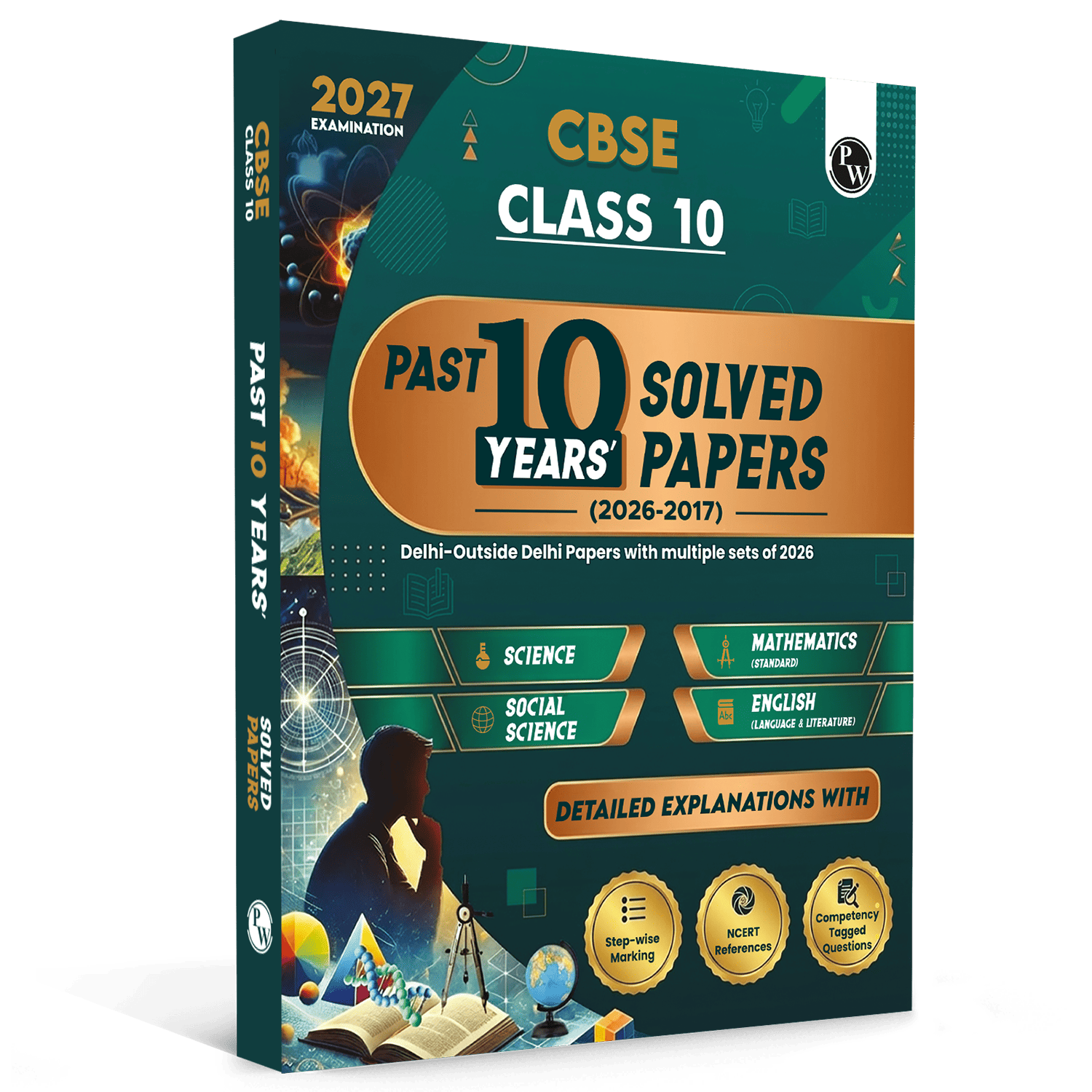
Check Out: CBSE Class 10 Books
Importance Of CBSE Class 10 PYQS
Success in the boards isn't just about how much you know; it is about how well you understand the examiner's mindset. When you dive into CBSE Class 10th PYQs, you notice that while the specific numbers in a maths problem might change, the core concept or the "type" of question remains remarkably consistent.
-
Predictability: Certain sections, like the "Refraction" diagrams in Science or "Arithmetic Progressions" in Maths, appear almost every year.
-
Confidence Booster: Seeing a familiar question in the exam hall instantly lowers anxiety levels.
-
Efficiency: You can allocate 80% of your energy to the 20% of the syllabus that generates the most marks.
How to Find Repeated Questions in CBSE Class 10 PYQ?
Finding repetitions isn't just about skimming through CBSE Class 10 PYQ. It requires a methodical approach to ensure you don't miss the subtle ways questions are rephrased.
1. Gather a 10-Year Question Bank
To see a pattern, you need enough data. Using a single year's paper won't help. You need a comprehensive collection of previous-year question papers for Class 10 spanning at least the last decade. This timeline is crucial because CBSE often cycles through question styles every 3 to 4 years.
2. Categorise by Chapter, Not Year
If you look at papers year-by-year, the patterns remain hidden. Instead, take one chapter, for example, "Chemical Reactions and Equations", and look at every question asked from this chapter across the last ten years. This " analysis" makes it glaringly obvious which definitions or experiments are the board’s favorites.
3. Identify "The Rephrased" Questions
Sometimes, a question isn't repeated word-for-word, but the core demand is the same.
-
Year 1: "Define the power of a lens."
-
Year 3: "A person uses a lens of focal length 25 cm. Calculate its power."
-
Year 5: "What is the SI unit of lens power, and how is it related to focal length?"
While these look different, they all stem from the same concept in your previous year question papers class 10.
4. Use a Frequency Table
Create a simple tally system. Every time a specific concept appears, add a mark next to that topic in your index. Topics with more than five marks are your "must-dos".
High Weightage Topics from CBSE Class 10 PYQ
Based on an analysis of the Class 10 PYQ, certain subjects show more repetition than others. Here is a breakdown of what you should look for.
Mathematics
In maths, the "type" of question repeats. For instance, proving the irrationality of a number (like root 2 or root 5) is a staple in the Real Numbers chapter. Similarly, the "Basic Proportionality Theorem" in geometry is a recurring five-mark favourite.
Science
Science is heavily driven by diagrams and experiments. If you check CBSE class 10 previous year paper, you will notice that the "Human Eye" diagrams or "AC/DC Generator" logic (where applicable) appear frequently. Chemical properties of carbon compounds, specifically esterification and saponification, are also high-repetition areas.
Social Science
In SST, the repetition often happens in the map work and long-answer questions. The "Nationalism in India" chapter has a fixed set of movements and dates that the board asks about every single year without fail.
CBSE Class 10 PYQ Trend Analysis Table
The table below illustrates how certain chapters consistently dominate the CBSE Class 10 previous year paper across different years.
|
Subject |
Highly Repeated Topic |
Average Marks Contribution |
Frequency (Last 10 Years) |
|
Maths |
Trigonometric Identities |
4-6 Marks |
9/10 Years |
|
Science |
Heredity & Evolution (Mendel’s Laws) |
3-5 Marks |
8/10 Years |
|
SST |
Sectors of the Indian Economy |
5 Marks |
7/10 Years |
|
English |
Analytical Paragraph/Letter Writing |
5 Marks |
10/10 Years |
Common Mistakes While Using CBSE Class 10 PYQ
Even with the best CBSE previous-year question papers Class 10, students often make errors that cost them marks.
-
Ignoring the Marking Scheme: Don't just look at the question; look at the official CBSE marking scheme. It tells you exactly which keywords earn you points.
-
Focusing Only on 5-Mark Questions: Often, 1-mark and 2-mark questions are the ones that repeat the most frequently. These are "easy wins" that build your total score.
-
Using Outdated Syllabus Papers: CBSE occasionally removes chapters. Ensure you aren't wasting time on topics that are no longer part of the current curriculum.
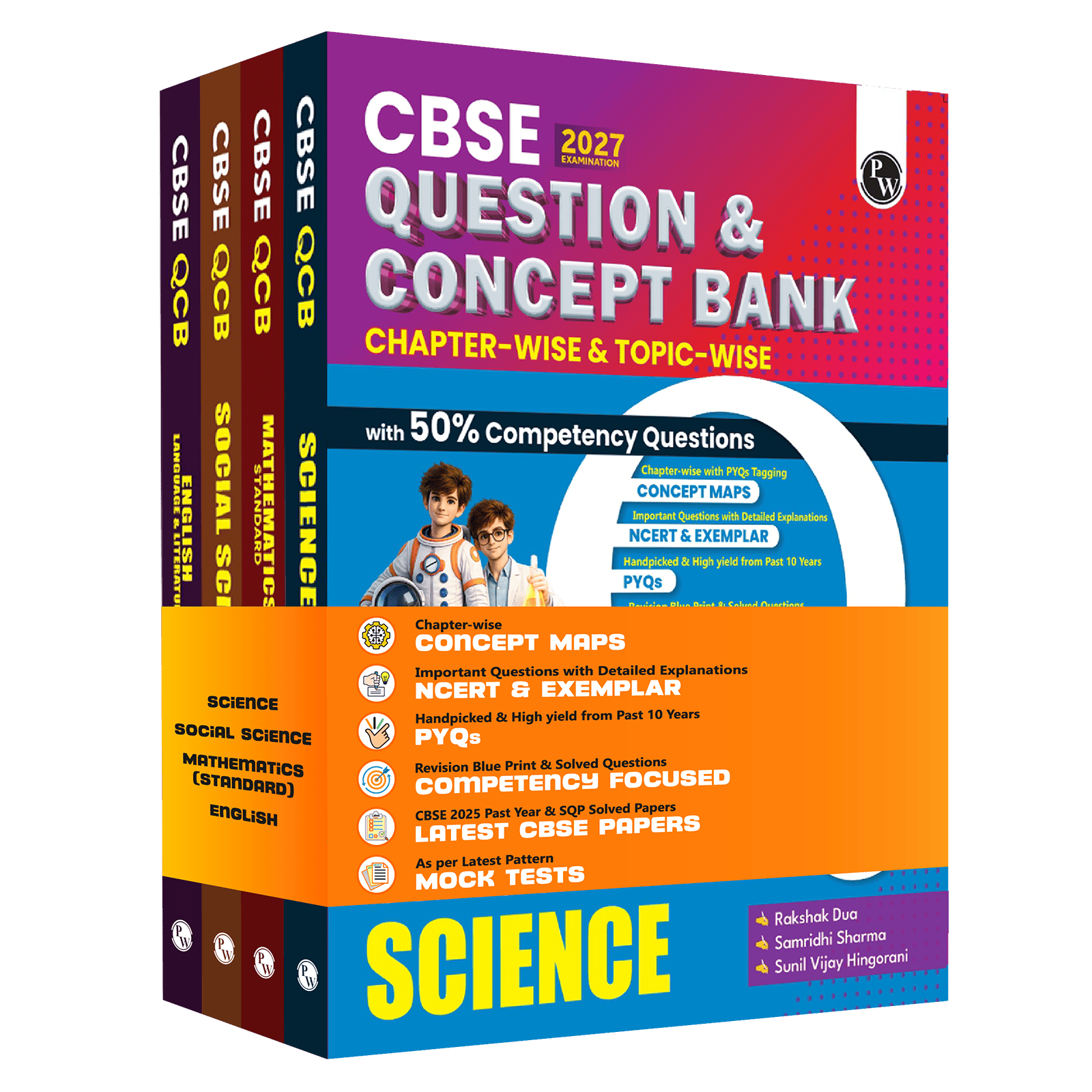
Check Out: CBSE Class 10th Question Banks
How to Practice CBSE Class 10 PYQ Effectively?
Once you have identified a repeated question in the PYQ, don't just read it.
-
Write it Out: Boards are a written exam. Your hand needs to remember the flow of the answer.
-
Time Yourself: If a question repeats, you should be able to solve it faster than a new one. Aim to shave off 2 minutes from your previous time.
-
Check the Variation: Try to think of how the examiner might twist the same question next year. If they asked for the "Advantages of Parallel Circuits" last year, they might ask for the "Disadvantages of Series Circuits" this year.
Finding patterns in previous year question papers in class 10 is the closest thing to having a crystal ball for your exams. By focusing on the concepts that have stood the test of time, you ensure that no matter how difficult the paper feels, you will have a solid foundation of "guaranteed" topics to fall back on.
Read More: CBSE Class 10 Question Bank PDF Download
CBSE Class 10 PYQ FAQs
How many years of Class 10 PYQ should I solve?
It is highly recommended to solve at least the last 10 years of papers. This range is wide enough to help you spot long-term trends and ensures you cover different variations of the same concept.
Are questions really repeated in the CBSE PYQ Class 10?
Yes, while the exact wording might change, the core concepts and the "structure" of the questions repeat frequently. In subjects like maths and science, almost 60-70% of the paper is based on themes seen in previous years.
Where can I find a reliable CBSE Class 10 previous year paper PDF?
You can find official papers online, or for a more organised experience, you can get the solved 10-year papers from the educational websites, which categorises them for easier study.
Should I rely only on CBSE Class 10th PYQs for my preparation?
While Class 10th PYQs are essential for understanding the exam pattern, you should first complete your NCERT textbook. Use the PYQs as a tool to refine your preparation and test your knowledge.
Which subject has the most repetitions in the CBSE PYQs class 10?
Science and mathematics usually show the highest rate of concept repetition. Social science also has high repetition in map work and the long-form descriptive questions in history and civics.