How to Revise Human Physiology Using Class 12 Question Bank?
Human Physiology is one of the crucial but difficult portions of biology board exams as it involves specific procedures, pictures and concepts. A Class 12 question bank makes the review more successful with chapter-wise practice, board pattern questions and active memory exercises. It helps to identify the weak areas, develop the conceptual comprehension and improve the confidence to score high in the final examination.
Why Use a Class 12 Question Bank for Human Physiology Revision?
Human Physiology is one of the most vital units in the Class 12 Biology syllabus. It carries substantial weightage in board examinations and contains concepts that form the foundation for competitive medical entrance tests. However, simply reading NCERT chapters multiple times is rarely enough to secure maximum marks.
Using a specialized question bank transforms your study strategy from passive reading to active problem-solving. Here is why this approach works so effectively for revision:
-
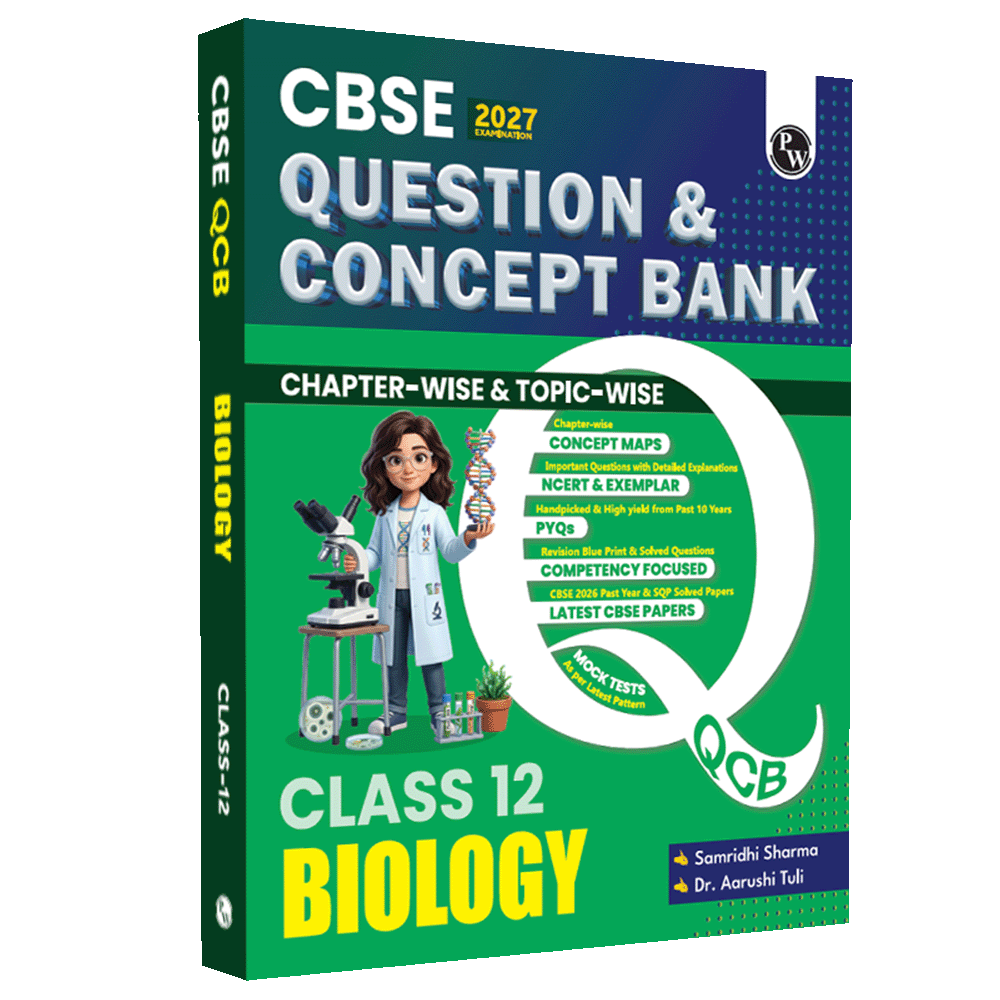
Targeted Focus on Frequently Asked Questions: A well-structured Biology question bank Class 12 compiles previous years' questions, sample papers, and high-probability board items. Practising these ensures you focus on concepts that external examiners consistently test.
-
Understanding Board Marking Schemes: Solving real questions will expose you to exact marking rubrics. You discover how marks are given for certain keywords, bullet points and step-by-step physiological systems.
-
Active Recall and Long-Term Retention: When you answer questions you’re forcing your brain to actively retrieve knowledge. It increases cerebral connections and makes it considerably simpler to remember complicated topics such as neuronal conduction or endocrine feedback loops in exams.
-
Identifying Knowledge Gaps: Beforehand Testing a series of questions quickly can identify chapters/concepts that you are lacking knowledge in so you can revisit and re-read relevant areas prior to test day.
Key Topics in Human Physiology to Practice from Class 12 Question Bank
Human Physiology is composed of some main topics . Different mechanisms , pathway diagrams and specific terms are present in each chapter . To help you learn efficiently, plan your revision around the high-weightage topics in your CBSE class 12 biology question bank.
1. Digestion and Absorption
Focus on the mechanical and chemical processes of digestion. Your book should include questions on enzyme functions, stomach acid regulation, and nutrient absorption mechanisms across the intestinal wall.
-
Practice writing out the specific enzymes involved in carbohydrate, protein, and lipid breakdown.
-
Solve short-answer questions related to digestive disorders such as jaundice, indigestion, and constipation.
2. Breathing and Exchange of Gases
This chapter frequently features questions regarding partial pressure gradients, respiratory volumes, and gas transport mechanisms.
-
Refer your question bank for solving numerical and descriptive questions on Tidal Volume (TV), Inspiratory Reserve Volume (IRV) and Expiratory Reserve Volume (ERV).
-
Review questions explaining oxygen-haemoglobin dissociation curves and how factors like pH, temperature, and carbon dioxide concentration shift the curve.
3. Body Fluids and Circulation
Circulation questions often focus on the cardiac cycle, blood clotting mechanisms, and electrocardiogram (ECG) readings.
-
Revisit questions covering the double circulation pathway in human hearts.
-
Learn short-note questions on blood groups, Rh incompatibility, and lymphatic system functions.
4. Excretory Products and Their Elimination
Urine formation and osmoregulation are essential topics that board examiners regularly test.
-
Solve step-by-step questions on glomerular filtration, selective reabsorption, and tubular secretion.
-
Practice explaining the Counter-Current Mechanism using labeled schematic flowcharts provided in your question bank.
5. Locomotion and Movement
This section focuses heavily on skeletal muscle structure and the sliding filament theory of muscle contraction.
-
Practice long-answer questions detailing the roles of actin, myosin, calcium ions, and ATP during muscle contraction.
-
Answer comparative questions distinguishing between pectoral and pelvic girdles, or fibrous, cartilaginous, and synovial joints.
6. Neural Control and Coordination
Neural physiology requires a clear understanding of impulse generation, conduction, and synaptic transmission.
-
Use your question bank to practice describing resting membrane potential, depolarization, and repolarization phases.
-
Learn diagrammatic questions covering the structure of a neuron, reflex arc, and central nervous system components.
7. Chemical Coordination and Integration
Endocrine physiology involves memorizing hormone sources, target organs, and feedback mechanisms.
-
Solve match-the-following and short-answer items on pituitary, thyroid, adrenal, and pancreatic hormones.
-
Practice questions detailing peptide versus steroid hormone action pathways at the cellular level.
How to Solve Human Physiology Questions with Class 12 Question Bank
Systematic execution is essential when using a question bank for revision. Jumping randomly between chapters often leads to fragmented learning. Follow this structured approach to maximize your retention and problem-solving speed during board preparation:
Phase 1: Concept Review (NCERT Reading)
│
▼
Phase 2: Chapter-Wise Question Bank Practice
│
▼
Phase 3: Self-Evaluation & Error Analysis
│
▼
Phase 4: Targeted Revision of Weak Areas
Step 1: Complete an Initial NCERT Chapter Review
Before opening your CBSE class 12 books, review the corresponding chapter in your standard NCERT textbook. Pay close attention to bold terms, summary tables, and official diagrams. Ensure your foundation is firm before attempting test questions.
Step 2: Attempt Questions without External Help
Select a specific block of chapter-wise biology questions from your question bank—for example, 15 short-answer questions and 2 long-answer questions from Excretory Products. Set a strict timer to simulate authentic exam conditions. Avoid referencing your textbook or answer keys while writing your responses.
Step 3: Evaluate Answers Against Official Solution Keys
Once finished, compare your written responses directly against the detailed solutions in your practice book. Evaluate your answers critically using the following criteria:
-
Did you include all essential technical terms and keywords?
-
Is your answer structured logically using clear bullet points?
-
Are physiological sequences (e.g., nerve impulse transmission) listed in correct chronological order?
-
Did you include labeled diagrams where appropriate?
Step 4: Maintain an Error Revision Log
Keep a dedicated notebook to record every mistake, missed keyword, or incorrect diagram label. Reviewing this log weekly prevents you from repeating identical errors in your final board examinations.
Diagram and NCERT Preparation Using Class 12 Question Bank
Diagrams carry significant weight in Human Physiology papers. Board examiners frequently award partial or full marks based on the accuracy and clarity of your illustrations. A high-quality question bank helps you understand diagrammatic representation through repeated practice.
|
Human Physiology Chapter |
Key Diagrams to Learn |
Common Question Types in Board Exams |
|
Digestion & Absorption |
Human Digestive System, Alimentary Canal Cross-section |
Diagram labeling, function identification |
|
Breathing & Gas Exchange |
Human Respiratory System, Alveolar Gas Exchange |
Mechanism explanation with structural diagrams |
|
Body Fluids & Circulation |
Schematic Heart Diagram, Standard ECG Waveform |
Flowchart mapping, wave interpretation |
|
Excretory Products |
Nephron Structure, Malpighian Body, Counter-Current Scheme |
Process tracking, structural identification |
|
Locomotion & Movement |
Sarcomere Diagram, Actin & Myosin Filament Structure |
Sliding filament mechanism verification |
|
Neural Control |
Structure of Neuron, Synaptic Transmission Scheme |
Impulses pathway illustration |
|
Chemical Coordination |
Endocrine Gland Locations, Hormone Action Diagrams |
Mechanism classification, hormone labeling |
Key Rules for Practising Diagrams
-
Always Use Sharp Pencils: Board guidelines require neat, pencil-drawn diagrams with clear, straight labeling lines.
-
Label on One Side: Keep labels aligned neatly on the right-hand side of the diagram whenever possible.
-
Include Proper Titles: Never leave a diagram untitled. Always state clearly what the figure represents (e.g., "Figure: Structure of a Human Nephron").
-
Practice Drawing Speed: Use your question bank to practice drawing complete diagrams within 3 to 5 minutes so you do not run out of time during the final exam.
How to Use Class 12 Question Bank for Biology Board Preparation
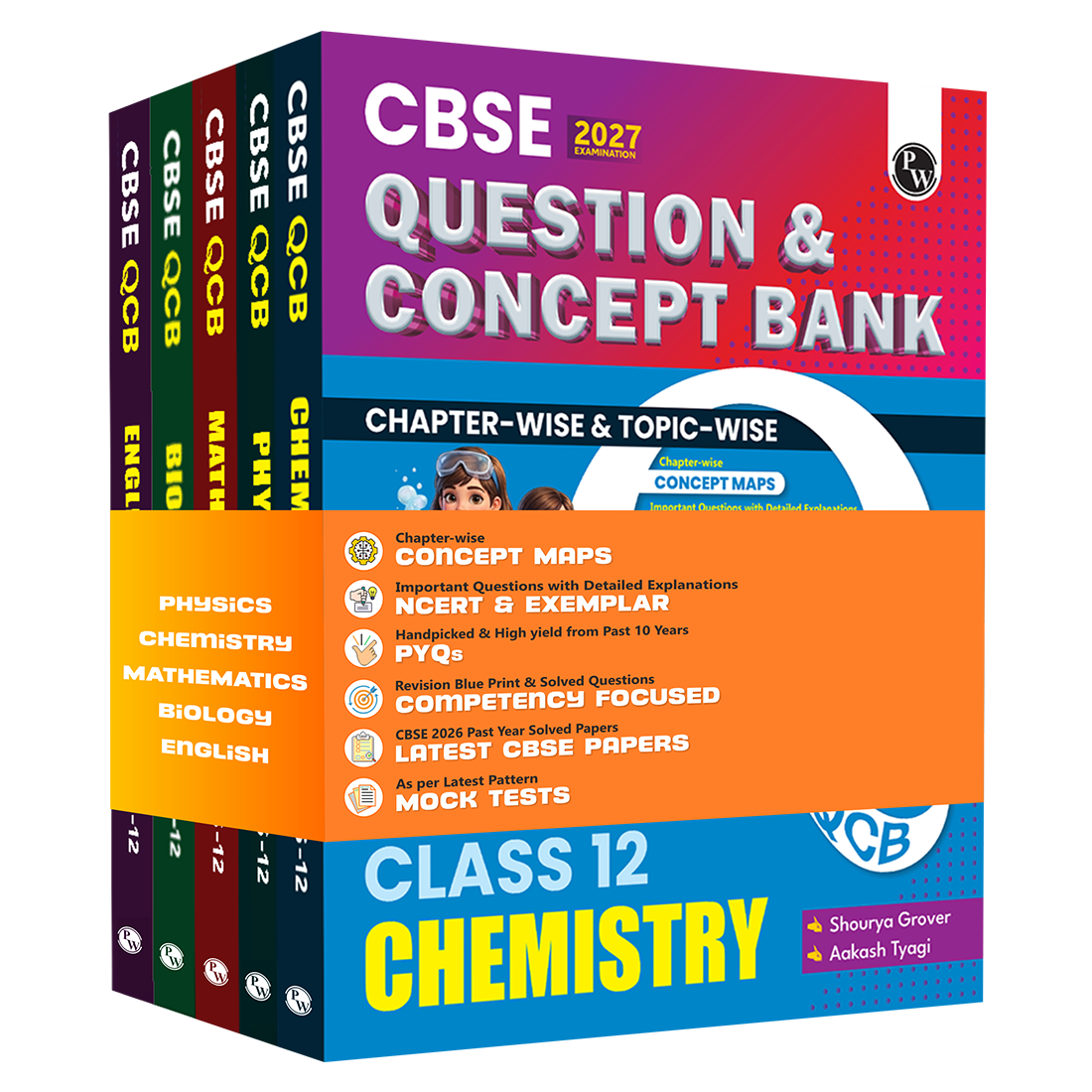
To gain the highest marks in Class 12 Biology, you need to have a disciplined timeline that combines learning topics with solving questions continuously. Here is a week-by-week implementation plan using your PW CBSE Question Bank Class 12 Set of 5 Books:
Week 1 & 2: Core Digestive, Respiratory, and Circulatory Revision
-
Dedicate days 1–4 to reviewing NCERT chapters on Digestion, Breathing, and Circulation.
-
Solve 20 to 30 questions from your question bank on a daily basis.
-
Focus a lot on short 2 mark & 3 mark conceptual problems to build initial speed.
Week 3 & 4: Excretion, Locomotion, and Neural Mechanisms
-
Work through Excretory Products, Locomotion, and Neural Control chapters.
-
Practice long 5-mark answer formulations using structured bullet points and labeled diagrams.
-
Solve multiple-choice questions (MCQs) and assertion-reason questions provided in your question bank.
Week 5: Endocrine Integration and Full Unit Mock Tests
-
Complete Chemical Coordination and Integration.
-
Attempt full-length, timed unit tests covering all 7 chapters of Human Physiology using your question bank.
-
Analyze your performance, calculate your percentage, and spend the final days rectifying weak areas recorded in your error log.
By sticking to this structured routine, your board preparation becomes predictable, manageable, and highly effective.
Read More: CBSE Class 12 Question Bank PDF Download
Class 12 Question Bank FAQs
How does a question bank help in human physiology revision?
Chapter wise questions for targeted practice together with previous year board topics and full solution keys are provided in a question bank. It helps students comprehend board marking patterns, practice crucial diagrams and understand active memory for complex physiological circuits.
Are human physiology questions from NCERT enough for biology board preparation?
While NCERT forms the foundation of board exams, solving extra questions from a dedicated Biology question bank Class 12 exposes students to varied question formats, including assertion-reasoning, case-based scenarios, and application-level problems required for high scores.
How many chapter-wise biology questions should I practice daily?
While revision keep yourself 20 to 30 questions a day to practice. It will keep you covering the ground consistently without burning out. Spend time on a mix of multiple choice, short notes, long response diagrammatic questions from your Class 12 question bank.
What is the best way to practice diagrams using a biology practice book?
Select key human physiology diagrams from your biology practice book, practice drawing them neatly using a pencil, and ensure all labels are positioned clearly on one side. Time yourself to complete each labeled diagram within 3 to 5 minutes.
Should I solve questions topic-wise or chapter-wise during revision?
Starting with topic-wise and chapter-wise questions helps build fundamental clarity. Once individual chapters are thoroughly revised using your class 12 question bank, transition to full unit mock tests to improve overall time management and integrated recall.