How to Identify Weak Chapters Using PW CBSE Class 9 Question Bank
With mid-term exams approaching, many students find themselves overwhelmed by the sheer volume of chapters in Science, Mathematics, and English. You might feel confident during a class lecture, but sitting down to solve an exam paper reveals unexpected gaps in your memory.
It is a common struggle to realize that you cannot recall specific formulas or structural grammar rules under exam pressure.
Using a dedicated CBSE Class 9 question bank allows you to uncover hidden gaps, fine-tune your preparation, and turn your weaker areas into strengths well before exam day.
What Is the CBSE Class 9 Question Bank?
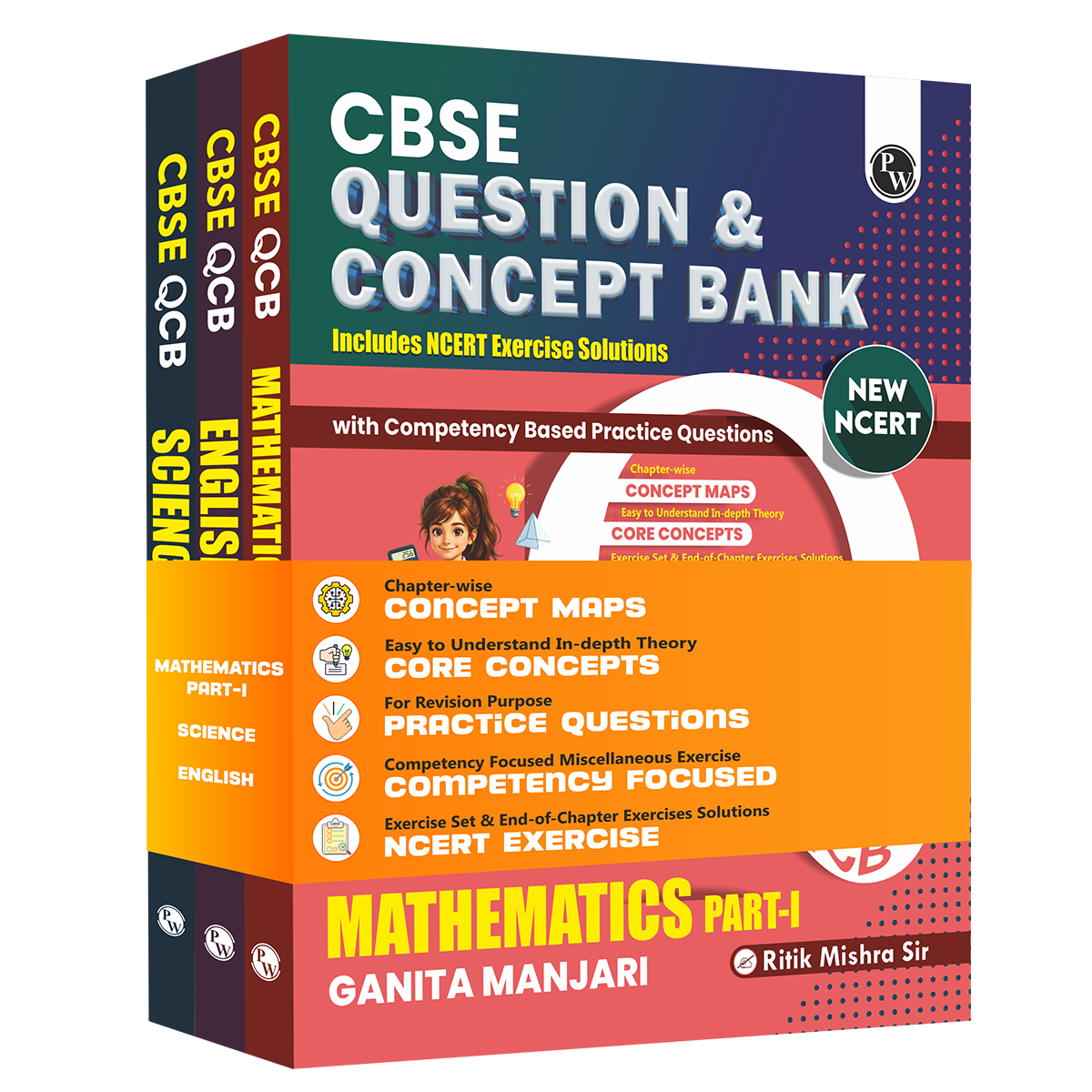
A CBSE Class 9 question bank is an all-in-one educational companion engineered to match the latest CBSE and New NCERT curriculum. This comprehensive package covers key core subjects—including Science (Exploration), Maths Part 1, and English R1 (Kaveri)—to provide structured, exam-oriented support.
It goes beyond a simple list of questions by integrating multi-layered learning tools designed to support complete learning, targeted revision, and rigorous self-assessment.
Within these resources, you will find:
-
Chapterwise Concept Maps: Visual tools that allow you to understand and connect critical concepts quickly for better long-term retention.
-
In-Depth Theory: Clear, structured, and easy-to-understand explanations across Science, Mathematics, and English to build strong foundational clarity.
-
Complete NCERT Solutions: Detailed, step-by-step solutions to NCERT in-text questions, exercises, and chapter-end problems.
-
Competency-Based Questions: Analytical and application-oriented problems aligned with modern CBSE assessment patterns to test your real-world understanding.
Why the CBSE Class 9 Question Bank Is Useful for Finding Weak Chapters?
The true value of a CBSE Class 9 question bank lies in its ability to act as a diagnostic tool for your mid-term prep. Instead of guessing which chapters need work, you can use structured features to pinpoint exact vulnerabilities.
-
Diagnostic Testing via Chapter-End Exercises
When you finish reading a topic, jumping straight into the chapter-end exercises helps you judge your actual retention. If you struggle to solve the basic application questions without flipping back to the theory pages, that specific chapter requires closer attention.
-
Spotting Conceptual Gaps with Competency-Based Questions
Modern exams emphasize application over simple recall. If you can define a term but fail to solve a scenario-based question on the same topic, the CBSE Class 9 question bank alerts you that your conceptual foundation is shaky, making it a perfect tool to identify weak topics before the school tests begin.
-
Measuring Speed and Accuracy
Answering questions under timed conditions reveals whether a topic is genuinely understood. If a single algebra or physics problem takes you twenty minutes to unravel, it shows a lack of fluency. This detailed resource highlights exactly where your speed drops, signaling a need for focused revision.
How to Prioritise Chapters Using the CBSE Class 9 Question Bank?
Not all chapters carry the same weight, and your level of comfort will vary across different units. You can categorize your syllabus into priority zones using a systematic chapterwise analysis to make your study sessions highly efficient.
Step 1: The Red Zone (High Difficulty, High Weightage)
Identify chapters that carry significant marks in the mid-term syllabus but cause you the most confusion. Open your CBSE Class 9 books, attempt the practice questions for these units, and mark the ones where you score poorly. These must be addressed first.
Step 2: The Yellow Zone (Medium Difficulty, Moderate Gaps)
These are chapters where you understand the basic theory but make silly mistakes in the final calculations or grammar rules. Use targeted question bank practice to eliminate minor errors and build consistency.
Step 3: The Green Zone (High Confidence, Strong Grip)
These are your strongest areas. You do not need to spend hours re-reading the theory here. Instead, quickly skim through the concept maps to keep the information fresh, saving your energy for more demanding topics.
Benefits of Using the CBSE Class 9 Question Bank
Utilizing a specialized CBSE Class 9 question bank brings distinct advantages to your daily study routine, shifting your approach from passive reading to active, exam-focused preparation.
-
Aligned with the Latest Patterns: Every segment is built around the current curriculum, ensuring your mid-term preparation matches exactly what examiners expect.
-
Promotes Independent Learning: The inclusion of detailed solutions allows for instant error correction without needing constant external guidance.
-
Strengthens Analytical Thinking: By tackling competency-focused exercises, you develop deeper problem-solving skills rather than relying on rote memorisation.
-
Comprehensive Subject Coverage: It brings together Science, Mathematics, and English into a single unified ecosystem, preventing you from scattering your focus across disjointed resources.
Study Plan for Using the CBSE Class 9 Question Bank
To achieve balanced marks across Science, Mathematics, and English, you need a structured, daily routine. This step-by-step Class 9 revision strategy integrates the resource into your schedule seamlessly.
Phase 1: Review the Visual Concept Maps
Before diving into heavy question sets, spend ten minutes looking at the chapter-wise concept maps. This helps your brain organize the subtopics and visually connect definitions, formulas, and structural rules.
Phase 2: Tackle the In-Text and End-of-Chapter Problems
Work through the complete NCERT solutions systematically. Write down your answers on paper rather than just reading through them. For Mathematics, solve every step of the equations, and for Science, sketch out the necessary diagrams and process steps.
Phase 3: Execute Strict Self-Assessment
Close your notes and treat a selection of miscellaneous exercises as a mini-test. Once finished, use the provided detailed answers to grade your own work objectively. Highlight every missed step or incorrect term with a colored pen to track your real progress.
|
Subject |
Focused Book Component |
Suggested Daily Practice Time |
|
Mathematics |
Practice Sets & Step Solutions |
45 Mins |
|
Science |
Exploration Theory & Competency Evaluation |
40 Mins |
|
English |
Kaveri Grammar, Writing & Literature Support |
30 Mins |
Common Mistakes to Avoid While Using the CBSE Class 9 Question Bank
To get the absolute most out of your CBSE Class 9 textbook , you must avoid common study pitfalls that can stall your academic growth during CBSE exam preparation.
-
Reading Solutions Instead of Solving: Looking at a pre-written solution and nodding along creates a false sense of security. Always attempt the problem on paper by yourself before checking the answer key.
-
Skipping the Hard Competency Questions: It is tempting to only answer simple recall questions and skip the analytical ones. However, avoiding complex problems leaves you completely unprepared for modern exam patterns.
-
Ignoring the Concept Maps During Revision: Skipping visual aids forces you to re-read long text blocks repeatedly, which wastes precious time during frantic mid-term schedules.
-
Neglecting English Practice: Many students focus exclusively on Math and Science, leaving English preparation to the final days. Regular practice with the literature and grammar sections ensures your overall percentage remains high.
CBSE Class 9 Question Bank FAQs
Q1: How does a CBSE Class 9 question bank help me save time during mid-term preparation?
It condenses extensive chapters into visual concept maps and pinpointed theory, allowing you to skip long reading sessions and focus directly on practice and error correction.
Q2: Can I rely on this resource if I am struggling to identify weak topics on my own?
Yes. By testing yourself against the miscellaneous and competency-based sections, any topic you cannot answer accurately stands out immediately, showing you exactly where to focus.
Q3: Why should I focus on competency-based questions before my exams?
Modern school boards focus heavily on real-world application. Practicing these specific question sets helps develop your critical thinking and ensures you are not caught off guard by tricky exam phrasing.
Q4: How often should I perform a self-assessment using this book set?
It is ideal to conduct a mini-evaluation after completing every chapter. This regular checking loop keeps you aware of your academic standing throughout the school term.
Q5: Is it necessary to practice English from a question bank?
Absolutely. Consistent practice with structured writing formats and grammar rules helps you structure clean, error-free answers, which directly improves your overall aggregate scores.