How to Master Algebra for Class 10 Boards with Question Bank?

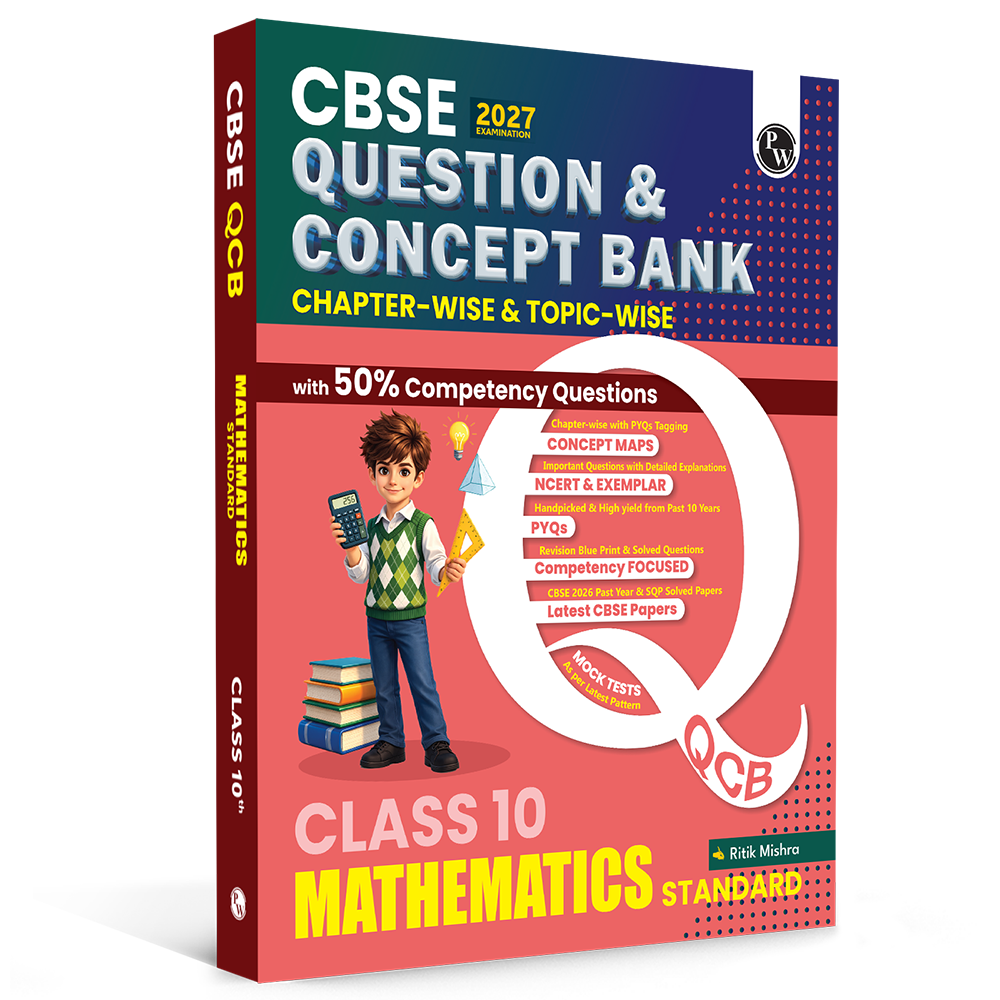
Many students struggle with complex equations and word problems, leading to exam anxiety. By using a structured CBSE Class 10 question bank Maths, you can break down the syllabus into manageable sections.
This article focuses on how to leverage the right resources to secure full marks in the Algebra unit, ensuring you are well-prepared for every possible question format.
Check out - CBSE Class 10 Books
Importance of Class 10 Question Bank for Maths
Algebra forms the backbone of the secondary school mathematics curriculum. It carries significant weightage in the board exams, making it a "make or break" section for students aiming for a high percentage. Understanding linear equations, quadratic equations, and arithmetic progressions is not just about memorising formulas; it is about developing logical reasoning.
When you use a CBSE Class 10 Maths chapter-wise question bank, you get a clear view of which topics are frequently tested. Algebra requires a step-by-step approach where one concept builds upon another. If you skip the basics of polynomials, you will likely find quadratic equations difficult. Therefore, a systematic study plan involving a dedicated question bank is essential for consistent progress.
Features of Class 10 Question Bank for Maths
When looking for a question bank, ensure it has the following features:
-
Updated Syllabus: It must align with the current 2025-26 CBSE curriculum.
-
Detailed Solutions: Not just the final answer, but a step-by-step breakdown.
-
Self-Assessment Tools: Checklists or progress trackers to monitor your learning.
-
NCERT Integration: Questions that cover NCERT textbook problems and NCERT Exemplar questions.
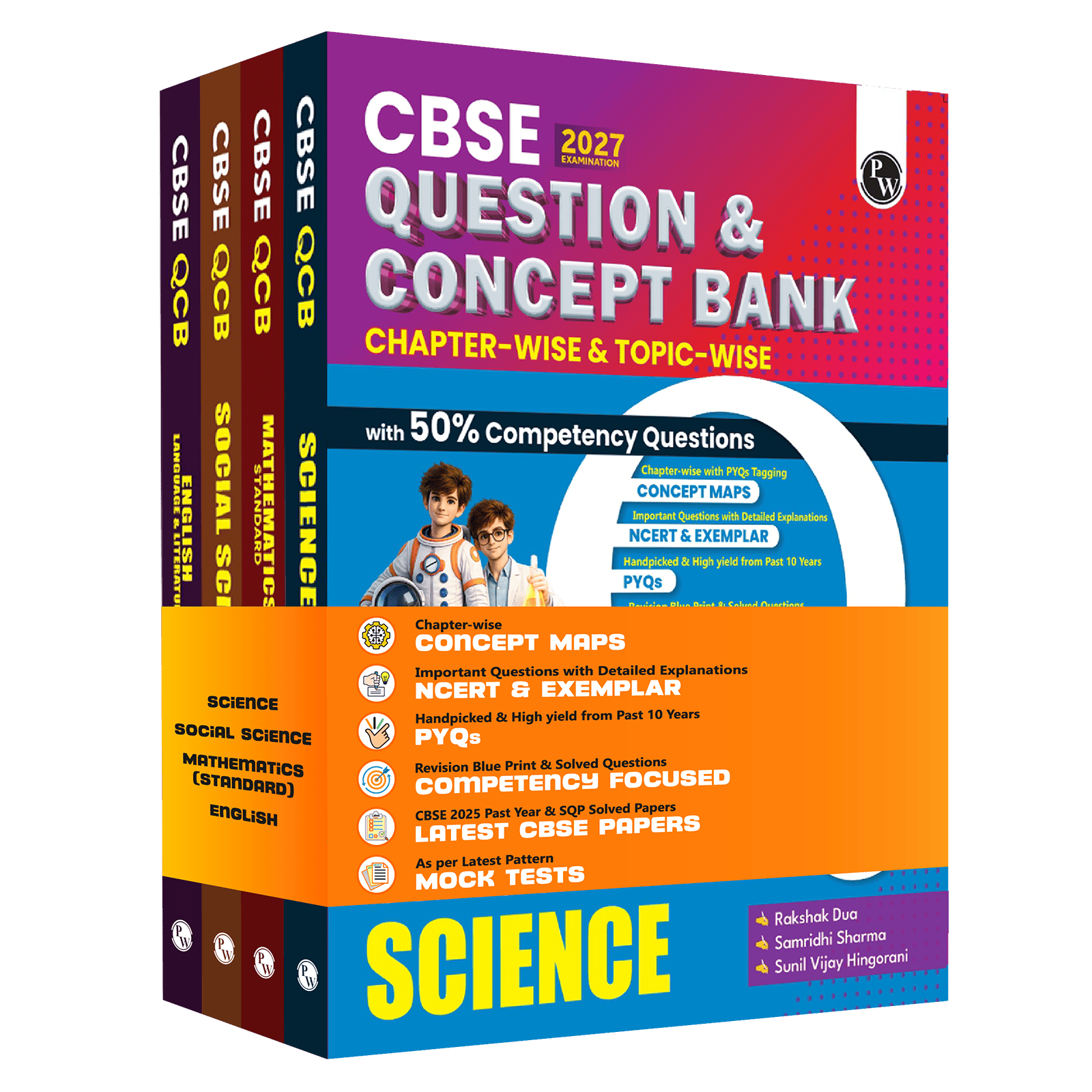
Question banks provide concept maps for quick revision and include a variety of question types, such as competency-based questions, which are now a staple in CBSE exams.
Why Use a Class 10 Question Bank for Maths for Practice
Standard textbooks provide the foundation, but a specialised CBSE Class 10 question bank in mathematics offers the competitive edge needed for the boards. These banks are designed to familiarise students with the latest exam patterns and marking schemes.
Targeted Chapter-Wise Practice
One of the biggest advantages of using a CBSE Class 10 maths question bank is the ability to focus on one topic at a time. Instead of feeling overwhelmed by the entire syllabus, you can master one chapter before moving to the next.
-
Polynomials: Focus on the relationship between zeros and coefficients.
-
Linear Equations: Practice substitution, elimination, and cross-multiplication methods.
-
Quadratic Equations: Master the quadratic formula and nature of roots.
-
Arithmetic Progressions: Understand the nth term and the sum of the first n terms.
Exposure to Diverse Question Types
The Board exam includes various formats such as Multiple Choice Questions (MCQs), Assertion-Reason, and Case-Based questions. A comprehensive CBSE Maths Class 10 question bank ensures you aren't surprised on the day of the exam. Practising these varied formats helps in building speed and accuracy.
How to Use a Maths Question Bank
Simply owning a CBSE Maths Class 10 question bank is not enough; you must use it strategically to see results.
-
Solve Previous Year Questions (PYQs): Most quality question banks include the last 10 years of board papers. This gives you an idea of the recurring themes.
-
Follow the Marking Scheme: Pay attention to how marks are distributed for steps. Even if your final answer is wrong, you can earn partial marks for correct steps.
-
Time Yourself: Use the sample papers in your CBSE Class 10 Maths chapter-wise question bank to conduct mock tests. Set a 3-hour timer to build your stamina.
-
Analyze Your Mistakes: After solving a set, compare your answers with the solutions provided. Identify if your errors are conceptual or due to calculation slips.
Linear Equations and Polynomials in Maths Question Bank
Linear equations and polynomials are the starting points of Algebra. Students often lose marks due to simple calculation errors or misunderstanding the signs. Using a class 10 question bank in maths allows you to see common pitfalls identified by experts.
Focus on Graphical Representations
In linear equations, the graphical method is a frequent 5-mark question. You must practice plotting lines accurately and identifying the point of intersection. The CBSE Class 10 Maths Question Bank usually provides solved examples of such graphs, showing exactly how to present your work for maximum marks.
Understanding Zeros of Polynomials
For polynomials, the geometric meaning of zeroes is a crucial concept. Ensure you practice questions that involve finding zeroes from a graph. The chapter-wise breakdown in a CBSE Class X Maths question bank helps in categorising questions based on their difficulty level, allowing for a gradual learning curve.
Quadratic Equations and AP in Maths Question Bank
Quadratic equations and Arithmetic Progressions (AP) often involve long calculations and word problems. This is where most students spend the majority of their time during the exam.
Mastering Word Problems
Word problems in quadratic equations can be tricky to set up. Whether it is a problem related to speed and distance or age-related questions, the trick lies in converting the text into a mathematical equation. A class 10 question bank in maths provides a vast collection of these problems, helping you recognise patterns in how equations are formed.
Efficiency in Arithmetic Progressions
AP is generally considered a scoring topic if you know the formulas well. However, the Board often asks "reverse" questions, such as finding the number of terms when the sum is given. Regular practice from a CBSE Class 10 question bank in mathematics ensures that you can manipulate the formulas easily under time pressure.
Mistakes to Avoid with Class 10 Question Bank for Maths
Even toppers make mistakes. Recognising these through your CBSE Maths Class 10 question bank practice can save you on the big day.
-
Sign Errors: Forgetting to change signs when moving terms across the "equal to" sign in linear equations.
-
Incorrect Formula Application: Confusing the formula for the nth term of an AP with the sum of n terms.
-
Ignoring Units: Not mentioning units in word problems related to area, volume, or speed.
-
Poor Presentation: Writing answers in a cluttered way. Use the structured format shown in the Maths Question Bank Solutions to keep your work neat.
Tips for Using Class 10 Question Bank for Maths
Mathematics is a race against time. Many students know the answers but fail to finish the paper. Using a CBSE Class X Maths Question Bank helps you develop shortcuts and mental math techniques.
Prioritise High-Weightage Topics
Algebra and Trigonometry usually carry the highest marks. By using your question bank, you can identify the sections that require the most attention. Spend more time on chapters where you feel less confident but carry significant weight.
Consistent Daily Practice
Math is a skill that rusts without practice. Aim to solve at least 15-20 questions from your class 10 question bank in maths every day. This consistency builds "muscle memory," making it easier to recall formulas and methods during the actual exam.
Read More: CBSE Class 10 Study Timetable
CBSE Class 10 Maths Question Bank FAQs
Which is the right question bank for maths for Algebra?
The best question bank is one that offers chapter-wise breakdowns, includes previous year questions, and follows the latest CBSE pattern.
How many hours should I practice from the CBSE Class 10 Maths chapter-wise question bank?
It is recommended to spend 1 to 2 hours daily on question bank practice to build speed and familiarity with different question formats.
Does the CBSE Class 10 Maths question bank include solved examples?
Yes, a high-quality question bank provides detailed, step-by-step solutions for all questions to help students understand the correct methodology.
Are competency-based questions included in the CBSE Class 10 question bank for mathematics?
Modern question banks are updated to include competency-based and case-study questions as per the latest CBSE guidelines.
Can I rely solely on a CBSE Maths Class 10 question bank for my preparation?
While a question bank is essential for practice, you should first finish your NCERT textbook to ensure your basic concepts are clear before moving to intensive practice.