NCERT Solutions for Class 6 Science Chapter 7 Getting to Know Plants
Nature is full of variety, and "Getting to Know Plants" is your first step into the fascinating world of botany. This chapter is essential for understanding how life on Earth is sustained. Whether you are searching for getting to know plants class 6 question answers for homework or looking for a detailed getting to know plants explanation class 6, this guide provides everything you need. From the veins in a leaf to the deep roots in the soil, we break down every concept clearly to ensure you excel in your Science exams using these NCERT solutions class 6 science chapter 7.
Check Out: Class 6th Books
Chapter Overview: Getting to Know Plants Class 6
In this chapter, we explore the structural diversity of plants and how they are classified based on their physical characteristics. Plants are primarily divided into three categories, Herbs, Shrubs, and Trees, depending on their height, the nature of their stems, and where their branches originate. We also study specialised plants like Creepers, which spread on the ground, and Climbers, which use external support to grow upwards.
This getting to know plants summary class 6 goes into a lot of depth about how plants are put together. It talks about how the stem moves water, how the leaf makes food and moves water out of the plant, and how the roots hold the plant in place and take in food. In addition, it looks at the Flower's reproductive system, naming important parts like sepals, petals, stamens, and the pistil and explains how ovules in the ovary turn into seeds.
NCERT Solutions for Class 6 Science Chapter 7
(a) Stem absorbs water and minerals from the soil.
(b) Leaves hold the plant upright.
(c) Roots conduct water to the leaves.
(d) The number of petals and stamens in a flower is always equal.
(e) If the sepals of a flower are joined together, its petals are also joined together.
(f) If the petals of a flower are joined together, then the pistil is joined to the petal.
Solution:
a) Roots absorb water and minerals from the soil. b) Stem holds the plant upright. c) Stems conduct water to the leaves. d) The number of petals and stamens in a flower may not always be equal. e) If the sepals of a flower are joined together, its petals are separate. f) If the petals of a flower are joined together, then the pistil may or may not be joined to the petal.Solution:
a)
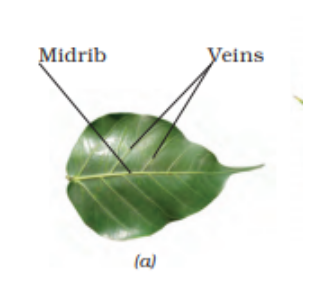 Leaf
Leaf
b)
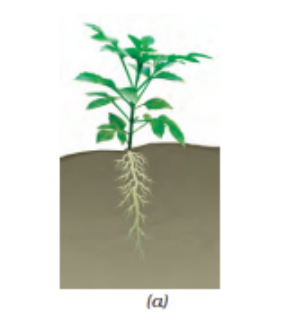 Tap root
c)
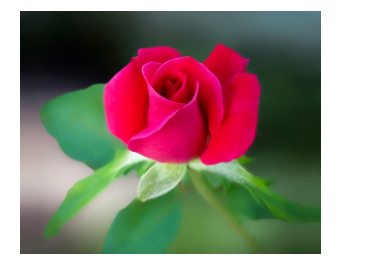 Flower(Rose)
3. Can you find a plant in your house or in your neighbourhood which has a long but weak stem? Write its name. In which category will you place it?
- Stems hold the plant upright.
- Stems conduct water to the leaves.
- Stems conduct food from leaves to other parts of the plant.
Benefits of Using NCERT Solutions
Using these NCERT solutions for class 6 science chapter 7 offers several advantages:
-
Conceptual Clarity: Simplifies tough botanical topics like leaf venation and flower anatomy for better retention.
-
Exam-Focused: Includes getting to know plants extra questions class 6 that are frequently asked in school examinations.
-
Logical Breakdown: Helps students identify the relationship between leaf venation and root types, which is a high-yield concept.
-
Time-Saving: Provides a concise getting to know plants summary class 6 for effective last-minute revision.
Check Out: Student Stationery Items
NCERT Solutions for Class 6 Science Chapter 7 FAQs
Q1. How can we tell if a plant has taproots or fibrous roots without pulling it out?
You can tell by looking at the leaves! Plants with reticulate venation usually have taproots, while plants with parallel venation usually have fibrous roots.
Q2. What is the role of chlorophyll in leaves?
Chlorophyll is a green pigment that traps sunlight, providing the energy needed for the plant to perform photosynthesis.
Q3. Are all tall plants called trees?
Not necessarily. To be classified as a tree, a plant must have a hard, thick, woody brown stem (trunk) with branches arising in the upper part, significantly above the ground.
Q4. Where can I find the class 6 science chapter 7 pdf?
You can access the official class 6 science chapter 7 pdf and these supplementary solutions online..
Q5. What is the function of the ovary in a flower?
The ovary is the swollen lower part of the pistil. It contains ovules, which eventually develop into seeds, while the ovary itself develops into a fruit.