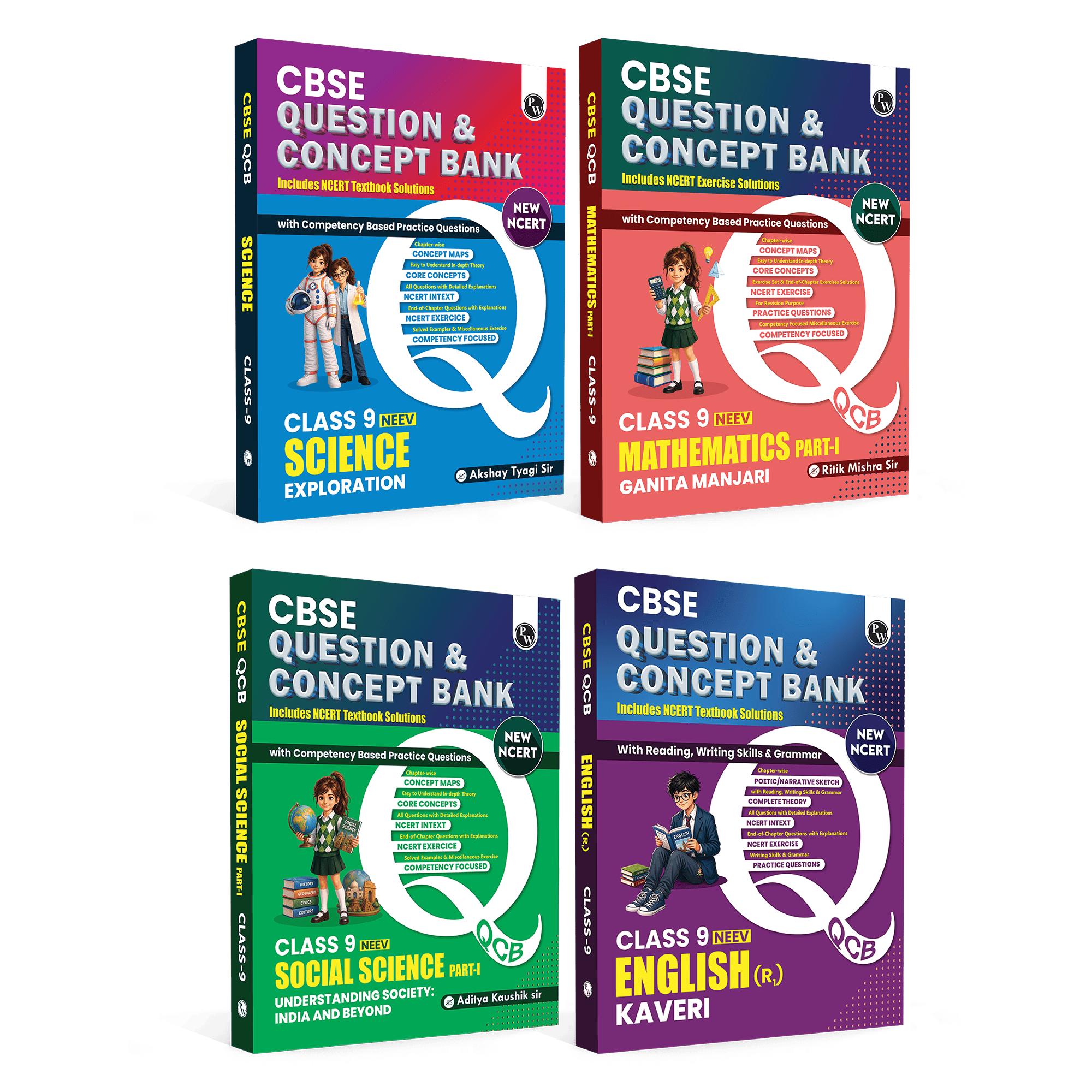
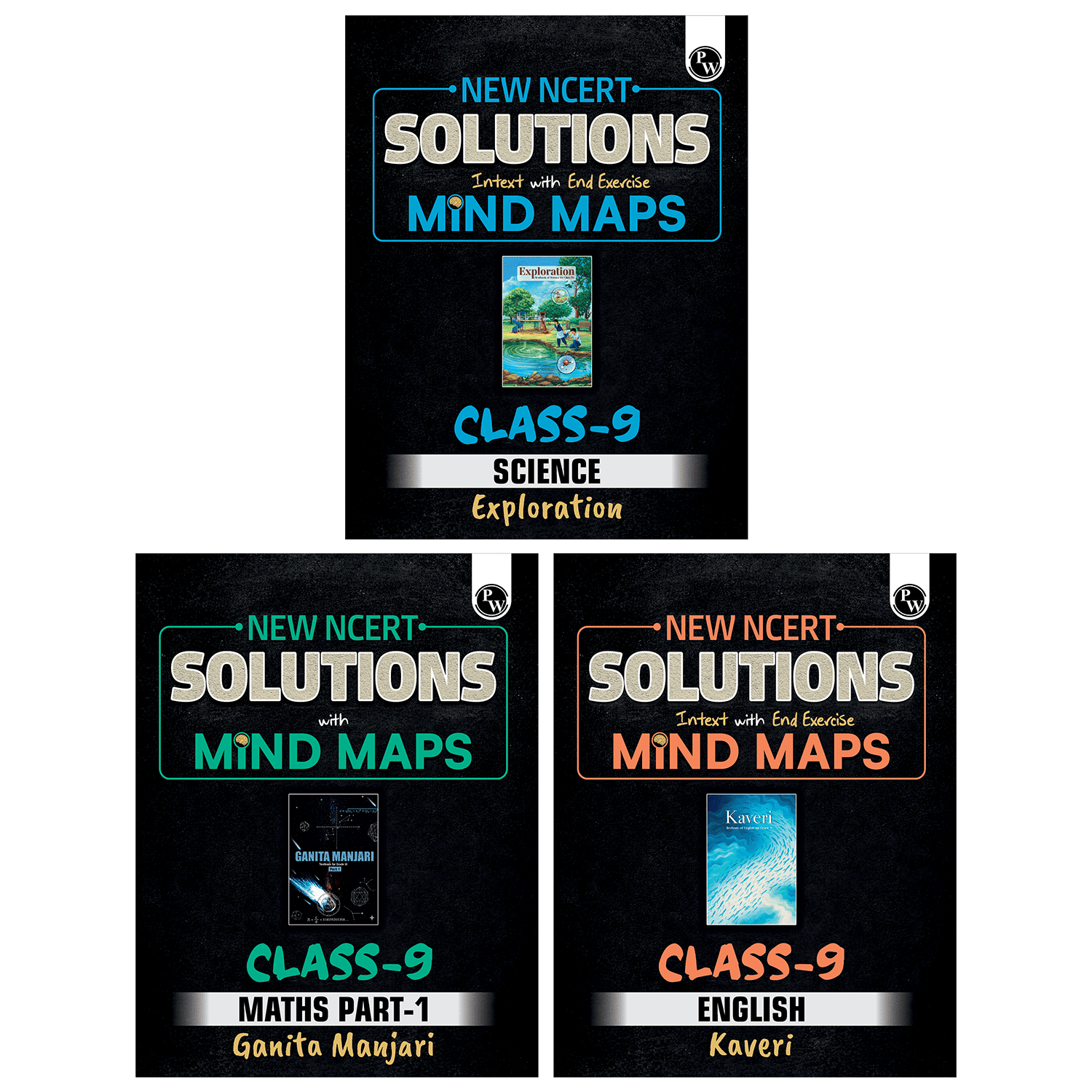
How to Prepare CBSE Class 9 Social Science Questions with PW Book
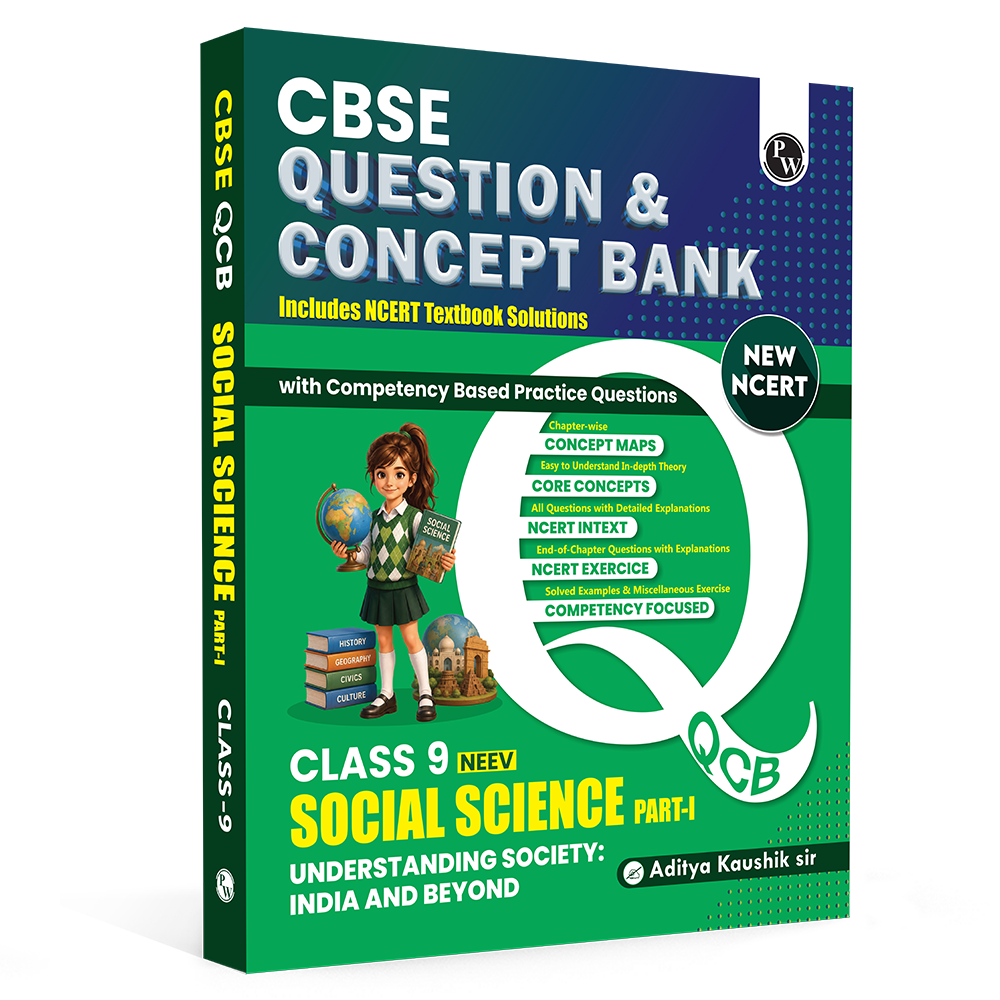
For preparing for school examinations, especially for topics with substantial theory, a systematic strategy is needed. Students generally find it difficult to remember historical dates, understand geographical concepts, and analyse civic themes. Regular practice with a CBSE Class 9 Social Science Question Bank helps reinforce concepts, enhance answer-writing skills, and identify weak areas while making revision more organised and manageable.
How to Study CBSE Class 9 Social Science Questions With Concept Maps
Studying Social Science questions becomes easier when students organise lengthy topics into smaller sections. Social Science includes dates, events, geographical processes, political concepts, and economic terms that can be difficult to remember through repeated reading alone. Concept maps can help connect related ideas and make revision more organised.
For History, students can use concept maps to connect major events with their causes, important developments, and outcomes. In Geography, maps and flowcharts can help explain physical features, climate, drainage, natural vegetation, and other topics. Political Science concepts can be linked with examples of institutions, rights, and democratic processes.
Students can create their own short concept maps after completing a chapter. This makes the revision process more active because they have to identify the most important information and arrange it logically.
-
Connect Important Ideas: Link events, causes, effects, definitions, and examples to understand chapters better.
-
Use Short Notes: Convert long explanations into short points that can be revised quickly.
-
Revise Through Visuals: Use flowcharts, tables, timelines, and diagrams wherever they make a topic easier to understand.
-
Practise Questions After Revision: Solve related CBSE Class 9 Social Science questions after reviewing each concept.
|
Study Phase |
Recommended Action |
Primary Benefit |
|
Initial Reading |
Go through chapter summaries and concept charts |
Establishes foundational familiarity |
|
Active Learning |
Attempt in-text exercises and solved examples |
Clarifies difficult theoretical concepts |
|
Final Practice |
Solve high-yield Class 9 SST practice questions |
Enhances speed and accuracy |
How a Question Bank Helps With CBSE Class 9 Social Science Questions
A CBSE Class 9 question bank can provide additional practice after students have completed their textbook reading. Instead of solving only a few questions from each chapter, students can use a question bank to practise different formats and identify areas that require more revision.
Social Science questions can test simple factual knowledge as well as the ability to explain, compare, interpret, and apply concepts. Practising different types of questions helps students understand how the same topic can be tested in different ways.
A question bank can also be useful for chapter-wise revision. Students can finish one chapter, attempt its practice questions, check their answers, and then move to the next topic. This creates a clear study cycle and makes it easier to track progress.
-
Cover the Syllabus: Practise questions from History, Geography, Political Science, and Economics.
-
Improve Answer Writing: Learn how to organise responses according to the question and marks.
-
Practise Different Formats: Attempt short-answer, long-answer, source-based, case-based, and application-oriented questions.
-
Identify Weak Topics: Mark questions that you find difficult and revisit the related concepts.
-
Review Solutions: Compare your answers with the solutions to identify missing points or factual errors.
Daily Practice Tips for CBSE Class 9 Social Science Question
Regular practice is important when solving CBSE Class 9 Social Science questions because the subject contains a large amount of information. Studying everything only before examinations can make revision difficult. A short and consistent daily routine allows students to cover the syllabus gradually.
Students can divide their practice across the four subjects instead of studying all four on the same day. For example, one day can focus on History and Geography, while another can be used for Political Science and Economics. The exact routine can be adjusted according to the student's school schedule and preparation level.
Timed practice is also useful. Students should occasionally solve a group of questions within a fixed time. This helps them understand how much time they need for reading, thinking, and writing each answer.
-
Set Daily Targets: Decide how many topics or questions need to be completed each day.
-
Practise Different Subjects: Rotate History, Geography, Political Science, and Economics throughout the week.
-
Use Timed Practice: Set a time limit for selected question sets to improve writing speed.
-
Check Factual Accuracy: Recheck dates, names, definitions, places, and important terms.
-
Maintain an Error List: Write down repeated mistakes and revise them regularly.
After completing a practice set, students should spend a few minutes reviewing their answers. This helps identify whether the problem is a lack of knowledge, poor answer structure, or careless mistakes.
How to Practise Competency Based CBSE Class 9 Social Science Questions
Modern question formats can require students to apply what they have learned instead of simply recalling textbook lines. Practising competency-based CBSE Class 9 Social Science questions can therefore help students become comfortable with unfamiliar situations and application-based questions.
Such questions may provide a short passage, data, map, situation, image, chart, or historical extract before asking students to answer. To solve them effectively, students should first understand the information provided in the question and then connect it with the relevant concept from the chapter.
For example, a question may provide information about rainfall and ask students to identify a related geographical factor. Similarly, a historical extract may require students to identify an event or explain its significance using their understanding of the chapter.
-
Read the Complete Question: Do not start answering before understanding the passage, data, or situation.
-
Identify the Topic: Determine which chapter or concept the question is testing.
-
Use Relevant Concepts: Connect the information given in the question with what you have studied.
-
Write Direct Answers: Avoid adding unrelated information that does not answer the question.
-
Review Your Response: Check whether every part of the question has been addressed.
Regular exposure to these formats through CBSE Class 9 Books can make students more comfortable when they encounter questions that are worded differently from those in their textbook.
How to Plan Revision With CBSE Class 9 Social Science Question Bank
A planned revision routine can make CBSE Class 9 Social Science questions easier to manage throughout the academic year. Students should avoid waiting until the examination period to revise all four subjects. Instead, they can revise each chapter multiple times at different stages.
The first revision can focus on understanding the chapter. The second can involve question practice, while later revisions can focus on mistakes, important facts, and difficult questions. This approach reduces the need to reread entire chapters repeatedly.
Students can also maintain separate revision lists for each subject. For History, this may include important events and terms. Geography can include locations, processes, and map-related information. Political Science can focus on concepts and institutions, while Economics can include definitions and examples.
A simple revision cycle can include:
-
Complete the Chapter: Read and understand the prescribed material.
-
Create Short Notes: Record important facts, terms, and concepts.
-
Solve Questions: Attempt chapter-wise questions without checking solutions.
-
Review Mistakes: Identify incorrect or incomplete answers.
-
Revisit Difficult Topics: Study the related concepts again.
-
Take Mixed Tests: Combine questions from different chapters during later revision.
Students should also avoid spending too much time on chapters they already know well. Once a topic is comfortable, more practice time can be given to areas where mistakes continue to occur.
Read More: CBSE Class 9 Important Questions for All Subjects
CBSE Class 9 Social Science Question Bank FAQs
What makes the PW class 9 social science question bank effective for exams?
The resource combines detailed theory, concept maps, and competency-based exercises aligned with modern assessment patterns, ensuring complete preparation.
How should students approach class 9 social science questions during self-study?
Students should start by reviewing chapter concept maps, read the detailed theory thoroughly, and then attempt practice exercises systematically.
Are competency-based problems included in the CBSE class 9 sst question bank?
Yes, modern practice modules feature extensive case-based and application-oriented queries designed to foster analytical thinking.
Why is early preparation crucial for CBSE Class 9 sst questions?
Early preparation builds a robust academic foundation, prevents last-minute stress, and improves answer-writing clarity for school assessments.
How can regular revision improve scores in class 9 social science preparation?
Regular revision using structured question banks helps reinforce core concepts, minimizes factual errors, and enhances overall time management.