Scoring Full Marks in English Board Exam Using Class 10 Question Bank
Many students face a common hurdle during their board exam English preparation: they know the stories and grammar rules, but they fail to present their answers in a way that matches the official marking scheme. This structural gap often leads to unexpected mark deductions in the final results.
Utilizing a dedicated CBSE Class 10 English question bank bridges this gap by shifting your focus from passive reading to active, exam-oriented practice.
Importance of CBSE Class 10 English Question Bank
Succeeding in a language paper requires a completely different approach compared to science or mathematics. While technical subjects rely on precise formulas, your English paper evaluates analytical depth, presentation, structural clarity, and language mechanics.
Integrating a comprehensive CBSE Class 10 English question bank into your weekly study routine provides several critical advantages:
-
Aligned with Evolving Trends: The latest CBSE guidelines mandate that papers include up to 50% competency-based questions. A standard textbook does not prepare you for these application-based prompts, but a structured question bank includes specialized blueprints specifically designed to tackle them.
-
Targeted Typology Coverage: It provides a healthy mix of Multiple Choice Questions (MCQs), Assertion and Reason, Case-Based Studies, along with structured Short and Long Answer Questions.
-
Clear Marking Schemes: Seeing how marks are distributed across steps prevents you from writing overly lengthy answers that waste crucial exam time.
-
Time Management Mapping: Practising section-wise collections under self-imposed timers helps you learn how to allocate your three hours perfectly across different paper components.
Features of the CBSE Class 10 English Question Bank
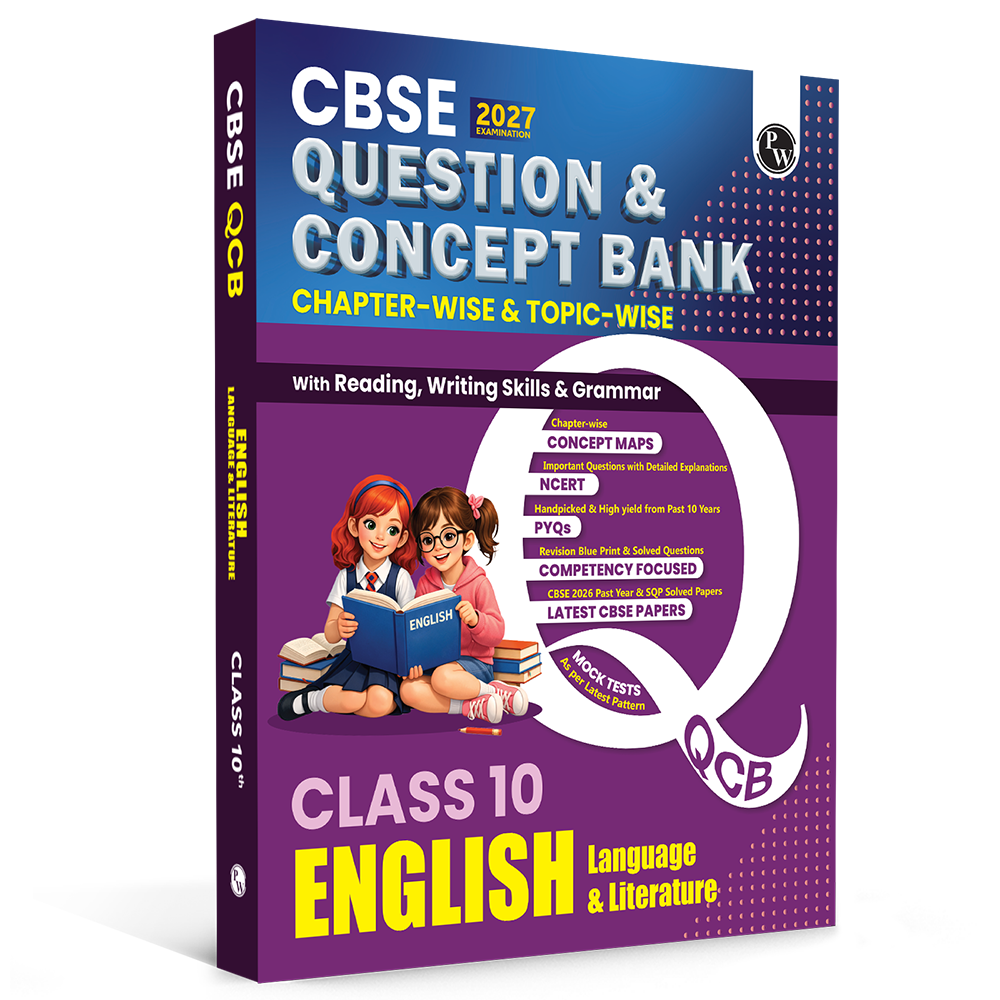
A CBSE Class 10 English Question Bank is designed to support systematic exam preparation with practice questions aligned to the latest CBSE syllabus. It helps students strengthen their reading, writing, grammar, and literature skills while becoming familiar with the board exam pattern.
CBSE 2026 PYQs & Solved Sample Papers
Prepare with fully solved CBSE Class 10 Previous Year Questions (PYQs) and Sample Question Papers (SQPs) to understand the latest CBSE exam pattern, marking scheme, question trends, and important exam topics.
Chapter-wise Concept Maps
Revise every chapter faster with easy-to-understand concept maps that summarize important topics and improve memory retention.
NCERT Questions + Important Questions + PYQs
Strengthen your concepts by practicing NCERT questions, important questions, competency-based questions, and previous-year board questions in one place.
10 Years of High-Yield Questions
Focus on the most frequently asked and high-scoring questions from the past 10 years to prepare smarter for the board exam.
Competency-Based Questions with Detailed Solutions
Build conceptual understanding and application skills through competency-based questions, structured answer blueprints, and step-by-step solutions.
Latest Pattern Mock Tests
Experience real board exam conditions with CBSE pattern mock tests that help improve speed, accuracy, confidence, and time management.
How does the CBSE Class 10 English Question Bank improve reading skills?
The reading section is often the most time-consuming portion of the Class 10 English board exam. Many students read the entire passage multiple times without understanding what the questions actually require, which leads to time exhaustion early in the examination.
CBSE Class 10 question bank contains a wide variety of unseen factual and discursive passages. To approach these passages like a topper, use the following scannable step-by-step framework:
-
Reverse Engineering: Read the questions first before diving into the text. This allows your brain to actively scan for specific keywords, metrics, or arguments while you read.
-
Skimming Techniques: Run through the passage quickly within three minutes to grasp the core theme and locate where major transitions occur.
-
Identify Inferential Cues: Modern CBSE questions rarely copy lines directly from the passage. They test your ability to deduce underlying meanings, analyze author intent, and identify vocabulary synonyms.
-
Draft Direct Responses: Keep your answers short, clear, and highly focused on what is being asked. Avoid adding personal opinions unless the question explicitly asks for your view.
How to Use the CBSE Class 10 English Question Bank for Writing Practice?
The writing section is a major area where students lose marks due to poor formatting, structural errors, or exceeding the specified word limits. Consistent English writing practice using solved board layouts ensures you do not lose these easily obtainable marks.
Formal Letter Layout and Analytical Paragraphs
A premium question resource displays the exact layout accepted by board evaluators. Review the comparison below to understand how proper layout application ensures maximum scores.
|
Writing Component |
Key Structural Elements to Track |
Scoring Points Focus |
|
Formal Letter |
Sender's address, Date, Receiver's designation, Subject line, Formal Salutation, 3-Paragraph Body, Complementary Close. |
1 Mark for exact layout format, 2 Marks for internal content, 2 Marks for grammatical accuracy and expression style. |
|
Analytical Paragraph |
Clear introductory trend statement, Detailed data comparison using analytical phrasing, Brief concluding overview. |
2 Marks for logical text organization, 2 Marks for accurate data extraction, 1 Mark for vocabulary variation. |
Golden Rules for Writing Sections
-
Stick to Word Limits: Always keep your formal letters and analytical descriptions within the 100–120-word bracket.
-
Use Transition Anchors: Implement smooth connections like In contrast, On the other hand, or As illustrated by the chart to show logical connections between data points.
-
Maintain Single-Tense Consistency: Ensure your structural descriptions stay consistently inside the correct objective tense without mixing formatting styles.
How to Use CBSE Class 10 English Question Bank for Grammar Practice?
Grammar is the most objective part of the English curriculum. You either secure full marks or lose them entirely. Practising a large pool of grammar questions Class 10 helps you spot structural errors quickly during the final exam.
The board curriculum prioritizes application over theoretical definitions. You must dedicate extensive time to solving integrated exercises rather than just memorising dry rules.
-
Tenses and Subject-Verb Concord: Focus heavily on error-correction sentences where singular subjects are paired with plural verbs through deceptive middle clauses.
-
Reported Speech Transitions: Master the shifting rules for commands, requests, and questions. Pay close attention to how time and place phrases change (e.g., yesterday shifts to the day before).
-
Determiners and Modals: Practice questions that require subtle choices between overlapping modal operators like must, should, or ought to based on the context's urgency.
-
Integrated Editing Exercises: Use the gap-filling and sentence-transformation banks inside your question files to train your eye to see errors intuitively.
How to Use the CBSE Class 10 English Question Bank for Literature Revision?
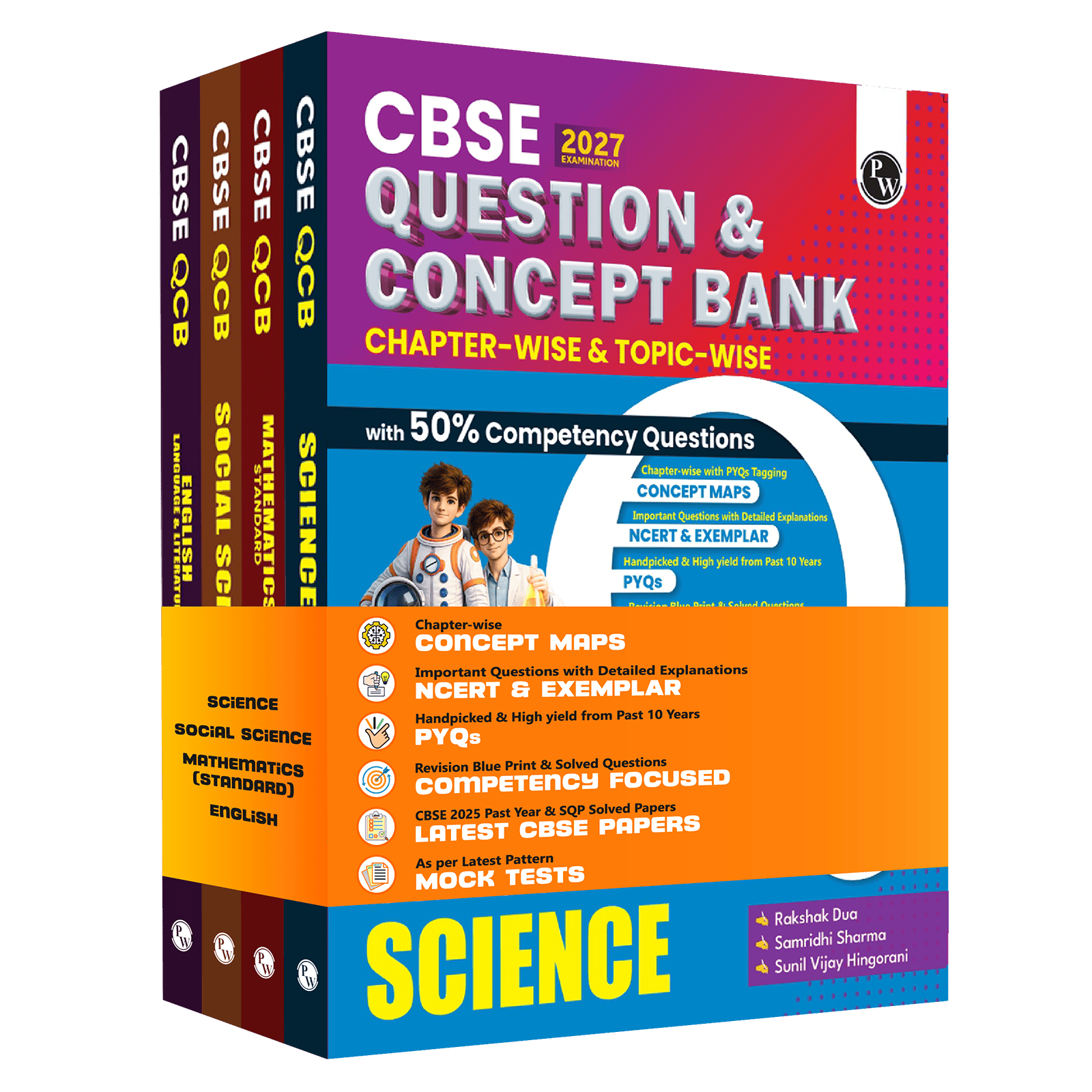
Literature accounts for a significant portion of the overall paper marks. Relying solely on basic plot summaries is no longer enough to secure top scores, as the latest evaluation pattern places greater emphasis on critical thinking, textual interpretation, and analytical writing. To strengthen your preparation, resources like the CBSE Question Bank Class 10 Combo Set 4 provide chapter-wise practice questions, competency-based exercises, and exam-oriented content that align with the latest CBSE pattern.
Your literature revision should go beyond recalling storylines. Examiners now frame questions that compare themes across chapters, analyse character decisions, and assess your ability to interpret literary devices and ethical conflicts. Regular practice with structured question banks helps you develop these skills and write well-organised, high-scoring answers in the board examination.
-
Extract-Based Questions: Use your question bank to practice reading short context clips from your textbooks. These require precise knowledge of who said what, why they said it, and the literary devices being used.
-
Character Sketches: Study the pre-solved topper answers to see how to describe characters using strong adjectives backed by real examples from the story plots.
-
Extrapolative Long Answers: These long responses require you to imagine characters interacting in new situations or discussing central values like resilience, greed, or compassion.
-
Literary Device Mapping: Keep a consolidated list of metaphors, similes, personifications, and ironies used across all prescribed poems.
Read More: NCERT Solutions for Class 10 English 2025-26, Chapter Wise Solutions
CBSE Class 10 English Question Bank FAQs
How does using a CBSE Class 10 English question bank help with competency-based questions?
The question bank contains specialized, application-based exercises that match the updated exam guidelines. These sections train your mind to interpret real-world case scenarios, decipher deep poetic themes, and solve structural queries that standard school textbooks do not cover.
What is the most effective way to carry out daily English writing practice?
Select one formal letter format or an analytical chart data set from your prep resource every alternate day. Write out your full answer within a strict fifteen-minute window, then check your final draft against the provided marking scheme to evaluate your layout accuracy.
Can I secure top marks in grammar questions in Class 10 by studying definitions?
No, memorizing theoretical grammar rules is rarely effective for boards. You need to actively solve integrated gap-filling tasks, sentence reordering sets, and error-spotting drills to learn how these concepts apply to actual passage editing.
How should I structure my literature revision close to the final exam?
Focus on solving context extracts and reviewing the main character summaries inside your practice materials. Pay close attention to the specific value points, important textual keywords, and poetic devices that evaluators look for when checking long-form answers.
When should I start using an English question bank for CBSE during the session?
You should begin using your practice materials right from the start of the academic year. Once you finish reading a chapter or topic from your main syllabus books, immediately solve its corresponding questions in the resource file to lock in your understanding.