How Solving Previous Year Papers Across Subjects Boosts Class 10 Board Scores
The vast volume of topics across multiple complex disciplines can leave individuals feeling completely unsure of how to structure their revision. Many study for endless hours yet struggle to secure excellent marks due to a lack of familiarity with official paper structures and precise evaluation criteria.
This is exactly where strategic preparation using a structured CBSE Class 10 PYQ compilation makes a massive difference. Transitioning from passive text reading to active question solving bridges the gap between basic memory and high-scoring execution under real conditions.
Overview of CBSE Class 10 PYQ
A proper CBSE Class 10 PYQ resource acts as a highly structured structural blueprint of past national assessments conducted over a set period. Rather than presenting a chaotic mix of random historical questions, a high-quality historical compilation organises questions systematically. This allows learners to see exactly how individual textbook chapters translate into formal exam prompts.
By reviewing a comprehensive CBSE Class 10 PYQ resource, students move away from guesswork. Instead of wondering which parts of the syllabus matter most, they gain a clear historical view of how the Central Board of Secondary Education structures its papers.
Features of CBSE Class 10 PYQ
When selecting a resource for your board preparation, the structural design of the content plays a key role in improving your performance. A complete revision set provides the right balance of previous year papers and exam-oriented practice, helping students prepare more effectively for the board examination.
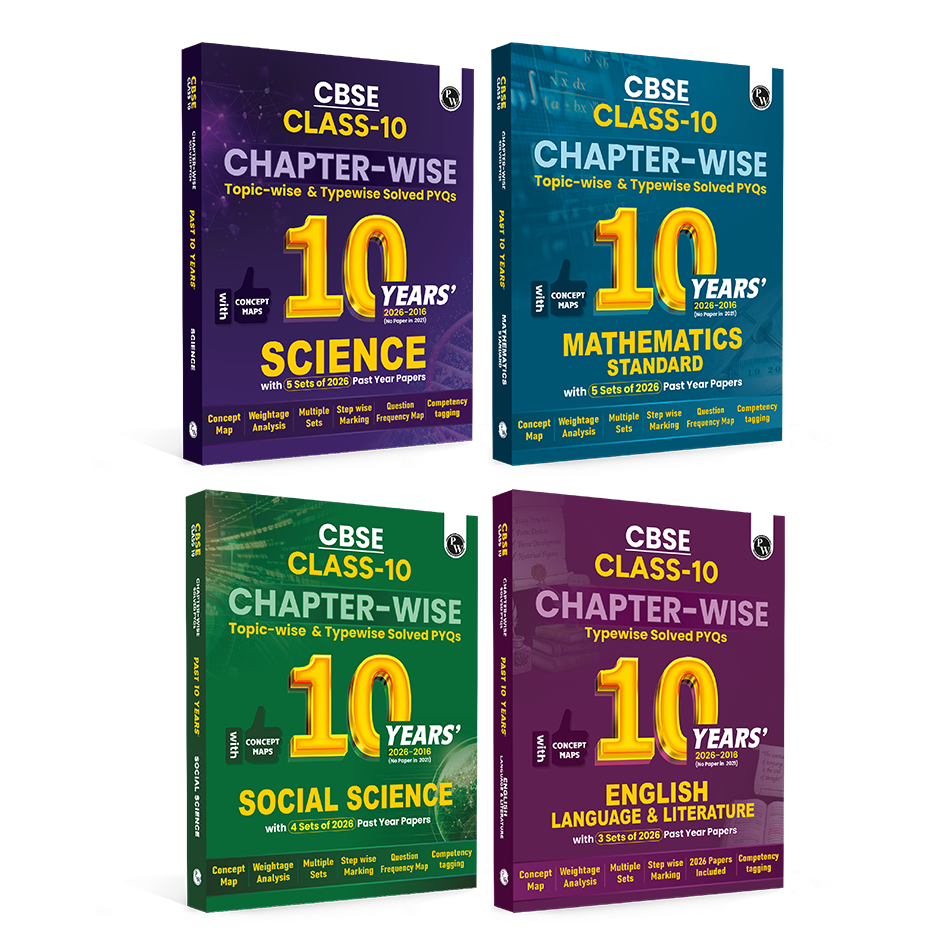
The CBSE Class 10 PYQ Combo 2027 is one such resource that brings together subject-wise previous year questions in a structured format, making revision more organised and focused. It enables students to identify important question patterns, strengthen concepts, and practise according to the latest CBSE exam trends.
The main features found within a premium CBSE Class 10 PYQ set include:
-
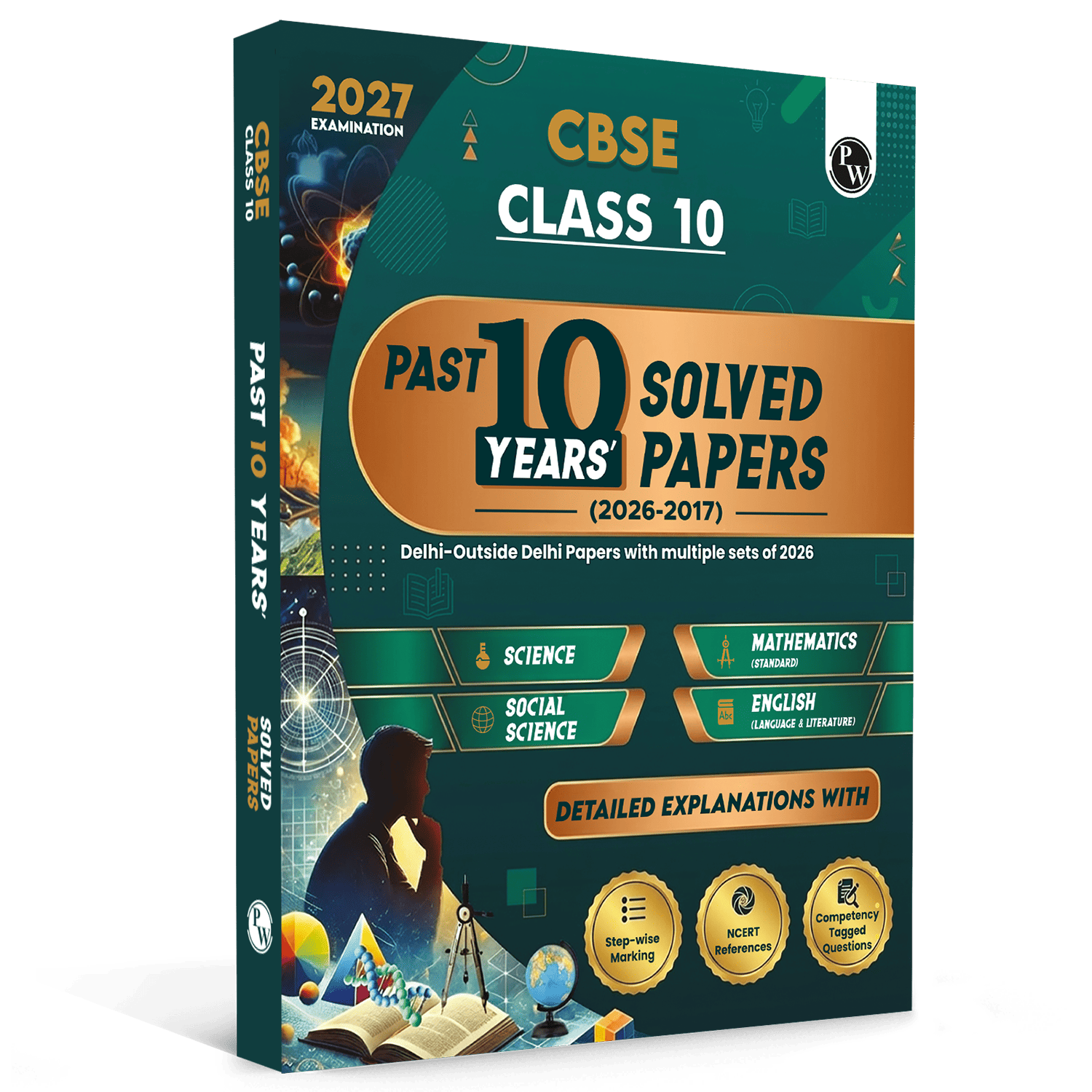
10 Years of Solved PYQs (2026–2016): Provides a complete ten-year historical bank containing authentic papers from both Delhi and Outside Delhi regions, across multiple structural sets.
-
Latest Board Paper Coverage: Includes the complete 2026 examination papers across multiple distinct sets with fully worked structural solutions and official marking rules.
-
Smart Exam Analysis: Offers exact chapter-wise weightage metrics and question typography breakdowns based on the latest boards.
-
Concept Maps & Question Frequency Analysis: Provides quick-reference visual maps coupled with explicit frequency tracking to highlight highly repetitive themes immediately.
-
Bloom's Taxonomy Classification: Organises specific questions across six distinct cognitive learning levels to improve analytical thinking.
-
Type-wise Question Segregation: Divides questions neatly by structural formats such as objective, short answer, and long answer types.
-
Term-wise & Official Sample Papers: Contains historical 2022 Term-I and Term-II papers alongside official Sample Question Papers for 2025, 2024, and 2023.
-
Detailed Solutions with NCERT References: Give clear step-by-step solutions where each answer is linked directly back to core textbook concepts for absolute conceptual clarity.
-
Competency Tagging: Identifies and highlights application-based questions to ensure you are fully prepared for case studies.
Why is CBSE Class 10 PYQ Important for Board Preparation?
Relying solely on textbooks often creates a false sense of security. A student might understand a paragraph while reading it calmly but still struggle to write a precise answer under strict exam conditions. Integrating an authentic CBSE Class 10 PYQ routine into your study schedule is essential for effective board exam preparation. Along with regular PYQ practice, using well-structured CBSE Class 10 Books helps strengthen conceptual understanding, improve answer-writing skills, and build the confidence needed to perform well in the CBSE board examinations.
Here is why working through these papers is so important:
-
Demystifies the Evaluation Standard: Seeing step-by-step marking schemes reveals exactly how examiners distribute credit for formulas, diagrams, and key phrases.
-
Eliminates Exam Anxiety: Simulating the actual examination environment multiple times removes the fear of the unknown, making the real test feel like a regular practice session.
-
Highlights High-Yield Topics: Frequency charts show you which chapters consistently carry the highest marks, helping you plan your study time effectively.
-
Builds Real-Time Time Management: Completing papers within the official time limit teaches you how to pace your writing across different sections.
How does CBSE Class 10 PYQ Improve Subject-wise Performance?
Every subject in the curriculum requires a slightly different approach to get top marks. A method that works perfectly for a language paper will not get you full marks in a mathematics assessment. Using a dedicated CBSE Class 10 PYQ set ensures you can adapt your approach to match the needs of each subject.
1. Mathematics
For math, success comes down to quick pattern recognition and flawless step-by-step calculation. Working through past papers helps you see how standard algebraic formulas and geometric theorems are turned into word problems or multi-tiered proofs.
By checking your work against detailed step-by-step solutions, you learn exactly where you tend to make careless errors in calculation or signs. This regular practice makes solving complex equations second nature.
2. Science
The science curriculum blends technical theory, mathematical problems, and detailed diagrams. Practising with past papers helps you master the balance between chemical equations, physics numericals, and biology diagrams.
Looking at previous exams teaches you exactly how to structure your answers, label diagrams properly, and use precise scientific terms to secure full marks.
3. Social Science
Social Science papers require you to present vast historical, geographical, and political information clearly and concisely. Regular practice shows you how to structure long answers using bullet points, bold headers, and clear introductions.
This keeps your answers focused and impactful, rather than overly long and vague. It also helps you get used to historical map work and data interpretation questions.
4. English Language & Literature
Language assessments test both your creative expression and your ability to analyse literature precisely. Solving past papers helps you understand standard essay formats, letter layouts, and grammatical rules.
It also helps you master literature extracts, showing you how to write text-based answers that match the examiner's marking criteria perfectly.
How to Use CBSE Class 10 PYQ?
Simply buying a book of past papers will not automatically improve your marks. To get the full class 10 PYQ benefits, you need to use them systematically within your daily study routine.
Always review the relevant chapter in your main textbook before attempting its historical questions. This keeps your focus on building deep conceptual understanding rather than just trying to memorise specific answers.
Using these detailed solutions alongside your textbooks helps you spot your weak areas early. This allows you to fix mistakes long before you walk into the exam room.
Study Strategy Plan with CBSE Class 10 PYQ
To get the most out of your preparation, you need a structured plan that fits around your school schedule and internal tests. This ensures you cover all subjects evenly and make steady progress.
Using past papers as the foundation of your revision provides excellent guidance for your exam preparation tips:
|
Phase |
Strategic Focus |
Expected Outcome |
|
Initial Chapter Mastery |
Solve chapter-wise and type-wise questions right after finishing a topic in class. |
Strong foundational understanding and early familiarity with question styles. |
|
Mid-Term Consolidation |
Use concept maps and frequency trackers to review high-weightage topics before school exams. |
Faster revision times and higher scores on internal school tests. |
|
Final Pre-Board Push |
Solve full 3-hour mock papers from recent years under strict exam conditions. |
Excellent time management and minimal exam anxiety. |
Tips to Maximise Score with CBSE Class 10 PYQ
To turn your practice into a clear board score improvement, you need to focus on precision and presentation. Keep these proven strategies in mind during your practice sessions:
-
Analyse Your Mistakes Carefully: Spend time studying the questions you got wrong. Check the step-by-step solutions to understand where your logic or explanation fell short.
-
Practice under a Strict Timer: Set a timer for three hours when solving full papers. This teaches you how to allocate your time effectively across different sections.
-
Focus on Key Terms: Pay close attention to underlined words or bold phrases in the model answers. Including these specific terms in your own writing helps you secure full marks.
-
Master the Marking Scheme: Learn how marks are awarded for separate steps, especially in math and science. This ensures you write down all the necessary work even if you run out of time.
Read More: Toughest and Easiest Chapters in CBSE Class 10 for All Subjects
CBSE Class 10 PYQ FAQs
How does using a CBSE Class 10 PYQ book help with time management?
Solving full past papers under a strict three-hour timer helps you understand exactly how long to spend on each section, preventing you from running out of time during the actual exam.
Where can I find authentic previous-year question papers across all four subjects?
A comprehensive four-book combo offers complete coverage for Science, Mathematics, Social Science, and English, giving you an authentic ten-year question bank in one place.
Do the detailed solutions provide direct references to standard textbooks?
Yes, quality question banks include step-by-step solutions that link right back to core concepts, helping you clarify any misunderstandings quickly.