How to Start Class 11 Chemistry from Zero Using Question Bank?
For many students, the jump from Class 10 is significant, with complex theories and vast numerical problems appearing all at once. If you feel you are starting from absolute zero, don't panic. Using a CBSE Class 11 question bank Chemistry is one of the most effective ways to build a foundation.
This article explains how to use these resources to master the subject from scratch.
Check Out: Class 11th Books
Importance of CBSE Class 11 Question Bank Chemistry
When you start from zero, the biggest challenge is knowing which topics to prioritise. A class 11 question bank in chemistry acts as a roadmap. It filters the vast syllabus into manageable chunks. Rather than reading a hundred pages of theory, you see the actual questions that have appeared in previous years. This helps you identify the "high-yield" areas—topics that carry the most marks.
By focusing on a class 11 chemistry question bank, you bridge the gap between knowing a concept and being able to write it in an exam. It transforms passive reading into active learning, which is crucial for a subject as technical as Chemistry.
Features of CBSE Class 11 Question Bank Chemistry
Not all study materials are created equal. Since you are preparing for future exams, you need the 2026 edition of the question bank. This ensures the content aligns with the latest CBSE syllabus and exam patterns.
A high-quality chemistry question bank should offer:
-
Chapter-wise weightage analysis to show which chapters are most important.
-
Solved examples that explain the step-by-step logic behind numerical problems.
-
Competency-based questions are now a staple in CBSE papers.
-
Self-assessment tests at the end of each unit to track your progress.
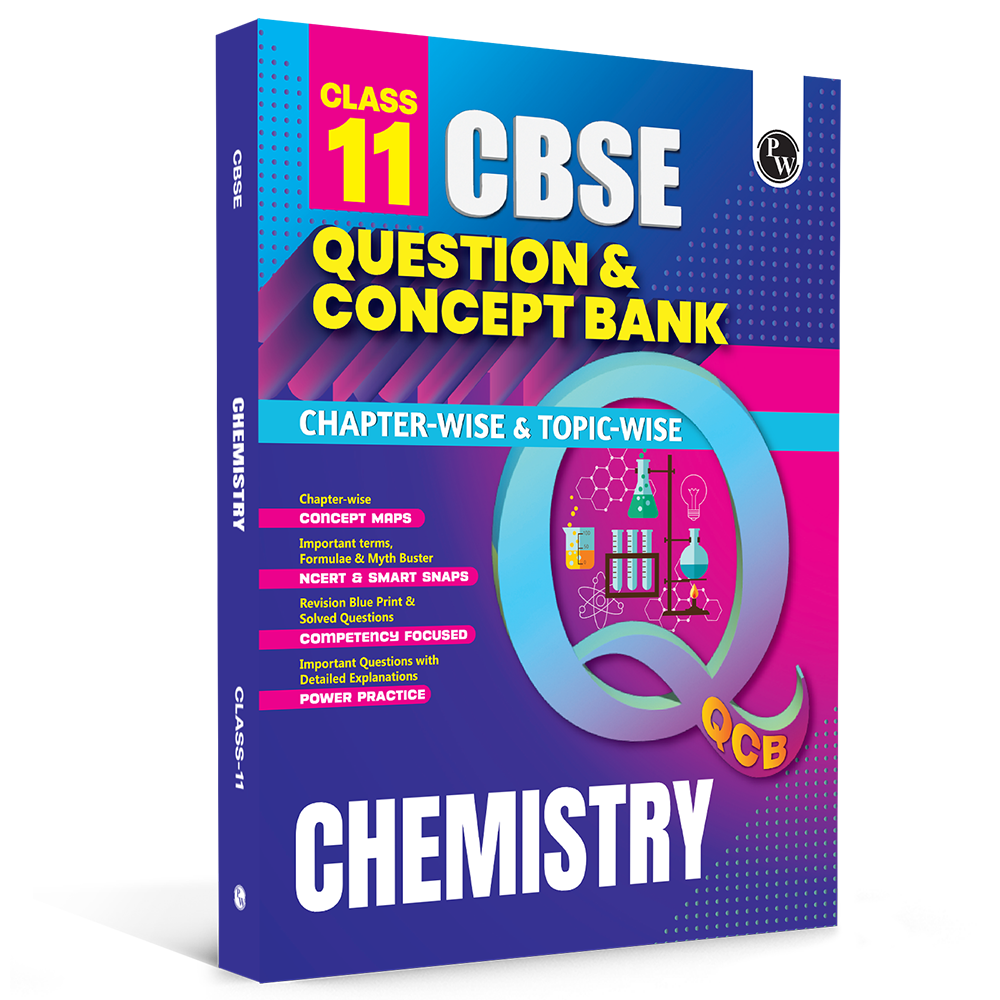
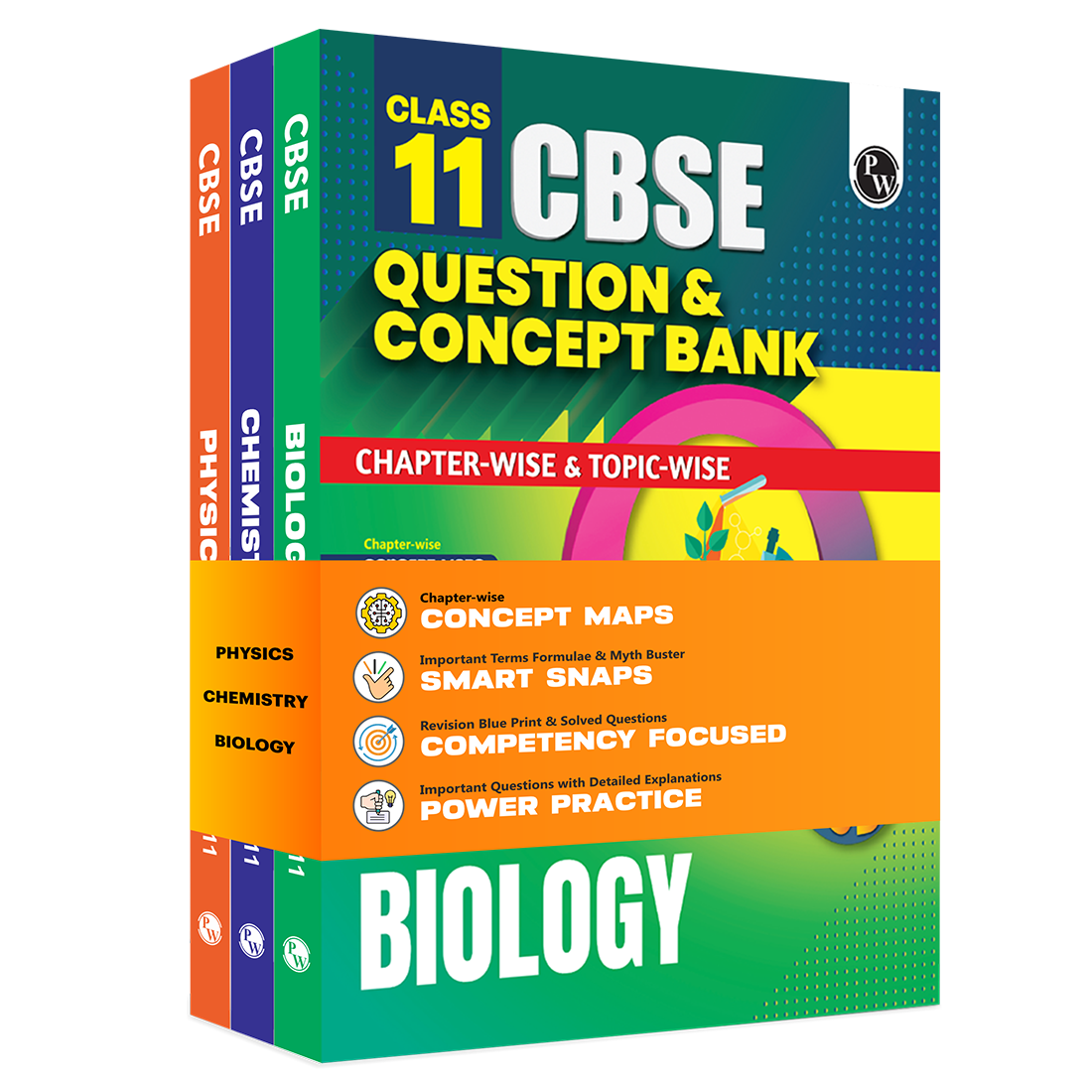
Using the question & concept bank class 11th chem 2026 is a great choice because it combines theory and practice in a single volume, making it easier for beginners to find everything in one place.
How to Use the CBSE Class 11 Question Bank Chemistry?
Simply owning a CBSE Class 11 chemistry question bank isn't enough; you have to use it effectively. Here is a step-by-step method to maximise your results:
-
The Reverse Engineering Method: Instead of reading the whole chapter, look at the "Short Answer" questions in the question bank first. This tells you what the examiners expect you to know.
-
Keyword Highlighting: When you read a solution, look for bold keywords. In CBSE marking schemes, marks are often awarded for specific technical terms.
-
Active Recalling: After reading a solved question, cover the answer and try to write it yourself. This builds the muscle memory needed for the exam hall.
-
Table Comparisons: Use tables to learn differences between concepts like Isothermal vs Adiabatic processes or Ideal vs Non-ideal gases.
|
Feature |
Ideal Gas |
Real Gas |
|
Intermolecular Forces |
Negligible |
Significant at high pressure |
|
Volume of Molecules |
Negligible compared to the container |
Significant at low temperatures |
|
Equation |
Follows PV = nRT strictly |
Follows the Van der Waals equation |
Study Plan for CBSE Class 11 Question Bank Chemistry
Starting from zero requires a specific strategy. You cannot just flip to a random page and start memorising. Chemistry is a sequential subject where Chapter 1 often provides the tools needed for Chapter 5.
Start with Basic Concepts
Before diving into Organic or Inorganic Chemistry, you must master the "Some Basic Concepts of Chemistry" chapter. Use your Class 11 question bank CBSE to find questions on:
-
The Mole Concept: This is the heart of Chemistry calculations.
-
Stoichiometry: Understanding how to balance equations and calculate yields.
-
Molarity and Molality: Essential for all lab-based and theoretical numericals.
Focus on Atomic Structure and Periodic Table
Once the basics are clear, move to the structure of the atom. Your CBSE 11th chemistry question bank will likely have many questions on quantum numbers and electronic configurations. Master these, as they explain why elements behave the way they do in later chapters.
Topics Covered in CBSE Class 11 Question Bank
Class 11 Chemistry is divided into three distinct parts. Your approach should change depending on which one you are studying.
Physical Chemistry
This section is all about numbers and laws. Use your CBSE Class 11 question bank to practice as many problems as possible. Focus on:
-
Thermodynamics: Understanding enthalpy, entropy, and Gibbs free energy.
-
Equilibrium: Le Chatelier's principle is a frequent flyer in exams.
Inorganic Chemistry
This part requires a lot of memorisation and understanding of trends. A CBSE question bank is vital here because it highlights the specific "exceptions" that CBSE loves to ask about.
-
S-Block and P-Block: Focus on anomalous properties and chemical reactivity trends.
-
Chemical Bonding: Practice drawing Lewis structures and understanding VSEPR theory.
Organic Chemistry
Organic Chemistry is like a new language. You must start with IUPAC nomenclature and GOC (General Organic Chemistry). The question bank will provide plenty of practice for naming compounds and identifying reaction mechanisms, such as inductive and resonance effects.
CBSE Class 11 Question Bank Chemistry vs Textbook
Textbooks are great for deep learning, but they don't teach you "how" to give an exam. A CBSE class 11 question bank in chemistry provides:
-
Direct Answers: It shows exactly how to phrase an answer to get full marks.
-
Time Management: By seeing the marks assigned to questions, you learn how much time to spend on each.
-
Confidence: Seeing that you can solve "Previous Year Questions" (PYQs) provides a massive mental boost.
The question & concept bank class 11th chem 2026 includes "Concept Maps" which are brilliant for visual learners starting from zero. These maps connect different ideas within a chapter, making it easier to see the "big picture."
Check Out: CBSE Class 11 Formula Handbook Chapterwise Key Formulas For 2027 Exams
Weekly Routine for CBSE Class 11 Question Bank Chemistry
To go from zero to hero, consistency is better than intensity. A dedicated schedule using your CBSE Class 11 question bank will keep you on track.
-
Morning (Fresh Mind): Study new theoretical concepts or Organic Chemistry mechanisms.
-
Afternoon (Practice): Solve at least 10–15 numericals from the CBSE Class 11 Question Bank Chemistry.
-
Evening (Revision): Revisit the questions you got wrong the previous day.
-
Weekends: Take a full-length mock test from the back of your question bank.
Mistakes to Avoid With CBSE Class 11 Question Bank Chemistry
Starting late or from scratch often leads to panic, which causes students to make these common errors:
-
Skipping the NCERT: While a CBSE 11th chemistry question bank is excellent, it should complement the NCERT, not replace it entirely.
-
Ignoring Numericals: Many students focus only on theory. Chemistry is math-heavy; you must practice the calculations.
-
Overloading Resources: Stick to one good class 11 chemistry question bank rather than buying five different books and finishing none.
-
Neglecting Lab Work: Understanding the practical side helps you visualise the theoretical reactions.
Tips for CBSE Class 11 Question Bank Chemistry
When you are short on time, long paragraphs are your enemy. Use your question bank to find summary tables.
For example, when studying the "States of Matter," a table comparing different gas laws is incredibly helpful:
|
Law Name |
Constant Variable |
Relationship |
|
Boyle's Law |
Temperature (T) |
Pressure is inversely proportional to Volume |
|
Charles's Law |
Pressure (P) |
Volume is directly proportional to Temperature |
|
Gay-Lussac's Law |
Volume (V) |
Pressure is directly proportional to Temperature |
These snippets are exactly what Google looks for in featured results and what your brain remembers during an exam.
The question bank is designed with the updated education policy in mind. This means there is a shift toward understanding rather than rote learning. Your CBSE 11th chemistry question bank will likely contain more case-study questions. These require you to read a passage and answer questions based on it, testing your ability to apply Chemistry to real-world scenarios.
Read More: CBSE Class 11 Question Bank PDF Download
CBSE Class 11 chemistry Question Bank FAQs
Can I score well in Class 11 if I start Chemistry from zero now?
Yes, by using a targeted CBSE Class 11 chemistry question bank, you can focus on the most important topics first and gradually build your knowledge.
Is the CBSE Class 11 Chemistry question bank enough for school exams?
A high-quality class 11 chemistry question bank covers almost all possible question types, making it an excellent primary resource for school exam preparation.
How is the Class 11 question bank 2026 different from older versions?
The question bank has been updated to reflect the latest CBSE syllabus changes and to include a higher percentage of competency-focused questions.
Should I solve the Class 11 CBSE question bank before or after reading the chapter?
It is best to first skim the CBSE Class 11 question bank to see what is important, then read the chapter, and finally solve the questions for practice.