Maths, Science or SST: Which UP Board Question Bank Should You Start With?

Starting board preparation creates immense confusion for Class 10 students. Facing a vast syllabus, many struggle to choose whether to tackle complex mathematical formulas, lengthy science theories, or extensive history dates first.
Selecting the right UP Board class 10 question bank at the beginning of your study routine dictates your preparation speed and overall confidence. This detailed strategy article breaks down the core subjects, helps you evaluate your academic strengths, and shows you how to structure your daily practice effectively.
What Is the UP Board Class 10 Question Bank?
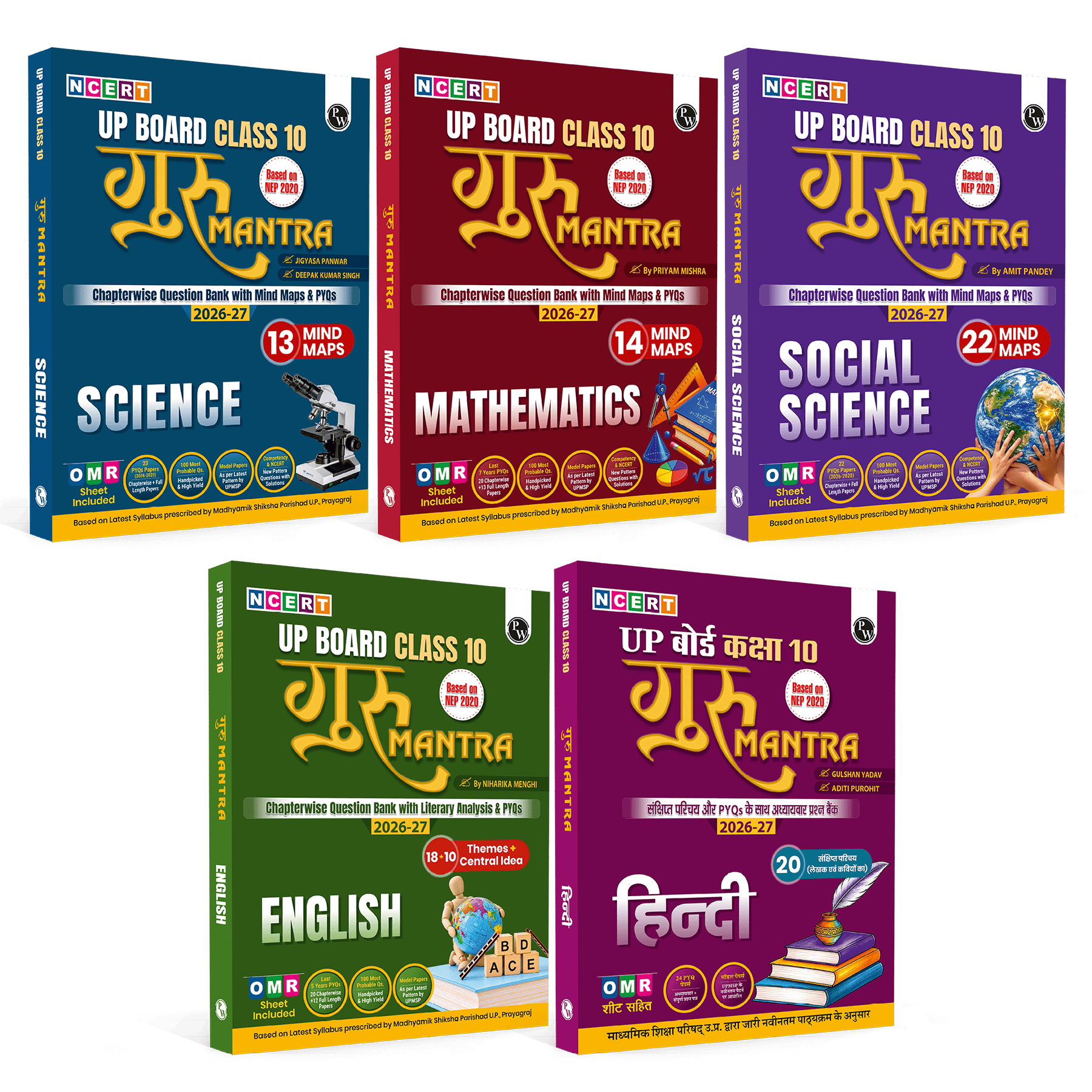
Class 10 Question Bank is a study resource designed to help students practise important questions based on the UP Board syllabus and exam pattern. It brings chapter-wise questions, previous year papers, competency-based questions, expected questions, NCERT and Exemplar practice, and solved model papers into one place.
Students can use it to revise concepts, understand question patterns, improve answer writing, and identify weak topics. A good Class 10 Question Bank also supports regular practice through mind maps, step-by-step solutions, OMR sheets, and additional PYQ sets, making UP Board preparation more organised and effective.
Features of UP Board Class 10 Question Bank
Not all study resources offer equal value. A high-quality UP Board preparation resource must match the latest exam pattern released by the board authority.
-
Latest UP Board Syllabus 2025–26: Study according to the updated syllabus with content aligned to the current UP Board exam requirements.
-
Chapter-wise Mind Maps: Revise key concepts, formulas, and important points quickly using easy-to-understand visual revision sheets.
-
Chapter-wise Previous Year Papers: Practise questions asked in earlier exams and understand important topics with detailed step-by-step solutions.
-
100 Expected Questions with QR Access: Practise 100 carefully selected questions that are likely to be important for the upcoming exam, along with expert solutions available through QR access.
-
Chapter-wise Competency-Based Questions: Develop better application and reasoning skills with questions designed around the latest competency-based exam approach.
-
Important NCERT & Exemplar Practice: Strengthen your preparation with selected NCERT and Exemplar questions that cover important concepts and exam-focused topics.
-
Step-by-Step Marking Scheme: Learn how marks are awarded for descriptive answers and understand the key points required to write scoring responses.
-
Solved Model Papers via QR Code: Practise complete model papers with easy QR access to solutions and get familiar with the structure of the actual examination.
-
Previous Year Papers + 5 Extra PYQ Sets: Get additional practice through five extra previous year question sets available via QR code to improve preparation and confidence.
-
OMR Sheets for Practice: Use the included OMR sheets to practise marking answers and become comfortable with the OMR-based exam process.
-
New-Pattern Competency & NCERT Questions: Prepare for changing question formats with competency-based and NCERT-focused questions supported by detailed solutions.
Explore UP Board books for Classes 10, featuring clear concepts, chapter-wise explanations, important questions, practice exercises, and exam-focused content to support effective preparation and revision.
How to Choose the Right UP Board Class 10 Question Bank?
Choosing the right study material at the start of your academic year prevents last-minute exam anxiety. Students often buy multiple books without understanding how to utilize them systematically. A well-designed class 10 question bank serves as a structured blueprint rather than just a collection of random problems.
To select the best starting subject, you need to analyze three major parameters:
-
Syllabus Length and Weightage: Subjects with extensive theoretical frameworks require early, consistent reading cycles.
-
Skill Requirements: Technical topics require daily analytical practice, whereas narrative-heavy subjects demand structured answer-writing practice.
-
Memory Retention Rates: Memory-heavy facts fade quickly if not revised regularly throughout the academic term.
When beginning your study regimen, start with subjects that require high problem-solving application, followed by conceptual understanding, and finish with memory-based retention subjects.
When to Start With Maths Practise with UP Board Class 10 Question Bank?
Mathematical proficiency develops through regular daily practice. Delaying numerical problem-solving until the final months leads to severe exam stress and poor speed management.
UP Board CLASS 10 PREPARATION FLOW
|
Step |
Subject |
Preparation Focus |
|
1 |
Maths Question Bank |
Build Analytical Skills & Improve Daily Accuracy |
|
2 |
Science Question Bank |
Master Diagrams, Formulas & Theories |
|
3 |
SST Question Bank |
Learn Timelines & Practise Map Work |
Analytical Skill Development
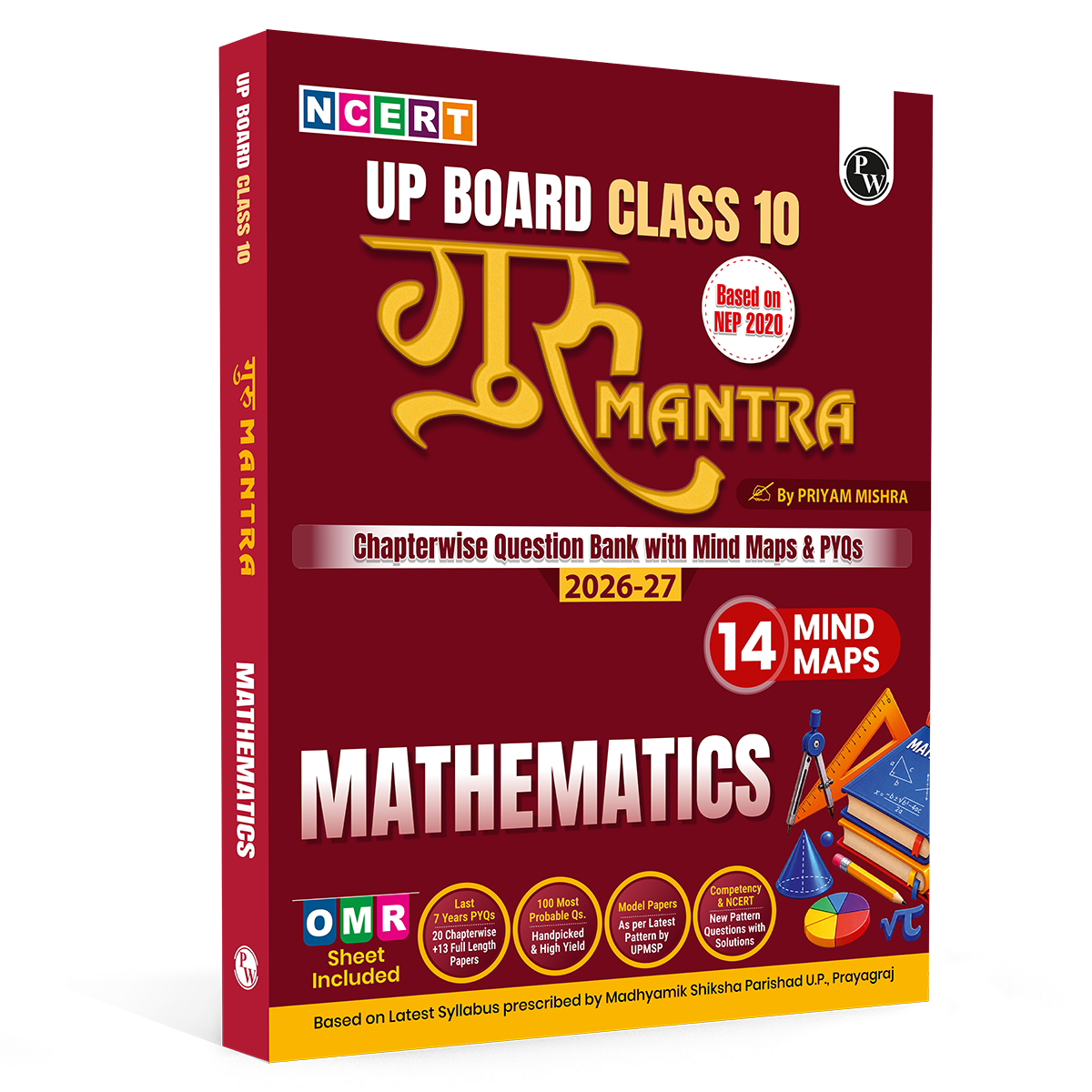
Maths relies entirely on logical step-by-step application rather than rote memorization. Using an UP Board maths question bank early in your timetable gives your brain sufficient time to process complex algebraic formulas, trigonometric identities, and geometric theorems. Daily practice of step-wise solutions ensures you retain methods long-term.
Mastering Step-Wise Marking Schemes
The board examination awards partial marks for every correct step in long-form solutions. Practicing from a dedicated class 10 question bank trains you to write precise mathematical steps that match the official marking schemes.
-
Clear separation of Given parameters, Formulas, and Calculations.
-
Neat visual construction steps for geometry tasks.
-
Proper highlighted units in final answer statements.
Explore school books designed for Classes 1–12, covering Maths, Science, English, Social Science, and more with clear concepts, chapter-wise explanations, practice questions, and exam-focused learning support.
How Does UP Board Class 10 Question Bank Help With Science Practice?
Science combines theoretical concepts, practical numerical problems, and labeled structural diagrams. It acts as the perfect middle ground between abstract logical subjects like Mathematics and descriptive subjects like Social Science.
Balancing Physics Numericals with Biology Diagrams
Using an UP Board science question bank early allows you to split your preparation into manageable parts:
-
Physics: Focus on circuit diagrams, ray diagrams for lenses, and numerical calculations for light and electricity.
-
Chemistry: Practice balancing chemical equations, understanding reaction types, and identifying periodic trends.
-
Biology: Focus on practicing neat, well-labeled diagrams of human digestive, respiratory, and circulatory systems.
Utilizing Chapter-Wise Cheat Sheets and Mind Maps
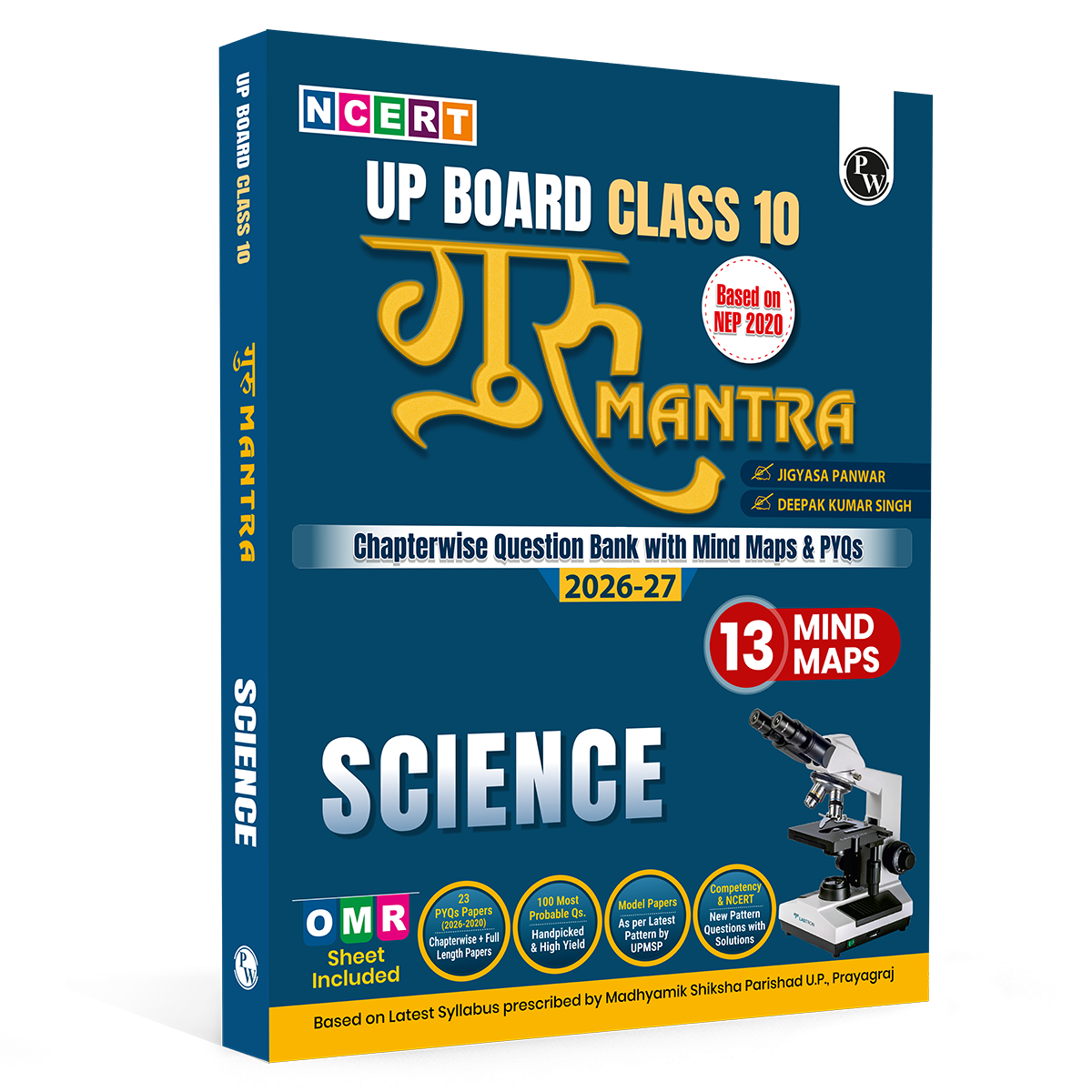
Visual tools like mind maps help simplify lengthy scientific processes. The class 10 question bank combo includes 14 structured chapter-wise cheat sheets. These visual summaries help you connect theoretical definitions with practical observations, making revision fast and effortless.
|
Science Branch |
Key Focus Area |
Best Question Bank Strategy |
|
Physics |
Formulas & Ray Diagrams |
Practice short numericals daily and memorize standard units. |
|
Chemistry |
Equations & Reactions |
Write and balance chemical equations repeatedly on paper. |
|
Biology |
Visual Diagrams & Terminology |
Draw labeled figures and write bulleted structural functions. |
When Should You Start SST Practise with UP Board Class 10 Question Bank?
Social Science carries a massive amount of historical data, geographical facts, civic rules, and economic theories. Students who delay opening a UP Board SST question bank often get overwhelmed by the sheer volume of information near exam season.
Managing High-Volume Theoretical Content
Social Science requires regular reading cycles to build context. Treating history like a chronological narrative makes it easier to memorize event sequences without stress.
-
History: Focus on chronological timelines, movement causes, and political impacts.
-
Geography: Combine descriptive notes with regular map practice.
-
Civics & Economics: Learn key definitions, institutional roles, and development indicators.
Scoring Maximum Marks in Map Work and Long Answers
Map pointing provides high-scoring opportunities in the Social Science paper. Using a specialized class 10 question bank allows you to practice geographical locations and historical sites systematically. Writing practice using structured bullet points improves answer presentation, making it easier for examiners to award top marks.
Which Subject Is Best to Start in the UP Board Class 10 Question Bank?
Selecting your initial focus area depends on your personal strengths and learning style. Evaluating subjects across difficulty levels and daily study needs helps you build an efficient routine.
|
Evaluation Parameter |
Maths Focus |
Science Focus |
SST Focus |
|
Daily Time Requirement |
1.5 - 2 Hours |
1 - 1.5 Hours |
1 Hour |
|
Learning Style |
Problem-solving & calculation |
Conceptual understanding |
Narrative reading & memorization |
|
Common Student Error |
Skipping calculation steps |
Ignoring labeled diagrams |
Writing unorganized wall-of-text answers |
|
Best Starting Phase |
Beginning of Session |
Mid-Early Session |
Mid-Session Onwards |
How to Use the UP Board Class 10 Question Bank Every Day?
Following a structured daily timetable ensures equal focus across all core subjects while maintaining consistent momentum.
Phase 1: Foundational Practice (Months 1–3)
-
Dedicate 60 minutes daily to your UP Board maths question bank, solving 15 to 20 chapter-wise problems.
-
Spend 45 minutes on Science, focusing on physics formulas and chemistry equations.
-
Read one Social Science chapter overview every two days.
Phase 2: Intensive Revision and Testing (Months 4–6)
-
Solve competency-based questions from your class 10 question bank.
-
Practice drawing 2 Science diagrams daily.
-
Complete 1 full Social Science map worksheet every week using your UP Board SST question bank.
-
Attempt weekly chapter-wise PYQ sets under timed conditions using OMR sheets.
FAQs
Which subject should I start with using the class 10 question bank?
You should ideally start with Mathematics using a class 10 question bank. Building calculation speed and problem-solving habits early gives you enough time to master complex topics without stress.
How do mind maps in the UP Board science question bank aid revision?
Mind maps in an UP Board science question bank summarize complex chapter concepts, biological processes, and chemical reactions into visual cheat sheets, enabling quick last-minute revisions before tests.
Is the UP Board maths question bank helpful for step-wise marking?
Yes, an UP Board maths question bank provides detailed, step-by-step solutions that match the board's official marking scheme, ensuring you don't lose marks on partial steps during exams.
How often should I practice map work using the UP Board SST question bank?
You should practice map work from your UP Board SST question bank at least once a week to memorize important historical sites, river systems, and geographic locations accurately.
What extra digital resources come with an UP Board preparation question bank combo?
A complete UP Board preparation combo includes QR code access to 100 most probable board questions, model test papers with full solutions, and extra sets of past year papers for thorough revision.