Why Concept-Based Practice in Class 9 Maths Question Bank Prevents Future Gaps

Ninth grade introduces abstract mathematical logic. Many students struggle during the midterm as the shift from simple arithmetic to advanced geometry and algebraic proofs creates unexpected academic hurdles. Relying on memorisation fails when questions alter slightly, leading to low marks and a loss of confidence.
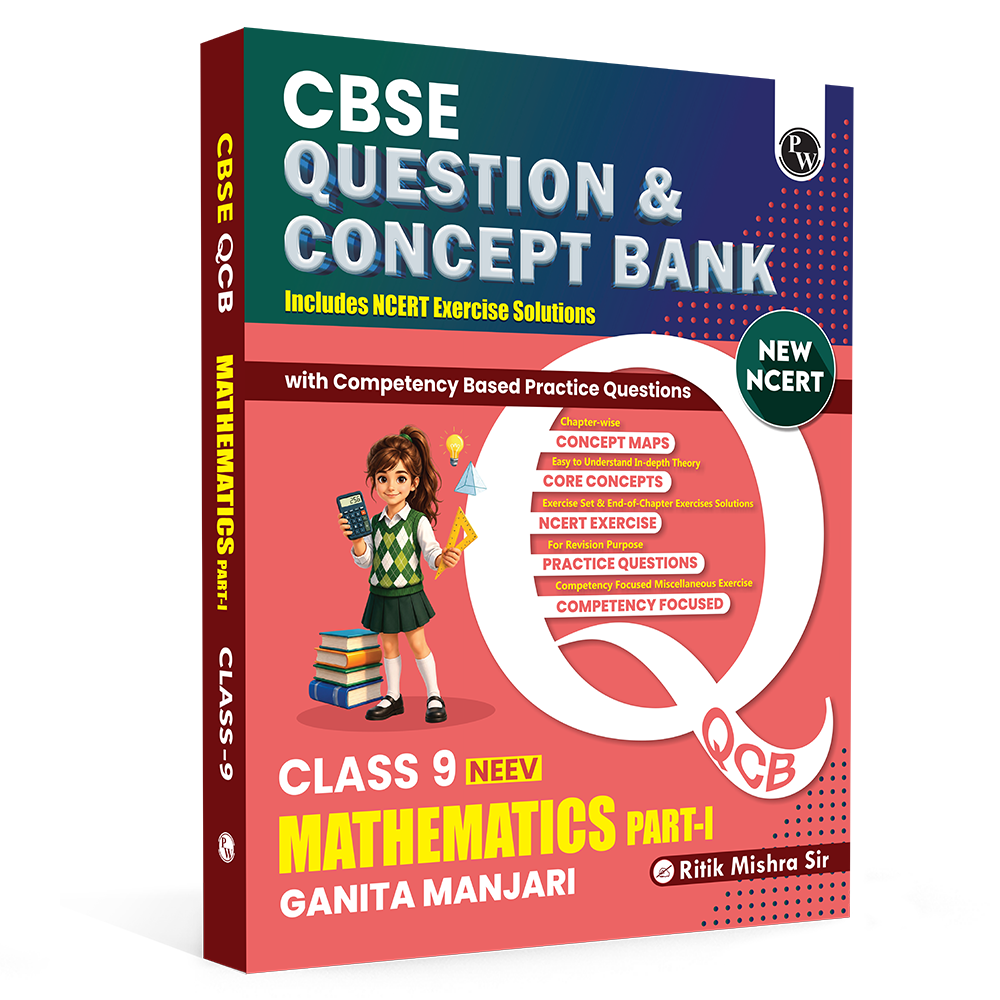
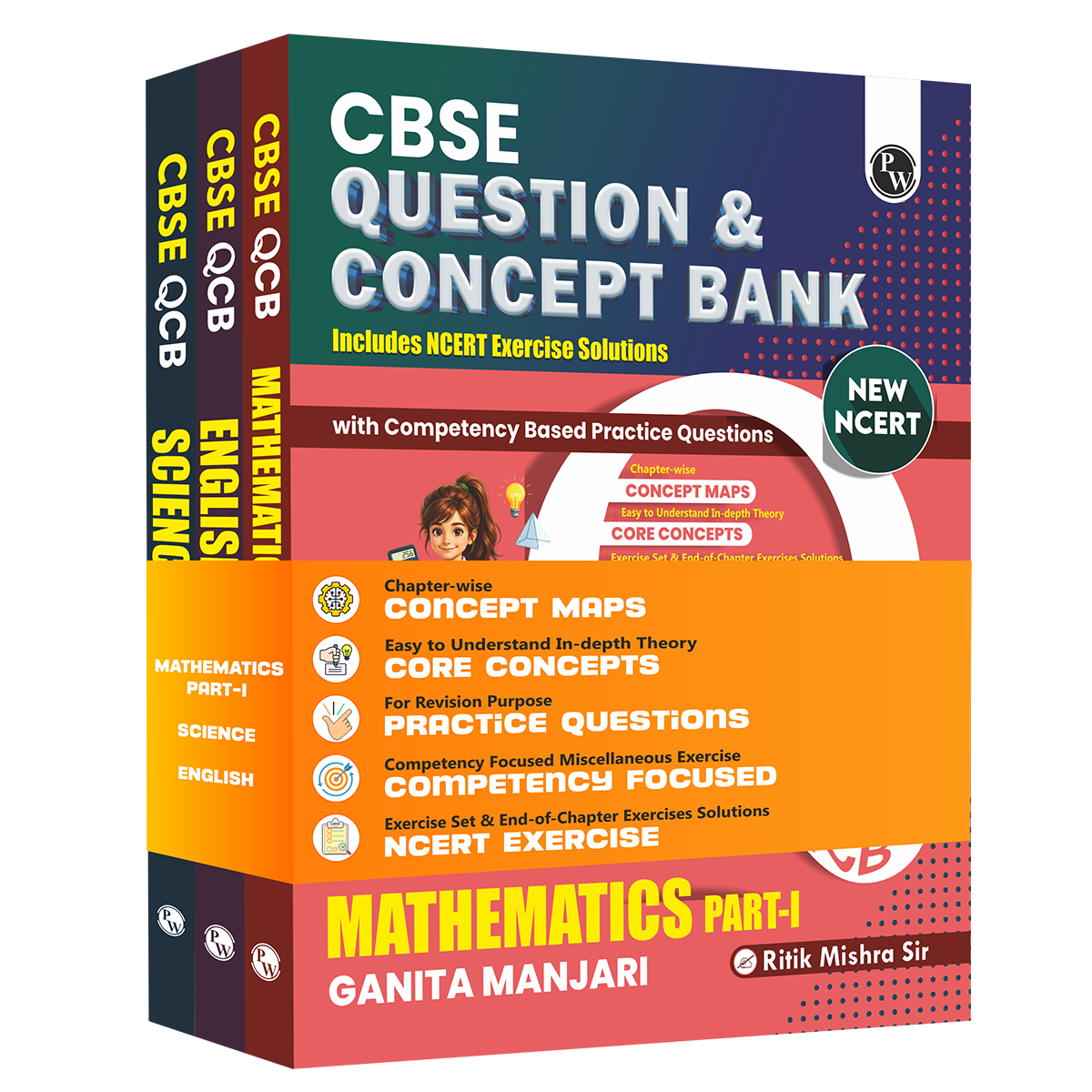
Utilizing a quality CBSE Class 9 maths question bank alongside structured materials ensures students adapt to modern competency-based assessment models.
Importance of CBSE Class 9 Maths Question Bank for Strong Maths Basics
Mathematical concepts are strictly hierarchical. Skipping an essential idea in the midterm creates a compounding structural deficit that disrupts learning for years. If a student finishes ninth grade without understanding linear equations, they will find tenth-grade quadratic equations impossible to solve.
-
The Snowball Effect: A single misunderstood topic in coordinate geometry undermines future engineering or advanced statistics preparation.
-
Loss of Academic Confidence: Consistent struggles with tricky questions cause exam anxiety and reduce interest in technical subjects.
-
Time Inefficiency: Spending hours re-learning forgotten concepts before boards takes valuable focus away from the active tenth-grade syllabus.
Using a comprehensive CBSE Class 9 question bank with structured theory prevents these gaps before they become structural problems.
How does a CBSE Class 9 Maths Question Bank Improve Concept-Based Learning?
Traditional learning methods encourage students to memorize formulas. However, contemporary board assessments prioritize genuine analytical skills over repetitive rote memory. Concept based maths practice shifts the focus from finding a rapid final answer to understanding the underlying mathematical principles.
Visual Representation and Deep Understanding
A reliable resource must provide structural tools that make abstract variables concrete. Visualizing equations prevents common computational mistakes.
|
Feature |
Visual Learning Tool |
Direct Academic Impact |
|
Concept Maps |
Chapterwise visual pathways |
Connects linear equations to graphical coordinates seamlessly. |
|
In-Depth Theory |
Step-by-step logical explanations |
Explains why a formula works instead of just stating it. |
|
Detailed NCERT Solutions |
Comprehensive exercise breakdowns |
Teaches correct formatting for school examinations. |
How Does a CBSE Class 9 Maths Question Bank Improve Analytical and Problem-Solving Skills?
Success in ninth grade requires an interconnected study methodology. The logical skills cultivated during class 9 maths revision directly influence how a student approaches complex scientific formulas and derivations.
-
Physics Numerical Problems: Calculating motion, force, and gravitation requires rearranging algebraic equations quickly and accurately.
-
Chemical Equation Balancing: Ratios and proportions learned in arithmetic serve as the primary framework for balancing stoichiometry.
-
Data Interpretation: Reading experimental graphs in biology requires an advanced understanding of coordinate geometry axes.
Investing effort into an integrated CBSE Class 9 science question bank ensures that analytical patterns transfer naturally across both technical subjects.
How Does a CBSE Class 9 Maths Question Bank Prepare Students for Competency-Based Questions?
The modern assessment framework evaluates a student's ability to apply textbook knowledge to real-world scenarios. Standard question sets often fail to prepare students for these modern, application-based evaluations.
A regular resource provides simple numerical questions, but a modernized curriculum requires deeper evaluation techniques:
-
Assertion and Reason: Evaluates whether a student understands the causal link between two mathematical properties.
-
Case-Based Analysis: Places a geometric or algebraic problem inside a real-world story, requiring students to extract variables independently.
-
Data-Driven Evaluation: Tests the ability to draw conclusions from dynamic tables, charts, or structured scientific data.
How Does a Chapter-wise CBSE Class 9 Maths Question Bank Help Identify Weak Areas?
Reviewing an entire syllabus right before an exam is incredibly overwhelming. Organizing preparation through chapterwise questions allows students to isolate and resolve specific weak areas systematically.
-
Focused Review: Concentrate study time on subtopics needing work, e.g., triangles, surface areas, instead of wasting hours on units already learned.
-
Incremental Difficulty: Gradually moves from simple text exercises to difficult competency problems, building exam confidence.
-
Tracking Progress: Provides a clear history of performance, showing exactly which chapters require further self-assessment.
How to Use a CBSE Class 9 Maths Question Bank?
Possessing quality CBSE class 9 books is only half the battle; students must apply them through an organized daily study strategy to get excellent midterm results.
[Read In-Depth Theory] ➔ [Review Chapterwise Concept Maps] ➔ [Solve NCERT Exercises] ➔ [Attempt Competency Questions]
-
Review the Core Theory: Read the detailed explanations to clarify the basic rules of the topic.
-
Analyze the Visual Maps: Use chapter-wise concept maps to understand how different formulas connect.
-
Solve Complete NCERT Questions: Complete the standard textbook problems using detailed step-by-step solutions to master formatting.
-
Target Competency Exercises: Finish with application-based problems to build strong analytical skills for CBSE Maths preparation.
-
Conduct Regular Self-Assessment: Revisit past mistakes weekly to ensure error correction translates to long-term memory.
Using this systematic approach transforms the foundation maths syllabus from a stressful chore into a highly manageable, logical daily routine.
Weekly Study Plan Using a CBSE Class 9 Maths Question Bank
A steady study habit beats cramming for examinations. Breaking preparation into daily chores allows students to have a complete understanding of ideas, retain material for longer, and prevent last-minute stress. Students can follow a simple weekly plan while using a question Bank.
|
Day |
Study Plan |
|
Monday |
Read the chapter theory and understand key concepts, formulas, and definitions. |
|
Tuesday |
Solve NCERT examples and textbook exercises using detailed solutions. |
|
Wednesday |
Practice chapter-wise questions from the CBSE Class 9 Maths Question Bank to reinforce concepts. |
|
Thursday |
Attempt competency-based, case-based, and assertion-reason questions to improve analytical thinking. |
|
Friday |
Revise difficult topics and maintain an error log by reviewing incorrect answers. |
|
Saturday |
Solve a mixed practice worksheet or chapter test under timed conditions to improve speed and accuracy. |
|
Sunday |
Review the week's learning, revisit weak areas, and plan targets for the upcoming week. |
The regimen is structured to ensure that students revise regularly and do not leave things to the last minute. It also leaves time to work on weak areas, to improve speed in solving problems, and to gain confidence gradually.
Students who practise regularly with a CBSE Class 9 Maths Question Bank gain a deeper knowledge of concepts, score better in competency-based assessments and keep themselves well-prepared for school examinations and higher-level board studies in the future.
Read More: CBSE Class 9 Maths Syllabus and Study Tips
CBSE Class 9 Maths Question Bank FAQs
How does concept-based maths practice improve midterm exam scores?
It teaches students the underlying principles behind formulas. This understanding allows them to solve unfamiliar, complex questions during exams even when the numbers are modified.
Why should I use chapter-wise questions during class 9 maths revision?
These questions help to find certain weak spots. With this strategy, students can identify specific learning gaps and avoid spending time studying what they already know.
Can a CBSE Class 9 science question bank help with CBSE Maths preparation?
Yes, a CBSE Class 9 science question bank builds advanced analytical, graphing, and algebraic skills. These logical tools are essential for solving scientific physics numerical problems and balancing chemical equations.
What makes a question bank suitable for modern foundation maths?
The current question bank should have chapter-wise concept maps, entire theory, NCERT solutions, and latest competence-based questions as per the latest assessment frameworks.
How often should students perform self-assessment with school materials?
Students should perform self-assessment at the end of every chapter. Reviewing mistakes weekly ensures long-term retention and prevents minor errors from becoming permanent habits before final exams.