Error Detection PYQ for SSC Exam with PYQ Book
Preparing for government competitive exams requires a smart approach to the English language section. Many aspirants struggle to apply grammar rules and lose crucial marks in spotting errors.
Solving Error Detection SSC PYQ sets helps you identify recurring grammatical patterns, understand exam expectations, and build confidence. Practising authentic TCS-pattern questions also improves your speed and accuracy across various SSC examinations.
Why Should You Practice Error Detection SSC PYQ?
Spotting errors in English sentences is an important part of major Staff Selection Commission exams. Many candidates know grammar rules but struggle to apply them within the limited exam time. Solving authentic SSC English PYQs helps bridge the gap between theory and practical application.
When you regularly practise English previous year questions, you understand how examiners frame sentence-based distractors. Most questions divide a sentence into three or four parts and ask you to identify the part containing the grammatical error. If the sentence is correct, you must select the "No Error" option.
Practising real exam questions offers several benefits:
-
Understanding Examiner Intent: Learn the grammar concepts frequently tested by SSC and TCS.
-
Pattern Recognition: Quickly identify common sentence structures used to hide subject-verb agreement, tense, or preposition errors.
-
Time Management: Reduce your average solving time from 45 seconds to nearly 15 seconds with regular practice.
-
Better Elimination: Rule out incorrect options logically instead of relying on guesswork.
|
Preparation Aspect |
Without Previous Year Questions |
With Dedicated PYQ Practice |
|
Grammar Application |
Theoretical understanding only |
Instant rule recognition in sentences |
|
Accuracy Rate |
Unpredictable (40%–60%) |
Highly consistent (85%+ accuracy) |
|
Solving Speed |
45–60 seconds per question |
10–15 seconds per question |
|
Exam Familiarity |
Low confidence with TCS interface |
High readiness for actual CBT environment |
Candidates preparing for SSC CGL, CHSL, CPO, MTS, GD, Delhi Police, and Stenographer exams should prioritise solving an Error Detection SSC PYQ bank to perform consistently in the actual exam.
What Grammar Rules Are Asked in Error Detection SSC PYQ?
1. Subject-Verb Agreement
A singular subject takes a singular verb, while a plural subject takes a plural verb. Examiners often place long prepositional phrases between the subject and verb to confuse candidates.
-
Rule: Words such as along with, together with, as well as, accompanied by, and in addition to do not change the number of the main subject.
-
Example: The captain along with his crew members was present on the deck.
-
Indefinite Pronouns: Words like each, every, everyone, someone, nobody, and neither always take singular verbs.
2. Tense Consistency and Conditional Sentences
Tense mismatch is one of the most common traps in competitive exams. Sentences describing past events should maintain the same tense unless expressing a universal truth.
-
Hypothetical Conditionals: Use had + past participle in the if-clause and would have + past participle in the main clause.
-
Sequence of Tenses: If the principal clause is in the past tense, subordinate clauses should also be in an appropriate past tense.
3. Prepositions and Fixed Expressions
Incorrect preposition usage appears frequently across SSC exams. Candidates should memorise commonly used verb-preposition combinations.
-
Common Fixed Prepositions: Abide by, abstain from, accuse of, adapt to, comply with, congratulate on, refrain from, and superior to.
-
No Preposition Needed: Verbs such as discuss, describe, order, request, reach, and resemble are used without a preposition in the active voice.
4. Pronoun Agreement and Relative Pronouns
Pronouns should always agree with their antecedents in number, gender, and person.
-
Relative Pronouns: Use who for subjects, whom for objects, and which/that for things or non-human nouns.
-
Personal Pronouns: Follow the 2-3-1 rule (Second, Third, First person) in positive statements and the 1-2-3 rule when admitting mistakes.
5. Modifiers and Parallelism
Items connected in a sentence should follow the same grammatical structure.
-
Parallelism Rule: Words joined by and, or, or but should have a parallel grammatical form.
-
Dangling Modifiers: Introductory phrases should clearly modify the subject that follows.
How Can You Solve Error Detection SSC PYQ Questions?
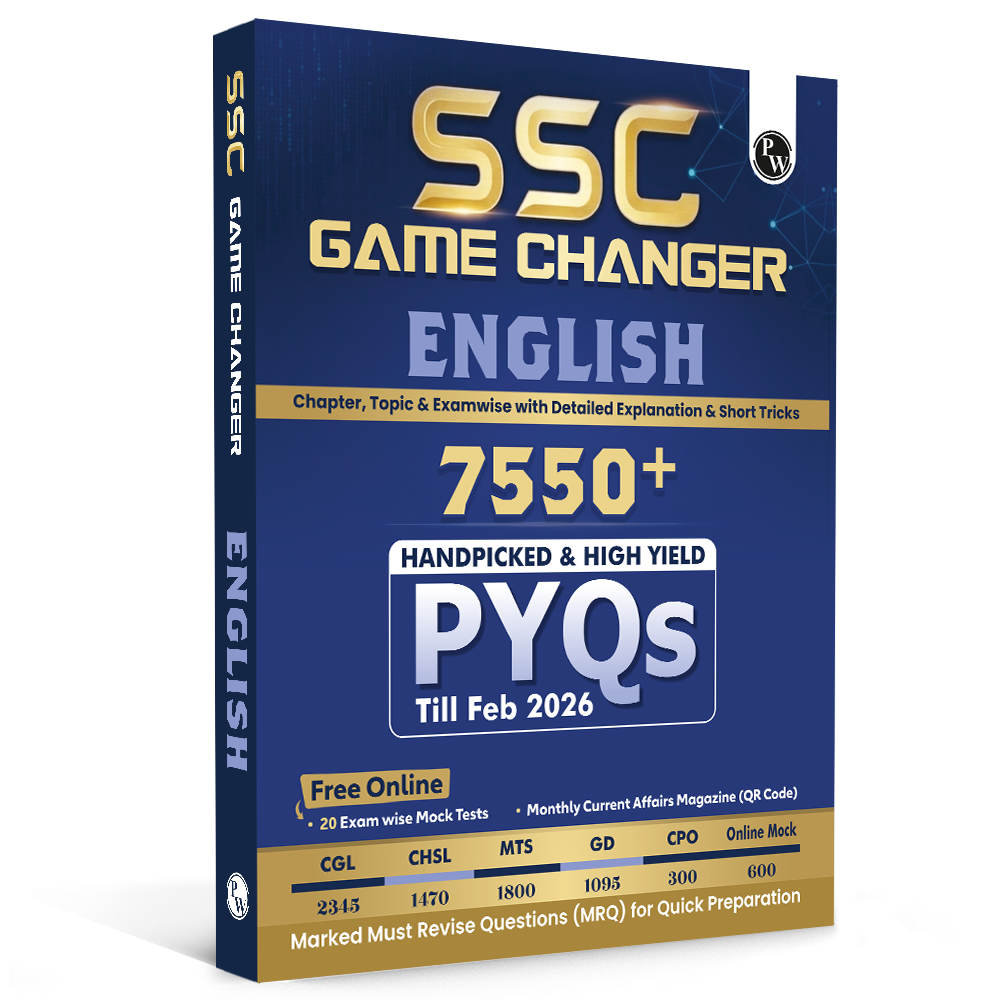
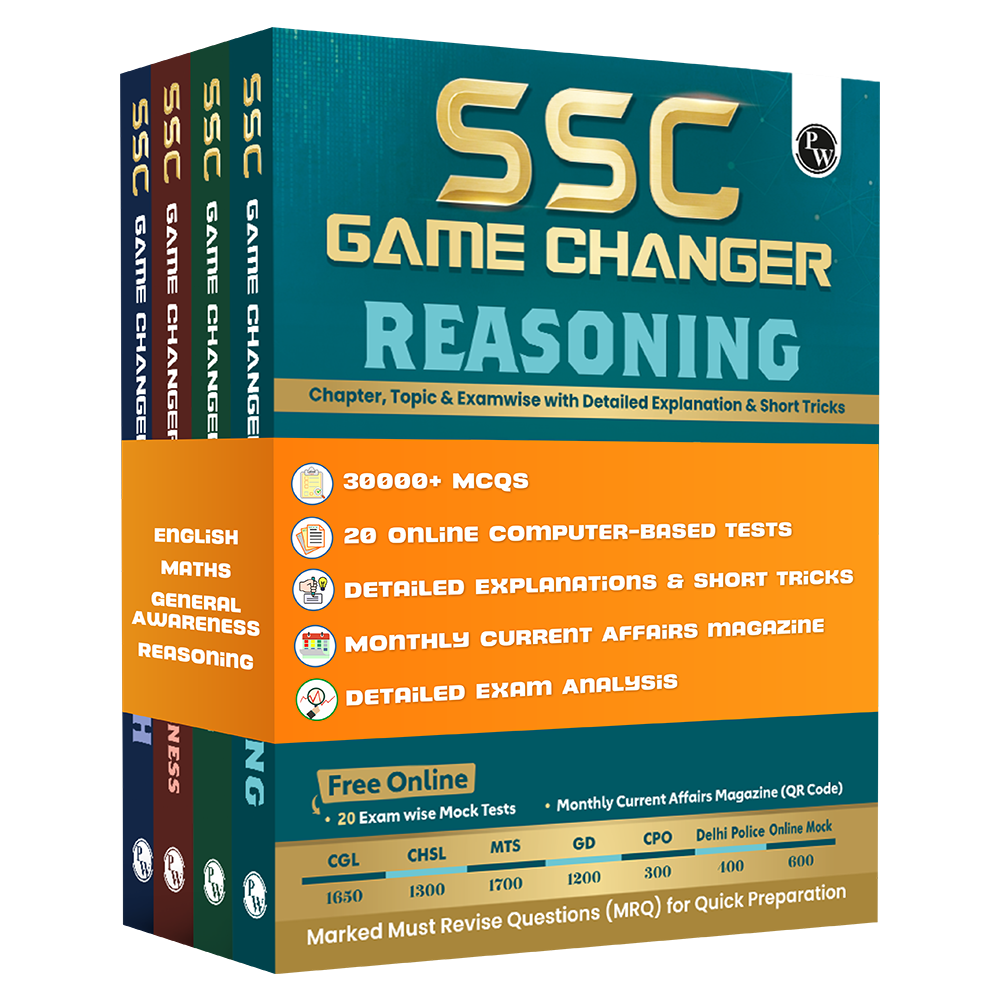
Solving previous year questions effectively requires structured study material based on the latest SSC pattern. The PW SSC Game Changer Book is designed to help candidates prepare systematically for SSC exams.
Using this book regularly for SSC English practice keeps your preparation aligned with the latest SSC exam pattern.
Key Features of the Book
-
7550+ TCS MCQs: Updated according to the latest SSC syllabus and exam pattern.
-
Chapter-, Topic-, and Exam-wise Division: Helps you focus on specific grammar topics.
-
Quick Revision Notes: Includes grammar rules, vocabulary, and revision tricks.
-
20 Online CBT Practice Sets: Simulates the actual computer-based test environment.
-
Monthly Current Affairs via QR Code: Supports General Awareness preparation.
-
Detailed Exam Trend Analysis: Covers CGL, CHSL, MTS, CPO, GD, and Stenographer exams.
Using the SSC English PYQ book regularly helps convert theoretical grammar knowledge into exam-ready accuracy. Candidates can identify weak areas, analyse mistakes, and improve consistently.
What Is the Topic-wise Distribution of Error Detection SSC PYQ?
Understanding the topic-wise distribution of Error Detection SSC PYQ questions helps candidates allocate their preparation time more effectively. SSC maintains a balanced distribution across different grammar topics to assess overall English proficiency.
Practising topic-wise previous year questions helps you identify weak areas and strengthen them before the exam.
What Is the Step-by-Step Method to Solve Error Detection SSC PYQ?
Attempting sentence correction randomly often leads to confusion and unnecessary negative marking. Following a structured approach while solving Error Detection SSC PYQ questions helps improve both speed and accuracy. Using the SSC Game Changer English book alongside PYQ practice can further strengthen grammar concepts, provide targeted practice, and help candidates identify and correct common errors more confidently.
Step 1: Read the Entire Sentence Carefully
Read the complete sentence once without stopping at the section divisions. This helps you understand the overall meaning, identify the tense, and recognise the sentence structure before looking for errors.
Step 2: Identify the Subject and the Verb
Locate the main subject and its corresponding verb. Ask yourself:
-
Is the subject singular or plural?
-
Does the verb agree with the subject?
-
Is the tense consistent throughout the sentence?
Checking subject-verb agreement first often helps eliminate incorrect options quickly.
Step 3: Check Prepositions and Conjunctions
Now examine the sentence for incorrect prepositions and conjunction pairs. Pay special attention to commonly tested combinations.
-
Either pairs with or.
-
Neither pairs with nor.
-
Not only pairs with but also.
-
Hardly/Scarcely pairs with when or before.
-
No sooner pairs with than.
These combinations are frequently tested in SSC English exams.
Step 4: Verify Pronouns, Nouns, and Modifiers
Ensure every pronoun clearly refers to its correct antecedent and agrees in gender and number. Also check whether adjectives, adverbs, and modifiers are placed correctly so that they describe the intended word or phrase.
Step 5: Review All Options Before Marking the Answer
If you identify a grammatical mistake, choose the corresponding part of the sentence. If every part follows the grammar rules correctly, confidently select the "No Error" option.
Practising this five-step method regularly with authentic Error Detection SSC PYQ sets will help you solve questions more accurately within the exam time limit.
Read More: SSC English Syllabus and Important Topic
SSC PYQ FAQs
How does practising Error Detection SSC PYQ improve accuracy in SSC exams?
Practising authentic previous year questions helps candidates understand recurring grammar patterns, common examiner traps, and sentence structures frequently used in SSC exams. This improves rule-based thinking, reduces guesswork, and increases overall accuracy.
Why is the PW SSC English PYQ Book useful for SSC preparation?
The SSC English PYQ Book contains 7,550+ chapter-wise and topic-wise MCQs based on the latest SSC exam pattern. It also includes detailed solutions, quick revision notes, exam trend analysis, and 20 online CBT practice sets for effective preparation.
How many Error Detection SSC PYQ questions should I practise every day?
Candidates should aim to solve 30 to 50 Error Detection SSC PYQ questions daily. Along with solving questions, reviewing explanations for incorrect answers is equally important to strengthen grammar concepts.
Are grammar questions repeated in SSC exams?
The exact questions may not be repeated, but grammar concepts, fixed prepositions, sentence structures, and common error patterns appear frequently across SSC CGL, CHSL, MTS, CPO, and other exams.
How can I improve my SSC English practice?
Regularly solving Error Detection SSC PYQ sets, revising grammar rules, analysing mistakes, and taking online CBT mock tests are some of the most effective ways to improve your SSC English preparation.