How to Track Your Progress While Solving SSC PYQs
Every SSC exam follows certain patterns, and previous year questions are one of the best ways to recognise them. Instead of treating SSC PYQ sets as just another practice exercise, use them to understand how questions are framed, which topics appear repeatedly, and the level of difficulty you can expect.
This approach helps you prepare with greater clarity rather than relying on random practice. As you solve more SSC PYQs, you become familiar with recurring concepts, improve your decision-making under time pressure, and develop the confidence needed to perform well in the actual examination.
What is SSC PYQ?
SSC PYQ stands for SSC Previous Year Questions, which are the actual questions asked in previous Staff Selection Commission examinations such as SSC CGL, CHSL, MTS, CPO, GD, Stenographer, and Selection Posts.
These questions help candidates understand the latest exam pattern, question types, difficulty level, and important topics that appear frequently in the exams. Practicing PYQ improves conceptual understanding, speed, accuracy, and time management while helping aspirants identify their strengths and weak areas. It is one of the most effective resources for focused revision and exam-oriented preparation.
Features of SSC PYQ
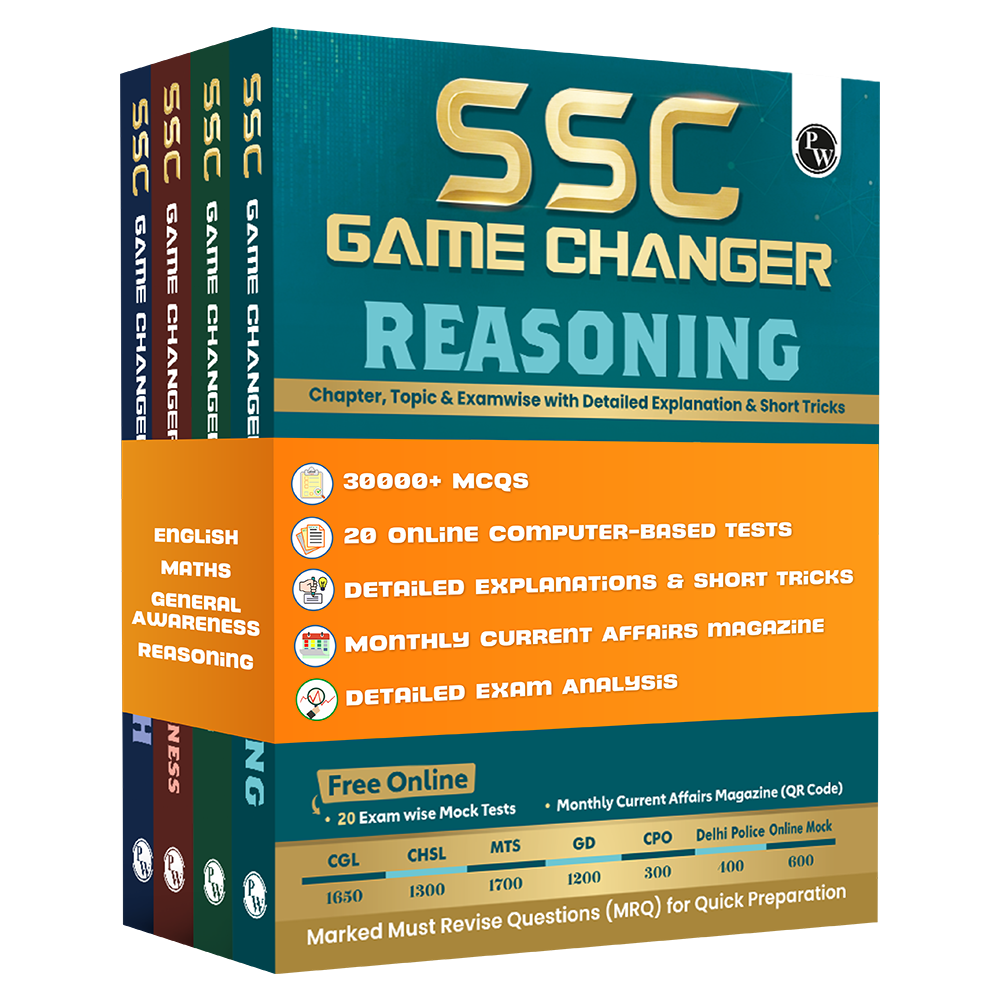
Prepare for SSC exams with a complete collection of Previous Year Questions (PYQs) based on the latest exam pattern. This SSC book includes extensive PYQ practice, quick revision notes, online CBT practice sets, current affairs, and detailed exam analysis to help you prepare with confidence.
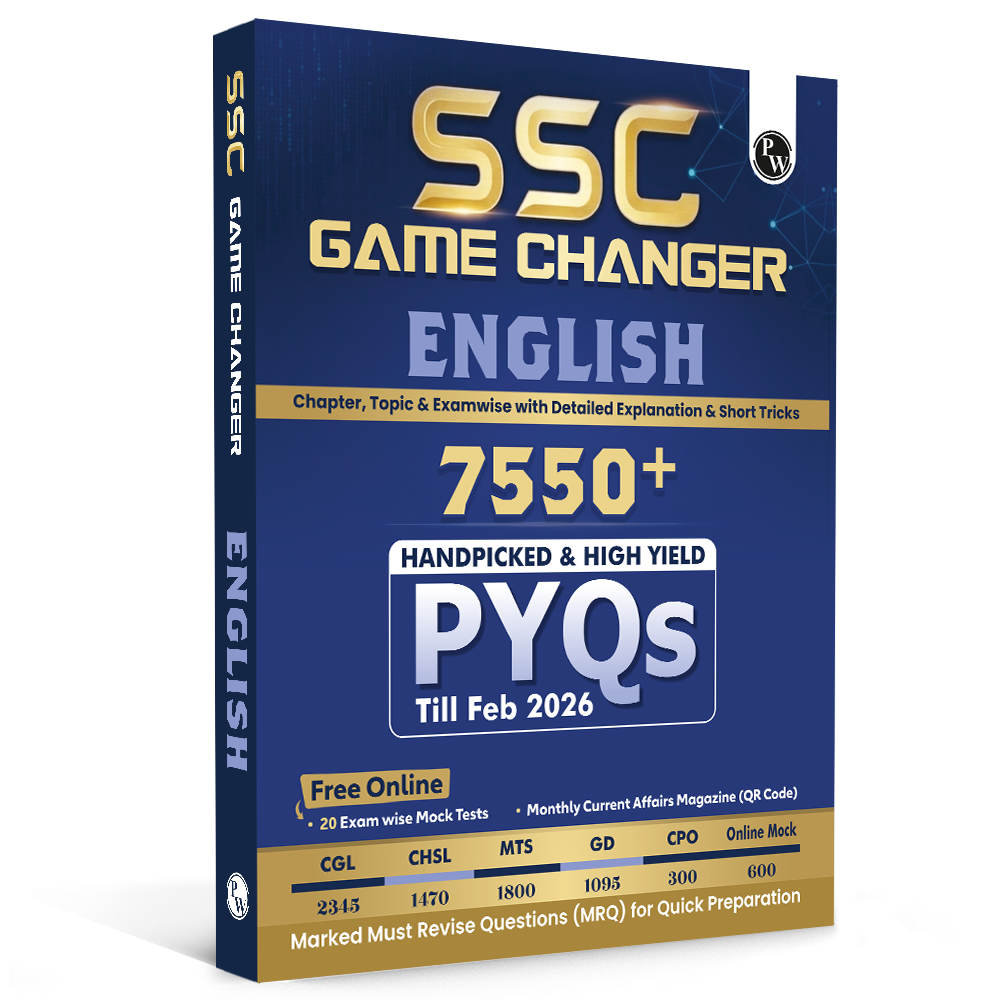
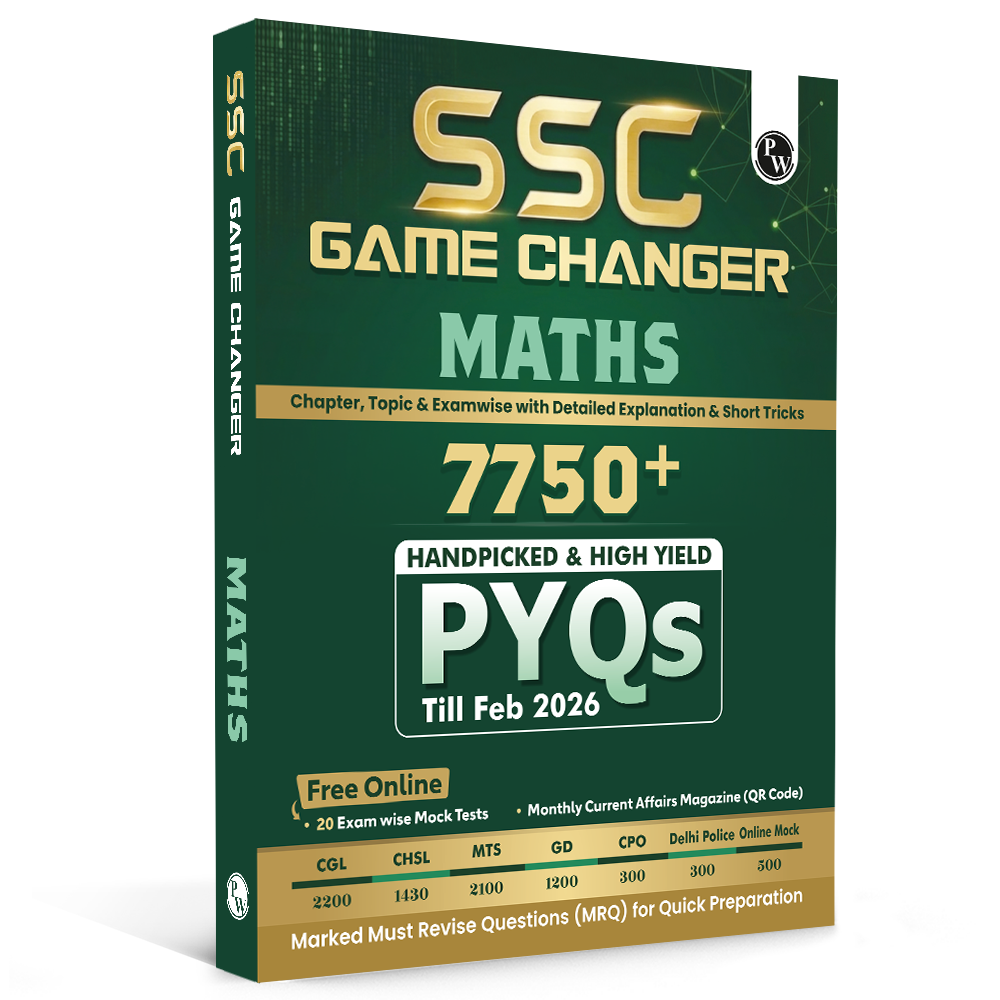
6800+ SSC Previous Year Questions (PYQs): Practice with more than 6800 SSC Previous Year Questions (PYQs) covering General Awareness, Quantitative Aptitude (Maths), English, and Reasoning. The questions are based on the latest SSC exam pattern and help you understand important topics and question trends.
Quick Revision Notes: Revise faster with short formulas, grammar rules, reasoning tricks, shortcuts, and important concepts. These notes are perfect for quick revision and last-minute exam preparation.
20 Online CBT Practice Sets: Experience the real SSC Computer-Based Test (CBT) with 20 full-length online practice sets. Improve your speed, accuracy, confidence, and time management before the exam.
Monthly Current Affairs (QR Access): Access monthly current affairs through a QR code and stay updated with the latest national and international events useful for the General Awareness section of SSC exams.
Detailed SSC Exam Analysis: Understand topic-wise trends, question distribution, weightage, and important insights from major SSC exams. This analysis helps you focus on high-scoring topics and prepare in a smarter and more effective way.
Why is it Important to Track SSC PYQ Progress?
Solving past papers without keeping record of your performance is like driving without a speedometer. You might be moving forward, but you have no idea whether you are on pace to achieve your target score. A dedicated tracking framework provides real-time clarity on your preparation level.
Here are the main reasons why tracking every session is essential:
-
Eliminates Blind Spots: You might feel confident in quantitative aptitude, but data might reveal that your accuracy drops drastically in algebra under time pressure.
-
Reduces Negative Marking: By monitoring unattempted questions versus wrong attempts, you learn when to skip uncertain questions during the actual exam.
-
Optimises Revision Time: Instead of re-reading entire chapters, a proper record points you directly to the exact sub-topics that need immediate attention.
-
Builds Exam Stamina: Regular time tracking conditions your brain to manage the strict timer of Tier 1 and Tier 2 papers.
When you analyze SSC previous years papers, the goal is not merely to check whether your answer matches the key. The real objective is to understand the underlying pattern of your mistakes. Are your errors stemming from conceptual gaps, calculation slip-ups, or simple misreading of the question prompt? Identifying these drivers allows you to adjust your approach systematically.
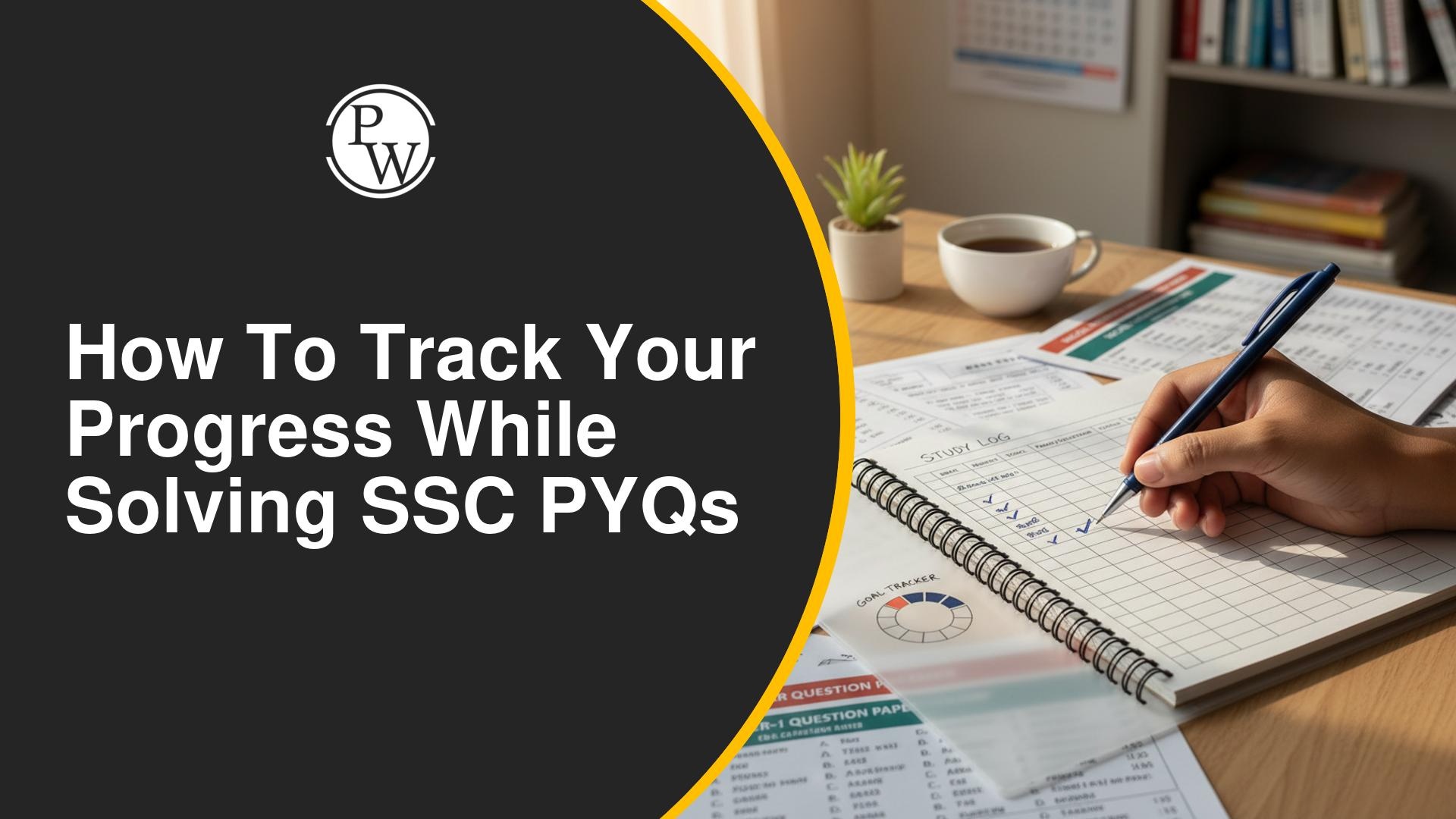
How to Set Up an SSC PYQ Tracking Sheet?
Creating a clean, functional log sheet is the first operational step towards structured preparation. You can use a digital spreadsheet or a physical notebook dedicated solely to performance logging.
To build an effective tracking system, organize your log sheet into these core columns:
|
Column Name |
Description / Purpose |
Example Entry |
|
Date & Shift |
Tracks exam year, tier, and specific shift |
14 July 2023 - Shift 1 |
|
Subject & Topic |
Identifies the exact chapter being practiced |
Reasoning - Syllogism |
|
Total Questions |
Total number of questions attempted in the set |
25 Questions |
|
Correct Answers |
Number of questions solved correctly on first try |
20 Correct |
|
Incorrect Attempts |
Number of wrong answers (calculates negative marks) |
3 Incorrect |
|
Skipped Questions |
Questions left unattempted due to lack of knowledge |
2 Skipped |
|
Time Spent |
Total time taken to complete the set |
18 Minutes |
|
Error Type |
Root cause category (Conceptual / Speed / Calculation) |
Calculation error on Q12 |
Setting up this log ensures every study session yields measurable data. Over two to three weeks, this sheet becomes a personalized diagnostic tool that maps your progress across General Awareness, Mathematics, Reasoning, and English.
A crucial aspect of an effective SSC preparation strategy involves reviewing this tracking sheet at the end of every week. Look for trends across topics. If you consistently spend over two minutes per question on geometry, it indicates a need to review basic properties and theorems before attempting more practice sets.
What are the Steps for Effective SSC PYQ Practice?
Attempting previous year questions requires a structured approach to get the most out of every practice session. Simply solving questions and checking the answers immediately reduces the learning value. Follow these steps to make your SSC PYQ practice more effective:
1. Set Up a Distraction-Free Timer
-
Allocate a fixed time for each practice set. For example, solve 25 reasoning questions in 15 minutes.
-
Avoid checking the answer key while the timer is running.
2. Attempt Questions in Exam Mode
-
Complete the entire set without taking breaks.
-
If you cannot identify the concept within 15 seconds, skip the question and move on.
3. Evaluate Your Performance
-
Compare your answers with the official answer key.
-
Calculate your score using the exam's marking scheme (for example, +2 for every correct answer and -0.5 for every incorrect answer).
4. Analyse Your Mistakes
-
Classify every incorrect answer as:
-
Conceptual error
-
Calculation mistake
-
Time management issue
-
Note any new shortcut, trick, or formula you learn while reviewing the solutions.
5. Reattempt Difficult Questions
-
Save the questions you found challenging.
-
Solve them again after 48 hours without referring to the solutions to check your improvement.
Following these steps consistently will make your SSC PYQ practice more organised and productive. Instead of simply completing more questions, you'll improve your accuracy, speed,
How to Analyze Your SSC PYQ Performance Effectively?
To improve your performance, don't focus only on your final score. Tracking specific performance metrics helps you identify whether your weak area is accuracy, speed, or question selection.
Review the following metrics every week to measure your progress:
|
Metric Name |
Formula / Calculation |
Target Benchmark |
Strategic Insight |
|
Accuracy Rate |
(Correct Answers ÷ Total Attempted) × 100 |
Above 85% |
Measures conceptual clarity and precision. |
|
Attempt Rate |
(Total Attempted ÷ Total Questions) × 100 |
Above 90% |
Reflects confidence level and syllabus coverage. |
|
Time Per Question |
Total Time Spent ÷ Total Attempted |
Below 45–50 seconds |
Indicates solving speed and decision-making ability. |
|
Error Ratio |
Incorrect Answers ÷ Total Attempted |
Below 10% |
Highlights careless mistakes and guessing habits. |
Tracking these metrics regularly gives you a clearer picture of your preparation. For example, if your accuracy rate is above 90% but your attempt rate is only 60%, you should focus on improving speed rather than revising concepts. On the other hand, a high attempt rate with low accuracy suggests that you are guessing too many answers, which can reduce your overall score due to negative marking.
Monitoring these numbers also helps you manage your time across different sections. In SSC exams, English and General Awareness generally require less time than Mathematics and Reasoning. Reviewing your sectional performance allows you to create a balanced exam strategy.
Also Check - PW Computer Awareness Book 2026
Which SSC PYQ Book Is Best for Preparation?
Choosing the right SSC PYQ book is as important as solving previous year questions regularly. A well-organised resource saves time by arranging questions topic-wise and shift-wise, making your preparation more structured.
Resources like the PW SSC PYQ books provide detailed explanations that make it easier to understand mistakes and improve your accuracy. The book offers comprehensive coverage of General Awareness, Mathematics, Reasoning, and English with systematically organised SSC previous year questions and step-by-step solutions.
A good SSC PYQ book should offer:
-
Topic-wise Practice: Helps you strengthen chapters where your performance is weak.
-
Detailed Solutions: Explains concepts and shortcut methods clearly.
-
Latest Exam Pattern: Includes recently asked questions based on the current SSC syllabus.
Using a reliable SSC PYQ book along with timed practice sessions makes revision more effective and helps reduce repeated mistakes.
Read More: Last 6 Months Current Affairs Key Topics to Know
SSC PYQ FAQs
How many years of SSC PYQs should I solve?
Practising SSC PYQs from the last 4 to 5 years is generally sufficient. These papers closely reflect the latest exam pattern, question trends, and difficulty level.
What is a good accuracy rate while solving SSC PYQs?
Aim for an accuracy rate of at least 85%. High accuracy reduces negative marking and improves your overall score in mock tests and the actual exam.
How often should I review my SSC PYQ error log?
Review your error log twice a week and before starting a new topic. Reattempting previously incorrect questions helps reinforce concepts and prevents repeated mistakes.
Should I practise SSC PYQs topic-wise or shift-wise?
Begin with topic-wise SSC PYQs to build concept clarity. Once most of your syllabus is complete, switch to shift-wise papers under timed conditions to simulate the actual exam.
How can SSC PYQs help improve speed in Mathematics?
Regularly solving SSC PYQs helps you recognise common question patterns and shortcut methods. Along with this, memorising tables, squares, cubes, and percentage conversions can significantly improve your calculation speed during the exam.