How to Identify High-Weightage General Awareness Topics with PYQ Book
Preparing for Staff Selection Commission examinations often feels overwhelming due to the massive syllabus of the General Awareness section. Aspirants spend hundreds of hours reading extensive textbooks without knowing which topics actually carry maximum marks in Tier 1 and Tier 2 tests. Solving questions blindly without analyzing patterns leads to poor time management and lower accuracy.
By learning how to systematically evaluate an SSC general awareness PYQ book, candidates can instantly pinpoint recurring themes, high-yielding chapters, and subject-wise score distribution. This strategic approach transforms vast study material into a focused, highly manageable study roadmap.
Importance of SSC General Awareness PYQ
SSC General Awareness PYQ is one of the most effective resources for preparing the General Awareness section of SSC exams. It helps candidates understand the latest exam pattern, identify high-weightage topics, and recognize frequently asked questions from subjects like History, Polity, Geography, Economics, Science, Static GK, and Current Affairs.
Regular practice with previous year questions improves accuracy, strengthens factual knowledge, and helps aspirants focus on topics that matter most instead of studying the entire syllabus equally. It also builds confidence, improves revision, and enables candidates to perform better in the actual examination.
Features of SSC General Awareness PYQ
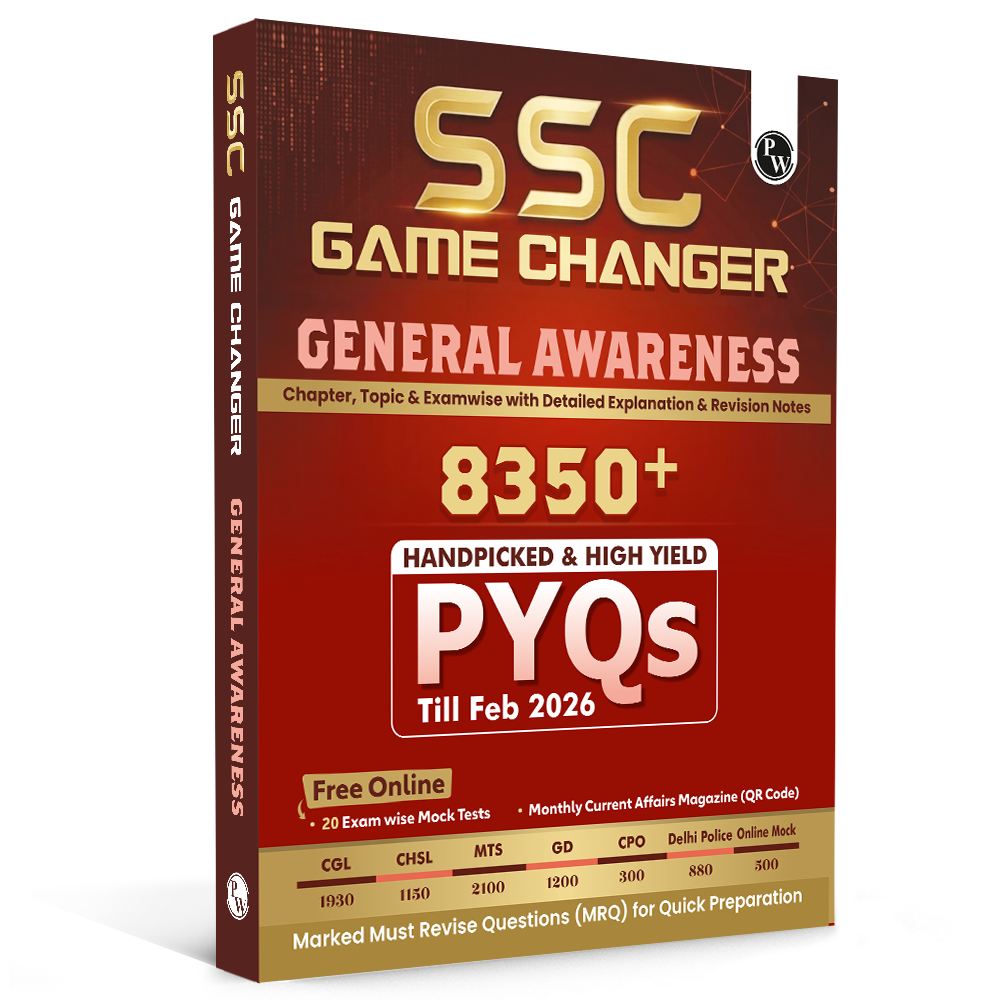
Boost your SSC General Awareness preparation with complete study material designed according to the latest exam pattern. This SSC book includes extensive MCQ practice, quick revision notes, online mock tests, current affairs, and detailed exam analysis for effective preparation.
8350+ MCQs: Practice with more than 8350 SSC General Awareness MCQs prepared according to the latest exam pattern. The questions cover the complete syllabus and help you strengthen every important topic.
Quick Revision Notes: Revise faster with short notes, important facts, key concepts, and easy tricks. These notes are ideal for quick learning and last-minute exam preparation.
20 Online CBT Practice Sets: Experience the real SSC computer-based test with 20 full-length online practice sets. Improve your confidence, speed, accuracy, and time management before the exam.
Monthly Current Affairs (QR Access): Access monthly current affairs through a QR code and stay updated with important national and international events useful for SSC General Awareness and Current Affairs preparation in 2026.
Detailed Exam Analysis: Understand topic-wise trends, question weightage, and important insights from major SSC exams. This analysis helps you focus on high-scoring topics and prepare in a smarter way.
Why Use SSC General Awareness PYQ?
The General Awareness paper covers history, geography, polity, economics, general science, static general knowledge, and dynamic current affairs. Attempting to master every single topic with equal depth is statistically inefficient. High-scoring candidates rely heavily on PYQ resources to separate core high-value subjects from low-yield areas.
Pareto Rule in Competitive Exams
The 80/20 principle applies strongly to competitive examinations conducted by the Staff Selection Commission. Approximately 80% of total marks stem from roughly 20% of the recurring core concepts.
-
Static GK & Culture: Classical dance forms, folk music, national parks, festivals, and monuments contribute consistently to every shift.
-
Indian Polity: Fundamental Rights, Directive Principles of State Policy, Constitutional Amendments, and Articles surrounding the Judiciary account for a major slice of polity marks.
-
Modern History: The Indian National Movement (1857–1947), Governors-General, and key socio-religious reform movements appear repeatedly.
-
General Science: Basic everyday biology, chemical names, periodic table trends, and fundamental physics laws form the bulk of science queries.
Exam Anxiety Through Pattern Recognition
When you regularly review SSC PYQ sets, vague fear transforms into actionable strategy. You stop memorising arbitrary facts and start identifying how examiner mindsets operate across different shifts.
How to Analyze SSC General Awareness PYQ?
Extracting actionable insights from previous years' collections requires a systematic evaluation framework rather than random page flipping. A well-designed compilation provides natural markers for subject priority.
Categorise Questions by Frequency and Recency
Not all old questions carry equal weight. SSC exam patterns evolved significantly after computer-based testing was introduced.
-
Focus on recent years: Prioritise questions from recent exam shifts (CGL, CHSL, CPO, MTS, GD) as recent trends reflect current TCS pattern preferences.
-
Track repetition rate: Note down specific sub-topics that appear in almost every test shift.
-
Observe shift variations: Compare morning, afternoon, and evening papers from the same year to spot core non-negotiable topics.
Track Chapter-Wise Weightage Trends
A structured book arranges general awareness PYQs into neat chapters and sub-topics. This layout lets you count question density instantly.
|
Subject Area |
Average Questions per Shift |
Weightage Level |
Primary Focus Areas |
|
Static GK |
6–8 Questions |
Very High |
Art, Culture, Festivals, Sports Awards, Books & Authors |
|
Indian Polity |
3–5 Questions |
High |
Articles, Amendments, Parliament, Fundamental Rights |
|
Modern History |
2–4 Questions |
Medium-High |
Freedom Movement, Acts, Important Congress Sessions |
|
Science (Bio/Chem/Phy) |
4–6 Questions |
High |
Human Anatomy, Vitamins, Chemical Compounds, Light & Sound |
|
Geography |
2–3 Questions |
Medium |
Rivers, Mountains, Soil Types, Drainage Systems |
|
Economics |
1–3 Questions |
Medium-Low |
Five-Year Plans, Budget Terms, Inflation, Banking |
By compiling these numbers from SSC general awareness questions, you create an evidence-based roadmap that removes guesswork completely from your general awareness preparation.
How to Study with SSC General Awareness PYQ?
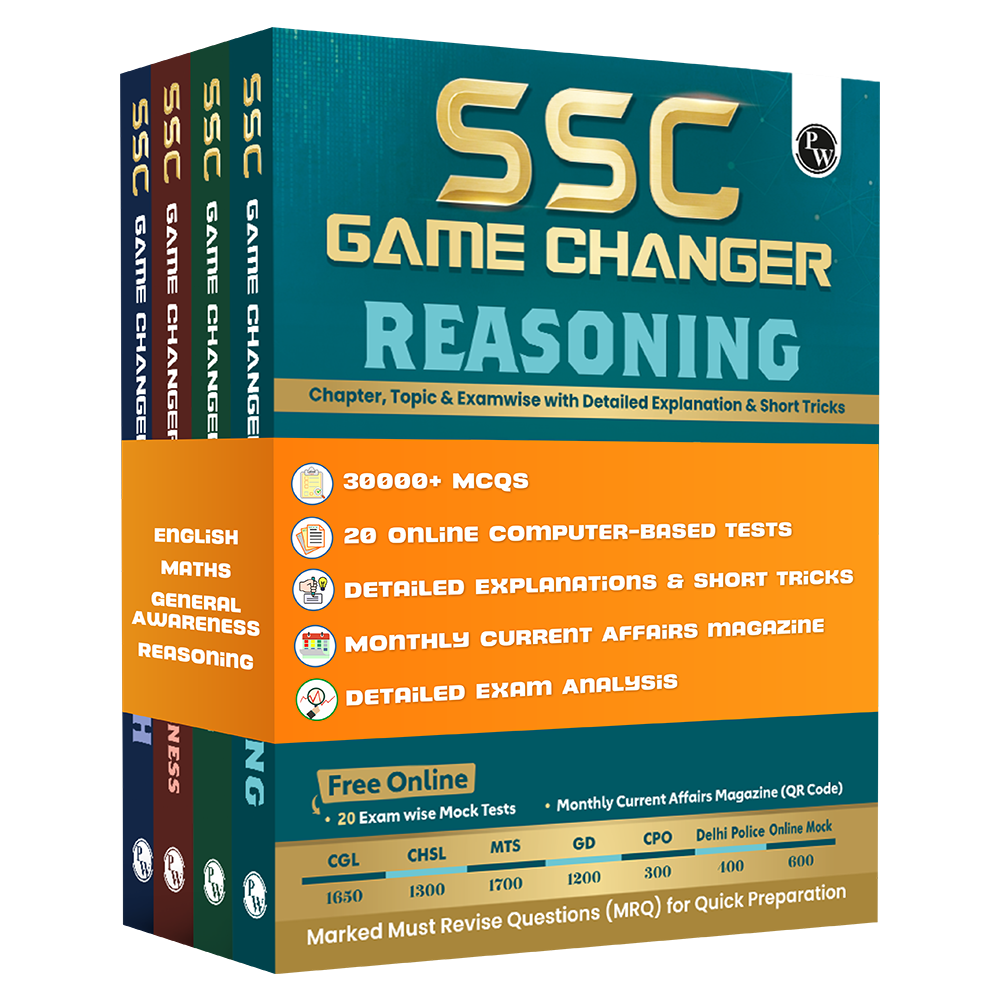
To extract maximum value from your study materials, follow a step-by-step workflow that moves from macro-analysis down to individual micro-topics. Using SSC Game Changer Books alongside this approach can help strengthen concepts, practise topic-wise questions, identify weak areas, and make your SSC preparation more focused and effective.
Step 1: Examine the Subject-Wise Table of Contents
Open your compilation and review the introductory section. High-quality books like the PW SSC GA PYQ manual break down previous years' papers into chapter-wise and topic-wise distributions.
-
Identify subjects containing more than 500+ past questions.
-
Highlight sub-topics with the highest volume of solved MCQs.
-
Note down low-weightage chapters to spend less time on them during initial revisions.
Step 2: Solved Practice and Self-Assessment
Attempt chapter-wise GA PYQs without looking at the explanations first. Mark your responses and calculate your baseline accuracy rate for each section.
-
High Accuracy, High Weightage: Retain with periodic revision notes.
-
Low Accuracy, High Weightage: Urgent priority! Re-read primary textbook notes immediately.
-
High Accuracy, Low Weightage: Low priority; revise only before exams.
-
Low Accuracy, Low Weightage: Allocate minimal time; focus on fundamental definitions.
Step 3: Utilize Detailed Solution Notes for Extra Facts
Solving the question itself is only half the job. Real growth happens when reading the detailed explanation accompanying each solved question
-
Option Elimination: Learn why incorrect choices were included.
-
Surrounding Facts: A question on the Battle of Plassey (1757) often contains explanations mentioning the Battle of Buxar (1764) and the Treaty of Allahabad.
-
Trend Forecasting: Examiners frequently frame new questions from the explanatory notes of older papers.
How to do Subject Analysis with SSC General Awareness PYQ?
Let us break down how specific subjects present themselves inside a PYQ compilation and where to direct your mental energy.
Static General Knowledge & Culture
Static GK consistently dominates Tier 1 examinations across CGL, CHSL, and MTS levels.
-
Folk & Classical Dances: Focus on famous exponents, state origins, and associated instruments.
-
Musical Instruments & Artists: Sitar, Tabla, Flute, and Sarod maestros appearing in recent years.
-
Religious Festivals & Fairs: Regional celebrations, tribal festivals, and seasonal harvest events.
-
Sports & Trophies: Terminology, ground dimensions, recent tournament venues, and historical records.
Indian Polity & Constitution
Polity is one of the most predictable sections in SSC GA practice routines because constitutional rules remain fixed.
-
Constitutional Framework: Preamble, Sources of Indian Constitution, Schedules, and Parts.
-
Executive & Legislature: President powers, Prime Minister, Governor, Rajya Sabha, Lok Sabha procedures.
-
Judiciary & Constitutional Bodies: Supreme Court, High Courts, CAG, Election Commission, UPSC.
-
Key Amendments: 42nd, 44th, 86th, 101st, 103rd, and 104th Amendments.
General Science (Physics, Chemistry, Biology)
General science tests daily observational concepts rather than deep theoretical physics or advanced orGAnic chemistry.
-
Biology: Human biological systems, deficiency diseases, plant kingdom classification, cell structure, enzymes, and hormones.
-
Chemistry: Common chemical names (e.g., Baking Soda, Bleaching Powder), acids and bases, metals/non-metals, and periodic trends.
-
Physics: SI units, wave optics, sound properties, heat transfer, motion equations, and optical instruments.
Read More: SSC CGL General Awareness Questions With Solutions
SSC PYQ FAQs
How does an SSC general awareness PYQ book help identify high-weightage topics?
A PYQ book categorises past questions by chapter and sub-topic. By checking the total number of questions listed under each chapter, aspirants can instantly see which topics appear most frequently in real exams.
How many years of SSC general awareness PYQs should I practice for CGL and CHSL?
Practising the last 4 to 5 years of SSC general awareness questions is ideal. This coverage exposes you to recent TCS question patterns, updated static GK trends, and modern computer-based exam formats.
Is practicing chapter-wise GA PYQs enough to clear SSC GA cutoffs?
Solving chapter-wise GA PYQs builds a solid foundation, but combining them with thorough concept reading, current affairs updates, and full-length CBT mock tests ensures top scores above cutoffs.
How much daily time should be allocated for SSC GA practice?
Dedicate around 1.5 to 2 hours daily to SSC GA practice. Divide this time between reviewing primary notes, practicing 50-100 previous year questions, and reading explanatory solutions carefully.
What makes the PW SSC GA PYQ book suitable for 2026 exam aspirants?
The SSC GA PYQ book includes 8350+ categorized questions, detailed trend analysis, quick revision notes, 20 online CBT practice sets, and QR-based monthly current affairs updates tailor-made for 2026 SSC exams.