How SSC CHSL Previous Year Papers Reveal About the Exam Pattern?
Preparing for competitive staff selection exams can feel overwhelming when candidates face thousands of topics without a clear roadmap. Most aspirants struggle to identify which subjects deserve maximum focus and how questions are framed in real exam conditions.
Working systematically through SSC CHSL Previous Year Papers resolves this uncertainty by highlighting exact paper structures and marking trends. Studying real questions builds familiarity with both Tier 1 and Tier 2 testing environments. This detailed article explores how past year papers uncover the complete SSC CHSL exam pattern and why structured SSC CHSL preparation is vital for securing top scores.
Overview of SSC CHSL Previous Year Papers
Previous Year Papers are a collection of actual questions asked in earlier SSC CHSL Tier 1 and Tier 2 examinations. These papers help candidates understand the latest exam pattern, question types, marking scheme, difficulty level, and important topics that appear regularly in the exam.
By solving previous year papers, aspirants can improve their speed, accuracy, and time management while identifying their strong and weak areas. Regular practice with Previous Year Papers also builds confidence and helps candidates prepare according to the real exam pattern instead of relying only on theory.
Features of SSC CHSL Previous Year Papers
Finding reliable, error-free SSC previous year paper collections with comprehensive solutions is crucial for effective revision. The SSC CHSL PYQ resource is specifically designed to meet these exact candidate requirements.
Using a structured SSC CHSL PYQ book simplifies trend tracking and systematic revision:
-
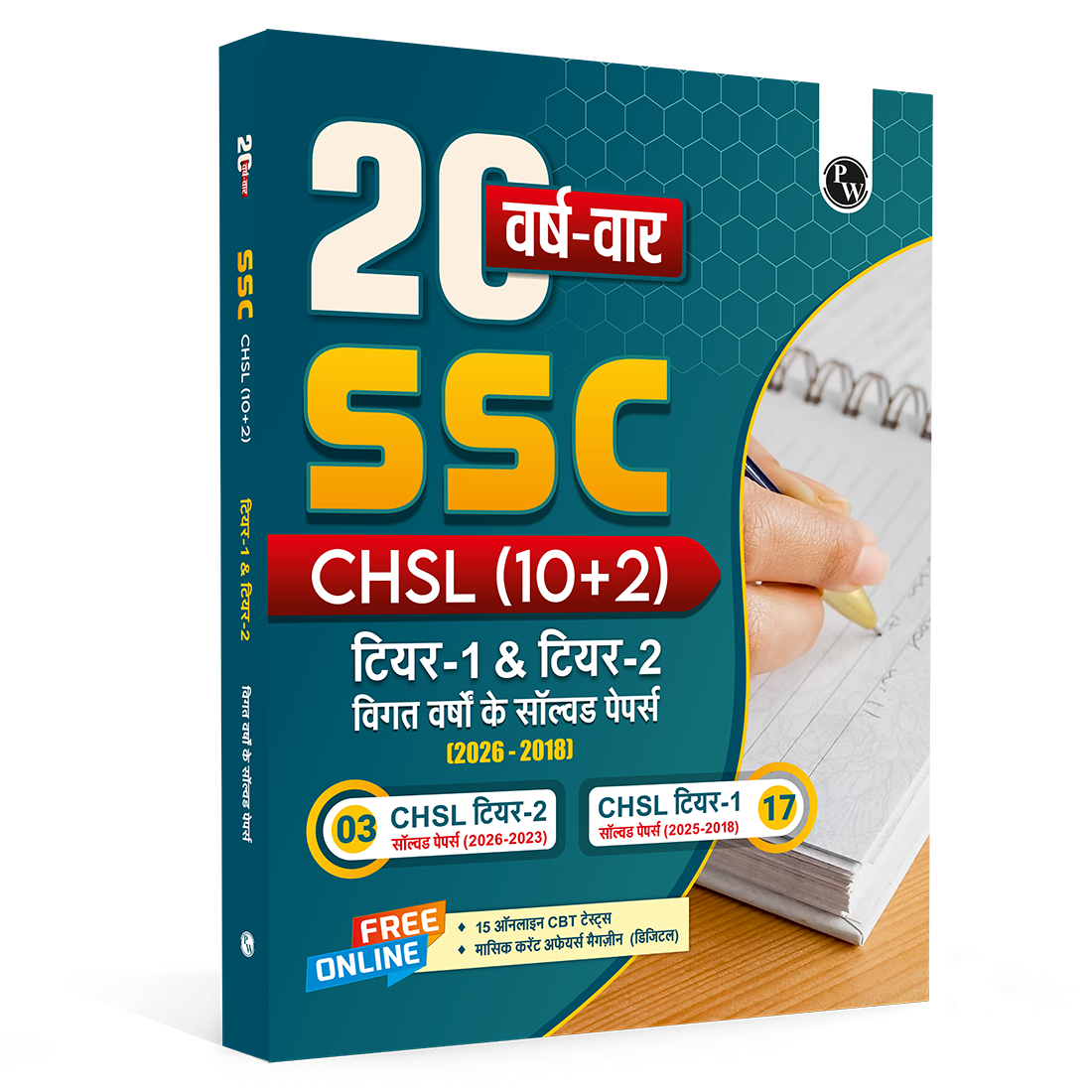
20 Year-Wise Solved Papers (2026–2018): Provides authentic questions spanning both Tier 1 and Tier 2 exams over an extensive 20-year coverage spectrum.
-
2100+ Solved Questions: Features detailed, step-by-step explanations for every question to build conceptual clarity and eliminate doubts.
-
Trend Analysis Guidance: Helps aspirants identify high-weightage topics and recurring question frameworks for targeted study.
-
15 Online Practice Tests: Allows candidates to simulate computer-based testing environments to improve real-time speed and accuracy.
-
Monthly Current Affairs Magazine Support: Delivers updated General Awareness coverage relevant for upcoming exam cycles.
-
English Medium Content: Crafted specifically for English medium candidates preparing for Tier 1 and Tier 2 selections.
Equipping yourself with complete, accurate solved papers ensures that your SSC CHSL preparation remains aligned with actual exam demands.
Why Solving SSC CHSL Previous Year Papers is Important?
Candidates often wonder why toppers place immense trust in authentic past exam questions during their study journey. Textbooks provide conceptual knowledge, but real exam questions demonstrate how those concepts are tested under strict time constraints.
Here are the fundamental reasons why past papers serve as an indispensable preparation tool:
-
Clear Understanding of Question Formats: Official papers display exact framing, options style, and difficulty variations across different exam shifts.
-
Identification of High-Weightage Topics: Reviewing multiple years of papers highlights recurring chapters in Quantitative Aptitude, English, Reasoning, and General Awareness.
-
Elimination of Exam Anxiety: Solving authentic papers under timed conditions builds mental stamina and reduces nervousness on exam day.
-
Refinement of Problem-Solving Speed: Regular practice helps candidates discover shortcuts and alternative calculation methods.
-
Realistic Self-Assessment: Mock practice with real papers gives an accurate measure of current performance levels and weak areas.
Exam patterns evolve periodically, yet core testing principles remain consistent. Analyzing actual test questions bridges the gap between theoretical knowledge and practical performance.
What is the SSC CHSL Previous Year Papers Exam Pattern?
A close examination of Previous Year Papers shows how the Staff Selection Commission structures both Tier 1 and Tier 2 examinations. Understanding these distinct stages ensures targeted study planning without wasting time on irrelevant topics.
Tier 1 Exam Pattern Insights
Tier 1 is a computer-based test designed to screen candidates through multiple-choice questions. Past paper trends reveal a balanced distribution across four core subjects:
-
General Intelligence and Reasoning: 25 Questions (50 Marks) focusing on verbal and non-verbal reasoning, analogies, series, and classification.
-
General Awareness: 25 Questions (50 Marks) covering static General Knowledge, history, geography, polity, science, and current events.
-
Quantitative Aptitude (Basic Arithmetic Skills): 25 Questions (50 Marks) testing arithmetic, algebra, geometry, mensuration, and data interpretation.
-
English Language (Basic Knowledge): 25 Questions (50 Marks) evaluating grammar, vocabulary, reading comprehension, and error spotter questions.
Total duration for Tier 1 is 60 minutes (80 minutes for eligible scribe candidates), with a negative marking of 0.50 marks for every incorrect response. PW SSC Books show that speed and accuracy must go hand-in-hand to clear high cut-offs.
Tier 2 Exam Pattern Breakdown
Tier 2 evaluates higher-order skills through objective modules and skill tests. Analyzing past Tier 2 papers demonstrates a clear shift toward comprehensive problem-solving and computer proficiency:
|
Session |
Section & Module |
Subject |
No. of Questions |
Maximum Marks |
Duration |
|
Session I |
Section 1: Module 1 |
Mathematical Abilities |
30 |
90 |
1 Hour (combined for Section 1) |
|
Section 1: Module 2 |
Reasoning and General Intelligence |
30 |
90 |
||
|
Section 2: Module 1 |
English Language and Comprehension |
40 |
120 |
1 Hour (combined for Section 2) |
|
|
Section 2: Module 2 |
General Awareness |
20 |
60 |
||
|
Section 3: Module 1 |
Computer Knowledge Test |
15 |
45 |
15 Minutes |
|
|
Session II |
Section 3: Module 2 |
Skill Test / Typing Test |
- |
Qualifying |
10 to 15 Minutes |
In Tier 2, each correct objective answer awards 3 marks, while 1 mark is deducted for each wrong answer. Studying Tier 2 SSC CHSL solved papers reveals that English Language holds the highest weightage, making thorough linguistic command mandatory.
Benefits of Using SSC CHSL Previous Year Papers
Consistent practice with authentic past papers directly influences final exam results. Aspirants who incorporate historical questions into their daily routine gain distinct operational advantages over those relying solely on general practice sets.
-
Trend Spotting: Question papers from 2018 to 2026 reveal subtle shifts in topic priorities, such as increased weightage on advanced geometry or specific current affairs windows.
-
Error Analysis: Solving authentic tests allows candidates to categorize mistakes into conceptual errors, calculation blunders, or misread questions.
-
Time Allocation Mastery: Candidates learn how many seconds to allocate per question across different sections to maximize total score.
-
Negative Marking Control: Practicing with realistic penalty rules trains candidates to skip low-confidence questions rather than making blind guesses.
-
Confidence Generation: Familiarity with actual exam phrasing removes surprise factors on test day.
Developing a systematic reviewing method ensures that every solved paper yields actionable improvements for subsequent practice sessions.
How to do SSC CHSL Previous Year Papers Subject-wise Analysis?
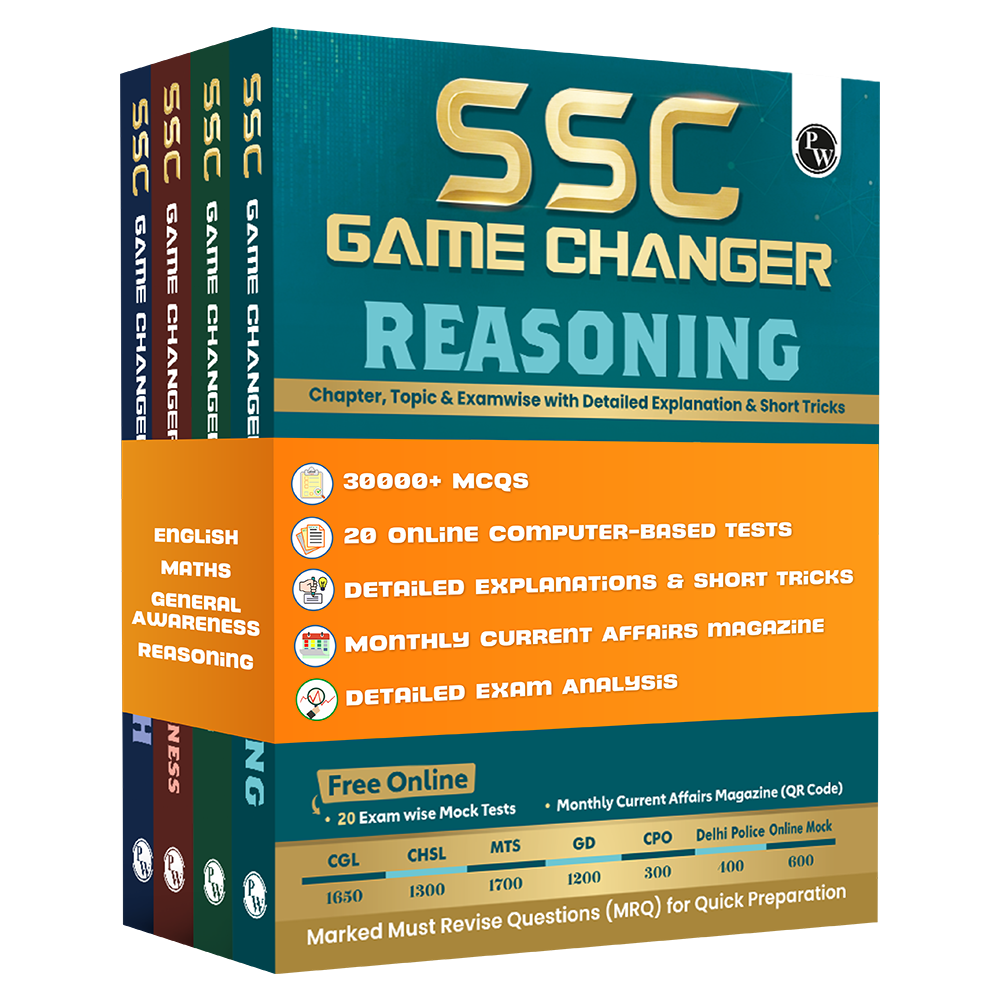
Evaluating Previous Year Papers topic by topic reveals specific patterns in how questions are distributed across core sections. Strategic preparation requires prioritising high-yield areas identified through paper analysis. Using PW SSC Game Changer Books alongside PYQ analysis can further strengthen concepts, provide focused practice across General Awareness, Maths, Reasoning, and English, and help improve overall exam readiness.
Quantitative Aptitude Analysis
Past papers show a distinct division between Arithmetic and Advanced Mathematics:
-
Arithmetic Operations: Percentages, Ratio and Proportion, Profit and Loss, Simple and Compound Interest, Time and Work, and Speed, Time and Distance appear consistently.
-
Advanced Mathematics: Algebra (basic algebraic identities), Geometry (triangle centers, circle chords and tangents), Mensuration (surface area and volume), and Trigonometry (standard ratios and identities) account for nearly half of the quantitative section.
-
Data Interpretation: Tables, bar charts, and pie charts test rapid calculation abilities based on percentage and ratio concepts.
Reasoning and General Intelligence Trends
Reasoning questions test logical processing and spatial visualization. Historical trend analysis reveals the following regular topics:
-
Analogy and Classification: Number, letter, and word-based relationships.
-
Series Completion: Number series, letter series, and repeating symbol sequences.
-
Coding-Decoding: Coding by shift, letter position interchange, and direct symbol substitution.
-
Non-Verbal Reasoning: Paper folding, figure matrix, embedded figures, and mirror images.
-
Critical Reasoning: Syllogisms, statement-conclusions, and blood relations.
English Language and Comprehension Patterns
The English section tests grammar fundamentals, vocabulary strength, and reading comprehension abilities:
-
Grammar Rules: Error spotting, sentence improvement, and active/passive voice transformations test core rules of subject-verb agreement, tenses, and prepositions.
-
Vocabulary: Synonyms, antonyms, idioms, phrases, one-word substitutions, and misspelled words recur frequently across shifts.
-
Comprehension: Cloze tests or short passages test contextual reading speed and vocabulary application.
General Awareness and Computer Knowledge Focus
General Awareness remains one of the most decisive sections for time savings:
-
Static GK: Indian History, Art and Culture, Geography, Polity (Articles and Amendments), and Basic Science (Physics, Chemistry, Biology).
-
Current Affairs: Events, awards, sports, and national initiatives from recent months prior to the examination date.
-
Computer Knowledge (Tier 2): Fundamentals of computers, operating systems, MS Office (Word, Excel, PowerPoint), basic internet concepts, and cybersecurity terms.
Tips for Using the SSC CHSL Previous Year Papers
Simply attempting past papers without a structured approach yields limited improvement. Candidates must follow a method that converts past test data into score growth.
-
Simulate Real Test Conditions: Sit in a quiet space, set a strict timer (60 minutes for Tier 1), and avoid checking solutions during the attempt.
-
Evaluate Performance Immediately: Calculate your net score after accounting for negative marking to track authentic progress.
-
Conduct Deep Diagnostic Review: Spend at least twice as much time analyzing the paper as you spent solving it. Identify why correct answers were right and why wrong answers failed.
-
Maintain an Error Notebook: Record concepts, formulas, or vocabulary words missed during practice. Review this log weekly.
-
Revisit Unsolved Questions: Re-attempt unanswered or incorrect questions without looking at detailed solutions first to strengthen independent problem-solving skills.
-
Track Speed and Accuracy Metrics: Monitor the time spent per section to establish an optimal sequence of attempts for exam day.
A disciplined practice loop transforms passive paper solving into active skill enhancement.
Read More: SSC CHSL Subject Wise Weightage and Important Topics
SSC CHSL FAQs
How do SSC CHSL Previous Year Papers help in understanding exam trends?
Solving authentic past papers reveals recurring question formats, shifting topic weightage, and difficulty levels across both Tier 1 and Tier 2 exam shifts.
Why is a dedicated SSC CHSL PYQ book essential for preparation?
A structured PYQ book offers authentic year-wise solved papers, step-by-step explanations, and trend analysis that help candidates systematically reduce errors and build speed.
How many past year questions are included in the PW SSC CHSL PYQ Book?
The resource features 20 year-wise solved papers containing over 2100+ fully solved questions covering Tier 1 and Tier 2 exams from 2018 to 2026.
Does the SSC CHSL exam pattern include negative marking?
Yes, Tier 1 has a negative marking of 0.50 marks per wrong answer, while Tier 2 deducts 1 mark for each incorrect response in objective modules.
Can practicing SSC CHSL solved papers improve time management on exam day?
Practicing past papers under strict timed conditions trains candidates to allocate time efficiently per section and avoid spending too long on difficult questions.