Chapter-Wise SSC Reasoning PYQs for Students Who Don’t Know Where to Start
Standing halfway through the academic timeline often creates pressure, making it difficult to decide which topics deserve immediate attention. When time feels limited, guessing which chapters matter most can lead to burnt-out study sessions and poor accuracy.
Navigating this mid-session phase requires an organized approach rather than random problem-solving. Utilizing a dedicated SSC reasoning PYQ resource allows learners to evaluate real exam trends, pinpoint weak areas, and direct their energy toward high-weightage topics without feeling lost.
Importance of SSC Reasoning PYQ
Facing competitive exams requires more than basic textbook knowledge. Working through past paper sets gives aspirants direct exposure to the actual format and difficulty level used in real tests.
-
Real Exam Pattern Alignment: Solving actual past questions exposes candidates directly to genuine exam formats, question phrasing, and recurring pattern structures.
-
Targeted Skill Enhancement: Concentrating on authentic past items develops fundamental analytical shortcuts, logical speed, and overall solving accuracy.
-
Focus on High-Weightage Chapters: Detailed exam analysis reveals key topic trends, helping students prioritize areas that carry the highest marks.
-
Realistic Computer-Based Testing: Practicing questions in actual exam formats helps learners adapt to timed environments, reducing exam-day anxiety.
Using an organized SSC reasoning PYQ book ensures that students do not spend precious time on outdated material or irrelevant theoretical concepts.
How Can SSC Reasoning PYQ Help You Choose Where to Start?
Mid-way through a term, deciding where to kickstart study sessions often causes hesitation. Past questions serve as an objective diagnostic tool that removes confusion.
-
Identifying Personal Strengths: Attempting a mixed collection of past questions quickly reveals which logical reasoning topics feel intuitive and which require immediate attention.
-
Understanding Topic Weightage: Reviewing previous year paper sets highlights chapters that appear consistently across various tiers and exam cycles.
-
Eliminating Guesswork: Instead of picking chapters randomly, real test data shows exactly which concepts form the core of the syllabus.
-
Building Initial Momentum: Starting with high-frequency, accessible questions creates early confidence, making long study hours much easier to manage.
Using SSC Previous Year Papers with topic-wise reasoning questions provides a clear starting point, enabling structured progression from simple logic patterns to complex analytical puzzles.
How to Use SSC Reasoning PYQ Chapter-Wise for Practice?
Approaching past papers without a clear system can lead to fragmented learning. A step-by-step method makes chapter-based practice far more productive.
-
Review Quick Revision Notes: Before tackling questions, quickly go over fundamental logic rules, short tricks, and analytical formulas for that specific chapter.
-
Solve Unassisted: Attempt 20 to 30 SSC reasoning chapter-wise questions without looking at solution keys to test true conceptual grasp.
-
Analyze Every Incorrect Response: Examine detailed explanations for every missed item to understand the exact reasoning flaw or missed pattern shortcut.
-
Track Solving Speed: Monitor the average time spent per question to ensure steady improvement in pacing over time.
-
Revisit Complex Concepts: Mark tricky questions during practice and re-attempt them after a few days to reinforce retention.
Structuring daily sessions around SSC reasoning practice helps turn raw theoretical knowledge into reliable performance under exam conditions.
When Should You Solve SSC Reasoning PYQ During Your Preparation?
Timing plays a crucial role in how effectively past questions boost performance during a test preparation cycle.
|
Stage of Preparation |
Primary Focus |
Objective |
|
Initial Phase |
Basic Concept Building |
Understand fundamental principles using short tricks and quick revision notes. |
|
Mid-Term Phase |
SSC Reasoning Previous Year Questions |
Apply concepts to authentic past items to build speed, accuracy, and confidence. |
|
Final Phase |
Online CBT Practice Sets |
Simulate full-length computer-based tests to fine-tune time management and stamina. |
Integrating past paper sets during the mid-term phase ensures that conceptual learning stays strictly aligned with real test requirements.
Study Strategy Plan with SSC Reasoning PYQ for Beginners
A structured weekly schedule, supported by SSC Books, helps mid-term learners maintain discipline and achieve steady progress across all major logical reasoning topics.
-
Days 1–2: Coding-Decoding & Analogy: Focus on letter-number patterns, position values, and basic relational logic. Solve at least 50 past items per topic.
-
Days 3–4: Series & Classification: Practice identifying visual, numerical, and alphabetical progressions. Master analytical shortcuts to spot pattern breaks quickly.
-
Days 5–6: Syllogism & Blood Relations: Study logical venn diagrams and family tree structures. Work through authentic SSC reasoning PYQs to prevent common deduction errors.
-
Day 7: Review & Online CBT Practice: Re-solve flagged items, read through monthly current affairs updates, and attempt full-length computer-based practice sets.
Following this balanced routine keeps daily learning structured and prevents last-minute cramming near exam dates.
Tips to Start Practising SSC Reasoning PYQ Chapter-Wise
Starting past paper practice can feel intimidating without a practical framework. Simple tactical adjustments make early practice sessions far smoother.
-
Begin with High-Accuracy Topics: Start with chapters like Direction Sense, Classification, or Dictionary Order to build immediate operational momentum.
-
Use Short Tricks Wisely: Apply analytical shortcuts only after understanding the underlying logic to avoid misapplying formulas during complex questions.
-
Simulate Real Test Interfaces: Use online computer-based tests whenever possible to become comfortable with digital exam screens and timers.
-
Maintain an Error Journal: Record recurring mistakes, confusing patterns, and tricky logic sequences in a dedicated notebook for quick pre-exam review.
-
Stay Consistent: Regular, daily practice on a few targeted topics yields better results than marathon sessions once a week.
Implementing these practices helps learners transition smoothly from basic topic understanding to speed-oriented problem solving.
Common Mistakes to Avoid While Solving SSC Reasoning PYQs
Avoidable habits during practice can slow down progress and obscure genuine concept gaps.
-
Relying on Answer Keys Too Early: Looking at solutions before attempting a complete solution limits critical thinking and problem-solving development.
-
Ignoring Detailed Exam Analysis: Skipping topic trends and weightage data can lead to over-investing time in low-yield chapters.
-
Neglecting Speed Control: Solving questions accurately without monitoring time can result in incomplete papers during actual computer-based exams.
-
Skipping Explanations for Correct Answers: Even when an answer is right, checking explanations can reveal faster short tricks or alternative methods.
-
Overlooking Non-Verbal Reasoning: Visual series, paper folding, and mirror images carry substantial weight and should not be left for the final days.
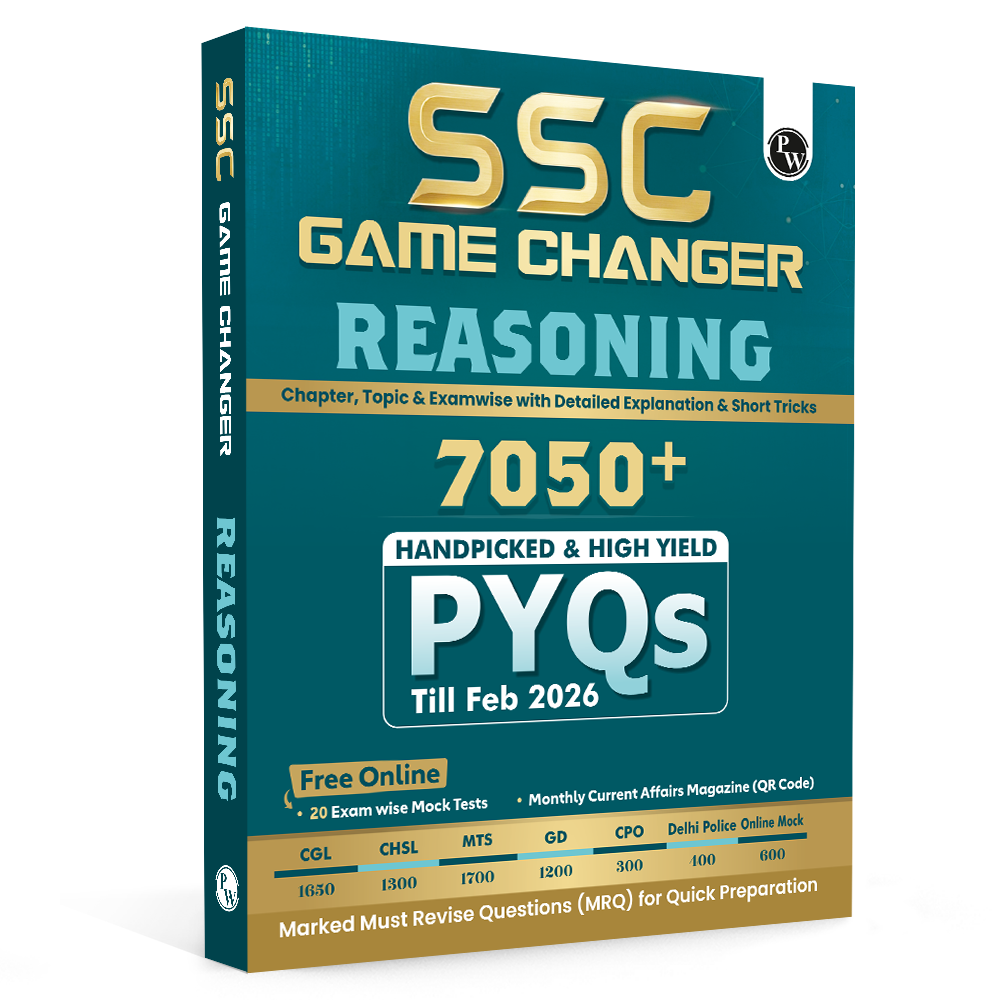
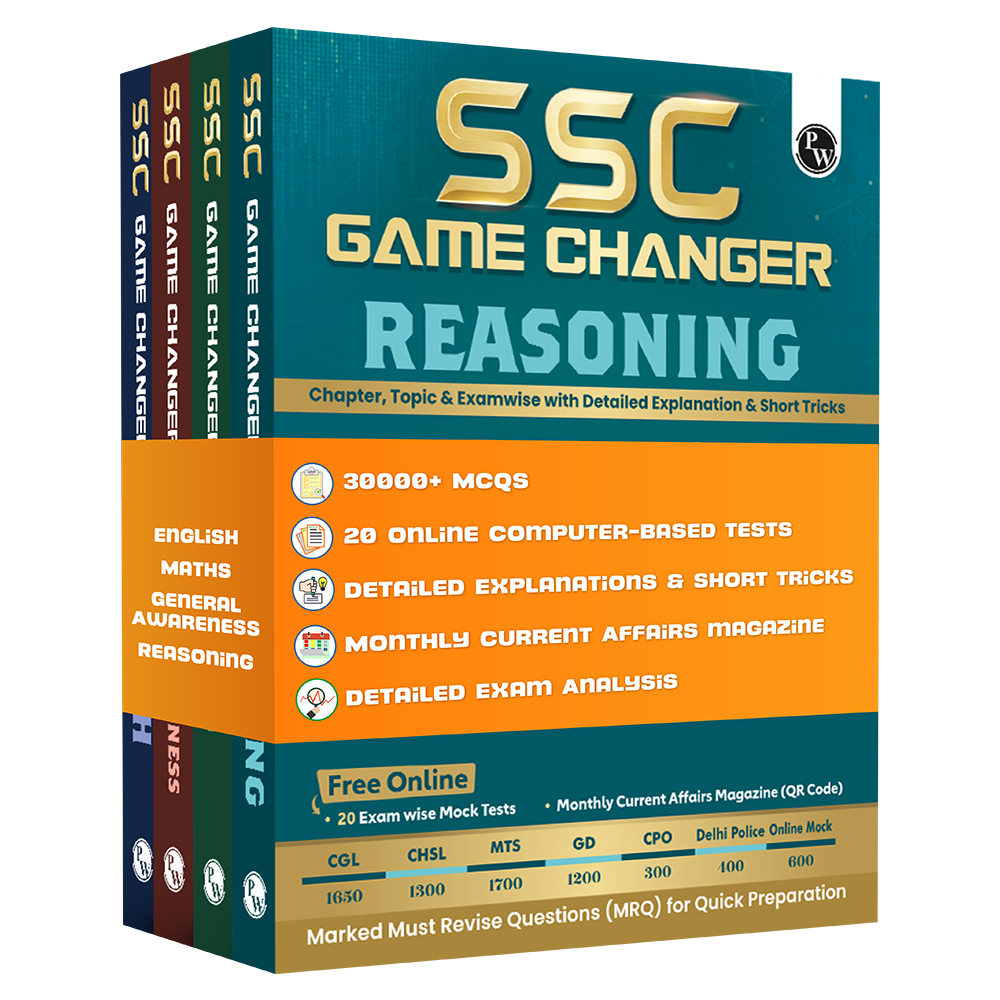
Recognizing and correcting these habits early, along with using the SSC Game Changer Combo of 4 Books, ensures that every practice session delivers maximum value.
Practice Sheet for Chapter-Wise SSC Reasoning PYQ Practice
Tracking progress with an organized checklist ensures comprehensive coverage across the logical reasoning syllabus.
-
Coding-Decoding: Cover letter shift patterns, direct coding, and numerical substitution rules.
-
Syllogism: Practice two-statement and three-statement deductions using logical Venn diagrams.
-
Blood Relations: Master family tree mapping for coded relations and direct statement puzzles.
-
Direction & Distance: Resolve multi-turn path tracking and shortest distance calculations using Pythagoras' rules.
-
Non-Verbal Puzzles: Practice mirror images, embedded figures, figure counting, and paper folding logic.
Completing this systematic checklist ensures complete syllabus coverage, leaving no topic unpracticed before exam day.
Read More: Logical Reasoning Topics for Competitive Exams
SSC Reasoning PYQ FAQs
What makes SSC reasoning PYQ essential for beginners?
Past exam questions show real question patterns, helping beginners focus on high-weightage topics without feeling overwhelmed by vast syllabi.
How do topic-wise questions help during mid-term preparation?
Organizing practice by chapter allows students to target specific weak areas, apply short tricks systematically, and build solving speed step by step.
Should I practice past questions before finishing the entire syllabus?
Yes, attempting chapter-wise past items alongside conceptual study reinforces learning and keeps preparation aligned with actual exam standards.
How many questions should I practice per chapter?
Solving around 50 to 100 past items per chapter provides sufficient exposure to recurring pattern variations and difficulty levels.
How do full-length online CBT practice sets improve performance?
Simulated computer-based tests help build familiarization with actual exam interfaces, time constraints, and overall test-taking stamina.