UGC NET History Preparation Plan for Beginners with PYQ Book
Many beginners struggle to identify which topics actually matter for the examination and end up losing valuable time on low-yield areas. Grounding your study routine in authentic UGC NET history PYQ practice bridges the gap between reading heavy textbooks and understanding what the examiners actually ask.
By analyzing past questions alongside trend breakdowns, you can transform a chaotic syllabus into a structured, manageable revision plan.
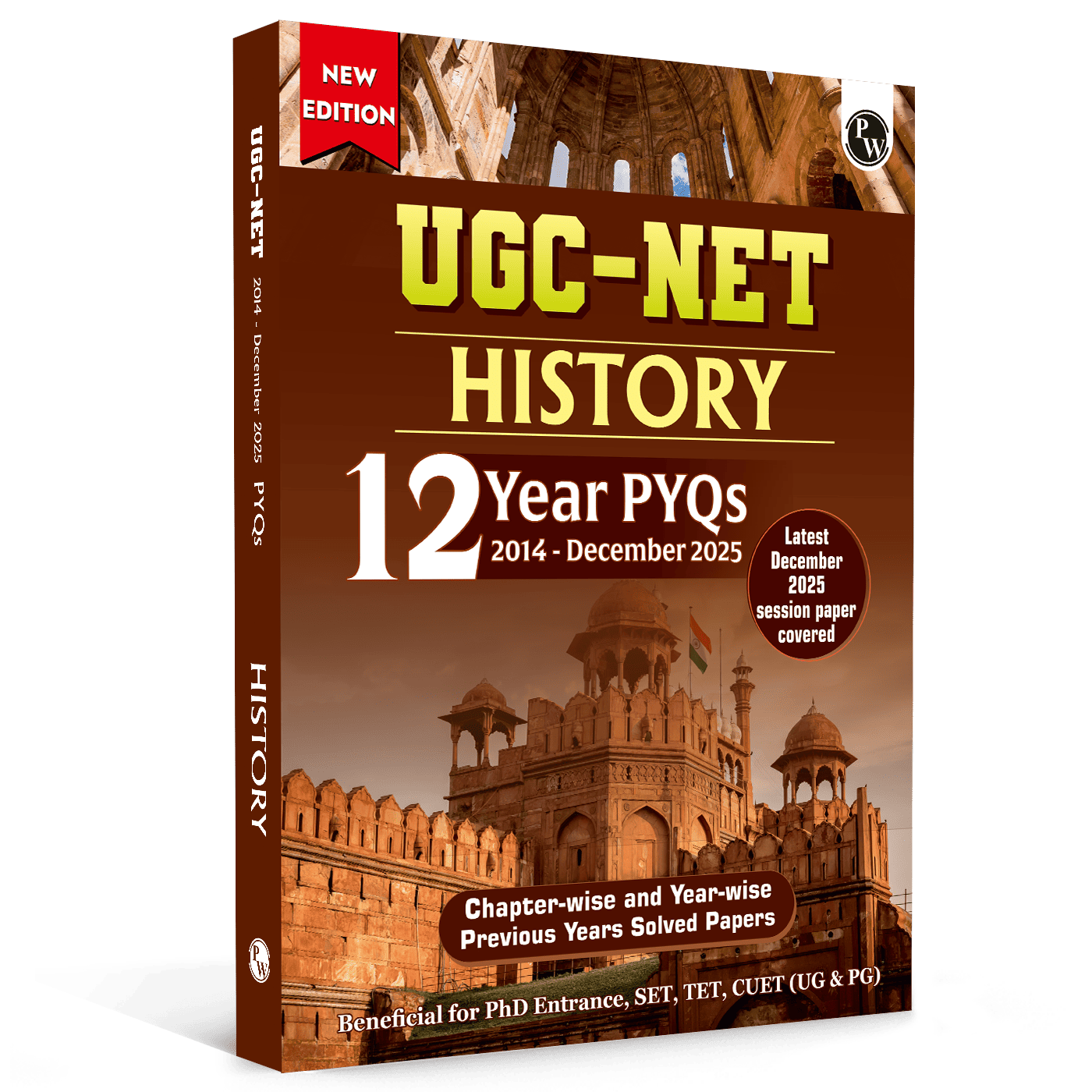
Importance of UGC NET History PYQ Book
Using a dedicated UGC NET history PYQ book gives candidates a clear vantage point over the actual exam requirements. Standard textbooks offer deep historical knowledge, but past papers teach you how that knowledge gets tested under exam conditions.
-
Understanding Exam Pattern: Practicing past papers clarifies the precise format of questions, whether they are direct factual queries, chronological ordering, or complex assertion-reasoning statements.
-
Identifying High-Yield Topics: A curated past paper compilation includes trend analysis that highlights shifting focus areas over time, showing you where to concentrate your energy.
-
Building Conceptual Clarity: Detailed explanations provided alongside answers offer missing context, enabling candidates to understand the underlying logic rather than merely memorizing correct options.
-
Versatile Exam Utility: Grounding your concepts through comprehensive paper sets supports your preparation not only for UGC NET, but also for PhD Entrance, SET, GATE, and CUET UG & PG exams.
How to Use UGC NET History PYQ Book for Exam Preparation
Integrating a UGC NET history PYQ resource effectively into your routine requires a strategic approach rather than passive reading.
Step 1: Review the Detailed Syllabus Breakdown
Start by aligning your daily reading with the official syllabus structure. Match each topic in your standard reference UGC NET books with corresponding past questions to ensure your learning remains targeted.
Step 2: Combine Year-Wise and Chapter-Wise Practice
Beginners benefit greatly from practicing chapter-wise history PYQs immediately after completing a specific topic to solidify foundational concepts. As exams approach, switch to year-wise history PYQs from 2014–2025 (including recent December 2025 papers) to simulate full-length test conditions.
Step 3: Analyze Explanations Deeply
Do not simply check if your answer is correct. Read the detailed explanations accompanying every question to grasp the reasoning and discover additional historical facts hidden within the options.
Chapters to Prioritise in UGC NET History PYQ Book
A strategic UGC NET history study plan prioritizes chapters based on historical trends observed across past papers.
|
Historical Section |
Key Focus Areas in Past Papers |
|
Ancient Indian History |
Indus Valley Civilization, Vedic literature, Mauryan administration, Gupta arts, and sangam literature. |
|
Medieval Indian History |
Delhi Sultanate agrarian policies, Mughal administration, socio-religious movements, and regional kingdom structures. |
|
Modern Indian History |
British economic policies, 1857 revolt, constitutional developments, socio-religious reform movements, and national movement phases. |
|
Historiography & Concepts |
Historical methods, research methodology, major historians, and key conceptual terms. |
Using a structured UGC NET history book with chapter-wise segregation allows you to target these specific focus areas systematically.
How UGC NET History PYQ Book Helps You Revise Faster
Smart UGC NET history revision relies heavily on active recall rather than reading passive notes repeatedly.
-
Targeted Learning Gaps: Attempting history solved papers quickly reveals exact weak spots, allowing you to re-read specific textbook sections instead of whole chapters.
-
Pattern Recognition: Solving questions from 2014–2025 helps candidates recognize recurring historical themes, key terms, and favored historical figures.
-
Structured Retainability: Segregated thematic questions facilitate organized visual memory, making it much easier to recall complex dates and chronological orders during high-pressure exam moments.
Study Strategy Using UGC NET History PYQ Book
To score well in UGC NET history preparation, structure your daily and weekly routine around active question practice.
-
Daily Practice Routine: Dedicate at least 90 minutes daily exclusively to solving past paper questions after reading core theory.
-
Weekly Review: Spend weekends solving 12-year historical paper collections to build test stamina.
-
Cross-Exam Application: Use these comprehensive history previous year papers to simultaneously prepare for overlapping exams like SET or PhD entrance tests.
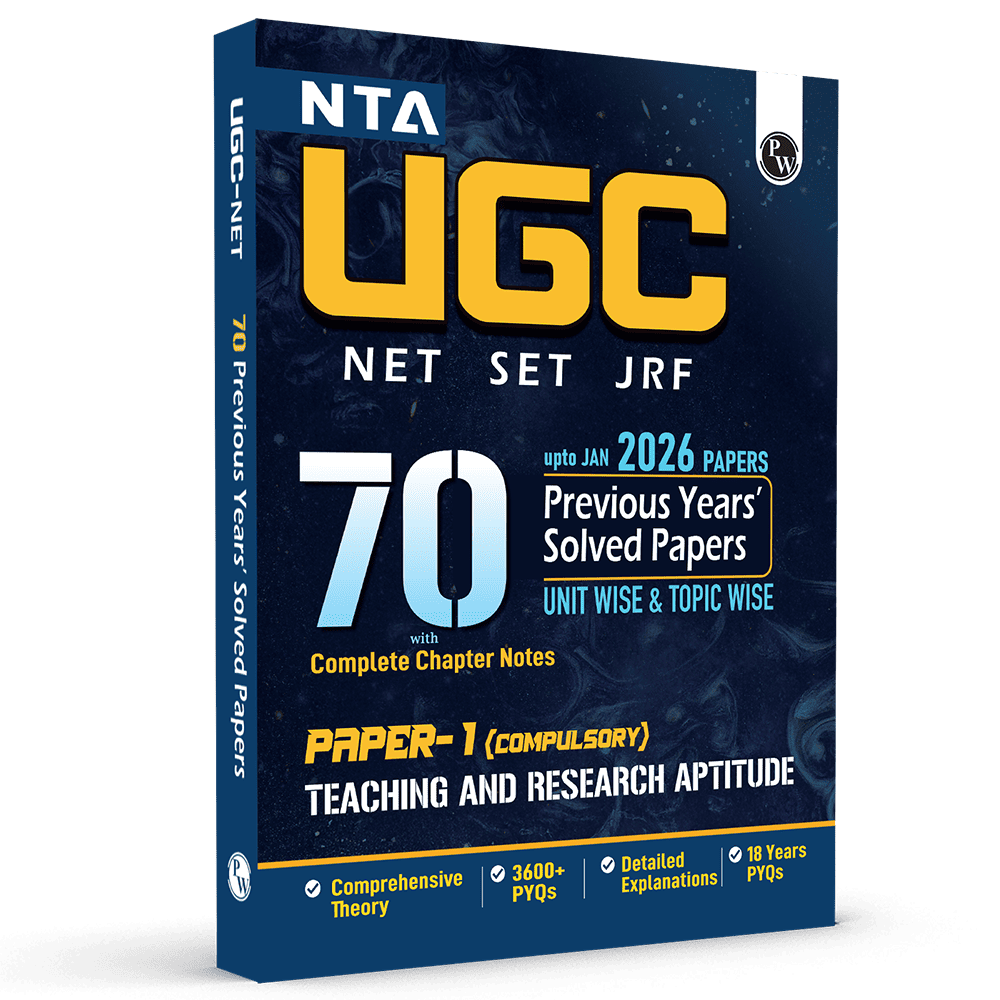
Strengthen your UGC NET Paper 1 preparation with the UGC NET Paper 1 Aptitude & Research PYQ Book, featuring previous year questions designed to help you understand exam trends and practise important concepts. Regular PYQ practice can improve accuracy, time management, and confidence across key areas such as Teaching Aptitude, Research Aptitude, Reasoning, Data Interpretation, and Communication.
Tips for UGC NET History PYQ Book
Maximizing the utility of your pw UGC NET history book involves adopting smart study habits:
-
Maintain an Error Log: Note down every question you got wrong along with its core historical explanation for quick last-minute revision.
-
Focus on Trend Shifts: Pay special attention to trend analysis from 2014–2025 to understand how question styles have evolved toward analytical statements in recent sessions.
-
Study Options, Not Just Answers: Research all four options given in a question, as incorrect options in past papers frequently become primary questions in subsequent exams.
Common Mistakes to Avoid While Using UGC NET History PYQ Book
Recognizing these missteps early ensures your study routine remains productive and aligned with actual test demands.
-
Skipping Detailed Explanations
Many candidates simply check the answer key to see if they got a question right or wrong, completely ignoring the written explanations. This approach deprives you of crucial contextual knowledge, as explanations frequently clarify broader historical frameworks and provide extra facts that appear in future tests.
-
Practicing Without Strict Time Constraints
Solving past questions casually without tracking time creates a false sense of security. The actual computer-based test demands quick decision-making under strict time limits, so practicing without a clock can lead to poor time management and unfinished sections during the real exam.
-
Neglecting Recent Examination Papers
Focusing entirely on older papers while ignoring recent test sessions leaves candidates unprepared for modern exam trends. Question styles have shifted significantly toward analytical statements, chronology matching, and complex historiographical queries, making recent paper analysis essential.
-
Memorizing Answers Instead of Concepts
Rote memorization of past questions rarely works because test setters seldom repeat questions verbatim. The goal of practicing past papers is to master the underlying concepts and historical logic, enabling you to solve newly framed questions with confidence.
-
Failing to Revisit Incorrect Responses
Working through hundreds of questions offers little value if you repeat the same mistakes on test day. Failing to systematically review incorrect answers and re-test weak spots prevents real performance improvement over time.
Read More: UGC NET History Previous Year Question Papers with PDF
UGC NET History PYQ Book FAQs
1. How many years of past papers are sufficient for history preparation?
Solving 12 years of past papers (2014–2025) provides comprehensive coverage of changing exam patterns and high-yield topics.
2. Can practicing past questions replace standard history reference books?
No, past questions complement standard textbooks by showing you how theoretical concepts are tested and where to focus your revision efforts.
3. Why are detailed explanations important in past paper books?
Detailed explanations provide background logic, clarify historical contexts, and turn single questions into broader learning opportunities.
4. Is chapter-wise practice better than year-wise practice for beginners?
Yes, beginners should start with chapter-wise practice to solidify individual topics before attempting full length year-wise papers.
5. Does practicing these questions help with other history competitive exams?
Yes, analyzing comprehensive past paper collections also aids preparation for SET, PhD Entrance, GATE, and CUET examinations.