UPTET Syllabus 2026 for Paper I and Paper II Exam
Aspirants looking to secure a teaching position in Uttar Pradesh government schools must stay updated with the latest UPTET syllabus. The exam is divided into two parts: Paper I for primary teachers (Classes 1–5) and Paper II for upper primary teachers (Classes 6–8).
The most effective method to start UPTET exam preparation requires students to understand the specific topics and test structure. The UPTET syllabus 2026 guide breaks down the exam requirements for both levels by showing subject weightage and current UPTET exam pattern. The roadmap helps you study child psychology and specialized subject knowledge according to UPTET syllabus 2026 for achieving successful results.
Check Out: CTET Books
UPTET Exam Pattern and Structure
Before diving into specific subjects, it is essential to understand the test format. The UPTET exam pattern requires test takers to manage their time while delivering accurate results.
Both papers follow a similar administrative structure, making it easier for candidates appearing for both levels.
-
Mode of Exam: Offline (Pen-and-Paper/OMR sheet).
-
Question Type: Multiple Choice Questions (MCQs).
-
Total Questions: 150 questions per paper.
-
Total Marks: 150 marks (1 mark per correct answer).
-
Duration: 150 minutes (2 hours and 30 minutes).
-
Negative Marking: There is no negative marking in the UPTET syllabus 2026.
|
Feature |
Paper I (Primary) |
Paper II (Upper Primary) |
|
Teaching Level |
Classes 1 to 5 |
Classes 6 to 8 |
|
Total Questions |
150 |
150 |
|
Total Marks |
150 |
150 |
|
Duration |
2.5 Hours |
2.5 Hours |
|
Negative Marking |
None |
None |
Since there is no negative marking, candidates are encouraged to attempt all questions. This structure is consistent for the UPTET syllabus 2026, making it vital to manage your time effectively during the test.
Check Out: Govt Entrance Exams Book
Syllabus Structure of UPTET Paper 1
The UPTET paper 1 syllabus evaluates primary teachers through mandatory sections which each contain 30 marks. The test consists of five required sections which each contain 30 marking points.
1. Child Development & Pedagogy
The core content of the UPTET syllabus shows child development stages and learning theories, which include Piaget, Pavlov, and Skinner and inclusive education. The program examines child psychology for children who are between 6 and 11 years old.
2. Language I (Hindi)
The test requires candidates to show their understanding of Hindi grammar and reading comprehension through language development tests. The content includes nouns and pronouns and verbs and sentence building rules.
3. Language II (English/Urdu/Sanskrit)
Candidates can choose one from English, Urdu, or Sanskrit. The UPTET syllabus 2026 for this section focuses on comprehension, grammar, and communication skills.
4. Mathematics
The Mathematics section evaluates basic arithmetic and problem-solving skills. Key topics include:
-
Number systems and fractions.
-
Geometry and data handling.
-
Measurement (time, weight, capacity).
5. Environmental Studies (EVS)
EVS covers a wide range of topics, including family, food, plants, animals, the Indian Constitution, and basic geography (rivers, mountains). It also includes pedagogical issues related to teaching environmental science.
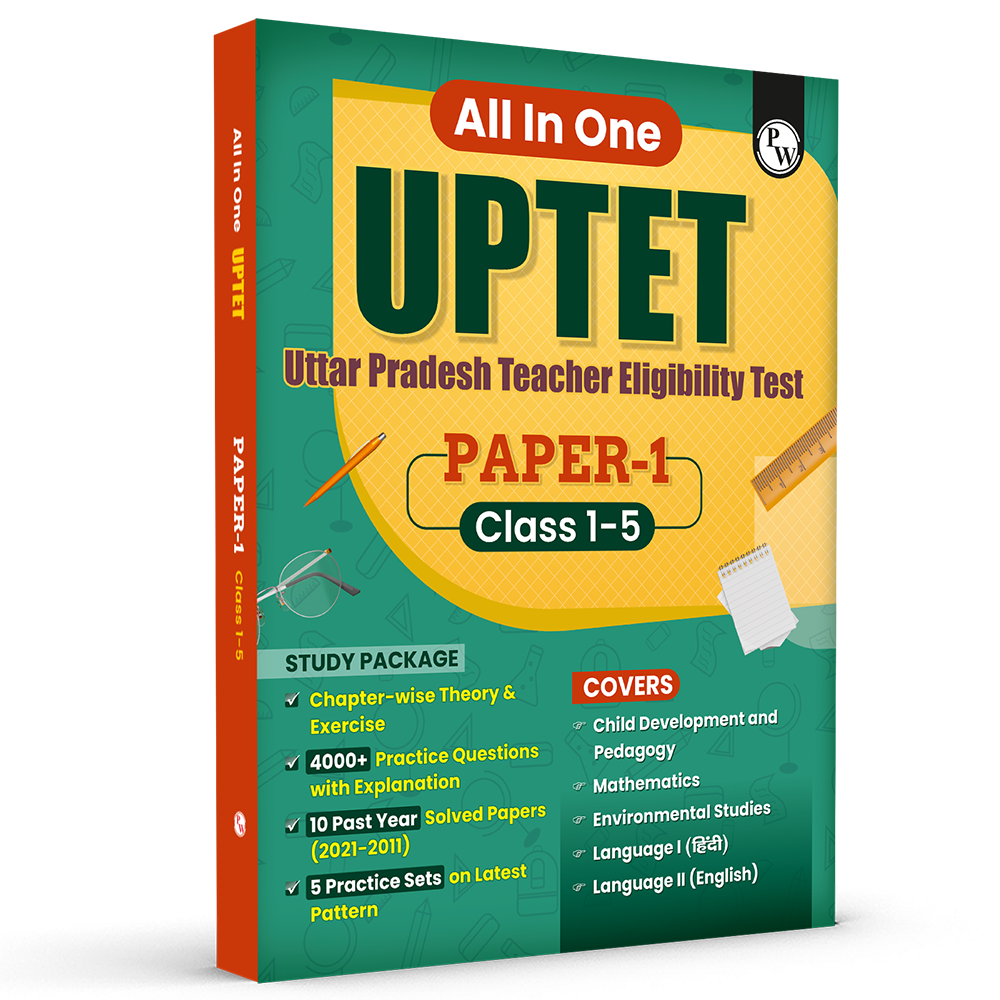
Check Out: All In One UPTET Paper 1 Class 1-5 Exam 2026
UPTET Paper 2 Syllabus
The UPTET Paper 2 syllabus establishes precise teaching requirements which candidates must follow to teach classes 6 to 8. The first three sections of the assessment which include Child Development and Language I and Language II duplicate Paper 1 structure but they focus on the psychological development of adolescents aged 11 to 14. Your teaching stream selection represents the most important exam section which determines your testing performance.
Compulsory Sections (90 Marks)
-
Child Development & Pedagogy: Focuses on the psychology of adolescents (11–14 years).
-
Language I (Hindi): Compulsory section testing language proficiency.
-
Language II (English/Urdu/Sanskrit): Choice of language for comprehension and grammar.
Optional Subject Stream (60 Marks)
The UPTET paper 2 syllabus requires you to choose one of the following options according to your academic background.
-
The Mathematics and Science test requires science students to study algebra and biology and physics and chemistry.
-
The Social Studies/Social Science test requires arts and commerce students to study History from Ancient times to Modern times and Geography and Civics and Economics.
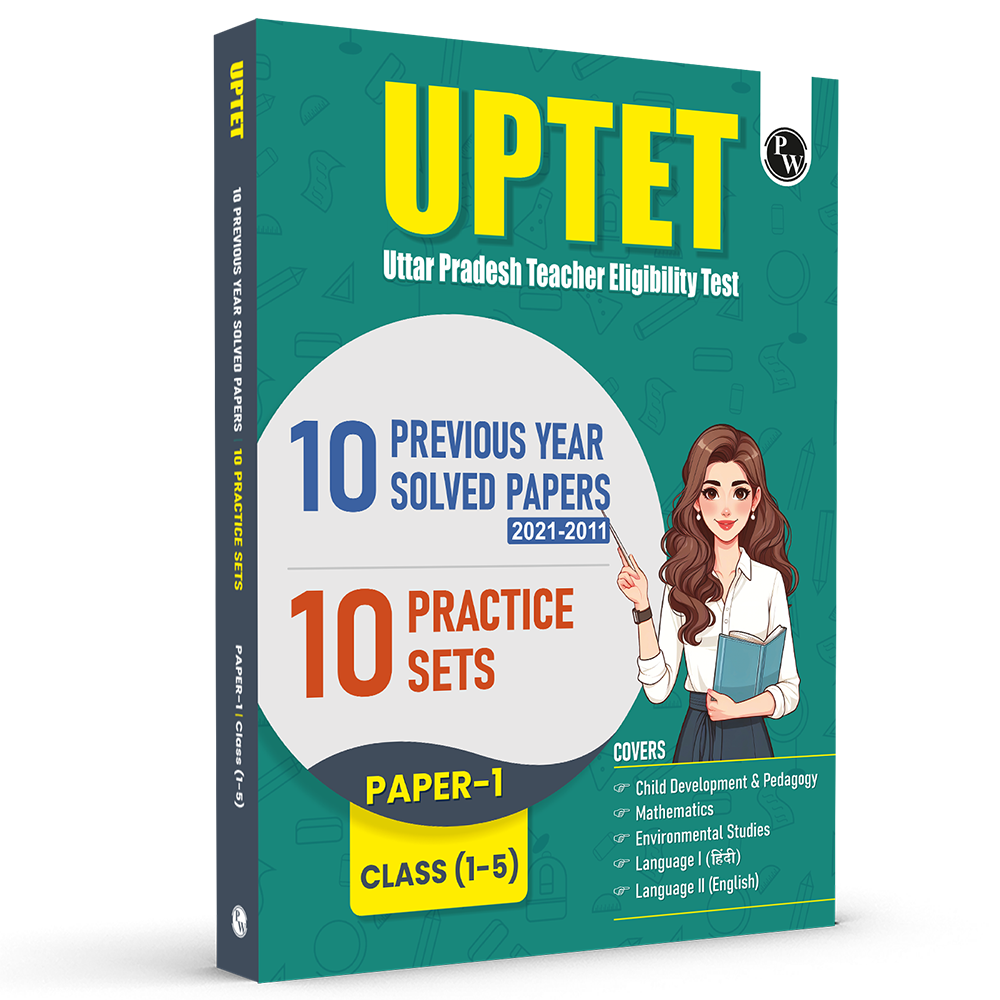
Check Out: UPTET Paper 1 - 10 Previous Year Solved Papers
Tips for UPTET Exam Preparation
A well-rounded UPTET exam preparation strategy goes beyond just reading the syllabus. You need a mix of concept clarity and consistent practice to score high.
-
Master the NCERT Books: For subject-specific topics in both papers, follow NCERT textbooks from Classes 1 to 8. Most questions in the UPTET syllabus 2026 are derived from these sources.
-
Focus on Pedagogy: Nearly half of the questions are related to teaching methods. Understanding child psychology is key to scoring well in the CDP and language sections.
-
Solve Previous Year Papers: Students require mock tests because they need to develop their speed and accuracy skills needed for the UPTET syllabus 2026.
-
Mock Tests for Time Management: The exam preparation process requires students to make short notes about formulas, dates and learning theories which they can use for quick review before the test.
-
Consistent Revision: Create short notes on formulas, dates, and learning theories for a quick review in the days leading up to the exam.
Read More: DSSSB PRT Syllabus with Exam Pattern
UPTET Syllabus 2026 FAQs
1. Is Child Development and Pedagogy the same for both Paper 1 and Paper 2?
While the topics are similar, the UPTET paper 1 syllabus focuses on children aged 6–11, while the Paper 2 syllabus targets adolescents aged 11–14. The teaching methods and psychology questions vary based on these age groups.
2. Can I choose any language for Language II in the UPTET syllabus 2026?
You have three options for Language II: English, Urdu, or Sanskrit. You must choose one of these at the time of application, and this section is separate from Language I (Hindi).
3. Does the UPTET exam pattern include negative marking?
The optional subject (either Mathematics & Science or Social Studies) carries 60 marks out of the total 150 marks. It is the highest-weightage section in the Paper II exam.
4. What is the weightage of the optional subject in the UPTET paper 2 syllabus?
The optional subject (either Mathematics & Science or Social Studies) carries 60 marks out of the total 150 marks. It is the highest-weightage section in the Paper II exam.
5. Are NCERT books sufficient for UPTET exam preparation?
Yes, NCERT books for Classes 1–5 (for Paper 1) and Classes 6–8 (for Paper 2) are highly recommended. They cover the core concepts of the UPTET syllabus in a clear and structured way.