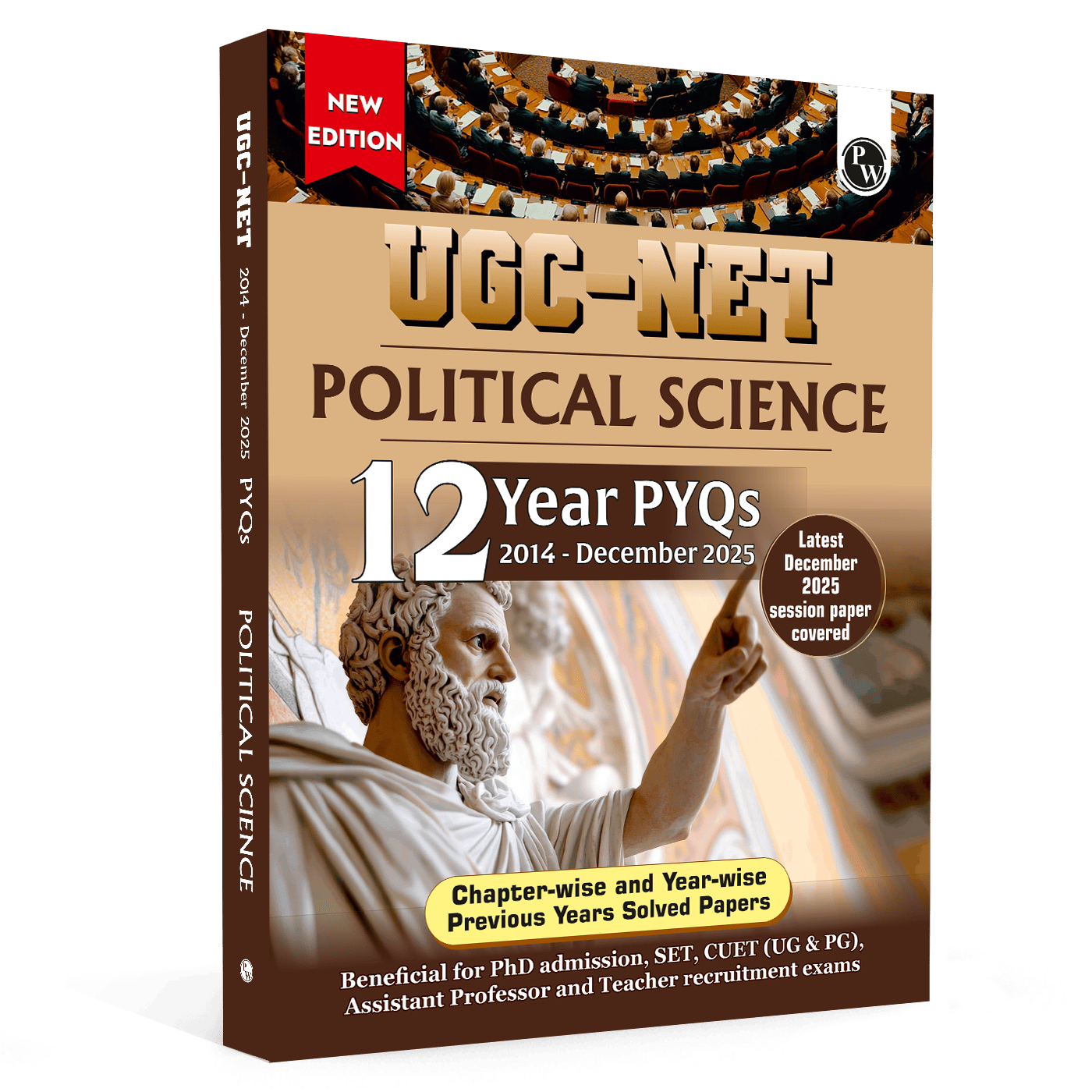
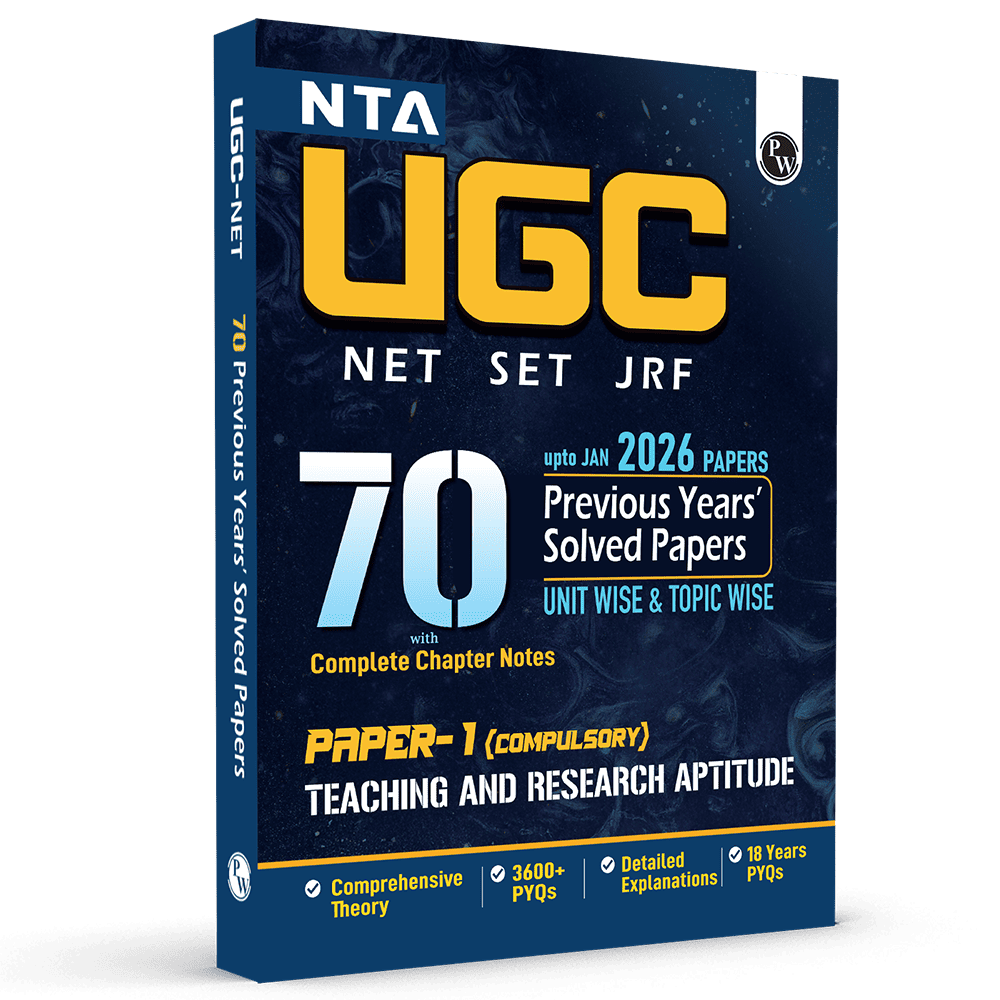
What Makes PW UGC NET Political Science PYQ Book Different?
Candidates frequently struggle to identify high-yield areas among vast theoretical units, leading to confusion and inefficient study sessions. Practicing with real examination papers offers the most reliable way to understand question patterns, yet candidates often encounter unverified solutions and unstructured answer sets.
This comprehensive guide highlights how using a dedicated UGC NET Political Science PYQ resource resolves these challenges. By combining 12 years of past papers (2014–2025) with detailed explanations and trend analysis, this reference helps candidates streamline their study routine, build strong conceptual clarity, and approach the exam with complete confidence.
What Is UGC NET Political Science PYQ?
A UGC NET Political Science PYQ resource is an essential compilation of past examination papers administered by the National Testing Agency (NTA). These previous papers offer a direct view into the actual structure, difficulty level, and conceptual scope of the exam.
Candidates relying solely on theoretical textbooks often find it difficult to apply abstract concepts to complex objective questions. Working through political science previous year papers bridges this gap by converting passive knowledge into active problem-solving skills.
Unlike generic practice papers, authentic previous papers reflect the exact phrasing, statement-assertion formats, and matching-type questions used in actual test sessions. They help candidates understand how topics across political theory, international relations, and public policy are framed. Utilizing a well-structured UGC NET Political Science book enables aspirants to test their conceptual understanding under real exam-like conditions.
Explore UGC NET books for effective exam preparation, featuring previous year questions, detailed solutions, subject-wise practice, and exam-focused content to strengthen concepts and improve performance.
What Makes UGC NET Political Science PYQ Book Different?
Selecting the right revision material can significantly alter your preparation outcome. Standard past paper compilations often print questions chronologically without categorisation or explanations. The pw UGC NET book stands out by introducing structured learning tools that simplify self-assessment and long-term retention.
Detailed Syllabus and Trend Analysis
A core advantage of this edition is its trend analysis integration. Rather than treating all chapters equally, the trend analysis illustrates how question weightages have shifted over the last twelve years. Candidates can quickly identify which units yield the highest number of questions and prioritize their daily study targets accordingly. Additionally, a detailed breakdown of the complete syllabus ensures that no essential topic is missed during revision sessions.
Dual Chapter-Wise and Year-Wise Format
Flexibility is crucial when navigating a large syllabus. This resource features both chapter-wise PYQs and year-wise solved papers.
-
Chapter-Wise Sorting: Organises questions according to individual syllabus units. Candidates can complete a theoretical unit in their main textbook and immediately practice relevant past questions to consolidate their learning.
-
Year-Wise Sorting: Preserves the original paper layouts from 2014 to 2025. Candidates can take full-length mock practice tests to evaluate speed, stamina, and overall performance under strict timed conditions.
Topics Covered in UGC NET Political Science PYQ
Comprehensive exam readiness requires systematic coverage across all major areas of political science. The UGC NET political science solved papers included in this volume encompass the entire syllabus defined by the NTA, ensuring aspirants practice questions across every required subject domain.
Political Theory and Political Thought
This section tests theoretical concepts alongside classical and modern political perspectives.
-
Political Theory: Key concepts including liberty, equality, justice, rights, democracy, power, and citizenship, along with major political ideologies.
-
Western Political Thought: Fundamental ideas of thinkers such as Plato, Aristotle, Machiavelli, Hobbes, Locke, Rousseau, Hegel, Mary Wollstonecraft, John Stuart Mill, and Karl Marx.
-
Indian Political Thought: Ancient, medieval, and modern Indian thinkers, including Kautilya, Kabir, Barani, Tilak, Swami Vivekananda, Rabindranath Tagore, Mahatma Gandhi, Aurobindo, B.R. Ambedkar, Periyar, and Jayaprakash Narayan.
Comparative Political Analysis and International Relations
This domain evaluates global systems, institutional structures, and foreign relations frameworks.
-
Comparative Political Analysis: Approaches to studying comparative politics, regime types, electoral systems, political development, state theories, and institutional frameworks.
-
International Relations: Core theoretical perspectives (Realism, Liberalism, Marxism, Feminism, Constructivism), post-Cold War developments, global security issues, international organizations, and global governance.
-
India’s Foreign Policy: Historical foundations, non-alignment, major bilateral relationships, regional engagements, and contemporary global strategy.
Indian Constitution, Political Institutions, and Governance
This practical section covers structural frameworks, public policies, and administrative mechanisms.
-
Indian Constitution and Institutions: Preamble, fundamental rights, directive principles, executive, parliament, judiciary, federalism, and statutory commissions.
-
Political Processes in India: State politics, identity politics, social movements, party systems, electoral behavior, and local self-governance.
-
Public Administration: Administrative theories, organizational behavior, public management, accountability, and policy implementation strategies.
-
Governance and Public Policy in India: Good governance, e-governance, social welfare initiatives, institutional mechanisms, and policy evaluation.
Read More - UGC NET Preparation Tips to Boost Your Exam Score
How to Study with UGC NET Political Science PYQ
To maximize your performance, you must use past papers actively rather than passively scanning through questions. Incorporating a structured practice routine ensures steady score improvements during your UGC NET preparation.
Phase 1: Syllabus Mapping and Unit Practice
Start by studying a theory topic from standard textbooks or course notes. Once you complete a unit, turn to the chapter-wise section of your past paper resource. Solve all questions for that specific chapter without checking the answer keys first. This tests how well you retain theoretical concepts and highlights immediate gaps in your understanding.
Phase 2: Solution Review and Distractor Analysis
When reviewing your responses, read the step-by-step explanations provided for every item. Do not focus only on why the correct option is right; analyze why the three remaining options are incorrect. The NTA frequently modifies distractor options from previous years into standalone questions in subsequent exam sessions.
Phase 3: Timed Full-Length Practice
During the final weeks of study, transition from chapter-wise practice to year-wise papers. Set a timer for three hours and solve full-length papers under exam conditions. This practice improves time allocation, reduces exam anxiety, and builds mental endurance for test day.
Study Strategy Plan with UGC NET Political Science PYQ
A structured study plan ensures that every unit receives adequate attention while providing time for continuous political science revision. Combining structured reading with consistent question practice yields the best results during your UGC NET exam preparation.
First Phase: Building Conceptual Foundations (Weeks 1 to 8)
Focus on building strong theoretical knowledge while integrating regular chapter-wise practice.
-
Allocate three hours daily to core theoretical topics across political theory and institutions.
-
Spend one hour daily solving chapter-wise PYQs related to the topics studied that day.
-
Maintain a dedicated revision notebook for key definitions, book titles, publication years, and political thinker quotes.
Second Phase: Targeted Weak-Area Refinement (Weeks 9 to 12)
Use performance data from your earlier practice to target specific weaknesses.
-
Consult the trend analysis chart to ensure high-weightage chapters receive extra attention.
-
Revisit chapters where your initial practice accuracy fell below 70 percent.
-
Practice complex question formats, such as assertion-reasoning items, chronological orders, and matching columns.
Third Phase: Full Mock Simulations and Final Revision (Weeks 13 to 16)
Focus on speed, accuracy, and overall paper strategy during the final month.
-
Solve two full-length year-wise solved papers per week under timed conditions.
-
Analyze every mistake to determine whether it stemmed from conceptual confusion or simple reading errors.
-
Dedicate the final seven days strictly to rapid review using your short notes and summary tables.
Common Mistakes While Solving UGC NET Political Science PYQ
Even dedicated candidates can lose marks by making avoidable errors during practice sessions. Recognizing these pitfalls early helps you maintain accuracy throughout your preparation.
-
Rote Answer Memorisation: Simply memorising answer options without understanding the underlying concepts leads to errors when questions are rephrased or framed differently.
-
Ignoring Solution Explanations: Skipping the written reasoning behind correct and incorrect options misses out on crucial background context that often appears in future exam questions.
-
Practicing Without Time Limits: Solving questions casually without tracking time leads to pacing difficulties during the actual exam.
-
Ignoring Shifting Patterns: Focusing solely on older papers while neglecting recent sessions, such as the December 2025 paper, leaves you unprepared for evolving exam trends.
-
Delaying Question Practice: Waiting until the final weeks to begin past paper practice leaves insufficient time to resolve conceptual weaknesses.
Frequently Asked Questions
Why is solving UGC NET political science PYQ essential for exam success?
Solving UGC NET political science PYQ sets helps candidates understand actual exam trends, identify high-yield topics, improve time management, and build practical problem-solving confidence.
Does this resource include the recent December 2025 session paper?
Yes, this 12-year collection covers examination papers from 2014 through 2025, fully incorporating the December 2025 session paper.
How does chapter-wise organization benefit political science revision?
Chapter-wise organization allows aspirants to practice questions immediately after finishing a specific unit, enabling focused and structured political science revision.
Is this political science book useful for exams other than UGC NET?
Yes, this UGC NET political science book is equally valuable for candidates preparing for SET, GATE, CUET UG, CUET PG, and PhD entrance examinations.
How does trend analysis assist during UGC NET preparation?
Trend analysis highlights weightage shifts and recurring question patterns across past years, helping aspirants prioritize high-yield units during UGC NET preparation.